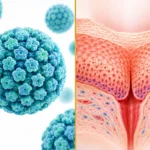
Yes, having genital warts does not stop you from getting the HPV vaccine. The vaccine is not contraindicated by an active genital wart outbreak, and current clinical guidance in 2026 still recommends vaccination for eligible adults even if they already have HPV or visible warts.
The catch worth understanding: the vaccine won’t clear warts you already have. It works by preventing new infections, not by treating existing ones. Whether it will still benefit you depends on which HPV types you’ve already been exposed to, and most people haven’t been exposed to all of them.
Key Takeaways
- Genital warts are not a reason to skip or delay the HPV vaccine
- The vaccine prevents future infections from HPV types you haven’t yet encountered, it does not treat current warts
- Most genital warts are caused by HPV types 6 and 11, which are covered by Gardasil 9, but if you’re already infected with those types, the vaccine won’t affect those existing warts
- Routine vaccination is recommended up to age 26; ages 27-45 should discuss it with a doctor
- Vaccination alongside treatment for current warts is a reasonable and supported approach
What Genital Warts Actually Are, and Why the Vaccine Question Comes Up
Genital warts are caused by low-risk HPV types, most commonly types 6 and 11. “Low-risk” means these types don’t cause cancer, they cause warts. That’s a meaningful distinction, and it’s covered in more detail in the overview of genital warts, what they look like, and what to do.
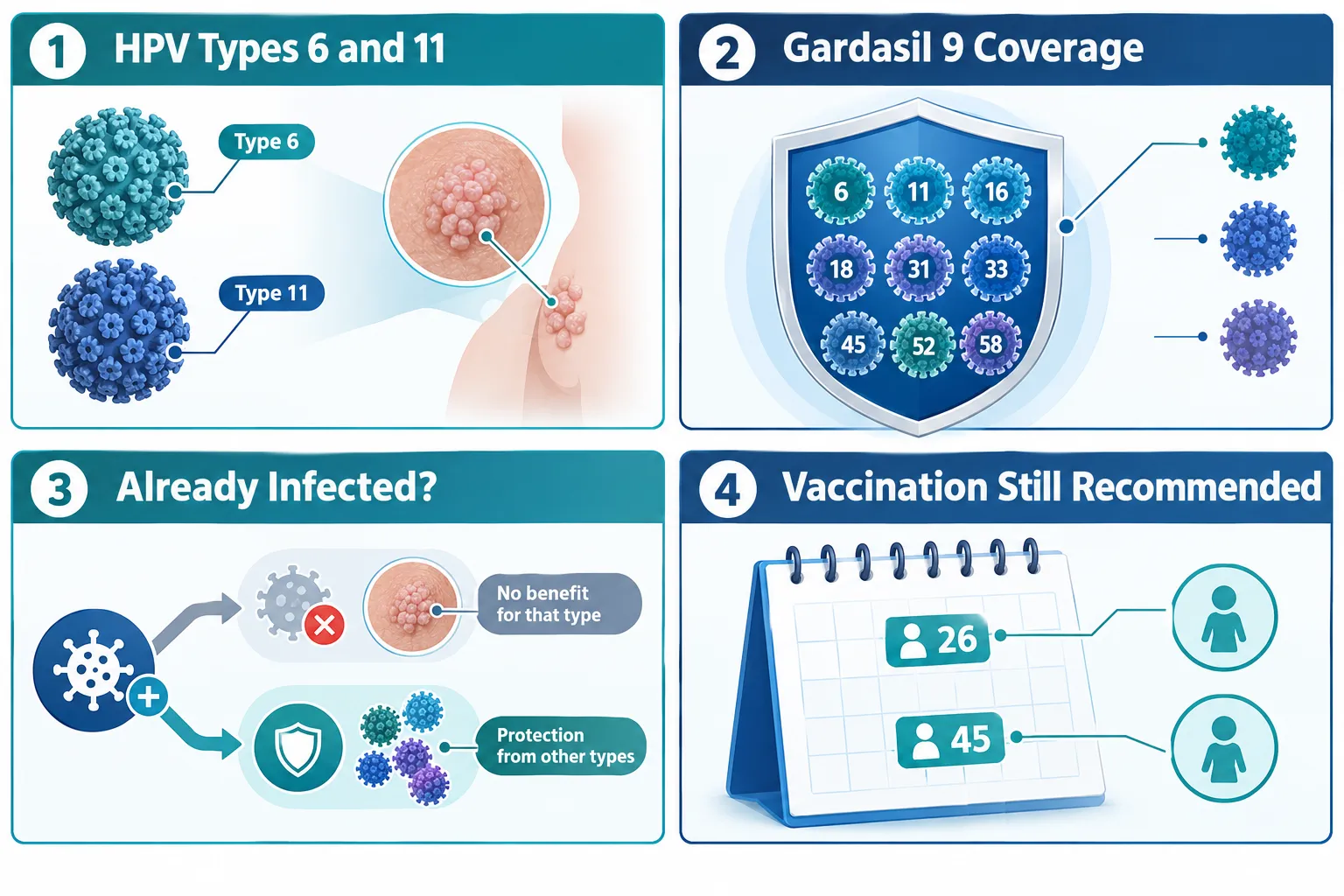
The reason people ask whether they can still get vaccinated after a genital wart diagnosis makes sense: if you already have HPV, why bother? The answer is that HPV isn’t a single virus, there are over 200 strains, and Gardasil 9 targets nine of them: types 6, 11, 16, 18, 31, 33, 45, 52, and 58. Even if you’ve been infected with type 6 or 11 (the wart-causing types), you may not yet have been exposed to the high-risk types like 16 and 18, which are responsible for the majority of HPV-related cancers. The vaccine still protects against those.
This is also why genital warts and cervical cancer risk are separate conversations, the connection between genital warts and cervical cancer explains how different HPV types behave differently in the body.
Who’s at Higher Risk for Complications from Untreated Genital Warts?
Most people with genital warts don’t face serious health consequences, but certain groups are more likely to experience persistent or difficult-to-treat warts:
- People with HIV or other immunocompromising conditions, a weakened immune system makes it harder to suppress HPV, and warts may grow more extensively
- Organ transplant recipients on long-term immunosuppressive therapy face similar challenges
- Pregnant people, warts can grow rapidly during pregnancy due to hormonal and immune changes, and in rare cases, HPV types 6 and 11 can be transmitted to the infant during delivery, causing a condition called recurrent respiratory papillomatosis
- Unvaccinated adults who have multiple sexual partners have a higher likelihood of encountering additional HPV types they haven’t yet been exposed to, which is exactly where vaccination adds value
Can You Get the HPV Vaccine if You Have Genital Warts Right Now?
Yes. A current genital wart outbreak is not a medical reason to postpone vaccination. The only standard contraindications to Gardasil 9 are a severe allergic reaction to a previous dose or to any vaccine component, and pregnancy.
Genital warts are not on that list.
Your doctor may still want to discuss timing and expectations with you before the first dose, because the counseling matters: the vaccine is for prevention, not treatment. If you’re hoping vaccination will make your current warts go away, it won’t. Genital wart treatment options, including topical medications, cryotherapy, and other procedures, are separate from vaccination and should be pursued in parallel if you want to address existing warts.
What vaccination does, even with active warts, is reduce your risk of acquiring additional HPV types you haven’t encountered yet. For someone who has type 6 or 11 but hasn’t been exposed to types 16 or 18, that protection is real and significant.
How Much Benefit Does the Vaccine Actually Offer with Prior HPV Exposure?
This is where precision matters. The evidence shows that Gardasil 9’s effectiveness is highest in people who haven’t yet been infected with the specific types the vaccine covers. If you’ve already had types 6 and 11 confirmed, the vaccine won’t help with those two strains. But it will still protect against the seven other types in the vaccine, including the high-risk cancer-causing strains.
Studies used in the FDA approval process for Gardasil 9 included participants with prior HPV exposure, and the vaccine still demonstrated meaningful protection against types they hadn’t yet encountered.
The practical takeaway: the younger you are when you get vaccinated, and the fewer HPV types you’ve been exposed to, the broader the protection. But even in adults with a known history of genital warts, the cancer-prevention benefit from types 16, 18, and the other high-risk strains in the vaccine remains relevant.
There is also emerging research looking at whether HPV vaccination might reduce recurrence rates in people being treated for persistent genital warts. This is not yet standard practice, it’s investigational, but it reflects a growing clinical interest in vaccination as more than just a prevention tool.
Age Recommendations Still Apply, Even with Genital Warts
The 2026 routine vaccination schedule hasn’t changed based on genital wart status. Vaccination is routinely recommended for everyone through age 26. For adults between 27 and 45, the CDC and ACOG recommend a shared decision-making conversation with a healthcare provider, meaning it’s not automatic, but it may still be worthwhile depending on your history and risk factors.
If you’re 27 or older and have genital warts, that conversation is worth having. Your provider will weigh your likelihood of new HPV exposures, your vaccination history, and your overall health. The HPV vaccine guide covering how it works and who should get it walks through the schedule in more detail.
For men specifically, the question of vaccination with existing HPV is addressed in the HPV vaccine for men, who should get it and whether it helps with prior HPV.
What the Vaccine Won’t Do
Setting clear expectations matters here. The HPV vaccine will not:
- Eliminate current genital warts
- Speed up clearance of an existing HPV infection
- Reduce the infectiousness of warts you already have
If you’re currently sexually active and have genital warts, understanding how contagious genital warts are and what that means for sex with HPV are separate but important questions to work through with your provider.
For current warts, topical prescription creams and how they work are one treatment path. Some warts do clear on their own, the evidence on whether genital warts go away without treatment is worth reviewing if you’re deciding whether to treat now or watch and wait.
Getting Vaccinated: What to Expect
Gardasil 9 is given as a series. For adults 15 and older, the standard schedule is three doses: the second dose one to two months after the first, and the third dose six months after the first. There’s no need to delay the series until warts have cleared.
Side effects are typically mild, soreness at the injection site, occasional low-grade fever, and rarely, brief dizziness after the shot. These are not reasons to avoid vaccination.
Your provider may also want to discuss HPV symptoms more broadly, since many people with genital warts don’t realize they may have been exposed to other HPV types without symptoms, the HPV symptoms guide covering signs in men and women is a useful reference for understanding what to watch for.
Frequently Asked Questions
Will getting vaccinated make my genital warts go away faster?
No. The vaccine has no effect on warts that are already present. It works by training your immune system to recognize and block HPV types before infection occurs, it can’t reverse an infection that’s already established. For current warts, treatment options like cryotherapy, prescription creams, or procedures are the appropriate path.
Can I get the HPV vaccine between doses of genital wart treatment?
Yes. There’s no known interaction between Gardasil 9 and topical genital wart treatments like imiquimod or podofilox. You don’t need to pause or complete treatment before starting or continuing the vaccine series.
If I’ve had genital warts for years, is it too late to benefit from vaccination?
Not necessarily. If you’re within the eligible age range and haven’t completed the vaccine series, vaccination can still protect against HPV types you haven’t been exposed to, including high-risk types linked to cervical, anal, and oropharyngeal cancers. The benefit is smaller if you’ve had many partners over many years, but the cancer-prevention component remains meaningful. Talk to your doctor about your specific history.
Do I need to tell the vaccine provider that I have genital warts?
Yes, not because it changes whether you can be vaccinated, but because it’s relevant medical history. Your provider may want to discuss treatment options for current warts, confirm your vaccination history, and make sure expectations about what the vaccine does and doesn’t do are clear before you start the series.
Does having genital warts mean I also have high-risk HPV?
Not automatically. Genital warts are caused by low-risk HPV types 6 and 11, which don’t cause cancer. It’s possible to have both low-risk and high-risk HPV types at the same time, but one doesn’t imply the other. If you’re due for cervical cancer screening or have concerns about high-risk HPV exposure, that’s a separate conversation from the wart diagnosis itself.