More than 360,000 people are diagnosed with genital warts in the United States each year — yet most are never told that treatment removes the warts, not the virus. That distinction matters enormously when you are trying to understand what comes next after a diagnosis.
Genital warts are caused by low-risk strains of human papillomavirus, specifically HPV types 6 and 11. These strains do not cause cervical cancer or other HPV-related cancers — that is a different group of HPV types entirely. For a broader picture of how the virus works, see this plain-English guide to HPV types and what the numbers mean.
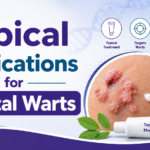
Effective genital warts treatment exists in several forms. Some are applied by a clinician in a medical office; others are prescription creams or gels you use at home under a provider’s guidance. The right choice depends on the size, number, and location of warts, your overall health, and whether you are pregnant. This article focuses entirely on treatment — what each option is, how it works, and what to realistically expect. For background on what genital warts look like and how they are diagnosed, visit the complete genital warts guide on this site.
Table of Contents
Key Takeaways
- Genital warts treatment removes visible warts but does not guarantee the underlying HPV virus is gone — recurrence is common.
- Treatment options fall into two main categories: in-office procedures performed by a clinician and prescription medications used at home.
- Over-the-counter wart removers (such as salicylic acid products) are designed for hands and feet and can cause serious burns on genital skin — do not use them.
- HPV types 6 and 11 that cause genital warts are low-risk and are not linked to cancer.
- Pregnancy changes which treatments are safe; always defer to your clinician for guidance during pregnancy.
Quick Answer
Genital warts are treated by removing them — with in-office procedures like cryotherapy, laser, or electrocautery, or with prescription creams applied at home such as imiquimod or podophyllotoxin. Treatment clears visible warts but may not remove the underlying virus, so warts can return. There are no safe over-the-counter options for genital skin.
Do Genital Warts Need Treatment?
Not always. A meaningful proportion of genital warts resolve on their own without any intervention, particularly in people with healthy immune systems. The CDC notes that the body’s immune response can suppress HPV activity over time, causing warts to shrink and disappear.
Reasons you might choose to treat:
- The warts are causing physical discomfort, itching, or bleeding
- The warts are growing in size or number
- Psychological distress or anxiety about transmission to a partner
- Warts are located in an area that interferes with urination, bowel movements, or sexual activity
- You are pregnant and your provider recommends removal
Reasons you might choose to watch and wait:
- Warts are small, few in number, and not causing symptoms
- Your immune system is healthy and your provider agrees observation is reasonable
- You prefer to avoid treatment side effects
The decision to treat is personal and should be made with a qualified healthcare provider. There is no single correct answer.
In-Office (Clinician-Applied) Genital Warts Treatments
These procedures are performed by a doctor, nurse practitioner, or other trained clinician. They are generally faster-acting than home treatments and are preferred when warts are large, numerous, or located in difficult areas.
Cryotherapy (Freezing)
Cryotherapy uses liquid nitrogen to freeze and destroy wart tissue. The clinician applies the liquid nitrogen directly to each wart using a probe or spray. The frozen tissue eventually blisters, dies, and falls off over one to two weeks.
- Sessions needed: Usually two to four, spaced one to two weeks apart
- Side effects: Temporary pain, swelling, and blistering at the treatment site
- Best for: External warts that are small to moderate in size
Cryotherapy is one of the most widely used first-line options and is available at most sexual health clinics and gynecology offices.
Electrocautery (Electrical Burning)
Electrocautery uses an electric current to burn off wart tissue. It is performed under local anesthesia and is effective for removing individual warts in a single session.
- Sessions needed: Often just one
- Side effects: Mild pain during recovery, potential for minor scarring
- Best for: Isolated warts or cases where cryotherapy has not worked
Laser Treatment
Laser therapy uses a focused beam of light to vaporize wart tissue. It is typically reserved for extensive warts, warts that have not responded to other treatments, or cases involving internal wart locations.
- Sessions needed: One to several, depending on extent
- Side effects: Pain, healing time, and higher cost compared to other options
- Best for: Widespread or treatment-resistant warts; sometimes used in pregnancy
Surgical Removal (Excision)
A clinician uses a scalpel or scissors to physically cut away wart tissue under local anesthesia. This approach provides immediate removal and allows the tissue to be sent for laboratory analysis if needed.
- Sessions needed: Usually one
- Side effects: Minor bleeding, soreness, potential scarring
- Best for: Large warts or warts with an uncertain appearance that require biopsy
Trichloroacetic Acid (TCA)
TCA is a chemical solution applied directly to warts by a clinician. It works by chemically destroying the wart tissue. Unlike some other options, TCA can be used safely on mucous membrane surfaces and is sometimes used during pregnancy.
- Sessions needed: Weekly applications over several weeks
- Side effects: Burning sensation at the time of application, local irritation
- Best for: Small, moist warts; one of the options considered in pregnancy management
Prescription Home Treatments for Genital Warts
Several prescription medications can be applied at home, but only under the guidance of a healthcare provider who has confirmed the diagnosis. These are not available over the counter.
| Medication | How It Works | Application |
|---|---|---|
| Imiquimod (Aldara, Zyclara) | Stimulates the immune system to fight HPV | Applied by patient 3x/week for up to 16 weeks |
| Podophyllotoxin (Condylox) | Destroys wart cell tissue directly | Applied by patient twice daily for 3 days, then 4 days off; repeated |
| Sinecatechins (Veregen) | Green tea extract; exact mechanism not fully established | Applied by patient 3x/day for up to 16 weeks |
Important notes on home treatments:
- A clinician must prescribe these medications and confirm the diagnosis before you begin
- Imiquimod and podophyllotoxin are contraindicated in pregnancy — do not use them if you are or may be pregnant
- Sinecatechins should also be avoided in pregnancy pending further safety data
- None of these medications should be applied to internal warts (inside the vagina, cervix, urethra, or rectum) — they are for external skin only
- Wash hands thoroughly before and after application
For a broader overview of how HPV and its symptoms are managed, the HPV treatment overview provides useful context alongside this article.
Why You Should Not Use OTC Wart Removers on Genital Skin
This point deserves its own section because it is one of the most common — and potentially harmful — mistakes people make after a diagnosis.
Products like salicylic acid pads, freeze-away kits, and other over-the-counter wart treatments are formulated for the thick, keratinized skin of hands and feet. Genital skin is far more sensitive, thinner, and more vascular. Applying these products to genital tissue can cause:
- Chemical burns
- Severe pain and inflammation
- Open wounds that increase infection risk
- Scarring
“There are no FDA-approved over-the-counter treatments for genital warts. Using products not intended for genital skin can cause serious harm.” — CDC
If you have been diagnosed with genital warts, contact a healthcare provider for appropriate prescription or in-office treatment. Do not attempt to self-treat with products from a pharmacy shelf.
Do Genital Warts Come Back After Treatment?
Yes, recurrence is common. This is one of the most important things to understand about genital wart treatment outcomes.
Treatment removes visible warts. It does not necessarily eliminate HPV from your body. The virus can remain in skin cells near the treated area in a dormant state and reactivate later — particularly if your immune system is under stress, you are ill, or you are immunocompromised.
Recurrence rates vary by treatment type and individual factors, but studies suggest that 20–30% of people experience recurrence within three months of treatment. Over a longer period, rates can be higher.
This does not mean treatment is pointless. Removing visible warts reduces the amount of virus present on the skin surface, which may lower (though not eliminate) the risk of transmission to partners. It also resolves symptoms and discomfort.
Understanding how HPV symptoms behave over time — including why most HPV infections produce no visible signs — can help put recurrence in perspective.
Genital Warts Treatment During Pregnancy
Pregnancy requires special consideration. Some treatments that are safe outside of pregnancy are contraindicated when you are pregnant.
- Podophyllotoxin and imiquimod are not recommended during pregnancy due to potential risks to the developing fetus
- TCA and cryotherapy are generally considered acceptable options during pregnancy, but the decision must be made by your obstetric provider
- Laser and surgical removal may be used in specific circumstances under medical supervision
- Warts can grow more rapidly during pregnancy due to hormonal and immune changes
- Rarely, HPV 6 and 11 can be transmitted to a newborn during delivery, causing a condition called recurrent respiratory papillomatosis (RRP) — though this is uncommon
Do not start, stop, or change any genital wart treatment during pregnancy without explicit guidance from your healthcare provider. This is not an area for self-management.
For women navigating HPV during pregnancy and beyond, the HPV in women guide covers relevant risks and screening considerations in more detail.
What to Expect Overall
Here is a realistic summary of what the treatment process looks like:
- Multiple visits or applications are usually required — there is rarely a single-session cure
- Healing time after in-office procedures is typically one to three weeks depending on the method
- Mild discomfort, redness, and temporary skin changes are normal after most treatments
- Follow-up appointments are important to assess whether warts have cleared or new ones have appeared
- Partner notification is worth discussing with your provider — partners may benefit from examination and, if eligible, vaccination
- HPV vaccination will not treat an existing infection but may offer protection against other HPV strains you have not yet encountered; see how the HPV vaccine works for more detail
The emotional impact of a genital warts diagnosis is real and often underestimated. Anxiety, shame, and concern about relationships are common responses. These feelings are valid — and they are also manageable with accurate information and, when needed, professional support.
Frequently Asked Questions
Can genital warts be cured?
There is no cure for HPV itself. Treatment successfully removes visible warts in most cases, but the virus may remain in the body. Some people never experience a recurrence after treatment; others do. The immune system plays a significant role in whether the virus becomes dormant long-term.
Do genital warts go away without treatment?
Some do. Studies suggest that a portion of genital warts resolve spontaneously, particularly in people with strong immune function. However, waiting is not appropriate for everyone — warts can grow, spread, or cause discomfort. The decision to treat or monitor should be made with a clinician.
Do genital warts come back after treatment?
Yes, recurrence is common. Approximately 20–30% of people see warts return within three months of treatment, and rates over longer periods can be higher. This happens because treatment targets the wart tissue, not the underlying virus. Repeat treatment is often needed.
Can genital warts be treated at home?
Only with prescription medications obtained from a healthcare provider. Imiquimod, podophyllotoxin, and sinecatechins are home-applied treatments, but a clinician must first confirm the diagnosis and prescribe the medication. Over-the-counter wart products are not safe for genital skin and should not be used.
Are genital warts dangerous?
Genital warts caused by HPV types 6 and 11 are not linked to cancer. They are a low-risk HPV infection. That said, they can cause physical discomfort and emotional distress, and some people have concurrent high-risk HPV infections that do require monitoring. Regular screening remains important. For more on HPV and cancer risk, see the dedicated guide on this site.
Conclusion
A genital warts diagnosis is manageable. Multiple effective genital warts treatment options exist — from cryotherapy and electrocautery performed in a clinic to prescription creams used at home. The key is working with a qualified healthcare provider to choose the right approach for your specific situation.
Treatment removes visible warts and can reduce discomfort and transmission risk, but it does not guarantee the virus is gone. Recurrence is common, and follow-up care matters. Avoid over-the-counter wart products on genital skin entirely — they can cause burns and are not appropriate for this tissue.
Actionable next steps:
- Schedule an appointment with a sexual health clinic, gynecologist, or primary care provider if you have not already been formally diagnosed
- Discuss which treatment option fits your health status, wart characteristics, and preferences
- Ask your provider about HPV vaccination if you are within the eligible age range
- Return for follow-up as directed, even if warts appear to have cleared
- Review the full genital warts resource hub for additional information on diagnosis, appearance, and ongoing management
You are not alone in this, and you have real options.
References
- Centers for Disease Control and Prevention. (2021). Genital HPV Infection — Basic Fact Sheet. https://www.cdc.gov/std/hpv/stdfact-hpv.htm
- Centers for Disease Control and Prevention. (2021). 2021 Sexually Transmitted Infections Treatment Guidelines: Anogenital Warts. https://www.cdc.gov/std/treatment-guidelines/anogenital-warts.htm
- NHS. (2022). Genital warts. https://www.nhs.uk/conditions/genital-warts/
- American College of Obstetricians and Gynecologists. (2020). Human Papillomavirus Vaccination (Committee Opinion 809). https://www.acog.org
- Lacey, C. J. N., et al. (2006). Randomised controlled trial and economic evaluation of podophyllotoxin solution, podophyllotoxin cream, and podophyllin in the treatment of genital warts. Sexually Transmitted Infections, 79(4), 270–275. PMID: 12902586. https://doi.org/10.1136/sti.79.4.270
- Scheinfeld, N., & Lehman, D. S. (2006). An evidence-based review of medical and surgical treatments of genital warts. Dermatology Online Journal, 12(3), 5. PMID: 16638420.
- World Health Organization. (2023). Human papillomavirus (HPV). https://www.who.int/news-room/fact-sheets/detail/human-papillomavirus-(hpv)-and-cervical-cancer
Disclaimer: This content is for informational purposes only and is not a substitute for professional medical advice, diagnosis, or treatment. Always consult a qualified healthcare provider with any questions about your health.
Author: Dr. Laura Bennett, OB/GYN — Board-Certified Gynecologist, Women’s Integrative Health Center (Private Practice) | Sources: WHO, CDC, ACOG, NHS, NCI, peer-reviewed literature | Last updated: January 2026