Nearly 360,000 people in the United States are diagnosed with genital warts each year, yet a significant number of them are handed a prescription cream and sent home with little explanation of how it actually works. That gap in understanding leads to missed doses, skin reactions that could have been anticipated, and frustration when warts return. Knowing exactly what topical medications for genital warts do — and what they cannot do — makes a real difference in how well treatment goes.
This article goes deep on prescription topical treatments only. For a broader look at all available options, see the complete HPV treatment overview. For background on genital warts themselves, the genital warts guide is a good starting point.
Quick Answer: Genital warts can be treated at home with prescription topical medications — most commonly imiquimod, podophyllotoxin, and sinecatechins (a green-tea extract). They are applied over several weeks and work by destroying wart tissue or prompting an immune response. A clinician prescribes and monitors them. Over-the-counter wart removers are not safe for genital skin.
Table of Contents
Key Takeaways
- The three main prescription topical medications for genital warts are imiquimod, podophyllotoxin, and sinecatechins — each works through a different mechanism.
- None of these treatments eliminate the underlying HPV virus; they clear visible warts only, and recurrence is common.
- Over-the-counter salicylic acid wart removers are formulated for thicker skin and can cause serious chemical burns on genital tissue — they should never be used in this area.
- Some topical treatments carry contraindications during pregnancy; all decisions about treatment while pregnant must be made with a clinician.
- Skin irritation during treatment is expected and manageable, but severe reactions should prompt a call to your prescribing provider.
What Are Topical Treatments for Genital Warts?
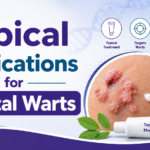
Topical treatments for genital warts are prescription medications applied directly to the skin surface of visible warts. Unlike in-office procedures — such as cryotherapy or surgical removal — these creams and ointments are designed for patient-applied, at-home use over a course of several weeks.
They fall into two broad categories based on how they work:
- Immune modulators — These do not attack the wart directly. Instead, they stimulate the local immune system to recognize and respond to HPV-infected tissue. Imiquimod is the primary example.
- Cytotoxic (tissue-destroying) agents — These compounds interfere with the cellular machinery of wart tissue, causing it to break down. Podophyllotoxin belongs to this category.
- Botanical antioxidant preparations — Sinecatechins occupy a unique middle ground, with both antiviral and immune-activating properties derived from green tea extract.
All three require a prescription. None are available over the counter in the United States or United Kingdom in formulations appropriate for genital use.
It is also worth understanding what these medications do not do. They treat visible warts — they do not clear the HPV virus from the body. The HPV types involved in genital warts (primarily types 6 and 11) are low-risk strains, meaning they are not the strains associated with cervical or other HPV-related cancers. Still, anyone with a new HPV diagnosis benefits from understanding the full picture of HPV symptoms and what they mean.
Imiquimod: The Immune-Response Cream
What it is: Imiquimod is an immune response modifier available in cream form, most commonly at 3.75% or 5% concentrations (brand names include Aldara and Zyclara). It is one of the most widely prescribed topical medications for genital warts in both the United States and the United Kingdom.
How it generally works: Imiquimod does not kill wart cells directly. It activates toll-like receptors in the skin, triggering the release of interferon and other cytokines. This essentially alerts the local immune system to the presence of HPV-infected tissue and prompts a sustained immune response that gradually clears the warts.
General use pattern: Treatment typically involves applying the cream several times per week over a period of weeks, following the specific schedule your clinician prescribes. The cream is washed off after a set period. The exact schedule varies by formulation and individual clinical factors — follow your prescription instructions precisely.
Common reactions: Because imiquimod works by generating an immune response, local skin reactions are expected and actually indicate the medication is working. These include:
- Redness and swelling at the application site
- Itching or burning
- Skin erosion or flaking
- Temporary skin discoloration
Severe reactions, flu-like symptoms, or significant skin breakdown should be reported to your provider. Imiquimod is not recommended for use during pregnancy without explicit clinician guidance.
Podophyllotoxin: The Cytotoxic Option
What it is: Podophyllotoxin (also called podofilox; brand names include Condylox) is derived from the podophyllum plant. It is available as a 0.5% solution or gel and is another of the well-established topical medications for genital warts.
How it generally works: Podophyllotoxin disrupts cell division within wart tissue by binding to tubulin, a protein essential for cells to replicate. This causes wart cells to stop dividing and eventually die off. The result is gradual shrinkage and clearance of visible wart tissue.
General use pattern: Treatment is typically applied in cycles — a set number of days on, followed by rest days — repeated over several weeks. Your prescribing clinician will outline the exact schedule. Do not apply to healthy surrounding skin, as the compound is cytotoxic to normal tissue as well.
Important safety note: Podophyllotoxin is contraindicated during pregnancy. If you are pregnant, trying to conceive, or think you might be pregnant, the decision about which treatment to use must be made with your clinician. Do not use this medication without disclosing pregnancy status to your provider.
Common side effects include local irritation, burning, and skin erosion at the application site, similar in character to imiquimod reactions.
Sinecatechins: The Green-Tea Extract Ointment
What it is: Sinecatechins 15% ointment (brand name Veregen) is a botanical prescription medication derived from green tea leaf extract. It is the only FDA-approved botanical prescription treatment for external genital warts.
How it generally works: Sinecatechins contain a mixture of catechins — antioxidant compounds — that appear to have both direct antiviral activity and immune-stimulating effects. The precise mechanism is not fully characterized, but clinical trials have demonstrated clearance rates comparable to other topical options.
General use pattern: Applied three times daily until warts clear, up to a maximum treatment period specified on the prescription. It has a distinctive dark green color and may stain clothing.
Tolerability: Sinecatechins tend to produce local skin reactions similar to other topicals — redness, itching, burning — but some patients find them better tolerated than imiquimod. As with all topical medications for genital warts, use should be guided by a clinician, and use during pregnancy has not been adequately studied.
How Topical Treatments Compare to In-Office Removal
Topical creams and ointments are not the only option. In-office procedures — including cryotherapy (freezing), trichloroacetic acid (TCA) application, electrosurgery, and laser removal — are performed by a clinician and often produce faster initial clearance of visible warts.
| Factor | Topical (at-home) | In-Office Procedure |
|---|---|---|
| Applied by | Patient | Clinician |
| Treatment duration | Weeks | One or a few visits |
| Initial clearance speed | Slower | Faster |
| Recurrence rate | Similar across methods | Similar across methods |
| Suitable for large/multiple warts | Sometimes limited | Often preferred |
| Pregnancy considerations | Most contraindicated | Some options available |
Neither approach eliminates the underlying virus. Recurrence rates are broadly similar regardless of the method used. The right choice depends on wart location, size, number, pregnancy status, and patient preference — a conversation best had with your clinician. For a full comparison of all available approaches, the HPV treatment overview covers the complete landscape.
Why You Should Never Use OTC Wart Removers on Genital Skin
This point deserves direct, unambiguous emphasis: over-the-counter salicylic acid wart removers are not safe for genital skin.
Products sold for plantar warts (foot warts) or common hand warts contain salicylic acid at concentrations typically ranging from 17% to 40%. These formulations are designed for the thick, keratinized skin of the feet and hands. Genital skin is thin, sensitive, and highly vascular — applying high-concentration salicylic acid to this tissue can cause severe chemical burns, open wounds, and significant pain.
The same applies to “wart freeze” sprays sold at pharmacies. These are not formulated for mucosal or genital tissue and carry real risk of injury.
If you are unsure whether a product is safe for genital use, assume it is not and consult your clinician or pharmacist before applying anything not specifically prescribed for this purpose.
What to Expect During and After Treatment
Irritation is normal — to a point. All prescription topical medications for genital warts cause some degree of local skin reaction. Mild to moderate redness, itching, and soreness are expected. Severe reactions — open sores that do not heal, spreading redness, fever — warrant a call to your provider.
Treatment takes weeks, not days. Visible improvement may not appear for two to four weeks. Completing the full prescribed course, even when warts appear to be clearing, is important for reducing recurrence.
Recurrence is common. Studies consistently show that genital warts recur in a significant proportion of patients within the first year after treatment, regardless of which method is used. This happens because topical treatments clear visible warts but do not eliminate HPV from surrounding tissue. If warts return, additional treatment cycles or a switch to a different modality may be recommended.
Follow-up matters. Regular follow-up with your clinician allows for assessment of treatment response, management of side effects, and decisions about next steps if warts persist or return. For those with a broader HPV diagnosis, understanding HPV testing and what results mean is also valuable context.
Men with genital warts have specific considerations around wart location and treatment access — the HPV in men guide addresses these in detail. Women navigating HPV alongside cervical screening concerns will find relevant information in the HPV in women resource.
Frequently Asked Questions
What cream treats genital warts?
The three main prescription creams and ointments used to treat genital warts are imiquimod (Aldara, Zyclara), podophyllotoxin (Condylox), and sinecatechins (Veregen). Each works differently and is prescribed based on individual clinical factors.
Can I buy genital wart cream over the counter?
No. Effective topical treatments for genital warts require a prescription in the United States and United Kingdom. Over-the-counter wart products (typically salicylic acid-based) are not formulated for genital skin and can cause chemical burns. A clinician visit is necessary to obtain appropriate treatment.
How long do topical treatments take?
Most topical treatment courses run between four and sixteen weeks, depending on the medication, wart response, and individual factors. Visible improvement often begins within two to four weeks, but completing the full course is important.
Do warts come back after creams?
Yes, recurrence is common. Studies report recurrence rates ranging from roughly 25% to 67% within the first year, depending on the medication and individual immune response. Recurrence does not mean treatment failed — additional treatment cycles are available and often effective.
Are these treatments safe in pregnancy?
Most topical medications for genital warts — including podophyllotoxin and imiquimod — are not recommended during pregnancy. Sinecatechins also lack adequate pregnancy safety data. If you are pregnant or may become pregnant, discuss all treatment options with your clinician before starting any medication. Some in-office procedures may be considered safer alternatives during pregnancy.
Conclusion
Prescription topical medications for genital warts give many people an effective, private, at-home treatment path. Imiquimod, podophyllotoxin, and sinecatechins each work through distinct mechanisms, and each comes with a specific application schedule, expected side effects, and important safety considerations.
The most important action steps after reading this:
- Talk to a clinician before starting any treatment. Prescription topicals require professional evaluation, a prescription, and monitoring. Self-treating with OTC products is not a safe substitute.
- Understand what the medication is doing. Knowing whether your cream works by immune activation or tissue destruction helps you interpret the skin reactions you experience.
- Set realistic expectations. Clearance takes weeks, irritation is normal, and recurrence is possible. None of these facts mean treatment is not working.
- Keep follow-up appointments. Response to treatment needs to be assessed, and adjustments may be needed.
- Do not use OTC wart removers on genital skin. The burn risk is real and the products are not effective for this purpose.
For the full picture of genital wart management — including in-office procedures and when to consider them — visit the complete genital warts resource.
References
- Centers for Disease Control and Prevention. (2021). Genital HPV infection — basic fact sheet. https://www.cdc.gov/std/hpv/stdfact-hpv.htm
- Workowski, K. A., & Bolan, G. A. (2015). Sexually transmitted diseases treatment guidelines, 2015. MMWR Recommendations and Reports, 64(RR-03), 1–137. PMID: 26042815
- NHS. (2023). Genital warts — treatment. https://www.nhs.uk/conditions/genital-warts/treatment/
- Lacey, C. J. N., Woodhall, S. C., Wikstrom, A., & Ross, J. (2013). 2012 European guideline for the management of anogenital warts. Journal of the European Academy of Dermatology and Venereology, 27(3), e263–e270. https://doi.org/10.1111/j.1468-3083.2012.04662.x
- Stockfleth, E., Beti, H., Orasan, R., Grigorian, F., Mescheder, A., Tawfik, H., & Thielert, C. (2008). Topical Polyphenon E in the treatment of external genital and perianal warts: a randomized controlled trial. British Journal of Dermatology, 158(6), 1329–1338. https://doi.org/10.1111/j.1365-2133.2008.08520.x PMID: 18363756
- American College of Obstetricians and Gynecologists. (2020). Human papillomavirus vaccination (Committee Opinion 809). https://www.acog.org/clinical/clinical-guidance/committee-opinion/articles/2020/11/human-papillomavirus-vaccination
Disclaimer: This article is for informational purposes only and does not constitute medical advice, diagnosis, or treatment. Always consult a qualified healthcare provider before starting, stopping, or changing any treatment. The information presented here is not a substitute for professional medical judgment.