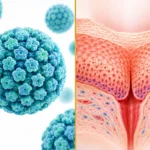
Genital warts can disappear on their own, but how long that takes, and whether it happens at all, depends heavily on your immune system. Most visible warts caused by HPV types 6 and 11 will clear without treatment within one to two years for people with a healthy immune response. That said, “going away” doesn’t always mean the virus is gone.
Here’s what the evidence actually shows about what you can expect.
Key Takeaways
- Genital warts are caused by low-risk HPV types 6 and 11, which are not linked to cervical or anal cancer.
- Visible warts can clear on their own within months to a couple of years, but the underlying HPV may remain in skin cells.
- Treatment removes visible warts faster than waiting, but does not eliminate the virus itself.
- Recurrence after clearance, with or without treatment, is common, especially in the first three to six months.
- Your immune system is the single biggest factor in whether warts go away and stay gone.
What “Going Away” Actually Means With Genital Warts
Genital warts are caused by HPV types 6 and 11, low-risk strains that do not cause cancer. Understanding what genital warts are and what they look like helps set realistic expectations before asking whether they’ll disappear.
When warts clear, one of two things is happening. Either your immune system has suppressed the viral load enough that the warts shrink and vanish, or treatment has physically removed the visible tissue. In both cases, the HPV DNA can still sit dormant in the surrounding skin cells.
This matters because it explains recurrence. Warts can return weeks or months after they’ve visibly cleared, not because treatment failed, but because the virus was never fully eliminated. Most recurrences happen within three months of initial clearance.
So when people ask “do genital warts go away?”, the honest answer is: the visible warts often do. The virus underneath them may or may not.
Do Genital Warts Go Away on Their Own Without Treatment?
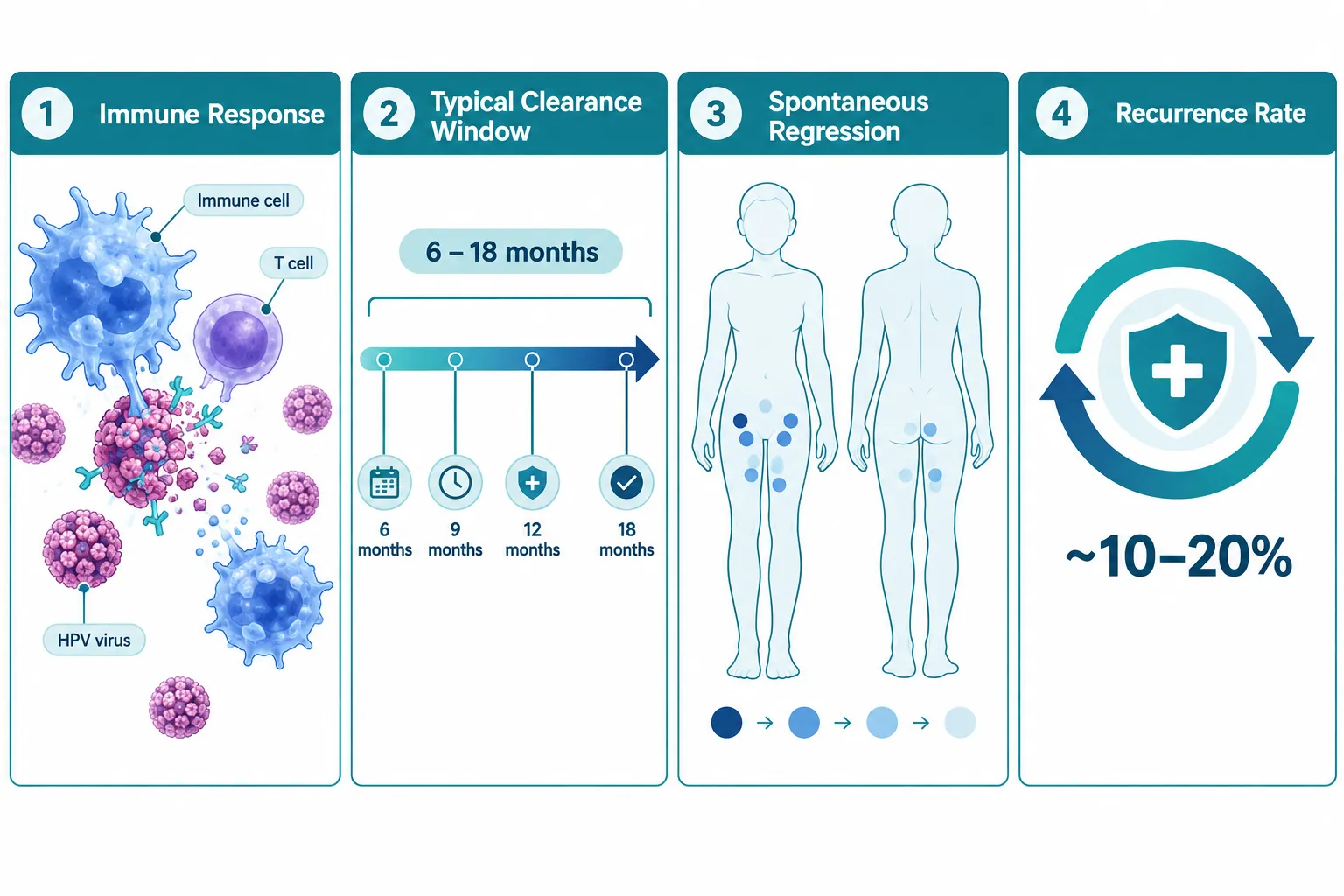
Yes, they can. Studies from clinical trial control groups, where participants received no active treatment, show that roughly 20 to 30 percent of genital warts resolve spontaneously within three to four months. Over a longer window of one to two years, the clearance rate climbs considerably higher for immunocompetent people.
The CDC acknowledges that visible genital warts may resolve on their own, and the NHS in the UK similarly confirms that some warts disappear without any intervention.
The catch is that waiting is unpredictable. Some warts stay stable for months. Others multiply or grow larger before the immune system catches up. There is no reliable way to predict in advance which path yours will take.
Watching and waiting is a legitimate choice, but it’s worth discussing with a clinician rather than deciding in isolation, particularly if warts are spreading, causing discomfort, or located in areas like the anus or urethra. The straight answers on anal genital warts covers location-specific considerations in more detail.
How Long Do Genital Warts Take to Clear?
There is no fixed timeline. This genuinely varies person to person, and immune status is the dominant variable.
For people with a healthy immune system:
- Some warts clear within a few weeks to three months.
- Most visible warts, if they are going to resolve without treatment, do so within one to two years.
- Warts that persist beyond two years without treatment are less likely to clear spontaneously.
With treatment, visible warts can be removed in one to several sessions depending on the method used. Cryotherapy, topical treatments like imiquimod or podophyllotoxin, and surgical excision all remove visible wart tissue. Cryotherapy for genital warts is one of the most commonly used clinic-based options and typically requires two to four sessions.
Treatment speeds up the removal of visible warts. It does not cure the underlying HPV infection, which means recurrence rates after treatment are similar to recurrence rates after spontaneous clearance, roughly 20 to 30 percent within the first three months.
Who Is at Higher Risk for Persistent or Recurrent Genital Warts?
Some people are significantly more likely to see warts persist, multiply, or return after clearance.
- Immunocompromised individuals, people living with HIV, organ transplant recipients on immunosuppressive therapy, or anyone with a condition that weakens immune function, often experience more extensive warts that are harder to clear and more likely to recur.
- Pregnant people, hormonal and immune changes during pregnancy can cause existing warts to grow rapidly and new ones to appear; treatment options are also more limited.
- Smokers, smoking impairs local immune responses in mucosal tissue, which is associated with slower clearance and higher recurrence rates.
- People with a high burden of warts at first presentation, a larger initial wart load is consistently associated with longer time to clearance, regardless of treatment method.
Does Treating Genital Warts Make Them Go Away Faster?
Yes, treatment removes visible wart tissue considerably faster than waiting for spontaneous resolution.
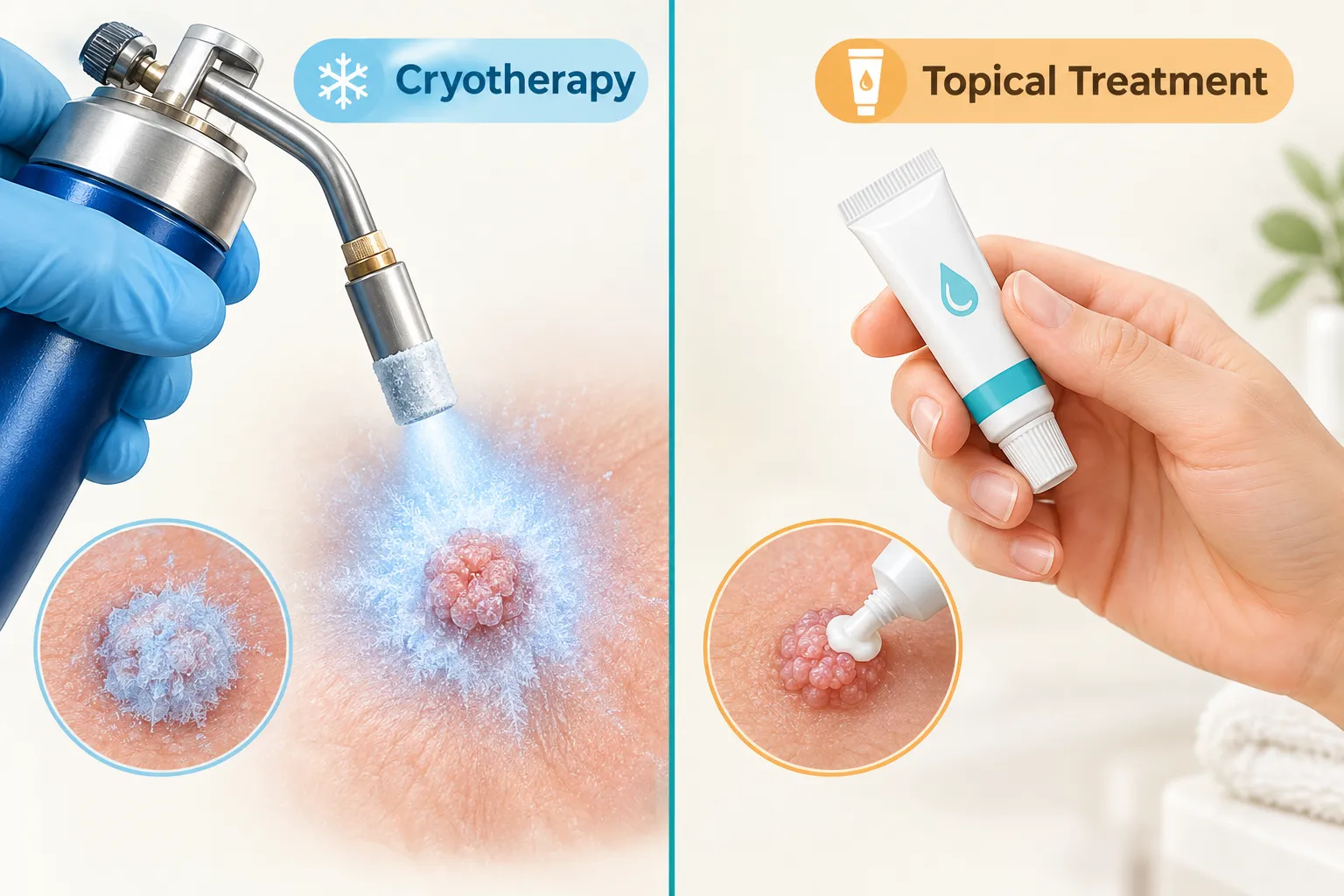
Untreated warts may take months to years to clear. Treated warts can often be eliminated over the course of several weeks to a few months, depending on the treatment chosen and how the tissue responds.
The trade-off is that treatment carries its own considerations: some methods require multiple clinic visits, some topical treatments cause local irritation, and none of them prevent recurrence. If warts return after treatment, that is not a sign that something went wrong, it reflects the biology of HPV remaining in surrounding tissue.
Whether to treat or wait is a conversation worth having with a clinician who can assess the wart size, location, and your overall health. If you’re wondering whether warts are fully curable in a lasting sense, the detailed breakdown of whether genital warts are curable addresses that distinction directly.
Do Genital Warts Go Away Permanently?
For many people, yes. Once the immune system clears the HPV infection, warts do not return. Most people who have had genital warts do not experience them indefinitely, the immune response eventually suppresses the virus to undetectable levels.
The risk of recurrence is highest in the first six months after clearance. After two years without a recurrence, the likelihood of warts returning from the same infection drops substantially.
Whether you are still contagious after warts have cleared is harder to answer. HPV can be transmitted even when no warts are visible, because the virus can be present in skin cells without causing visible lesions. This is worth discussing with a clinician if you have questions about transmission to a partner.
It is also worth knowing that having genital warts, caused by HPV 6 or 11, does not increase your cancer risk. These are genuinely low-risk strains. If you’ve been told you have HPV but aren’t sure whether your strain is low-risk or high-risk, understanding whether genital warts are classified as an STD and what that means provides useful context on how these strains are categorized.
Frequently Asked Questions
Can genital warts come back after they’ve completely disappeared?
Yes. Recurrence is common, particularly in the first three to six months after clearance. This happens because HPV can remain dormant in nearby skin cells even after visible warts are gone. It does not necessarily mean reinfection from a partner, it can be reactivation of the same original infection.
If I never treat genital warts, will they eventually go away?
In many cases, yes, especially for people with a healthy immune system. Studies show that a significant proportion of untreated warts resolve within one to two years. However, some warts persist or multiply without treatment, and there is no way to predict which outcome applies to you without monitoring them over time.
Can you get the HPV vaccine if you already have genital warts?
Yes, and it may still offer protection against HPV strains you haven’t yet been exposed to. The vaccine does not treat existing warts or clear a current infection. The full explanation of whether you can get the HPV vaccine if you already have genital warts covers who benefits and when vaccination still makes sense.
Are genital warts the same as warts on hands or feet?
No. Genital warts are caused by specific HPV types (6 and 11) that are sexually transmitted. Common hand or foot warts are caused by different HPV types and are not sexually transmitted. The virus does not transfer from hands to genitals under normal circumstances, the evidence on whether hand warts can spread to the genital area explains why the two are distinct.
How do I know if what I have is actually a genital wart?
Genital warts have a characteristic appearance, soft, flesh-colored, sometimes cauliflower-like, but other conditions can look similar, including skin tags, molluscum contagiosum, and normal anatomical variation. A clinician can usually diagnose warts on visual examination. The guide to the difference between skin tags and HPV warts is a useful starting point if you’re trying to identify what you’re seeing.
What to Do Next
Genital warts are common, caused by low-risk HPV strains, and for most people with a healthy immune system, they do clear, either on their own or with treatment. The key variables are your immune status, the number and location of warts, and how long they’ve been present.
The most useful next step is a clinical assessment. A doctor or sexual health clinician can confirm the diagnosis, discuss your treatment options, and help you decide whether to treat now or monitor. Cell changes are easiest to manage before they progress, and for genital warts specifically, getting an accurate diagnosis early means you can make an informed choice rather than waiting and wondering.
If warts are persisting, spreading, or located in a difficult area, that is a reason to seek assessment sooner rather than later, not because genital warts are dangerous, but because treatment is more straightforward when warts are small and few.