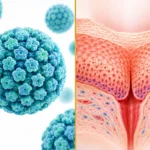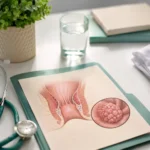
Genital warts are a sexually transmitted infection, yes, they are an STD. They are caused by specific strains of human papillomavirus (HPV), spread almost exclusively through sexual skin-to-skin contact, and classified as an STI by every major public health authority including the CDC and the NHS. Knowing that is useful. What matters just as much is what it does not mean: genital warts are caused by low-risk HPV types that do not cause cancer, they are treatable, and having them says nothing about how many partners you’ve had or how careful you’ve been.
About 1% of sexually active adults have clinically visible genital warts at any given time, and estimates suggest between 500,000 and one million new cases occur in the United States each year. This is one of the most common STIs there is.
Key Takeaways
- Genital warts are caused by HPV types 6 and 11, low-risk strains that account for roughly 90% of all anogenital warts and are not associated with cancer.
- Transmission requires sexual skin-to-skin contact; genital warts cannot be caught from toilet seats, towels, or casual contact.
- There is no cure for HPV itself, but visible warts can be effectively treated and often clear on their own over time.
- The HPV vaccine covers types 6 and 11 and significantly reduces the risk of developing genital warts.
- Having genital warts does not mean you have, or will develop, cervical cancer or any other HPV-related cancer.
What Causes Genital Warts, and Why Are They Classified as an STD?
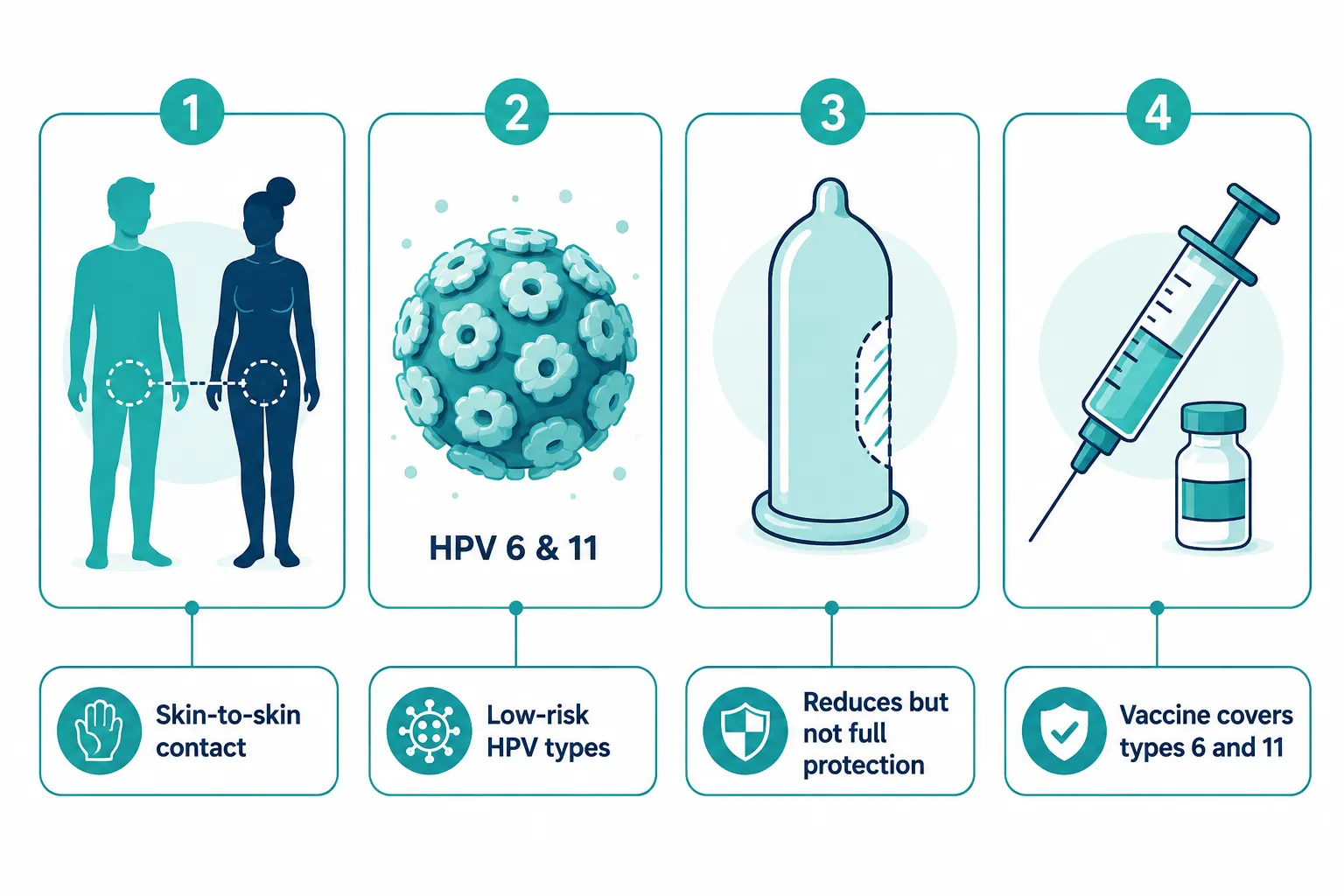
Genital warts are caused by HPV, specifically types 6 and 11. These are called low-risk or nononcogenic HPV types, meaning they do not cause cancer. They are distinct from high-risk types like HPV 16 and 18, which are linked to cervical and other anogenital cancers, a distinction the HPV types guide covers in detail.
The STD classification comes down to how the virus travels. HPV types 6 and 11 are transmitted through sexual contact, vaginal, anal, and oral sex, as well as genital touching and shared sex toys. The virus lives in skin and mucosal cells, not in blood or bodily fluids, which is why penetration or ejaculation is not required for transmission. Contact with infected genital skin is enough.
You can transmit HPV even when no warts are visible. Warts may not appear for weeks, months, or sometimes years after initial infection, so the timing of an outbreak rarely tells you when or from whom you acquired the virus. If you’re trying to figure out the “when” or “who,” the honest medical answer is that it’s usually unknowable.
The terminology has shifted in professional settings, “STI” (sexually transmitted infection) is now preferred over “STD” (sexually transmitted disease), but the underlying classification is identical. Both terms describe the same thing: an infection passed through sexual contact.
How Do Genital Warts Spread?
The virus spreads through direct skin-to-skin contact with an infected area. Vaginal and anal sex carry the highest transmission risk, but oral sex and genital touching without penetration are also documented routes. A study-level estimate puts the probability of acquiring HPV and developing genital warts after sexual contact with an infected person at roughly 75%, which reflects how efficiently this virus moves between people.
Condoms reduce the risk. They do not eliminate it, because HPV can infect skin not covered by a condom, the base of the penis, the scrotum, the inner thighs, and the vulva.
What does not spread genital warts: toilet seats, towels, cutlery, cups, swimming pools, or kissing. The virus cannot survive on surfaces long enough to infect someone through casual contact.
Two uncommon transmission routes are worth knowing. First, a pregnant person with genital warts can pass HPV to a baby during vaginal delivery, though this is rare. Second, autoinoculation, touching a wart and then touching another part of your body, can theoretically spread the virus to a new site, though this is also uncommon. For a fuller picture of how HPV moves between people, the how HPV spreads guide covers both common and less common routes.
What Do Genital Warts Look Like?
Genital warts typically appear as soft, flesh-colored growths. They can be flat or raised, single or clustered, and sometimes take on a cauliflower-like texture. They are usually painless, though some people notice itching or mild discomfort.
In people with a vulva, warts appear on the labia, vaginal opening, perineum, or inside the vagina and on the cervix. In people with a penis, they appear on the shaft, foreskin, or tip. Warts can also develop around or inside the anus regardless of the type of sex a person has had.
Many HPV infections, including those caused by types 6 and 11, produce no visible warts at all. The genital warts overview includes a detailed description of what they look like and how they differ from other skin conditions that are sometimes mistaken for warts.
Who Is at Higher Risk for Genital Warts?
Genital warts affect people across all demographics, but certain groups face a meaningfully higher risk:
- Unvaccinated people, those who have not received an HPV vaccine that covers types 6 and 11 have no immune protection against the most common wart-causing strains.
- Immunocompromised individuals, people living with HIV, those on immunosuppressive therapy after an organ transplant, or anyone with a weakened immune system are more likely to develop warts after exposure and less likely to clear the infection without treatment.
- People with early or multiple sexual contacts, nearly half of all new HPV infections occur in people aged 15-24, and a greater number of sexual partners increases cumulative exposure risk.
- Pregnant people, hormonal and immune changes during pregnancy can cause existing warts to grow more rapidly or new ones to appear.
Can Genital Warts Be Treated?
Visible warts can be treated effectively. There is no treatment that eliminates HPV from the body, the virus itself has no cure, but the warts it causes can be removed or cleared with several well-established options.
Treatment broadly falls into two categories: things a clinician does in-office (cryotherapy, surgical excision, electrocautery, or trichloroacetic acid application) and prescription medications you apply at home. The genital warts treatment guide walks through how each option works, how long treatment typically takes, and what recurrence looks like. If you’re specifically looking at topical options, the prescription creams guide covers imiquimod, podophyllotoxin, and sinecatechins in detail.
Some warts resolve on their own without treatment, this can take months to a couple of years. Others persist or recur after treatment because the underlying virus remains in surrounding tissue. Recurrence is common and does not mean treatment failed; it means the virus is still present.

Does Having Genital Warts Mean You Have Cancer Risk?
No. Genital warts caused by HPV 6 and 11 do not cause cancer. These low-risk types are biologically different from the high-risk strains, particularly HPV 16 and 18, that drive cervical, anal, oropharyngeal, and other HPV-related cancers.
That said, it is possible to carry both low-risk and high-risk HPV types at the same time, since HPV is common and reinfection with different types can occur. If you’ve been diagnosed with genital warts and have a cervix, staying current with cervical screening is still the right move, not because the warts themselves are dangerous, but because routine Pap and HPV testing is how high-risk infections get caught early. The HPV and cancer overview explains the cancer connection plainly, including which types are actually implicated and what screening does about it.
Can the HPV Vaccine Prevent Genital Warts?
Yes, and this is one of the clearest benefits of HPV vaccination. Current HPV vaccines, including the 9-valent Gardasil 9, cover types 6 and 11 alongside several high-risk strains. In vaccinated populations, the incidence of genital warts has dropped substantially. The HPV vaccine guide covers the full schedule, age recommendations, and what the vaccine does and does not protect against.
The vaccine works best before exposure to HPV, which is why it is recommended in early adolescence. It can still provide partial protection in adults who haven’t been exposed to all the covered types, though the benefit decreases with age and prior sexual activity. Vaccination does not treat an existing infection or remove warts that are already present.
Frequently Asked Questions
Can you get genital warts without having sex?
Sexual skin-to-skin contact is by far the most common route. Rare exceptions include transmission from a parent to a newborn during vaginal delivery and, theoretically, autoinoculation. You cannot get genital warts from toilet seats, towels, or other everyday surfaces.
If my partner has genital warts, does that mean they were unfaithful?
Not necessarily, and the medical evidence doesn’t support that conclusion. HPV can remain dormant for months or years before warts appear, so an outbreak now could reflect an infection acquired long before your current relationship. The timing of HPV infection is often impossible to determine.
Do genital warts always come back after treatment?
Recurrence is common but not guaranteed. Because the virus remains in surrounding tissue after wart removal, new warts can develop in the same area. Many people have one or two treatment courses and then see no further outbreaks; others manage recurrences over a longer period. Immune status plays a significant role in how the body handles the virus over time.
Should I tell a new partner if I’ve had genital warts?
This is a personal decision, but disclosure is generally considered the ethical standard in sexual health. Even after warts have cleared, HPV may still be transmissible. A frank conversation, ideally before sexual contact, allows a partner to make an informed choice, including about vaccination if they haven’t already been vaccinated.
Can men get genital warts?
Yes. Genital warts affect people of all sexes. In men, warts appear on the penis, scrotum, and around or inside the anus. The HPV in men guide covers how HPV presents differently in men, including the absence of routine HPV testing options comparable to the Pap smear.
What to Do Next
If you’ve noticed something that looks like a genital wart, see a clinician for a visual diagnosis, most warts are identified on examination without any additional testing. If you’ve already been diagnosed, talk to your doctor about which treatment approach fits your situation; options vary based on the number, size, and location of warts as well as your preferences and immune status.
If you haven’t been vaccinated against HPV, ask whether you’re still within the recommended age range or whether vaccination would still offer you meaningful protection. Cell changes and new infections are easiest to address before they progress, that’s exactly what screening and vaccination are designed for.