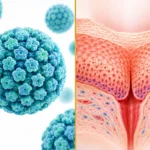
Genital warts can be treated, cleared, and often kept away for long stretches, but they are not curable in the strict medical sense. The virus that causes them, HPV types 6 and 11, can remain in your body even after every visible wart is gone. That distinction matters, and this article explains exactly what it means for you.
Key Takeaways
- Genital warts are caused by low-risk HPV types 6 and 11, not the same types linked to cancer.
- Multiple effective treatments exist, but none eliminate the underlying HPV infection with certainty.
- Warts can recur after treatment because the virus may persist in surrounding skin.
- In many people, the immune system eventually suppresses the virus and warts stop returning.
- The HPV vaccine prevents new infections with types 6 and 11 but does not treat existing ones.
What “Treatable But Not Curable” Actually Means
Genital warts are treatable. That’s not a consolation, it’s a meaningful clinical fact. Treatments can clear visible warts completely, often within weeks, and many people go years without a recurrence. The reason doctors stop short of calling them “curable” is specific: no available treatment reliably eliminates HPV from the surrounding tissue. The virus can sit dormant in skin cells near the treated area, which is why warts sometimes return even after a thorough course of treatment.
This is different from saying treatment doesn’t work. It does. The goal of treatment is to remove visible warts, reduce discomfort, and lower, though not eliminate, the chance of passing the virus to a partner.
For a broader look at what genital warts are and how they present, the genital warts overview on HPVGuide.org covers the basics in plain language.
Are Genital Warts Curable With Current Treatments?
The short answer: not in the way a bacterial infection is cured with antibiotics. But the longer answer is more encouraging than that framing suggests.
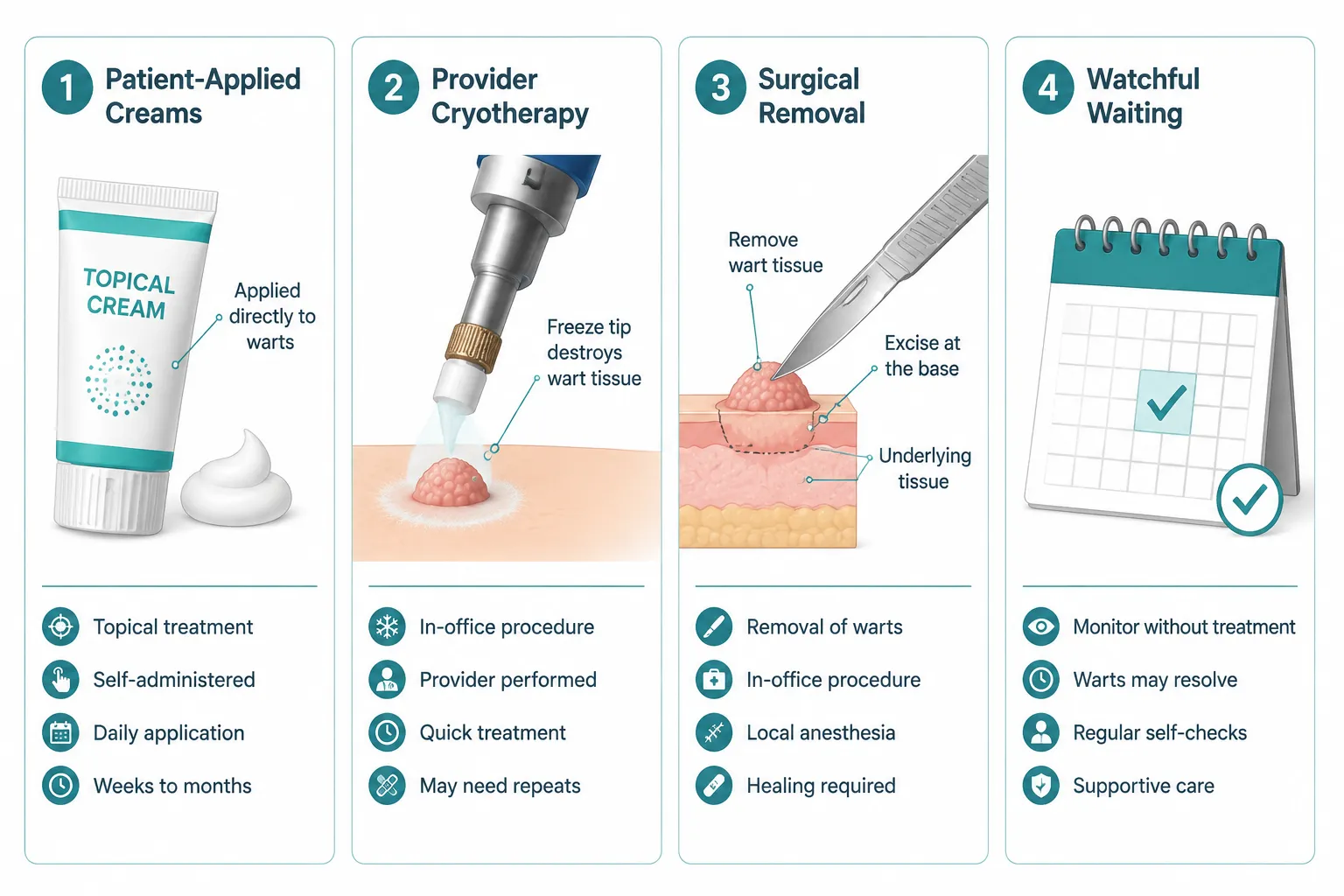
Patient-Applied Treatments
Two prescription creams are commonly used at home. Imiquimod works by stimulating your immune response to attack HPV-infected cells. Podophyllotoxin (podofilox) directly destroys wart tissue. Both can clear warts in a significant proportion of people, though clearance rates vary and multiple application cycles are usually needed. The guide to topical medications for genital warts explains how each cream works and what to expect during a course of treatment.
Provider-Applied Treatments
Cryotherapy (freezing with liquid nitrogen), trichloroacetic acid (TCA), and surgical excision are performed in a clinic. Cryotherapy is one of the most commonly used options and can clear warts in one to three sessions. Surgical removal, including laser ablation or electrosurgery, is typically reserved for larger or more persistent warts.
Does Clearing Warts Mean You’re No Longer Infectious?
Not reliably. This is the core reason the word “cure” doesn’t apply. After treatment, HPV may still be present in adjacent skin even when no warts are visible. Transmission risk decreases, but it does not drop to zero. Condoms reduce transmission risk but do not eliminate it, since HPV can affect skin not covered by a condom.
For a full breakdown of all available approaches, the genital warts treatment guide covers options, how they compare, and what to expect at each stage.
Can Genital Warts Go Away Without Treatment?
Yes, and this is more common than most people expect. The immune system clears many HPV infections on its own. Visible warts resolve spontaneously in roughly 30-40% of people within four months, and a larger proportion see clearance within a year or two. For this reason, watchful waiting, monitoring without immediate treatment, is a legitimate option, particularly if warts are small, few in number, and not causing symptoms.
Choosing not to treat immediately is not the same as ignoring the problem. It means working with your doctor to monitor the warts and decide on treatment if they grow, multiply, or cause discomfort.
The tradeoff: untreated warts remain potentially transmissible, and some people find them distressing regardless of their clinical significance.
Who’s at Higher Risk for Persistent or Recurrent Genital Warts?
Most people with genital warts will respond to treatment, but some groups are more likely to experience persistent or frequently recurring warts:
- People with HIV or other immunocompromising conditions, A weakened immune system has more difficulty suppressing HPV, making warts harder to clear and more likely to return. This includes people on immunosuppressive therapy after organ transplantation.
- Smokers, Smoking impairs local immune responses in genital tissue, which is associated with slower clearance and higher recurrence rates.
- Unvaccinated people, Those who haven’t received the HPV vaccine remain susceptible to new infections with types 6 and 11, which can introduce new warts even after existing ones are cleared.
- People with a high burden of warts at diagnosis, Larger or more widespread wart involvement at the start of treatment is consistently associated with higher recurrence rates across treatment types.
Recurrence: What to Expect After Treatment
Recurrence is the central challenge. Studies show that warts return in roughly 30-70% of people within the first three months after treatment, regardless of which treatment was used. That wide range reflects how much individual immune response varies.

The good news is that recurrence tends to become less frequent over time. As your immune system builds a stronger response to the specific HPV types causing the warts, outbreaks typically become less severe and less frequent. Many people reach a point where warts stop recurring altogether, not because the virus is gone, but because the immune system is keeping it suppressed effectively.
If warts keep returning despite multiple rounds of treatment, your doctor may recommend switching to a different treatment modality, combining approaches, or investigating whether there’s an underlying factor, such as immune status, affecting your response. Understanding how HPV types differ can also help clarify why low-risk types like 6 and 11 behave differently from the high-risk types associated with cancer.
Does the HPV Vaccine Help If You Already Have Genital Warts?
The vaccine is preventive, not therapeutic. If you already have genital warts caused by HPV 6 or 11, the vaccine will not clear them or reduce recurrence. What it can do is protect you against HPV types you haven’t yet been infected with, including high-risk types 16 and 18 if you haven’t been exposed to those.
The HPV vaccine is not recommended during pregnancy, if you’re pregnant and considering vaccination, discuss timing with your doctor after delivery.
For people who haven’t been vaccinated and are in the eligible age range, getting vaccinated still makes sense even after a genital warts diagnosis. The full HPV vaccine guide covers who should get it, the schedule, and what it does and doesn’t protect against.
Are Genital Warts Linked to Cancer?
This is one of the most common fears, and it’s worth being direct about. HPV types 6 and 11, which cause virtually all genital warts, are classified as low-risk HPV types. They are not the types associated with cervical, anal, or other HPV-related cancers. The cancer-linked types are primarily 16 and 18, which do not cause warts.
Having genital warts does not mean you have a cancer risk from those warts. It does mean you’ve had a sexually transmitted HPV infection, which means you could also have been exposed to other HPV types, including high-risk ones, at some point. That’s a reason to stay current with cervical screening if you have a cervix, not a reason to panic. The HPV and cancer overview explains which types carry cancer risk and how screening addresses it.
Frequently Asked Questions
If my warts clear up, am I still contagious?
Possibly, yes. Clearing visible warts reduces but does not eliminate transmission risk. HPV can persist in skin cells near the treated area without causing visible warts. Using condoms consistently reduces the risk of passing the virus to a partner, though it doesn’t eliminate it entirely since HPV affects skin beyond the areas a condom covers.
How long does it take for genital warts to clear with treatment?
It depends on the treatment and your immune response. Patient-applied creams typically require 4-16 weeks of use. Cryotherapy may clear warts in one to three sessions spaced a few weeks apart. Some people see complete clearance quickly; others need multiple treatment rounds. There’s no single timeline that applies to everyone.
Can genital warts come back years later?
Yes. If HPV remains dormant in your tissue, warts can recur after months or even years of no symptoms, particularly if your immune system is temporarily weakened by illness, stress, or medication. This is uncommon but documented. Most recurrences happen within the first three months after treatment.
Is there anything I can do to reduce recurrence?
Maintaining a healthy immune system helps. That means not smoking, managing any underlying immune conditions, and staying consistent with follow-up appointments. There is ongoing research into immune-modulating supplements, but the evidence for most of them remains limited. The AHCC for HPV evidence review covers one of the more studied options and what the current research actually shows.
Do I need to tell future partners if I’ve had genital warts?
This is a personal and legal question as much as a medical one, and the answer varies by jurisdiction. Medically, the relevant fact is that you may still carry the virus even after warts clear. Most sexual health clinicians recommend disclosure so partners can make informed decisions about their own screening and vaccination status.
What This Means for You Right Now
Genital warts are not curable in the strict sense, the virus can persist even after every wart is gone. But they are manageable, treatable, and in many people, eventually suppressed by the immune system to the point where warts stop recurring.
The most useful next steps are straightforward: get an accurate diagnosis confirmed by a clinician, discuss which treatment option fits your situation, and stay current with any recommended screening. If you have a cervix, that means keeping up with Pap smear schedules regardless of your wart status. Cell changes from high-risk HPV types are easiest to address before they progress, that’s exactly what routine screening is designed to catch.
Genital warts caused by HPV 6 and 11 are common, low-risk for cancer, and respond well to treatment. That’s the accurate picture, as of 2026.