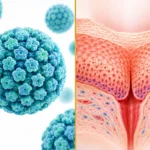
Hand warts and genital warts are both caused by HPV, but they are caused by different types of HPV, and that distinction matters enormously when asking whether warts on hands can be transferred to the genital area. The short answer is: it is extremely unlikely. The HPV types that cause common hand warts are not the same types that infect genital tissue, and they are not well-suited to surviving or replicating there.
That said, the question deserves a fuller answer, because the biology is specific and the risk, while low, is not exactly zero.
Key Takeaways
- Common hand warts are caused by cutaneous HPV types (most often HPV 1, 2, or 4), which are distinct from the genital HPV types (HPV 6 and 11) that cause genital warts.
- Cutaneous HPV types are adapted to thick, keratinized skin and are generally considered unlikely to establish infection in mucosal genital tissue.
- The risk of transferring hand warts to the genital area is described by most clinical experts as extremely low.
- Genital warts spread primarily through direct genital-to-genital or genital-to-skin sexual contact, not through hands.
- If you have visible warts anywhere on your body, a clinician can confirm the type and advise on the appropriate next step.
Why Hand Warts and Genital Warts Are Not the Same Thing
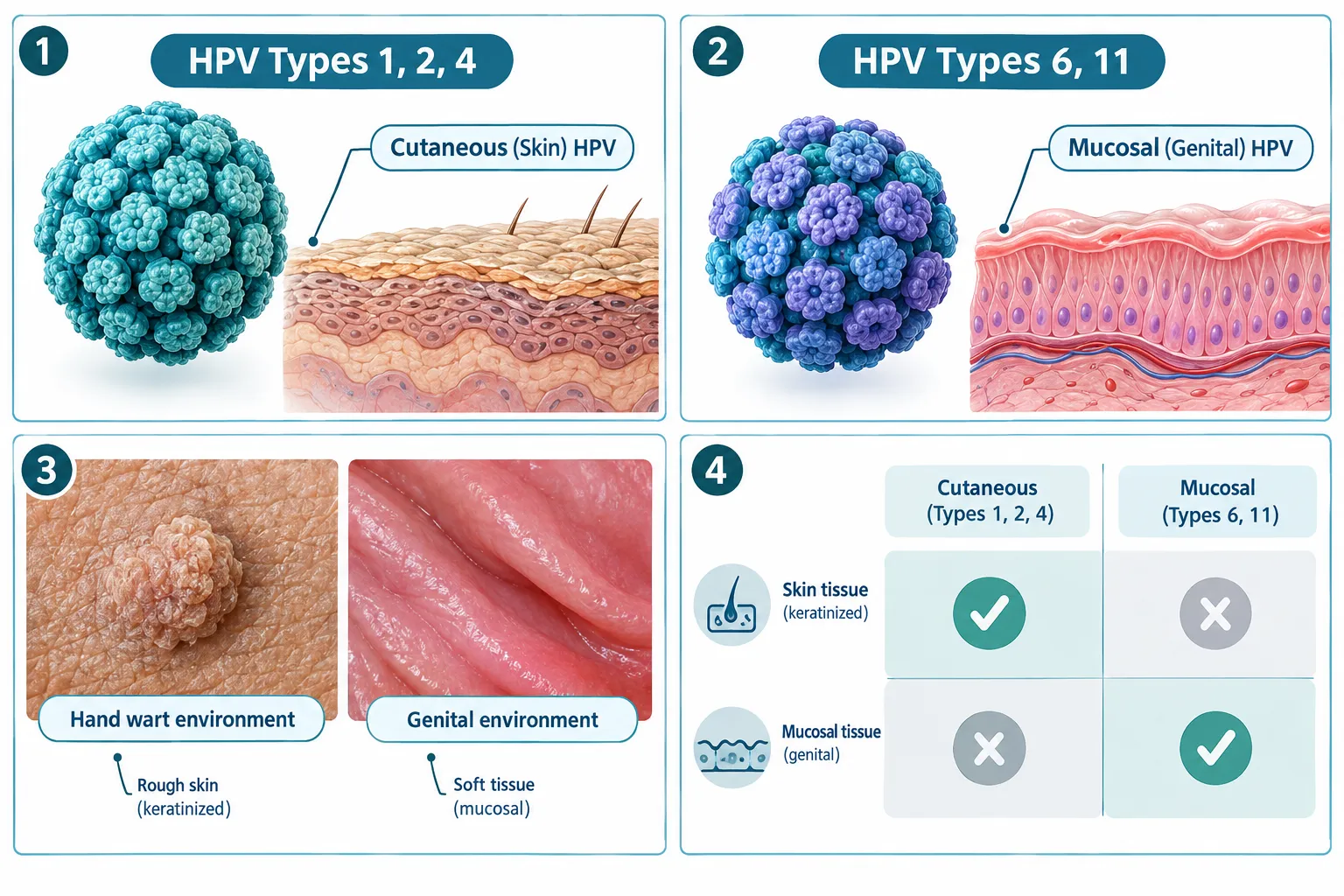
HPV is not a single virus, it is a family of more than 200 related genotypes. Each type has a preference for a specific kind of tissue. This is called tissue tropism, and it is the core reason why the question of whether warts on hands can be transferred to the genital area has a reassuring answer for most people.
Common hand warts, the rough, raised bumps that often appear on fingers or the backs of hands, are typically caused by HPV types 1, 2, and 4. These are classified as cutaneous HPV types. They are adapted to the thick, dry, keratinized skin that covers most of the body’s outer surface.
Genital warts, by contrast, are caused almost exclusively by HPV types 6 and 11. These are mucosal HPV types. They thrive in the warm, moist, thin-walled tissue of the genital and anal region. The cellular environment is fundamentally different from the skin on your hands.
Cutaneous HPV types do not replicate efficiently in mucosal tissue. This is not a matter of hygiene or immune strength, it is a matter of biological compatibility. The virus needs specific receptors and cellular conditions that are simply not present in the same way at genital sites.
You can read more about what genital warts are, what they look like, and what to do if you are trying to distinguish between the two.
Can Warts on Hands Be Transferred to Genital Area, What the Evidence Actually Shows
The biological argument above is well-established, but it is worth being precise about what “extremely low risk” means in practice.
Hand-to-genital contact does occur, and in theory, if someone has an active cutaneous wart and touches their own or a partner’s genital area, some viral particles could be deposited. The question is whether those particles can cause infection. Current clinical evidence suggests they generally cannot, at least not in the form of genital warts caused by HPV 6 or 11.
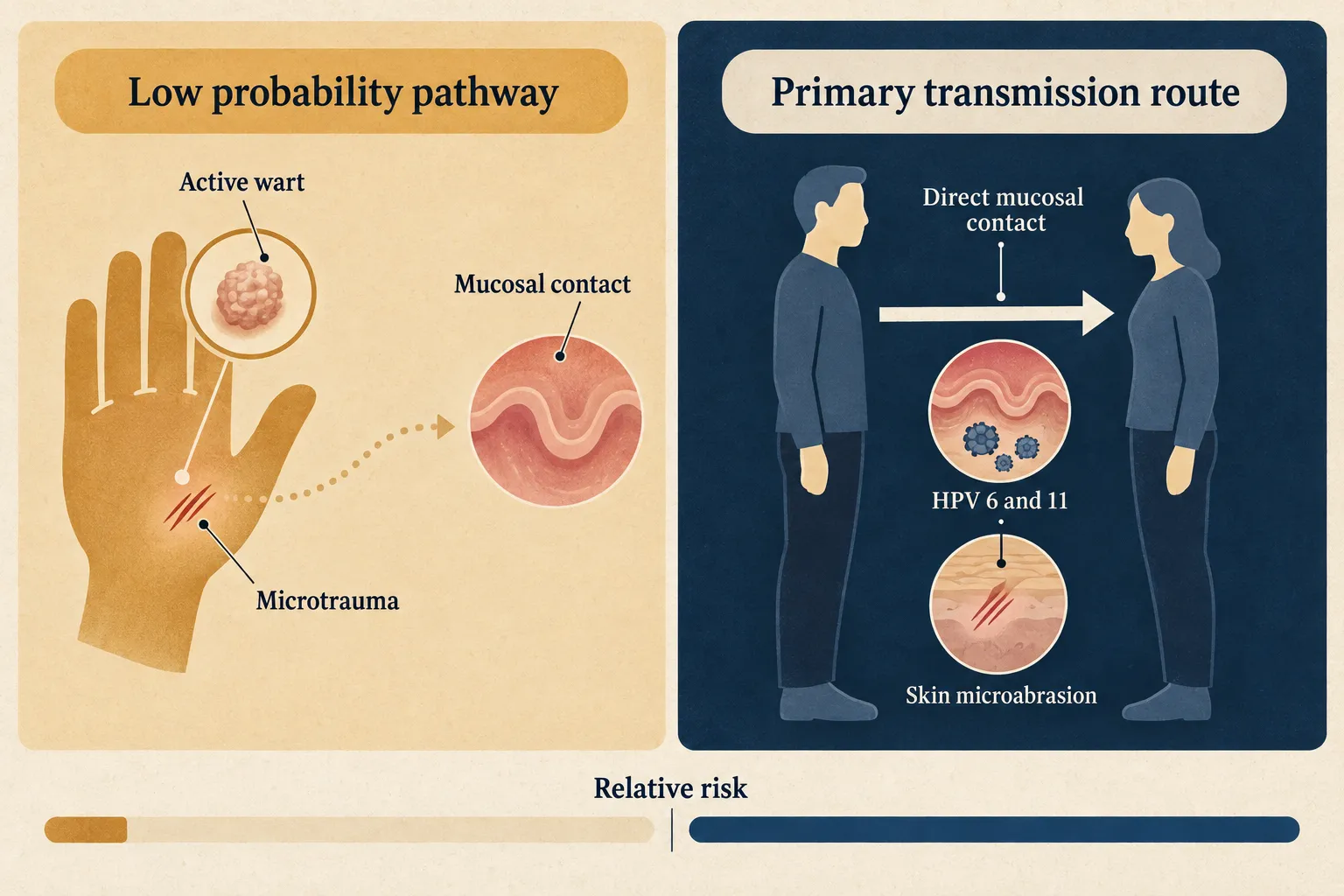
What is more plausible, though still uncommon, is a different scenario: if someone carries a genital HPV type on their hands (picked up through prior sexual contact), they could theoretically transfer that to a partner’s genitals through manual contact. This is a hand-to-genital transfer of a genital HPV strain, not a transfer of a cutaneous wart virus. That distinction matters.
The primary transmission route for genital warts remains direct genital-to-genital or skin-to-genital sexual contact. Microtrauma, tiny breaks in the skin or mucosa, facilitates entry of the virus. This is why condoms reduce but do not eliminate transmission risk: they do not cover all potentially infected skin.
For a fuller picture of how genital warts spread, the page on whether genital warts are contagious covers the transmission routes in detail.
Who Is at Higher Risk for HPV Transmission Through Skin Contact?
While the overall risk of hand-wart-to-genital transfer is low for most people, a few groups face elevated risk from HPV transmission in general:
- Immunocompromised individuals, people living with HIV, organ transplant recipients on immunosuppressive therapy, or anyone with a significantly weakened immune system are less able to clear HPV infections and more susceptible to unusual transmission patterns.
- People with active skin breaks or microtrauma, any disruption to the skin barrier, whether from eczema, cuts, or abrasion, increases the theoretical window for viral entry.
- Unvaccinated adults, HPV vaccination protects against types 6 and 11 (genital warts) as well as high-risk types 16 and 18. Unvaccinated people have no immune head start against these strains.
- People with multiple concurrent sexual partners, higher exposure frequency increases overall HPV acquisition risk, regardless of transmission route.
Are All Warts the Same? Understanding Cutaneous vs. Genital HPV
A common source of confusion is the assumption that a wart is a wart, that the virus causing a bump on your finger is the same one that could cause a genital infection. It is not.
The question of whether all warts are caused by HPV is worth exploring separately, but the short version is: yes, all warts are HPV-related, but the HPV type determines where the wart can grow and how it behaves.
Common warts (verruca vulgaris), plantar warts, and flat warts are all cutaneous. Genital warts (condylomata acuminata) are mucosal. They look different, feel different, and respond differently to treatment. A clinician examining a wart can usually identify the type by location and appearance alone, though a biopsy can confirm it if needed.
This is also why treating a hand wart does not reduce your risk of genital warts, and vice versa. They are separate infections caused by separate virus types.
What to Do If You Have Hand Warts and Are Concerned
Having a hand wart does not require you to change your sexual behavior out of fear of transmitting genital warts. The biology does not support that concern in any meaningful way.
That said, a few practical points are worth keeping in mind:
- Avoid picking or scratching hand warts, which can spread the cutaneous HPV to other skin sites on your own body (autoinoculation to other skin areas is possible, though this stays within the cutaneous zone).
- If you notice any new growths in the genital area, have them evaluated by a clinician, do not assume they came from a hand wart. Genital warts have their own transmission story, and whether genital warts are an STD is addressed directly in that linked guide.
- If you are unsure whether a growth is a wart or something else, a dermatologist or sexual health clinician can confirm it quickly.
Treatment options for hand warts range from over-the-counter salicylic acid preparations to cryotherapy in a clinical setting. For genital warts specifically, topical prescription medications for genital warts work differently and require a separate clinical approach.
Can Genital Warts Go Away Without Treatment?
This question comes up often alongside concerns about transmission. Genital warts caused by HPV 6 and 11 can resolve on their own in some cases, the immune system clears the active infection over time. However, the timeline varies considerably from person to person, and visible warts are more contagious during active outbreaks.
The page on whether genital warts can go away on their own covers what to expect if you decide to monitor rather than treat immediately, and what signs suggest you should seek treatment sooner.
Frequently Asked Questions
Can I give my partner genital warts by touching them with a hand that has a wart?
The risk is extremely low. Common hand warts are caused by cutaneous HPV types, primarily HPV 1, 2, and 4, which are not adapted to genital mucosal tissue. They are not the same strains that cause genital warts (HPV 6 and 11). Routine hand contact, including during sex, is not considered a meaningful transmission route for genital warts.
What if I touched a genital wart and then touched my own genitals?
This is a slightly different question. If you have had direct contact with an active genital wart (your own or a partner’s) and then touch your own genital area, there is a theoretical risk of transferring the mucosal HPV strain, not the cutaneous one. This is a less common route than direct sexual contact, but it is the scenario where hand-to-genital HPV transfer is considered more plausible.
Do hand warts need to be treated to protect a sexual partner?
Treating hand warts is reasonable for your own comfort and to prevent spreading the cutaneous HPV to other skin areas on your body. It is not specifically required to protect a sexual partner from genital warts, since the virus types involved are different. If you have concerns about a specific growth, a clinician can confirm what type of HPV is involved.
Can the HPV vaccine prevent both hand warts and genital warts?
The current HPV vaccines protect against genital HPV types, including HPV 6 and 11 (which cause genital warts) and high-risk types 16 and 18. They do not target the cutaneous types that cause common hand warts. So vaccination reduces your risk of genital warts significantly but does not affect hand wart susceptibility.
Is it possible to have both hand warts and genital warts at the same time?
Yes, and it is not unusual. But they would be caused by different HPV types acquired through different routes, not one infecting the other. A hand wart does not become a genital wart. Each infection is independent and would be evaluated and treated separately.
The Practical Answer
The concern that warts on hands can be transferred to the genital area is understandable, it is a logical question if you know that HPV causes both. But the biology works against that transfer. Cutaneous HPV types are not genital HPV types, and the tissue environments are different enough that cross-site infection is considered extremely unlikely by current clinical evidence.
If you have visible genital warts or are unsure about a growth in that area, that warrants a clinical evaluation regardless of whether you have hand warts. Genital warts are treatable, common, and manageable, and a clinician can confirm what you are dealing with and outline your options from there.