There is no approved drug that clears an HPV infection from your body. That is the honest answer, and it is also not the whole story, because the virus clears on its own in most cases, and the disease it can cause is both preventable and treatable when caught early.
Understanding what “cure for HPV in women: what actually works” really means requires separating two things: clearing the virus versus treating what the virus can cause. Medicine is very good at the second one, and actively working on the first.
Key Takeaways
- No antiviral drug currently approved to eliminate HPV infection exists, but most infections resolve without treatment within one to two years.
- The HPV vaccine, especially when given before first exposure, prevents up to 90% of HPV-related cancers and remains the most effective intervention available.
- Treatments for HPV-related cell changes (dysplasia) and genital warts are well-established and highly effective.
- Therapeutic vaccines targeting HPV’s E6 and E7 oncoproteins are in clinical trials in 2026 and show early promise for persistent infections.
- AHCC, a mushroom extract supplement, has been studied for its effect on HPV clearance, though evidence remains preliminary.
Does HPV Actually Go Away on Its Own?
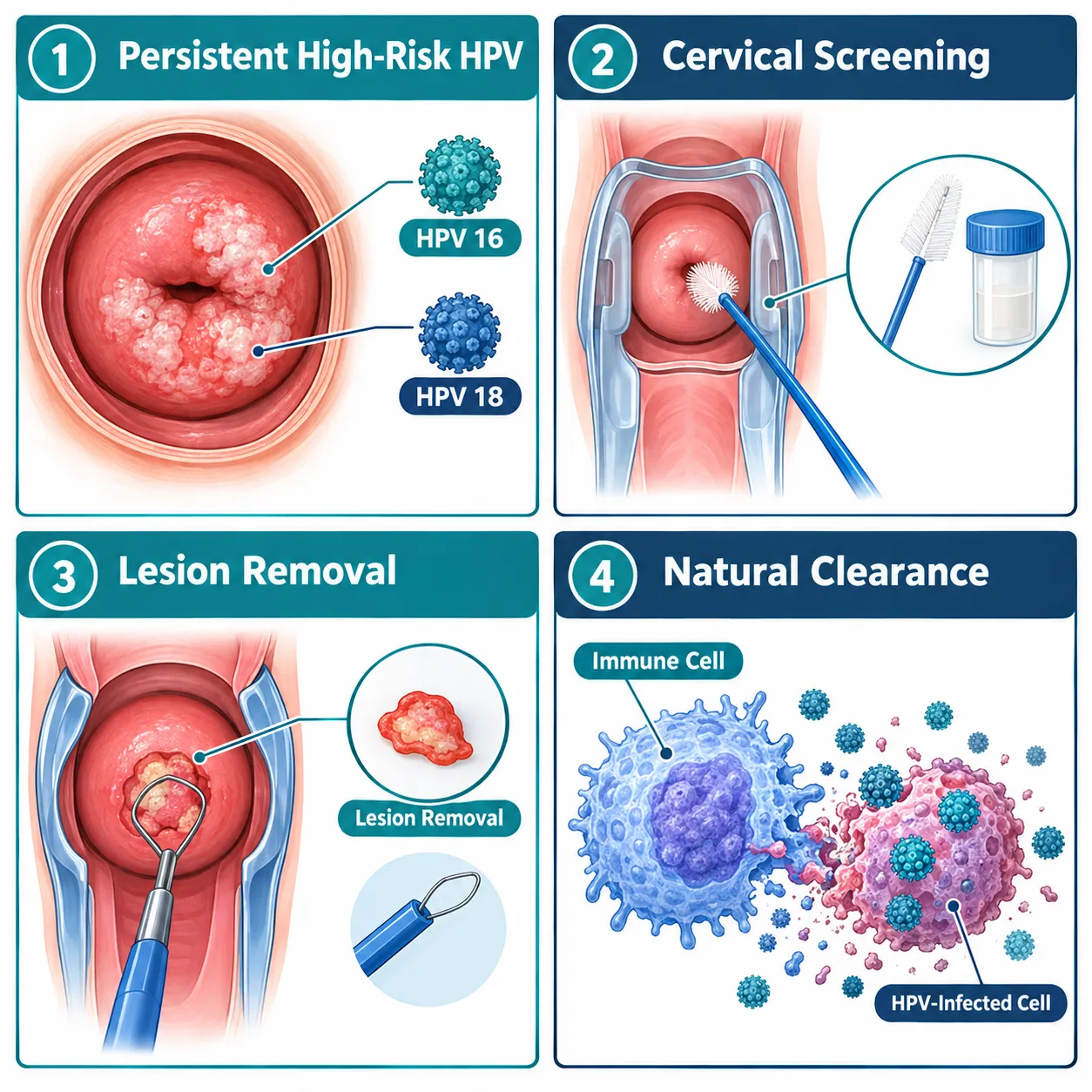
Most of the time, yes. The immune system clears roughly 90% of HPV infections within two years, including many high-risk types like HPV 16 and 18. Clearance does not mean immunity, you can be reinfected, but it does mean the virus is no longer detectable and is not actively causing cell changes.
Persistent infection is the concern. When high-risk HPV stays present over years, it can drive cervical cell changes from mild dysplasia (LSIL) through to high-grade changes (HSIL) and eventually cervical cancer. This progression is slow, typically taking 10 to 15 years, which is exactly why screening exists.
For low-risk types like HPV 6 and 11, the virus can cause genital warts, which are treatable and not linked to cancer. The warts themselves can be removed; the underlying infection may still resolve on its own.
The key point: the absence of a cure for the virus itself does not mean you are without options. It means the focus shifts to monitoring, prevention, and treating any cell changes before they progress.
Who Is at Higher Risk for Persistent HPV Infection?
Some people are more likely to have an infection that does not clear:
- People with HIV or other immunosuppressive conditions, including organ transplant recipients on immunosuppressant medications, have significantly higher rates of persistent high-risk HPV and faster progression to dysplasia.
- Smokers, smoking impairs local cervical immunity and is independently associated with higher rates of persistent infection and cervical cancer.
- People with a history of abnormal Pap results, prior LSIL or HSIL findings indicate the immune system has already had difficulty clearing the virus.
- Unvaccinated individuals, those who have not received the HPV vaccine lack protection against the highest-risk genotypes (16, 18, 31, 33, 45, and others covered by Gardasil 9).
What Treatments Actually Exist for HPV-Related Disease in Women
This is where the evidence is strong. Official guidance from the CDC, WHO, and ACOG is consistent: treat the disease manifestations, not the virus itself. That approach works.
For cervical dysplasia (abnormal cell changes):
- LEEP (loop electrosurgical excision procedure) removes the transformation zone of the cervix where abnormal cells develop. It is highly effective for HSIL.
- Cryotherapy and laser ablation are used for lower-grade changes in appropriate cases.
- Cone biopsy (conization) is used when LEEP is insufficient or when cancer needs to be ruled out.
These procedures do not cure the HPV infection, but they remove the cells that could progress to cancer. Regular follow-up with co-testing (Pap smear plus HPV test) after treatment is standard, because the virus can persist and cause new cell changes.
If your Pap result came back abnormal and you are trying to understand what happens next, the abnormal Pap smear guide covers the follow-up steps in detail, including when colposcopy is recommended.
For genital warts: Topical prescription treatments, imiquimod, podofilox, sinecatechins, work by triggering an immune response at the wart site or directly destroying wart tissue. Topical medications for genital warts explains how each class works and what to expect during treatment. Warts can recur even after successful treatment because the virus may still be present.
The HPV Vaccine: The Closest Thing to a Cure for HPV in Women
Vaccination does not treat an existing infection. But it prevents the high-risk infections that cause the most harm, and that distinction matters enormously at a population level.
Gardasil 9 protects against nine HPV genotypes, including types 16 and 18 (responsible for approximately 70% of cervical cancers) and types 6 and 11 (responsible for most genital warts). Adolescent vaccination can prevent up to 90% of HPV-related cancers. That is not a projection, countries with high adolescent vaccination rates are already seeing dramatic reductions in cervical cancer diagnoses.
Vaccination also benefits adults. Studies show it reduces oral HPV infections and provides partial protection even in adults who have already been exposed to some HPV types, because they are unlikely to have been exposed to all nine covered strains. The HPV vaccine guide covers the current recommended schedule, age limits, and what the safety data shows.
The vaccine is not recommended during pregnancy. If you are pregnant and unvaccinated, vaccination should wait until after delivery.
What About AHCC and Other Supplements?
AHCC, a standardized extract from shiitake mushroom mycelia, has attracted research attention specifically for its potential to support HPV clearance. A small Phase II clinical trial published in 2014 found that oral AHCC supplementation was associated with clearance of persistent high-risk HPV infections in some participants. Larger confirmatory trials have followed.
The evidence is preliminary, not conclusive. AHCC is not an approved treatment and is not part of standard clinical guidelines for HPV. What the research does suggest is a possible immune-modulating effect that may support the body’s own clearance process, not a direct antiviral action. AHCC and HPV: does it actually work covers the trial data in detail, including what the study limitations mean for interpreting the results.
If you are considering AHCC, discuss it with your doctor before starting. It is generally well-tolerated, but it is not a substitute for screening or treatment of existing dysplasia.
What Research Is Underway for a True Cure
This is where things are genuinely moving in 2026.
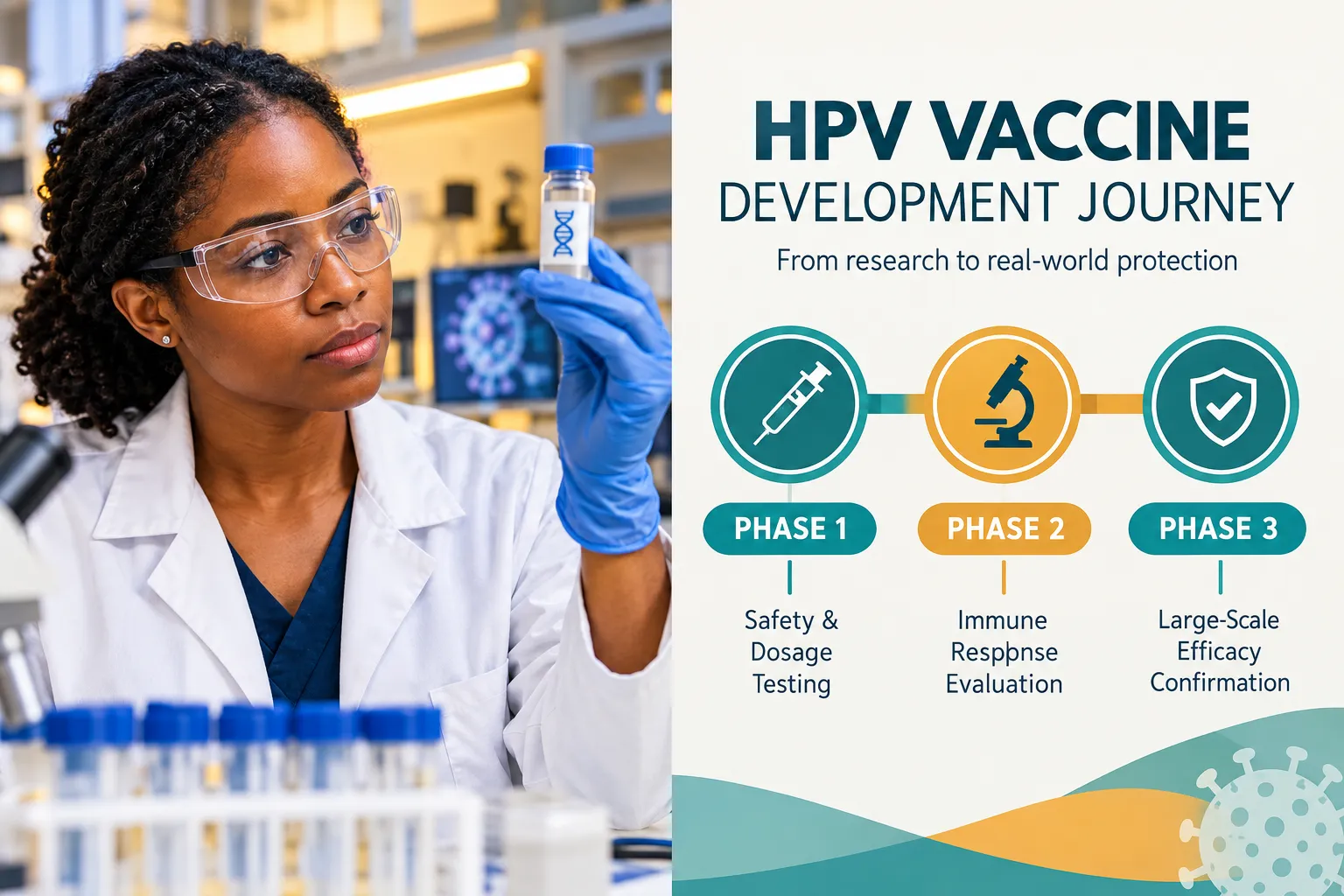
Therapeutic HPV vaccines are the most promising avenue. Unlike preventive vaccines, therapeutic vaccines are designed to treat existing infection by targeting the E6 and E7 oncoproteins, the proteins HPV uses to drive abnormal cell growth. Early-phase trials have shown lesion regression in some participants with HSIL. These are not yet approved treatments, but the mechanism is sound and multiple candidates are in Phase 1 and Phase 2 trials.
DARE-HPV is a vaginal insert formulation in Phase 2 trials, designed to clear persistent high-risk HPV directly at the cervical transformation zone. It represents a different approach from systemic vaccines, local delivery targeting the site of infection.
The AdenoVerse platform has received FDA recognition for its work on HPV-associated cancers, signaling regulatory acknowledgment of the therapeutic vaccine pathway.
None of these are available outside clinical trials. But the direction of research is clear: a targeted treatment for persistent high-risk HPV infection is a realistic near-term goal, not a distant possibility.
What This Means for You Practically in 2026
The honest picture: no pill clears HPV today. What exists is a highly effective prevention system (vaccination), a reliable early-warning system (Pap and HPV co-testing, including the Aptima HPV test), and well-established treatments for every stage of HPV-related disease before it becomes cancer.
Cell changes are easiest to treat before they progress, that is what screening is for. Staying current with cervical screening is the single most actionable step for any woman with a high-risk HPV result.
If you have questions about how HPV affects fertility, the HPV and infertility guide addresses what the evidence actually shows about that concern.
Frequently Asked Questions
Can HPV be permanently cured?
Not with any currently approved drug. Most infections resolve on their own through immune clearance, which functions like a cure in practical terms. Treatments exist for every disease manifestation HPV causes, dysplasia, warts, and cancer, but none of these eliminate the virus itself. Therapeutic vaccines in trials may change this in coming years.
If my HPV cleared, can it come back?
Clearance means the virus is no longer detectable, but it does not guarantee permanent immunity. Reinfection with the same or a different HPV type is possible. Some researchers believe low-level latent virus can reactivate during periods of immune suppression, though this is less common than new exposure.
Does having HPV mean I will develop cervical cancer?
No. The vast majority of HPV infections, including high-risk types, resolve without causing cancer. Cervical cancer requires persistent infection with a high-risk type over many years, plus other co-factors. Regular screening catches cell changes at a stage when treatment is straightforward and effective.
Is there anything I can do to help my body clear HPV faster?
No supplement or lifestyle change has been proven to reliably accelerate clearance. Stopping smoking is the most evidence-supported modifiable factor, smoking is independently associated with persistent infection and higher cancer risk. General immune health (sleep, nutrition, managing chronic illness) supports immune function broadly, though no specific regimen has been shown to clear HPV on a defined timeline.
What does an ASCUS result with HPV mean?
ASCUS (atypical squamous cells of undetermined significance) is a mildly abnormal Pap finding. When it comes back with a positive high-risk HPV result, it typically triggers colposcopy to look more closely at the cervix. The ASCUS HPV guide explains what the different follow-up pathways look like and when watchful waiting is appropriate versus immediate colposcopy.