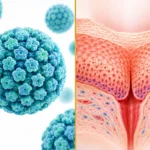
Yes, HPV vaccination does prevent genital warts, and it does so reliably when given before exposure to the virus types that cause them. The vaccines covering HPV types 6 and 11, which are responsible for roughly 90% of all genital wart cases, have shown high efficacy in clinical trials and have driven measurable drops in wart diagnoses across national vaccination programs worldwide.
That said, the answer has limits worth understanding. The vaccine prevents new infections, it does not clear warts you already have, and it does not cover every HPV type that can cause warts on other parts of the body. Knowing exactly what the vaccine does and does not do helps you make sense of your own situation.
Key Takeaways
- The quadrivalent (Gardasil 4) and 9-valent (Gardasil 9) vaccines both target HPV types 6 and 11, the strains behind most genital warts.
- Vaccination before first exposure offers the strongest protection, efficacy against wart-related lesions in clinical trials exceeded 95% in HPV-naive individuals.
- Population-level data from multiple countries show significant declines in genital wart diagnoses following national vaccination programs.
- The vaccine does not treat existing warts, if you already have them, treatment is a separate step.
- Getting vaccinated after a genital warts diagnosis still provides partial protection against HPV types not yet acquired.
How HPV Types 6 and 11 Cause Genital Warts
Not all HPV types behave the same way. The more than 200 known HPV genotypes split broadly into high-risk types, those linked to cervical and other cancers, and low-risk types, which cause warts but rarely lead to cancer. Types 6 and 11 are the primary low-risk strains responsible for genital warts, also called condylomata acuminata.
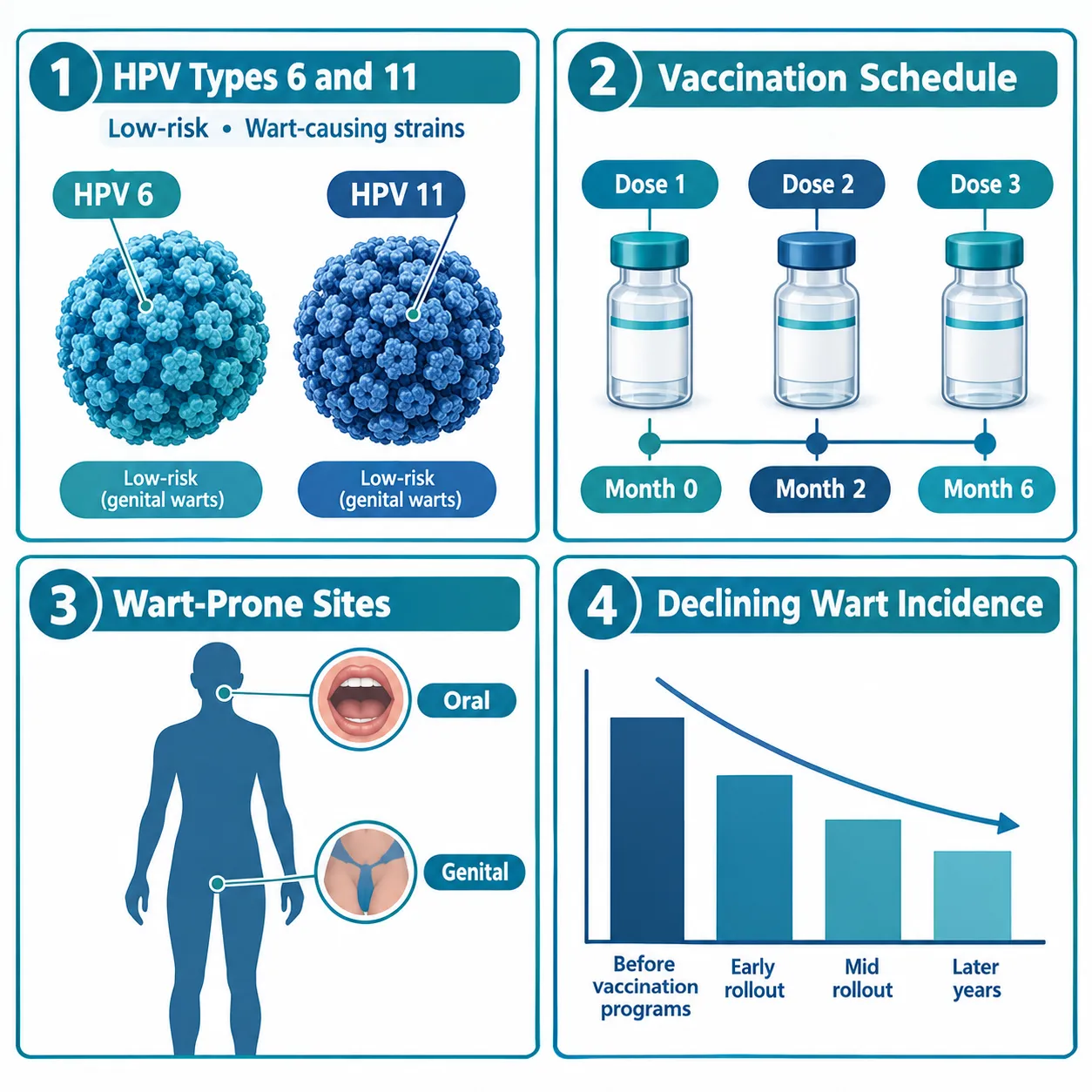
When either type establishes an infection in genital or anal skin, it triggers abnormal cell growth that produces the soft, flesh-colored growths most people recognize as genital warts. The incubation period between infection and visible warts can range from a few weeks to several months, which is part of why timing an infection to a specific exposure is often impossible. The HPV treatment overview covers the full range of options once warts appear, but prevention through vaccination is the only tool that stops the infection from taking hold in the first place.
HPV types 6 and 11 can also cause a rarer condition called recurrent respiratory papillomatosis, where wart-like growths develop in the throat. Vaccination against these types reduces that risk as well.
Does HPV Vaccination Prevent Warts, and How Well?
The evidence here is straightforward. Both the quadrivalent vaccine (4vHPV, Gardasil) and the 9-valent vaccine (9vHPV, Gardasil 9) include HPV types 6 and 11. In clinical trials involving HPV-naive participants, people with no prior exposure to those types, vaccine efficacy against genital wart-related lesions exceeded 95%.
Real-world data reinforce this. Countries that introduced national HPV vaccination programs for adolescents have reported substantial drops in genital wart diagnoses, sometimes within just a few years of program launch. Australia, which began a school-based program in 2007, saw genital wart diagnoses in young heterosexual women fall by over 90% within a decade. Similar declines have been documented in Sweden, Canada, the United Kingdom, and more recently in Israel, where updated national data confirm wart incidence drops among vaccinated adolescents. A 2025-2026 global review confirmed herd protection effects, meaning even some unvaccinated people in high-coverage communities benefit from reduced circulation of the virus.
For males specifically, a large-scale analysis tracking quadrivalent vaccine recipients over 10 years found sustained high efficacy against wart-related lesions, reinforcing that the benefit is not short-lived.
The answer to “does HPV vaccination prevent warts?” is yes, with a precision that population data consistently backs up.
What the Vaccine Does Not Do
The vaccine is not a treatment. If you already have genital warts, vaccination will not make them go away. Existing warts need to be managed through clinical options like cryotherapy, the cryotherapy for genital warts guide explains how that process works and what to expect, or other approaches covered in condyloma genital warts treatment options.
The vaccine also does not cover all HPV types that can produce warts elsewhere on the body. Common hand warts, for example, are typically caused by HPV types 1, 2, and 4, none of which are in any current vaccine. If you are wondering whether warts on your hands could spread to the genital area, the answer involves a different set of HPV types, covered in detail in the guide on hand warts and genital transfer.
One more nuance: the vaccine does not prevent recurrence of warts caused by an HPV type you already carry. Canadian technical summaries on vaccine efficacy note uncertainty specifically around recurrence in people with pre-existing infections. Vaccination after a genital warts diagnosis can still protect against HPV types not yet acquired, which is why getting the HPV vaccine after a genital warts diagnosis is still worth discussing with a clinician.
Who’s at Higher Risk for Genital Warts?
Some groups face a meaningfully higher chance of developing genital warts, and vaccination matters more, not less, for them:
- Unvaccinated adults, regardless of age, who have not yet been exposed to HPV types 6 or 11 retain the most to gain from vaccination.
- Immunocompromised individuals, including people living with HIV and organ transplant recipients on immunosuppressive therapy, are more likely to develop persistent warts and less likely to clear the underlying infection without intervention.
- People with multiple sexual partners or early sexual debut have higher cumulative exposure to HPV, increasing the probability of encountering types 6 and 11 before vaccination.
- Pregnant people face a specific concern: active genital warts during pregnancy can, in rare cases, be transmitted to a newborn, causing laryngeal papillomatosis in the infant.
When Does Vaccination Work Best?
Timing matters significantly. The vaccine produces the strongest protection when given before any exposure to the HPV types it covers. Current guidelines in most countries recommend routine vaccination starting at age 9-12, with catch-up vaccination available through age 26 for most people and through age 45 for some, based on a shared clinical decision.
The standard schedule for adolescents under 15 is two doses given 6 to 12 months apart. For those starting at 15 or older, or for immunocompromised individuals, three doses are given at months 0, 2, and 6. Both schedules produce strong antibody responses, though seroconversion rates are highest in younger adolescents.
Vaccination after age 26 does not guarantee the same level of benefit, because the likelihood of prior exposure to one or more vaccine-covered HPV types increases with age and sexual history. That does not make it useless, partial protection is still protection, but the conversation with a clinician becomes more individualized. Condoms also reduce transmission risk, though they do not eliminate it, as the guide on whether condoms prevent HPV explains.

Are Genital Warts Curable Without the Vaccine?
Genital warts are treatable, and many cases resolve with or without intervention. The underlying HPV infection often clears on its own within one to two years as the immune system suppresses it. Warts themselves can be removed through cryotherapy, topical treatments, or other procedures, though recurrence is possible because the virus may persist in surrounding tissue even after visible warts are gone.
The full breakdown of whether genital warts are curable covers what “curable” actually means in this context, it is a more nuanced answer than a simple yes or no. Vaccination prevents the infection from establishing in the first place, which is a different and more complete outcome than treating warts after they appear.
Frequently Asked Questions
Does the HPV vaccine protect against all types of warts?
No. Current vaccines target HPV types 6 and 11 (responsible for genital warts) along with high-risk types linked to cancer. Common skin warts on the hands or feet are caused by different HPV genotypes, types 1, 2, and 4, which are not included in any approved vaccine.
Can you still get genital warts after being vaccinated?
It is possible but uncommon. The vaccine does not cover every HPV type that can occasionally produce genital warts, and it offers no protection against types acquired before vaccination. In most vaccinated people with no prior exposure to types 6 and 11, the protection is strong and durable.
Does the HPV vaccine help if you already have genital warts?
Not for the warts you currently have. Vaccination does not treat an active infection or existing lesions. It can, however, protect against HPV types you have not yet been exposed to, which is why clinicians often still recommend completing the vaccine series even after a diagnosis.
How long does wart protection from the vaccine last?
Long-term follow-up data, including a 10-year analysis of quadrivalent vaccine recipients, show sustained protection without evidence of significant waning. Booster doses are not currently recommended by major health authorities, though research continues.
Is the HPV vaccine safe for people who are immunocompromised?
Yes. The HPV vaccine is an inactivated (non-live) vaccine, meaning it contains no live virus and is safe for immunocompromised individuals. Immune response may be somewhat lower in this group, but vaccination is still recommended because the risk of persistent HPV infection and warts is higher.
Does oral sex exposure to HPV cause the same type of warts?
HPV types 6 and 11 can infect oral and throat tissue as well as genital skin. The guide on genital warts and oral sex transmission covers how this works and what the vaccine’s role is in that context.
Conclusion
The evidence is consistent and strong: HPV vaccination prevents genital warts when it covers types 6 and 11, and it does so at a population level that is now visible in national health data from multiple countries. The protection is highest when vaccination happens before exposure, which is why routine adolescent vaccination remains the standard recommendation in 2026.
If you have not been vaccinated yet, the practical next step is a conversation with a clinician about whether you are still within the age range for routine coverage or whether catch-up vaccination makes sense for your situation. If you already have genital warts, treatment is the immediate priority, vaccination can still be part of your plan, but it will not resolve existing lesions. Cell changes and infections are easiest to manage early, and knowing where you stand starts with asking the right questions at your next appointment.