Yes, oral sex can transmit the HPV types that cause genital warts, though this route is less common than vaginal or anal intercourse. The same virus responsible for warts on the genitals, HPV-6 and HPV-11, can infect the mouth, throat, or lips, and it can travel in the other direction too, seeding a genital infection from an oral one.
That answer tends to raise more questions than it settles. How likely is it, exactly? What does it look like if it happens? And what actually reduces the risk? Those are the questions this page addresses.
Key Takeaways
- HPV-6 and HPV-11, the strains behind nearly all genital warts, can be passed through oral sex in both directions, mouth to genitals and genitals to mouth.
- Oral transmission is a real but less frequent route compared to vaginal or anal sex.
- Warts in the mouth or throat are uncommon; most oral HPV infections cause no visible symptoms at all.
- Condoms and dental dams lower transmission risk but cannot eliminate it entirely, because HPV spreads through skin-to-skin contact in areas a barrier does not cover.
- The HPV vaccine protects against both HPV-6 and HPV-11, making it the most effective single step for prevention.
How Does HPV Spread Through Oral Sex?
HPV spreads through direct contact with infected skin or mucous membranes, not through blood or bodily fluids in the way HIV does. During oral sex, the mouth and throat come into contact with genital or anal tissue, which means the virus has a direct path between the two sites.
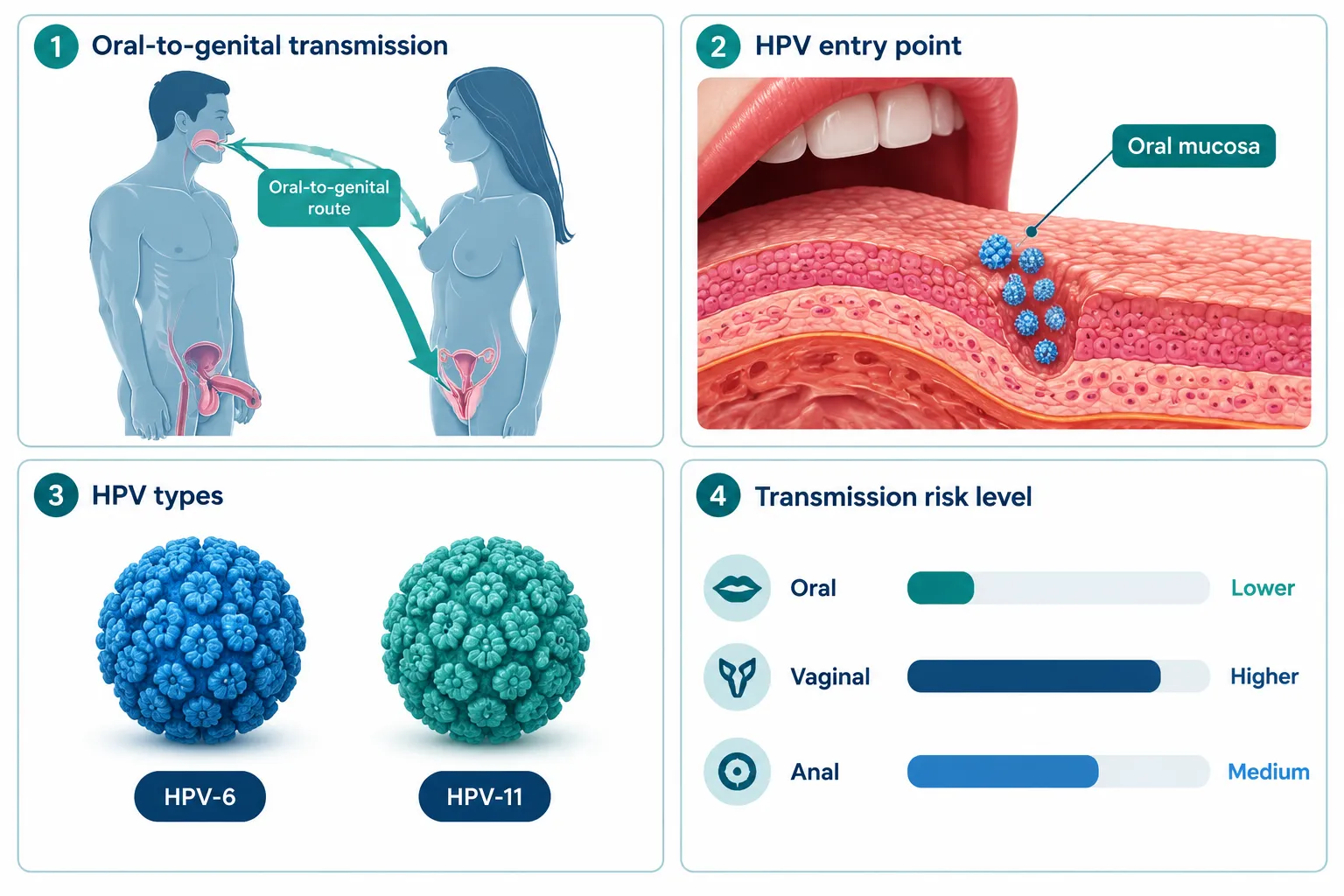
Giving oral sex to a partner who has genital HPV can expose the mouth and throat to the virus. Receiving oral sex from a partner who carries HPV in the mouth or on the lips can expose the genitals. Both directions are possible.
A few factors raise the likelihood of transmission during oral sex specifically:
- Cuts, abrasions, or sores in the mouth or on the lips
- Active visible warts on the genitals or around the anus
- Prolonged or vigorous contact that creates small tissue disruptions
- Retaining semen or vaginal fluid in the mouth for an extended time
None of these are required for transmission to happen, they simply shift the probability. HPV can pass between intact mucous membranes too.
One important detail: roughly 15% of oral HPV infections are linked to oral-genital exposure. That figure puts oral sex in perspective, it is a meaningful route, not a negligible one, but it is not the dominant pathway for genital wart transmission overall. The genital warts overview at HPVGuide.org covers the full picture of how these warts develop and what they look like.
What Happens If You Get Genital Warts from Oral Sex?
If HPV-6 or HPV-11 establishes an infection in the oral cavity, warts can appear on the lips, tongue, soft palate, or throat. These are the same low-risk HPV types that cause warts on the genitals, they are not the high-risk types linked to cancer. The distinction between low-risk and high-risk HPV types matters here; for more on that, the page on whether HPV can cause both genital warts and cervical cancer explains the difference clearly.
Oral warts from HPV-6 and HPV-11 are uncommon. Most people who acquire oral HPV through sexual contact never develop visible warts, the immune system clears the infection without any symptoms appearing. When warts do appear in the mouth or throat, they typically look like small, soft, flesh-colored bumps, similar in texture to genital warts.
If HPV travels from a partner’s mouth to your genitals during oral sex, the result is the same type of genital wart infection that can occur through any other route. Warts may appear weeks to months after exposure, the incubation period for HPV-6 and HPV-11 is typically one to eight months, though it can be longer.
Visible warts are treatable. The genital warts treatment guide covers the full range of options, from topical prescription creams to in-office procedures, and what to expect from each.
Who Is at Higher Risk for Oral HPV Transmission?
Certain groups face a meaningfully higher chance of acquiring HPV through oral sex:
- Immunocompromised people, including those living with HIV or on immunosuppressive therapy after an organ transplant, are less able to clear HPV naturally, making both oral and genital infections more likely to persist.
- Unvaccinated adults, particularly those who did not receive the HPV vaccine before becoming sexually active, lack protection against HPV-6 and HPV-11 specifically.
- People with multiple sexual partners or a history of early sexual activity, cumulative exposure increases the statistical likelihood of encountering an HPV-positive partner.
- People with a current genital wart diagnosis or a partner with one, research shows that having a partner with active genital warts is a statistically significant risk factor for acquiring oral HPV through sexual contact.
Can You Get Genital Warts from Oral Sex Even with No Visible Warts?
This is one of the most common questions, and the answer is yes. HPV can be present on the skin and transmissible even when no warts are visible. This is called subclinical infection, and it is the norm rather than the exception. Most people with HPV have no symptoms and no visible warts at any point.
That means a partner does not need to have visible warts for transmission to occur during oral sex. It also means that knowing when or from whom you acquired HPV is often genuinely impossible, the virus can remain dormant for months or years before any sign appears, if one ever does.
This is not a reason for alarm. It is simply the biology of HPV, and it applies to all transmission routes, not just oral sex. If you have been diagnosed with genital warts and are wondering whether oral sex was involved, the honest answer is that the timing of HPV infection is usually not traceable. The page on whether genital warts are an STD addresses how transmission works in broader terms.
How to Reduce the Risk of Getting Genital Warts from Oral Sex
No single measure eliminates the risk entirely, but several steps reduce it substantially.
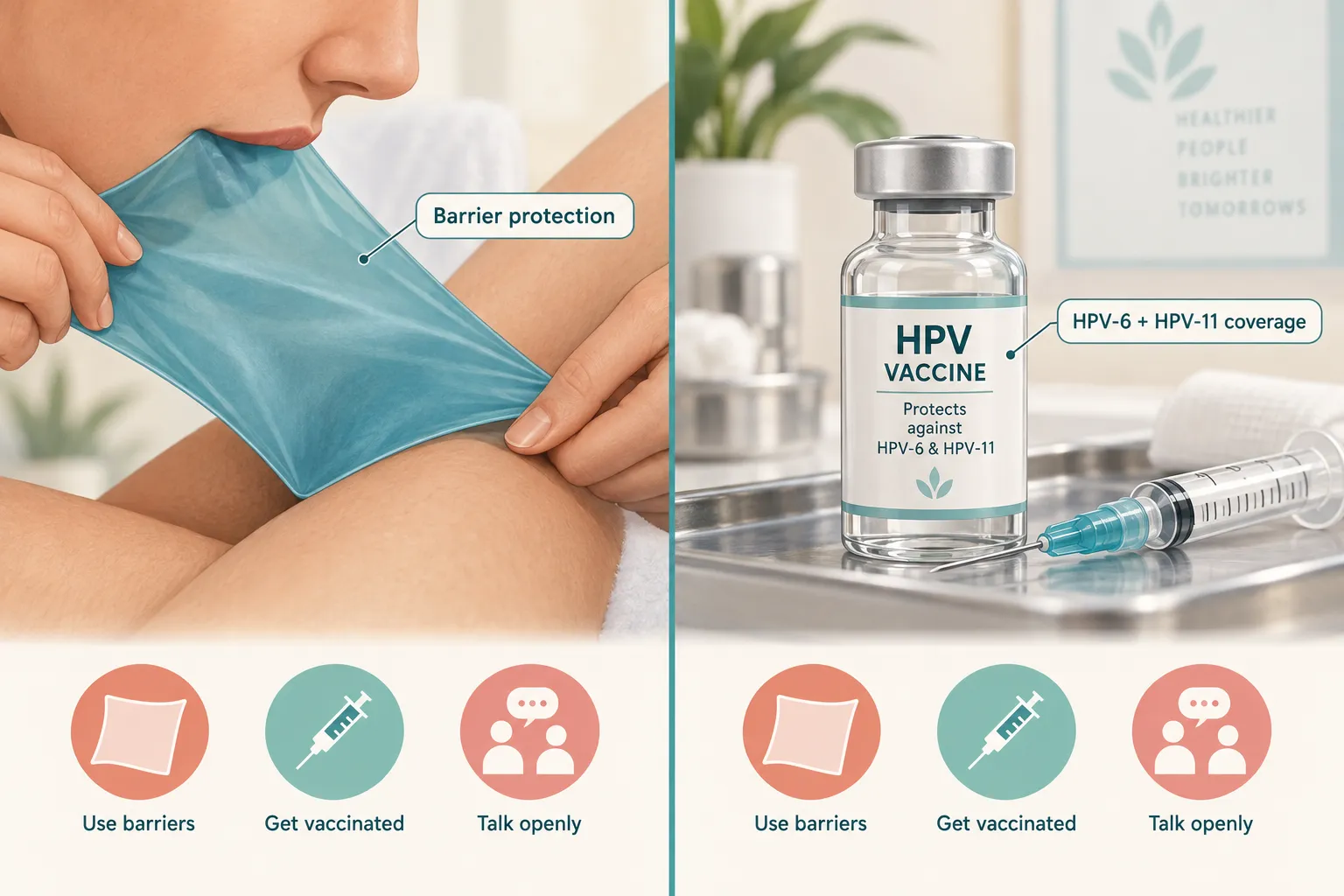
Barrier methods. Condoms used during oral sex on a penis lower the chance of HPV transmission. Dental dams, thin latex or polyurethane sheets, provide a barrier during oral sex on a vulva or anus. Neither covers all potentially infected skin, so they reduce rather than eliminate risk. For oral-anal contact specifically, the guide to anal genital warts explains why this area carries its own transmission considerations.
HPV vaccination. The HPV vaccine covers HPV-6 and HPV-11, the two types responsible for the vast majority of genital warts. It also covers the high-risk types HPV-16 and HPV-18. Vaccination before exposure to these types is the most effective prevention available, and in 2026, it remains recommended for people up to age 26, with shared clinical decision-making for ages 27 to 45.
Avoiding oral sex when visible warts or sores are present. Active warts represent the highest-shedding state. Pausing oral sex during a visible outbreak meaningfully lowers the chance of transmission.
Informing partners. Even after visible warts are treated or resolve, HPV often persists in the body and can still be transmitted. Topical treatments for genital warts can clear visible lesions, but they do not eradicate the virus from the body. Partners benefit from knowing this so they can make informed decisions about barrier use and vaccination.
Can Men Get Oral HPV from Women Through Oral Sex?
Yes. HPV does not discriminate by sex or anatomy. A person of any sex who performs oral sex on a vulva, vagina, or anus can acquire HPV from that contact. The page on whether men can get HPV from women covers this dynamic in more detail, including the specific risks and screening considerations for men.
Studies looking at people who engage in oral sex show substantially higher rates of oral HPV compared to those who do not, in some datasets, roughly 50% higher odds of acquiring oral HPV. Not all of those infections are the wart-causing types, but the pattern confirms that oral sex is a genuine transmission route regardless of the sex or gender of the people involved.
Frequently Asked Questions
Can you get warts in your throat from oral sex?
Yes, though it is uncommon. HPV-6 and HPV-11 can infect the throat and larynx, a condition called recurrent respiratory papillomatosis in its more persistent form. Most oral HPV infections do not produce visible warts and resolve on their own. Throat warts from HPV are treated differently from genital warts and typically require specialist care.
If my partner has genital warts, should I get tested for oral HPV?
There is no routine clinical test for oral HPV in the way there is for genital HPV. If you develop symptoms, unusual bumps on the tongue, lips, or throat, a doctor or dentist can examine them. Vaccination is a more actionable step than testing in this scenario, particularly if you have not already received the HPV vaccine.
Does treating genital warts prevent me from passing HPV to a partner during oral sex?
Treating visible warts removes the lesions but does not clear the virus from your body. HPV can still be present in surrounding skin and tissue after treatment, so transmission remains possible. Barrier methods and informing partners remain relevant even after successful treatment.
How long after oral sex would genital warts appear?
The incubation period for HPV-6 and HPV-11 is typically one to eight months, but it can extend beyond that. Some people carry the virus for years before any wart appears, or never develop a visible wart at all. There is no reliable way to pinpoint the exact exposure event from the timing of an outbreak.
Is oral HPV the same as the HPV that causes cervical cancer?
Not necessarily. Oral HPV can involve any HPV type, including both low-risk types like HPV-6 and HPV-11 and high-risk types like HPV-16. HPV-16 is the type most strongly associated with oropharyngeal cancer. Genital warts are caused by low-risk types and are not a sign of cancer risk, but a person can carry multiple HPV types simultaneously.