By the time most people reach their 50s, they have been exposed to HPV. Not some people, most people. The CDC estimates that roughly 85% of sexually active adults will acquire at least one HPV genotype during their lifetime, and some studies put that figure closer to 91%. So when you ask “does everyone have HPV?”, the honest answer is: not literally everyone, but the lifetime odds are high enough that exposure is the norm, not the exception.
That doesn’t mean you currently have an active infection. Most HPV infections clear on their own, often without any symptoms at all.
Key Takeaways
- Approximately 85-91% of sexually active adults will acquire HPV at some point in their lifetime.
- At any given moment, tens of millions of Americans carry an active HPV infection, but many more have already cleared one silently.
- Most HPV infections, including high-risk types like HPV 16 and 18, resolve without treatment within one to two years.
- Having HPV doesn’t mean you have cancer, or that you will develop it.
- Vaccination significantly reduces exposure to the most dangerous HPV genotypes, especially when given before first sexual contact.
What Does “Having HPV” Actually Mean?
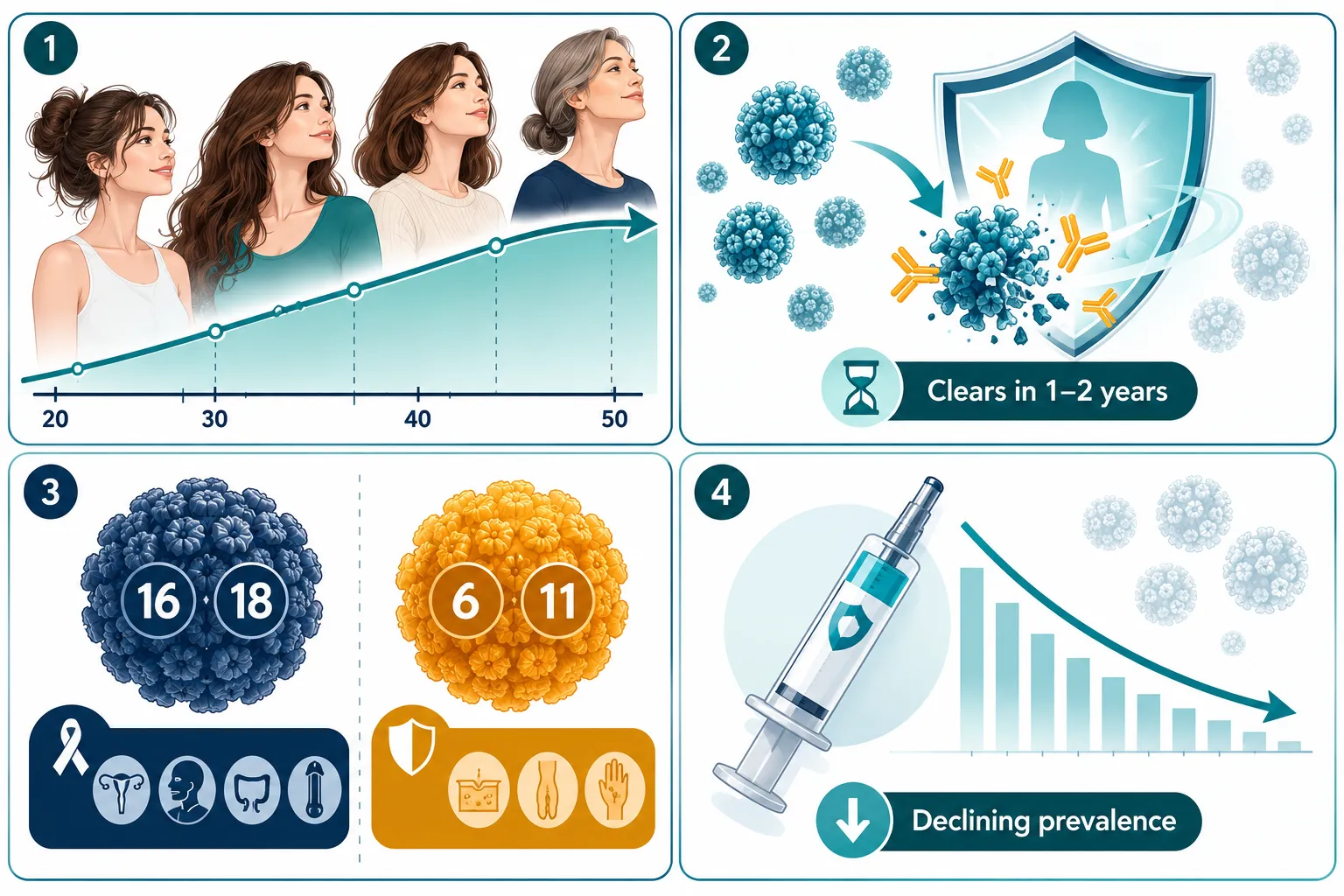
HPV, human papillomavirus, is not a single virus. It’s a family of more than 200 related genotypes, roughly 40 of which infect the genital tract. They split into two broad categories: low-risk types like HPV 6 and 11, which cause genital warts, and high-risk types like HPV 16 and 18, which are linked to cervical, oropharyngeal, anal, and other cancers.
“Having HPV” could mean any of these things at once: an active infection you’re currently carrying, a past infection your immune system already cleared, or a latent infection sitting below detectable levels. Standard HPV tests only detect active infections above a certain threshold, so a negative result doesn’t confirm you’ve never been exposed.
This distinction matters. When people ask “does everyone have HPV?”, they’re often conflating lifetime exposure with current infection. Those are two different things. Current prevalence in the U.S. sits at roughly 42 million active infections at any given time. Lifetime exposure is far higher.
How Common Is HPV, Really?
About 13 million Americans acquire a new HPV infection every year. Across a lifetime, the exposure rate among sexually active people approaches 85-91%. By age 50, having encountered HPV is statistically ordinary.
Here’s what that looks like across age groups:
| Age Group | Approximate HPV Prevalence (Active Infection) |
|---|---|
| 20-24 | Highest, peak acquisition period |
| 25-34 | Elevated, begins to decline |
| 35-44 | Moderate, secondary peak in some studies |
| 45-59 | Lower active prevalence; most cleared |
| 60+ | Lower still; lifetime exposure remains high |
The peak acquisition window is roughly ages 15-25, shortly after sexual activity begins. That’s not a moral statement, it’s immune biology. Younger immune systems haven’t encountered these genotypes before, so first exposures are more likely to establish infection.
Non-sexual transmission also exists, though it’s less common. HPV can pass through skin-to-skin contact in areas not covered by a condom, and in rare cases through shared surfaces or vertical transmission from parent to infant. This is why even people with very few sexual partners can acquire HPV.
Does Everyone Have HPV, or Just Most People?
Not literally everyone. Lifetime exposure is not guaranteed, and a small proportion of adults, particularly those who are vaccinated before first sexual contact, have had very limited sexual exposure, or have robust immune responses, may never acquire a detectable infection.
But “most sexually active people will acquire HPV” is the official public health framing in 2026, and the evidence supports it. The question isn’t really whether you’re unusual for having HPV. The more useful question is what type you have, whether it’s cleared, and what monitoring makes sense for you.
High-risk genotypes like HPV 16 and 18 together account for approximately 70% of cervical cancers and a large share of oropharyngeal cancers. But carrying HPV 16 or 18 doesn’t mean cancer is coming, it means those genotypes warrant monitoring. Cell changes are easiest to treat before they progress, and that’s exactly what cervical screening and understanding what an abnormal Pap smear result means are designed to catch.
Low-risk types like HPV 6 and 11 cause genital warts but are not linked to cancer. They’re common, they’re treatable, and carrying them says nothing about your character or your partner’s.
Who’s at Higher Risk for Persistent HPV Infection?
Most people clear HPV within one to two years. But some groups are more likely to develop a persistent infection, one that stays detectable and carries a higher risk of cell changes over time.
- Immunocompromised individuals, including people living with HIV, organ transplant recipients on immunosuppressive therapy, and those on long-term corticosteroids, clear HPV more slowly and are at significantly higher risk for dysplasia and cancer.
- Smokers, tobacco use is independently associated with persistent high-risk HPV infection and faster progression to cervical dysplasia.
- Unvaccinated people, those who haven’t received the HPV vaccine remain fully susceptible to the high-risk genotypes (16, 18, 31, 33, 45, 52, 58) covered by current vaccines.
- People with a history of abnormal Pap results, prior LSIL or HSIL findings indicate the immune system hasn’t cleared the infection and that monitoring needs to continue.
Does HPV Go Away on Its Own?
Yes, in most cases. Roughly 90% of HPV infections clear within two years without any treatment. The immune system identifies the infected cells and eliminates them, often without the person ever knowing they had an infection.
Clearance doesn’t always mean the virus is completely gone. Some research suggests HPV can persist at very low, undetectable levels even after a negative test, a concept sometimes called latency. Whether latent HPV can reactivate later in life, particularly during periods of immune stress, is still an area of active research.
What this means practically: a negative HPV test result is genuinely good news. It means there’s no active infection above detectable levels. It doesn’t mean you need to investigate further or assume the worst about past results.
For a broader look at what HPV symptoms do and don’t look like, and why most infections produce none at all, the HPV symptoms guide covering signs in men and women explains what to watch for and when to follow up.

What About the HPV Vaccine, Does It Change These Numbers?
It already has. Since the introduction of the HPV vaccine in 2006, prevalence of HPV 16 and 18 among vaccinated age groups has dropped dramatically, by more than 80% in some surveillance data. Genital wart rates caused by HPV 6 and 11 have also fallen sharply in countries with high vaccination coverage.
The current Gardasil 9 vaccine covers nine genotypes: 6, 11, 16, 18, 31, 33, 45, 52, and 58. Together, those nine types account for approximately 90% of cervical cancers and the majority of other HPV-related cancers. Vaccination before first sexual exposure provides the strongest protection, but it still offers benefit to people who have already been sexually active, because it protects against types they haven’t yet encountered.
The HPV vaccine isn’t recommended during pregnancy. Outside of that, it’s approved for use through age 45, with the strongest evidence for vaccination in adolescents and young adults.
For men specifically, the HPV vaccine for men page covers who should get it and whether it helps if you already have HPV. And if you’re wondering whether vaccination still makes sense after a genital warts diagnosis, getting the HPV vaccine when you already have genital warts addresses that directly.
If HPV Is This Common, Why Does It Matter?
Because common doesn’t mean consequence-free. HPV causes approximately 37,000 cancers in the U.S. every year, cervical, oropharyngeal, anal, vulvar, vaginal, and penile. The vast majority of those cancers are preventable through vaccination and screening.
The reason HPV gets so much clinical attention isn’t to alarm people who test positive. It’s because the gap between “most people clear this” and “some people develop cancer” is bridged almost entirely by whether those people were screened and followed up appropriately.
If you’ve tested positive for a high-risk type, the path forward isn’t panic, it’s a clear plan. That means knowing your genotype if possible, understanding what your Pap or co-test result means, and following your provider’s colposcopy or surveillance schedule. The HPV testing guide explains how results are read and what follow-up looks like.
For women navigating a positive result specifically, HPV in women covers symptoms, screening, cervical risk, and what a positive result actually means.
Frequently Asked Questions
Can you have HPV and not know it?
Yes, and this is the norm, not the exception. Most HPV infections produce no symptoms. There’s no rash, no pain, no visible sign. The only way to know you have a high-risk type is through an HPV test, which is typically done alongside a Pap smear for people with a cervix. Men currently have no approved routine HPV screening test in the U.S., which means most male infections go undetected unless genital warts appear.
Does a positive HPV test mean your partner cheated?
Not necessarily, and the medical evidence doesn’t support that conclusion. HPV can remain dormant for months or years before showing up on a test, the timing of a positive result tells you almost nothing about when the infection was acquired or from whom. This is one of the most common sources of relationship distress around HPV, and it’s worth knowing that even long-term monogamous couples can receive a first positive result years into a relationship.
Can you get HPV without having sex?
Genital HPV is primarily transmitted through skin-to-skin sexual contact, but non-penetrative contact can also transmit it. Oral sex is a route of transmission for oral and throat HPV, HPV transmission through oral sex covers what the evidence shows there. Non-sexual transmission is much less common but not impossible, particularly for non-genital HPV types that cause common hand or foot warts.
If most people get HPV, why do only some people get cancer?
Most HPV infections clear before they cause lasting cell changes. Cancer develops when a high-risk infection persists long enough to cause progressive dysplasia, and even then, it typically takes 10-15 years for cervical dysplasia to advance to invasive cancer. Immune status, smoking, genotype, and whether someone receives regular screening all affect that trajectory. Screening exists precisely to catch cell changes, classified as ASC-US, LSIL, or HSIL, at a stage when they’re straightforward to treat.
Does having HPV affect whether you can have sex?
Having HPV doesn’t mean you have to stop having sex, but it does mean there are things worth discussing with a partner. Condoms reduce transmission risk but don’t eliminate it entirely, since HPV spreads through skin contact in areas condoms don’t cover. The guide on having sex with HPV covers transmission risk, disclosure, and what protection actually looks like in practice.
Is there anything you can do to help your body clear HPV faster?
There’s no antiviral medication that directly clears HPV. The immune system does the work. Quitting smoking, maintaining a healthy immune system, and keeping up with screening are the evidence-based steps. Some research has explored supplements like AHCC, what the evidence shows on AHCC for HPV gives a clear-eyed look at what the studies actually found and what they don’t yet prove.