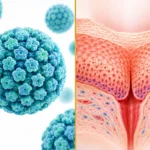
Yes, oral sex is a documented route for HPV transmission. The virus can infect the mouth, throat, and oropharynx through oral-genital and oral-anal contact, and in some cases through deep open-mouth kissing. Most oral HPV infections clear on their own without causing any symptoms or long-term problems, but certain high-risk types, particularly HPV16, are linked to oropharyngeal cancers involving the tonsils and the base of the tongue.
Key Takeaways
- HPV can be transmitted through oral sex; it is not limited to vaginal or anal intercourse.
- HPV16 is the high-risk genotype responsible for the majority of HPV-related throat cancers.
- Most oral HPV infections resolve without treatment, but some persist and raise cancer risk.
- Condoms and dental dams reduce transmission risk during oral sex, though they do not eliminate it entirely.
- The HPV vaccine protects against the types most likely to cause oropharyngeal cancer.
How Does HPV Spread Through Oral Sex?
HPV spreads through direct skin-to-skin and mucosa-to-mucosa contact. The virus is present in genital tissue, mucus, and, to a lesser extent, saliva. During oral sex, the oral mucosa comes into direct contact with infected genital or anal tissue, which is the most clearly documented pathway for oral HPV infection.
Transmission through saliva alone, outside of sexual contact, has not been proven. Casual contact, sharing drinks, kissing a family member, is not a documented source of oral HPV. The virus needs direct mucosal exposure to establish infection, which is why sexual contact involving the mouth is the main concern.
Deep open-mouth kissing is also considered a possible route, particularly when one partner has active oral HPV. Small cuts or sores in the mouth may make transmission more likely by giving the virus easier access to the mucosal layer beneath.
Both giving and receiving oral sex carry some level of risk. A person with genital HPV can transmit it to a partner’s mouth and throat; a person with oral HPV can transmit it to a partner’s genitals. The evidence shows that having a partner with cervical HPV roughly doubles the likelihood of having oral HPV yourself, a pattern consistent with bidirectional transmission during oral sex.
For a broader look at how HPV moves between partners, the HPV symptoms overview at HPVGuide.org explains why most people with the virus have no visible signs and may not know they are carrying it.
Which HPV Types Are Found in the Mouth and Throat?
Not all HPV types behave the same way in oral tissue. The two main categories matter here:
High-risk types, particularly HPV16, are the ones associated with oropharyngeal cancer. Over 90% of HPV-positive throat cancers are caused by HPV16 specifically. The International Agency for Research on Cancer classifies HPV16 as carcinogenic in the oral cavity and oropharynx based on sufficient evidence.
Low-risk types, primarily HPV6 and HPV11, can cause a rare condition called recurrent respiratory papillomatosis, where non-cancerous growths form in the throat and airway. This is uncommon but can be serious, especially in infants who acquire the virus during birth from a parent with genital warts.
| HPV Type | Risk Category | Oral/Oropharyngeal Concern |
|---|---|---|
| HPV16 | High-risk | Primary driver of oropharyngeal cancer |
| HPV18 | High-risk | Less common in oral tissue than genital |
| HPV6, HPV11 | Low-risk | Recurrent respiratory papillomatosis |
The distinction matters because an oral HPV infection with a low-risk type carries a very different prognosis than one involving HPV16.
Can You Get HPV from Oral Sex and Develop Throat Cancer?
Having oral HPV does not mean you will develop cancer. Most infections, including those caused by high-risk types, clear on their own within one to two years as the immune system suppresses the virus. Only a small fraction of persistent high-risk infections progress to cellular changes, and fewer still progress to cancer.
That said, the link between oral sex behavior and oropharyngeal cancer is real and supported by data. Research shows that having six or more lifetime oral sex partners is associated with roughly a 3.4-fold increase in the odds of oropharyngeal cancer. The association between oral HPV16 infection specifically and oropharyngeal cancer is much stronger, with odds ratios in case-control studies reaching approximately 14-fold compared to uninfected individuals.
HPV-related oropharyngeal cancers are a growing concern. Roughly 30% of oropharyngeal squamous cell carcinomas worldwide are HPV-driven, and in some developed countries that figure is considerably higher, between 45% and 90% of cases, depending on the region. The cancers most commonly involve the tonsils and the base of the tongue.
The HPV and cancer overview covers which cancer types are linked to HPV, how progression happens, and what monitoring looks like when high-risk HPV is detected.
Who Is at Higher Risk for Oral HPV Infection?
Certain groups face a meaningfully higher likelihood of acquiring oral HPV:
- People with multiple oral sex partners, the number of lifetime oral sex partners is one of the strongest behavioral predictors of oral HPV prevalence.
- Immunocompromised individuals, people living with HIV, organ transplant recipients on immunosuppressive therapy, and others with reduced immune function are less able to clear HPV infections, making persistence and progression more likely.
- Unvaccinated adults, people who did not receive the HPV vaccine before becoming sexually active lack protection against HPV16 and other high-risk types covered by current vaccines.
- Smokers, tobacco use is associated with impaired mucosal immunity and is an independent risk factor for oropharyngeal cancer, compounding the risk when oral HPV is present.
Does the HPV Vaccine Protect Against Oral HPV?
The current 9-valent HPV vaccine (Gardasil 9) covers HPV16, HPV18, and five other high-risk types, along with HPV6 and HPV11. Because HPV16 is responsible for the overwhelming majority of HPV-related throat cancers, vaccination before exposure to the virus offers meaningful protection against the type most likely to cause oropharyngeal cancer.

The vaccine works best when given before any sexual activity begins, but the CDC recommends catch-up vaccination through age 26 for anyone not previously vaccinated, and shared decision-making between ages 27 and 45. Vaccination does not treat an existing infection, it prevents new ones.
Condoms and dental dams reduce transmission risk during oral sex by acting as a physical barrier between the mouth and infected tissue. They do not eliminate risk entirely, since HPV can be present on areas not covered by a barrier, but consistent use meaningfully lowers the likelihood of transmission.
The HPV vaccine guide covers the full schedule, who should get it, and what the evidence shows about its safety and effectiveness.
Can HPV from Oral Sex Be Detected or Treated?
There is currently no routine screening test for oral HPV in the general population. Unlike cervical HPV, which is detected through Pap smears and HPV co-testing, oral HPV has no equivalent standard screening protocol. If a doctor suspects an oropharyngeal abnormality, they may refer for an examination of the throat, and a biopsy would be used to evaluate any suspicious tissue.
For people concerned about their overall HPV status, the HPV testing guide explains how testing works, who it applies to, and how results are interpreted, including why testing options differ significantly between men and women.
There is no antiviral treatment that clears HPV from oral tissue. The immune system does this work in most cases. If an oral HPV infection leads to detectable cell changes or a tumor, treatment follows standard oncology protocols, surgery, radiation, or a combination, and HPV-positive oropharyngeal cancers generally respond well to treatment when caught early.
For men specifically, understanding the full picture of HPV risk and detection is covered in the HPV in men guide, which addresses symptoms, testing limitations, and what a diagnosis means in practice.
Reducing Your Risk During Oral Sex
Risk reduction is straightforward, even if it is not absolute:
- Use condoms during oral sex on a penis.
- Use dental dams during oral sex on a vulva or anus.
- Get vaccinated if you have not already, vaccination before exposure is the most effective prevention available.
- Discuss STI status with partners, understanding that most people with HPV do not know they have it.
- Attend regular sexual health screenings; while oral HPV has no routine test, cervical and anal HPV screening can identify high-risk infections in those tissues.
The timing of any HPV infection is often impossible to determine. If you or a partner has been diagnosed, that does not tell you when the infection was acquired or from whom. HPV can remain dormant for months or years before detection, the can HPV be dormant page explains how that works and what it means for interpreting a new diagnosis.
Frequently Asked Questions
Can you get HPV from oral sex even if your partner has no symptoms?
Yes. Most people with HPV have no visible symptoms and no way of knowing they are infected. The virus can still be present in genital or oral tissue and transmissible through contact. Absence of symptoms does not mean absence of the virus.
Is oral HPV the same as genital HPV?
The same HPV types, including HPV16, can infect both genital and oral tissue. The infection is the same virus; the difference is the anatomical location. A person can carry HPV in one area without having it in another, though bidirectional transmission during oral sex is documented.
Should I tell a partner if I have oral HPV?
This is a personal decision, but disclosing a known HPV status is generally considered part of informed consent between sexual partners. Because HPV is extremely common and often undetectable, many sexual health clinicians frame the conversation around shared risk rather than individual blame.
Does oral HPV always show up on a throat exam?
No. Oral HPV typically causes no visible lesions and would not be apparent on a routine throat exam. It is only detectable through specific swab testing, which is not part of standard care for most people. Visible changes in throat tissue, if they occur, usually appear much later and require biopsy for evaluation.
Can someone who has had the HPV vaccine still get oral HPV?
The vaccine covers the types most likely to cause oropharyngeal cancer, but it does not cover every HPV genotype. Vaccination significantly reduces risk but does not eliminate it entirely. Someone vaccinated against HPV16 and 18 could still acquire a less common type, though the cancer risk from those types is considerably lower.