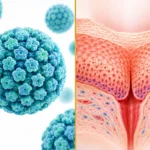
Condoms reduce the risk of getting HPV, but they don’t eliminate it. That distinction matters, and it’s not a reason to skip condoms. It’s a reason to understand exactly what they do and don’t do, so you can make informed decisions about protection.
Key Takeaways
- Consistent condom use lowers the risk of acquiring HPV by roughly 50-70%, based on prospective studies in both women and men.
- HPV spreads through skin-to-skin contact, not just fluid exchange, which means any genital skin not covered by a condom can still transmit the virus.
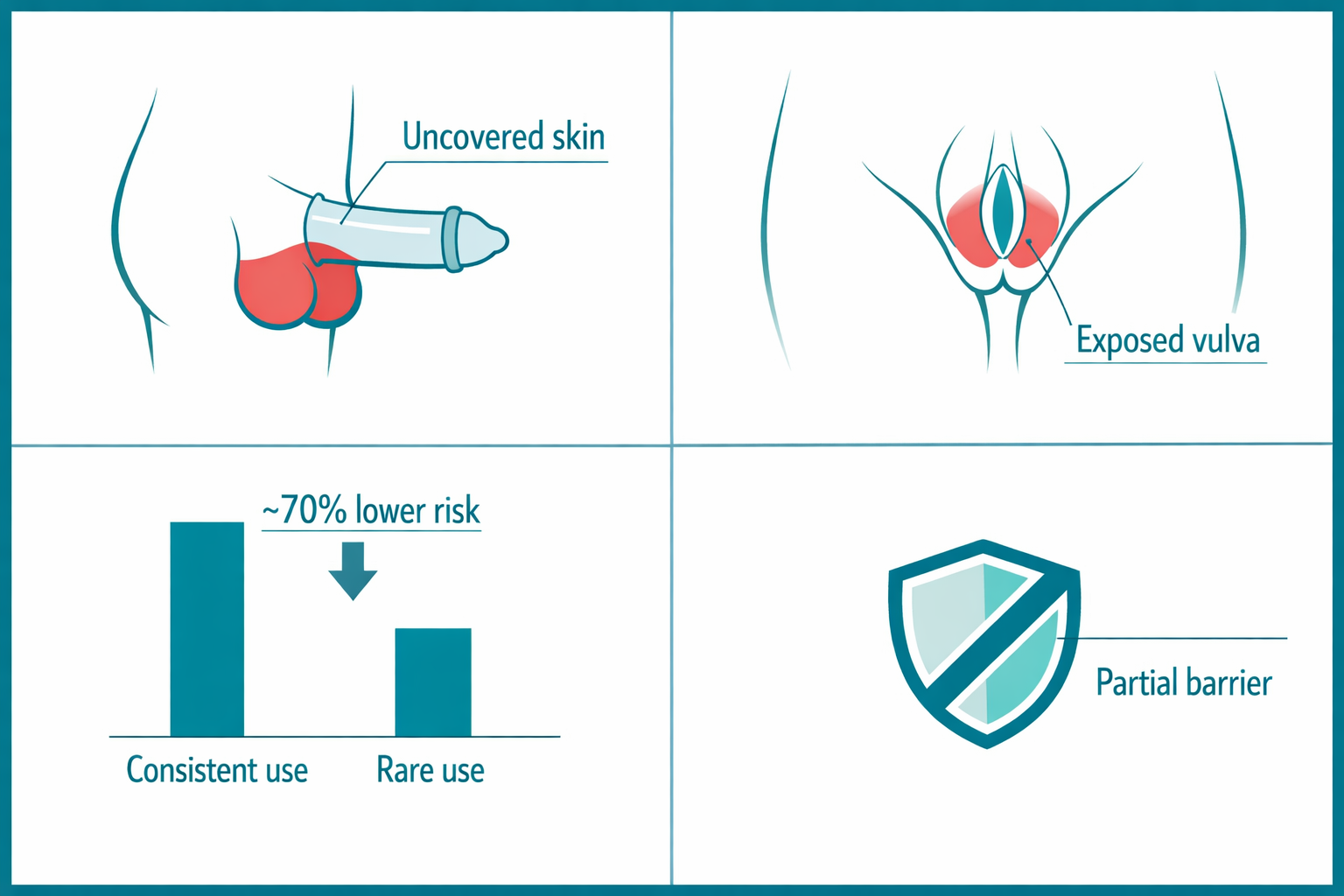
- Male condoms leave the vulva, scrotum, and base of the penis exposed; female condoms cover more of the vulva but have been studied less thoroughly for HPV specifically.
- Condoms may also reduce how long an HPV infection persists, not just whether you get one.
- The strongest protection against HPV combines consistent condom use, vaccination, and regular screening, no single method does the full job alone.
How HPV Actually Spreads, and Why Condoms Can’t Cover Everything
HPV is not a fluid-borne infection. It spreads through direct skin-to-skin contact with infected genital tissue, which is exactly why a barrier that covers only part of that tissue offers only partial protection.
Most other STIs that condoms protect against, such as gonorrhea or HIV, require fluid exchange. HPV doesn’t. The virus can live on the skin of the vulva, scrotum, inner thighs, and the base of the penis, areas that a standard male condom simply doesn’t reach. A female (internal) condom covers more of the vulva and inner labia, which is an anatomical advantage, but the research on its specific effectiveness against HPV is still limited compared to the data on male condoms.
There’s also a timing issue. HPV can be transmitted before a condom is put on, during any skin contact that happens before penetration. That window is small but real.
Understanding how HPV types differ in their transmission and risk profiles helps clarify why no single prevention method is complete, low-risk types like HPV 6 and 11 cause genital warts, while high-risk types like 16 and 18 are linked to cervical and other cancers, and both spread the same way.
Do Condoms Protect Against HPV? What the Studies Show
The short answer: yes, meaningfully, but not completely.
A landmark prospective study in newly sexually active women found that women whose partners used condoms consistently, meaning 100% of the time, were about 70% less likely to acquire a new HPV infection compared to women whose partners used condoms less than 5% of the time. That’s a substantial reduction. The incidence dropped from roughly 89 per 100 patient-years in the low-use group to about 38 per 100 patient-years in the consistent-use group.
A separate prospective study in high-risk men found a similar pattern. Men who always used condoms were approximately 50% less likely to acquire a new HPV infection over 12 months than men who never used them. The same study noted that consistent condom use also shortened the duration of infections, suggesting condoms may help the immune system clear HPV faster, not just reduce initial exposure.
A systematic review of longitudinal studies found that consistent condom use offers “relatively good, though partial, protection” against both HPV infection and cervical cell changes. Four of eight longitudinal studies in that review showed a statistically significant protective effect.
The CDC, the American Cancer Society, and the NICHD all reach the same conclusion: condoms lower the chances of HPV acquisition and transmission, and reduce the risk of HPV-related disease, but they don’t provide complete protection because HPV can infect skin that condoms don’t cover.
One important nuance: the evidence suggests condoms may be more reliably protective against HPV-related disease outcomes, like genital warts, high-grade cervical intraepithelial neoplasia (CIN II/III), and invasive cervical cancer, than against simply testing HPV DNA-positive. That’s a meaningful distinction if you’re thinking about long-term health rather than just infection status.
If you’re asking this question because you or a partner have already been diagnosed, the guide on whether you can have sex with HPV covers what that conversation looks like practically.
Who’s at Higher Risk for HPV Transmission Despite Condom Use?
Some people face a higher baseline risk of acquiring or transmitting HPV even with consistent condom use, because of factors that affect either exposure or immune response.
- Unvaccinated people of any gender, the HPV vaccine covers the types most likely to cause cancer and genital warts; without it, condoms carry more of the prevention burden alone.
- Immunocompromised individuals, including those living with HIV or on immunosuppressive therapy after organ transplant, are less likely to clear HPV naturally and more likely to develop persistent infections.
- People with multiple concurrent partners, higher frequency of new exposures increases cumulative transmission risk even when condoms are used consistently.
- Those with a history of abnormal Pap results, prior high-risk HPV exposure means ongoing monitoring matters as much as barrier protection going forward.
What Condoms Don’t Cover: The Exposed Skin Problem
This is the core limitation, and it’s worth being direct about it.
A standard male condom covers the shaft of the penis. It does not cover the scrotum, the base of the penis, or the skin around the anus. During sex, all of those surfaces can contact the vulva, inner labia, perineum, or anal skin of a partner, and any of those contact points can transmit HPV in either direction.
Female (internal) condoms sit inside the vagina and extend to cover part of the vulva and labia, which addresses some of the gap. But they’ve been studied less rigorously for HPV specifically, so the evidence base for their protective effect is thinner.
This is also why the question of how a woman can spread HPV to a man, or vice versa, doesn’t have a simple answer tied to condom use alone. Transmission is bidirectional and depends on which skin surfaces make contact.
For anal sex specifically, the same principle applies: condoms reduce but don’t eliminate transmission risk for anal HPV, which can lead to anal dysplasia in people who carry high-risk types.
The Stronger Strategy: Layering Protection
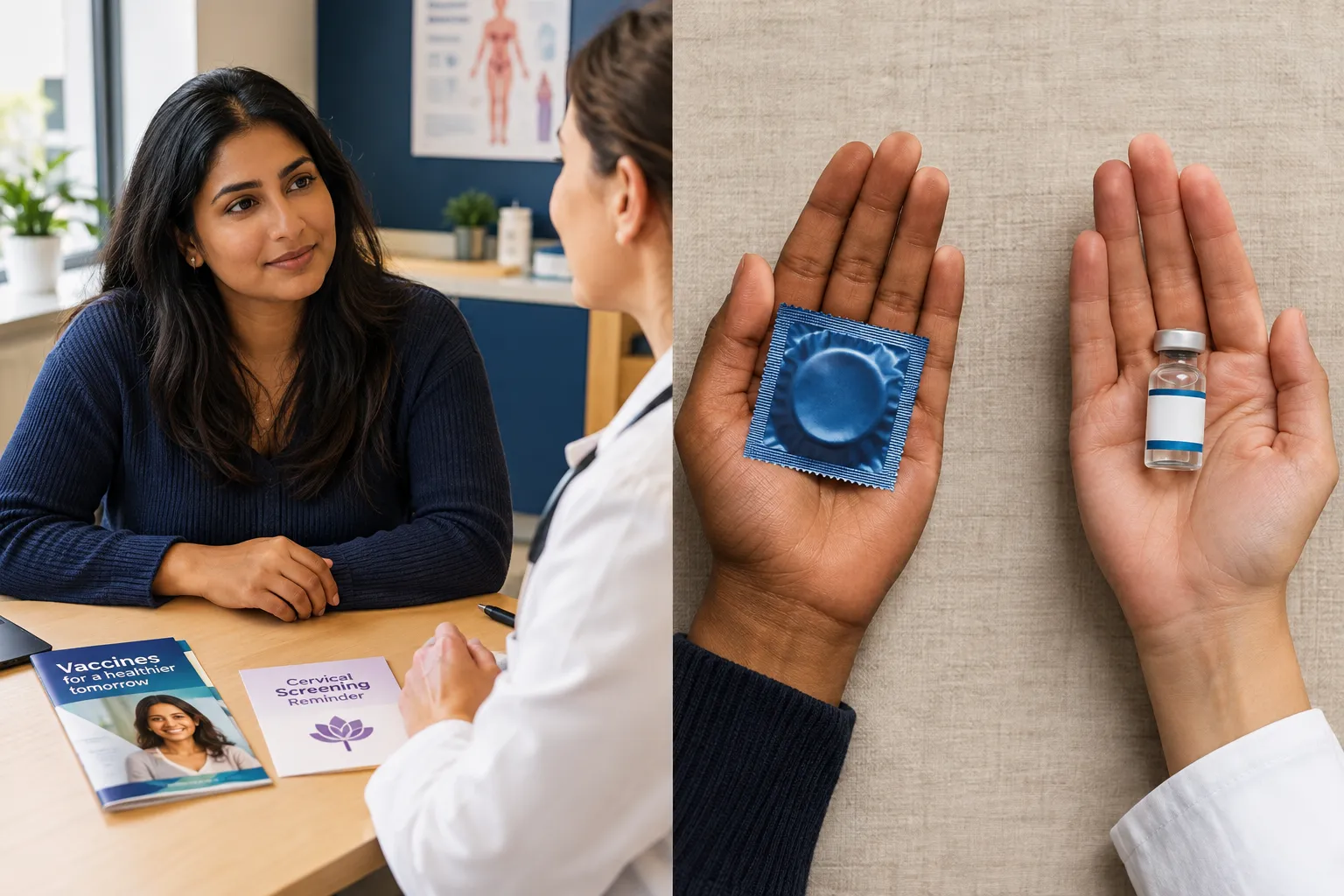
Condoms are one layer. They’re a meaningful layer, a 50-70% reduction in transmission risk is not trivial. But the evidence is clear that the most effective approach combines multiple strategies.
Vaccination is the most powerful tool available. The HPV vaccine (Gardasil 9) protects against nine HPV types, including the two highest-risk types (16 and 18) responsible for the majority of HPV-related cancers, and the two types (6 and 11) that cause most genital warts. The HPV vaccine guide covers who should get it, the schedule, and whether it helps if you’ve already been exposed.
Regular screening, Pap smears and HPV co-testing, catches cell changes caused by high-risk HPV before they progress. Cell changes are easiest to treat before they advance; that’s what screening is designed to catch. The HPV testing guide explains how results are read and what different findings mean.
Reducing the number of concurrent partners lowers cumulative exposure. The CDC includes this alongside consistent condom use in its HPV prevention guidance, not as a moral directive, but as a straightforward risk-reduction measure.
No single method, not condoms, not the vaccine, not screening alone, covers everything. Used together, they substantially reduce both the chance of acquiring HPV and the chance that any infection leads to serious disease.
Frequently Asked Questions
Can you still get HPV if a condom is used every time?
Yes, transmission is still possible. Consistent condom use reduces the risk by roughly 50-70%, but HPV can infect genital skin that condoms don’t cover, including the vulva, scrotum, and base of the penis. “Every time” use is far better than inconsistent use, but it doesn’t make transmission impossible.
Do condoms help if one partner already has HPV?
They reduce the risk of transmission, and there’s also evidence that consistent use may help an existing infection clear faster. If one partner has a confirmed HPV infection, using condoms consistently, combined with vaccination if not already done, is a reasonable harm-reduction step, though it won’t guarantee the other partner avoids exposure entirely.
Does the type of condom matter for HPV protection?
Latex and polyurethane condoms both provide a physical barrier. The limitation isn’t the material, it’s the anatomy. Any condom that covers only the penile shaft leaves other genital surfaces exposed. Female (internal) condoms cover more vulvar tissue, which is anatomically relevant for HPV, but the evidence on their specific effectiveness against HPV is less developed than for male condoms.
Is HPV protection a reason to use condoms for oral sex too?
HPV can be transmitted orally, though the risk is lower than for genital contact. Condoms and dental dams reduce, but don’t eliminate, transmission during oral sex. The HPV and oral transmission guide covers what the evidence shows for that specific route.
If I’ve already been vaccinated, do I still need condoms?
Yes. The vaccine covers nine HPV types, but there are more than 40 types that infect genital tissue. Vaccination dramatically reduces risk from the most dangerous types, but condoms add a layer of protection against types not covered by the vaccine and against other STIs entirely. They work better together than either does alone.
Do condoms protect against genital warts specifically?
The evidence suggests condoms may be more reliably protective against HPV-related disease outcomes, including genital warts caused by HPV 6 and 11, than against HPV infection in general. Consistent use lowers the risk of developing warts, though it doesn’t eliminate it. If warts have already appeared, the genital warts treatment guide explains the options available.