Anal HPV is one of the most common sexually transmitted infections in the world, and most people who have it never know. The virus causes no symptoms in the vast majority of cases, clears on its own within one to two years, and does not lead to cancer for most people who carry it. That said, certain high-risk HPV types, particularly types 16 and 18, can cause cell changes in the anal canal that, if left undetected, may progress to anal cancer over many years.
Understanding anal HPV: symptoms, screening, and prevention means knowing what to watch for, who genuinely needs monitoring, and what steps actually reduce risk. This article covers all three.
Key Takeaways
- Most anal HPV infections produce no symptoms and clear without treatment
- High-risk HPV types 16 and 18 are responsible for the majority of anal cancers
- Screening is recommended for specific higher-risk groups, not the general population
- The Gardasil 9 vaccine prevents the HPV types most linked to anal cancer and is effective even in adults up to age 45
- Anal cancer is almost entirely preventable with timely vaccination and appropriate screening
What Anal HPV Actually Does, and Doesn’t Do
Anal HPV refers to infection with human papillomavirus in the tissue of the anal canal and perianal skin. The virus is transmitted through direct skin-to-skin or mucous membrane contact, anal sex is the most common route, but the virus can also spread through other forms of genital contact. How HPV spreads and how it doesn’t is worth reading if you’re unsure about transmission routes.
Most infections are transient. The immune system clears them without any medical intervention, often within 12 to 24 months. No treatment is needed for the infection itself, only for the symptoms or cell changes it may cause.
When HPV does persist, the type matters enormously. Low-risk types like 6 and 11 can cause anal warts (condyloma acuminata) but do not cause cancer. High-risk types, primarily 16 and 18, which together account for roughly 90% of anal cancers, can trigger abnormal cell changes in the anal squamous epithelium. These changes are classified on a spectrum: from low-grade squamous intraepithelial lesions (LSIL) to high-grade squamous intraepithelial lesions (HSIL), also called anal intraepithelial neoplasia (AIN). HSIL is the true precancerous lesion. It does not automatically become cancer, but it is the stage where intervention makes the most difference.
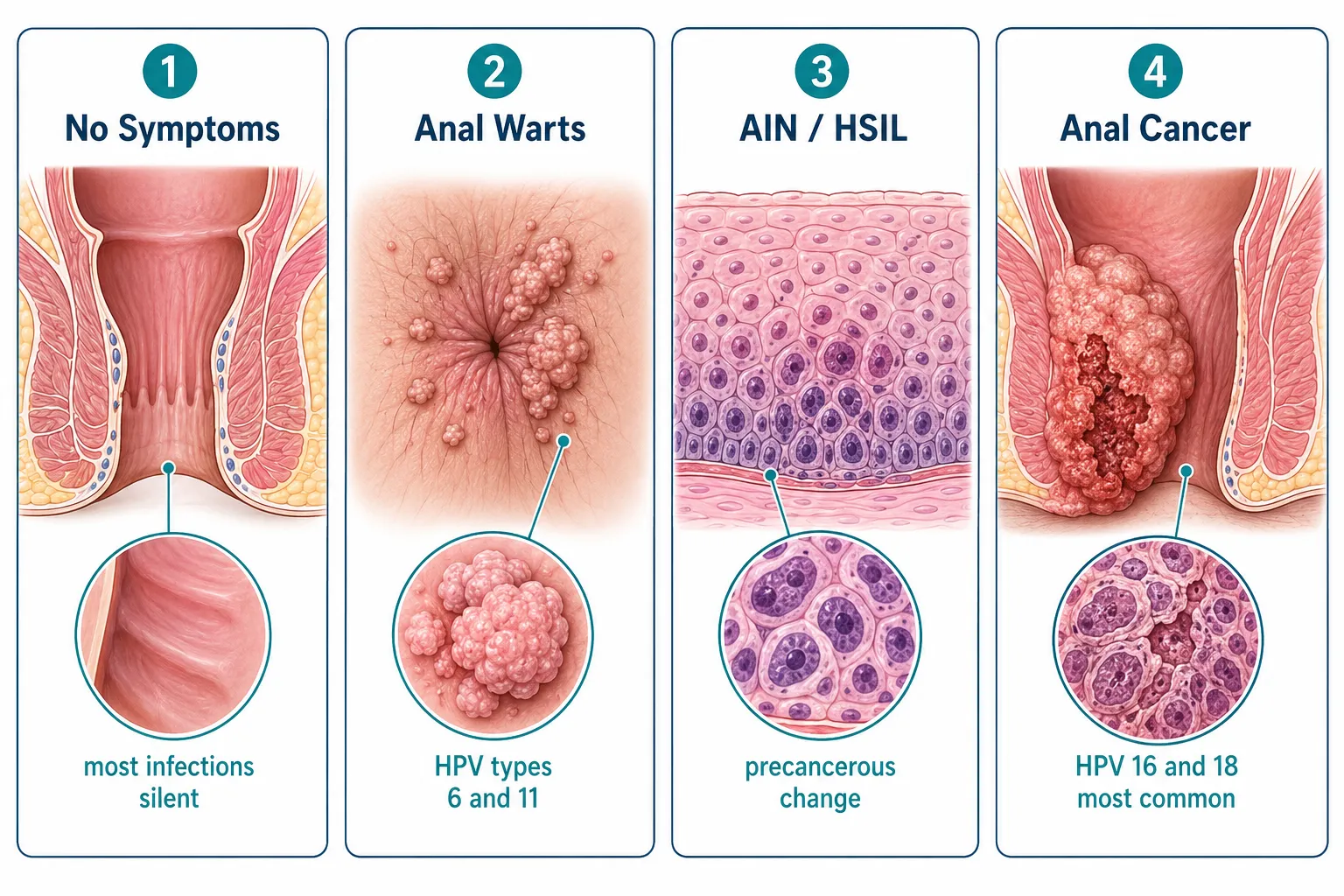
Anal cancer itself remains relatively uncommon in the general population, roughly 10,000 new cases are diagnosed annually in the United States, but incidence has been rising steadily over recent decades, particularly among women and people with HIV.
Recognizing Symptoms of Anal HPV
Anal HPV usually has no symptoms at all. That is not a reassuring oversimplification, it is the clinical reality for the majority of people infected.
When symptoms do appear, they vary by HPV type:
Low-risk HPV (types 6 and 11):
- Soft, flesh-colored or pink growths around or inside the anus
- Mild itching, moisture, or discomfort in the perianal area
- Visible warts that may be flat or raised, single or clustered
High-risk HPV (types 16, 18, and others):
- Usually no visible symptoms in early stages
- Persistent anal itching, bleeding, or pain, these are late signs and warrant prompt evaluation
- A feeling of fullness or a lump near the anus
The absence of symptoms does not mean the absence of cell changes. HSIL, the precancerous stage, is almost always silent. That is precisely why screening exists, not to catch something you can feel, but to find changes before they become something you can’t ignore.
For a broader look at how HPV presents across the body, the HPV symptoms guide covering signs in men and women explains why most people have no visible signs at all.
Who’s at Higher Risk for Anal HPV?
Anal HPV affects people across all demographics, but certain groups face a meaningfully higher risk of persistent infection and progression to HSIL or anal cancer:
- People with HIV, particularly men who have sex with men (MSM) with HIV, have anal cancer rates up to 40 times higher than the general population. Immunosuppression allows HPV to persist and progress far more readily.
- Men who have sex with men (regardless of HIV status) have significantly elevated rates of anal HSIL and anal cancer compared to heterosexual men.
- Immunocompromised individuals, including organ transplant recipients on long-term immunosuppressive therapy, face similar risks to people with HIV.
- People with a prior history of cervical, vulvar, or vaginal HSIL are at higher risk for concurrent or subsequent anal HPV-related disease, given shared HPV exposure patterns.
Screening for Anal HPV: Who Needs It and How It Works
Screening for anal HPV is not recommended for the general population. Cell changes are easiest to treat before they progress, that is what screening is for, but the benefit-to-risk ratio only justifies routine screening in groups where the rate of HSIL is high enough to make detection meaningful.
Current guidance, including recommendations from the International Anal Neoplasia Society (IANS), supports anal cancer screening for:
- MSM, especially those living with HIV
- People with HIV regardless of sexual behavior
- Organ transplant recipients and others on long-term immunosuppression
- People with a history of vulvar or vaginal HSIL
The main screening tools are:
| Method | What It Does | Notes |
|---|---|---|
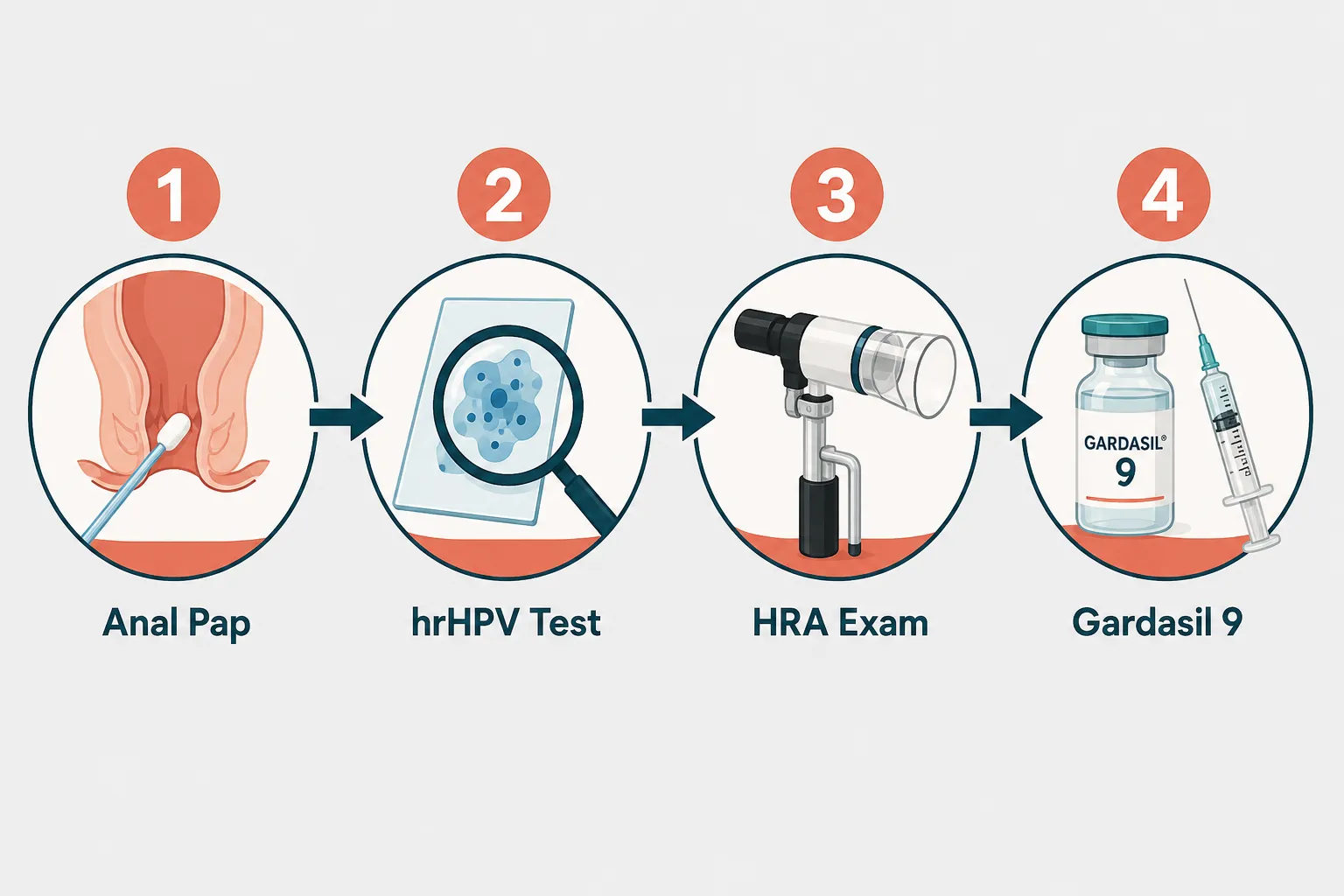
| Anal cytology (anal Pap) | Collects cells from the anal canal to look for abnormalities | Similar to a cervical Pap; detects LSIL and HSIL |
| High-risk HPV (hrHPV) testing | Identifies the presence of high-risk HPV types | NIH guidelines recommend cautious interpretation; used alongside cytology |
| High-resolution anoscopy (HRA) | Direct visual examination of the anal canal with magnification and biopsy | The gold standard for confirming HSIL |
| Digital anal rectal exam (DARE) | Physical palpation of the anal canal | Detects palpable masses; used alongside other methods |
If an anal Pap shows abnormal cells, the next step is typically HRA with biopsy to confirm whether HSIL is present. Treatment of confirmed HSIL, through ablation or other office-based procedures, significantly reduces the risk of progression to invasive cancer.
For those navigating abnormal results from any HPV-related test, the guide on what happens after an abnormal Pap smear walks through the follow-up process clearly.
People with HIV should discuss anal cancer screening directly with their HIV care provider. The evidence base is strongest in this group, and most HIV treatment guidelines now include anal dysplasia monitoring as part of routine care.
Prevention: Vaccination, Safer Sex, and What Actually Works
Anal cancer is almost entirely preventable. That is not an overstatement, it reflects the actual evidence on HPV vaccination and its impact on anal HSIL and cancer rates.
The HPV vaccine (Gardasil 9) protects against nine HPV types, including the high-risk types 16 and 18 responsible for most anal cancers, and the low-risk types 6 and 11 that cause anal warts. Real-world data consistently show substantial reductions in anal HSIL rates among vaccinated populations.
Current U.S. vaccination recommendations:
- Routine vaccination at age 11 or 12 (can start at age 9)
- Catch-up vaccination through age 26 for anyone not previously vaccinated
- Shared clinical decision-making for adults aged 27 to 45, vaccination can still provide benefit if not previously exposed to the relevant HPV types
- A two-dose schedule applies if the first dose is given before age 15; three doses are required if vaccination starts at 15 or older
The vaccine does not treat existing HPV infection, but it protects against types not yet acquired. Even people who have had HPV can benefit from vaccination against strains they haven’t been exposed to. The HPV vaccine guide covering how it works and who should get it covers the full schedule and safety data.
For men specifically, the HPV vaccine for men page addresses whether vaccination is still useful after an existing diagnosis.
Condoms and barriers reduce, but do not eliminate, anal HPV transmission, because the virus spreads through skin contact in areas not covered by a condom. They remain a meaningful part of risk reduction, particularly when combined with vaccination.
Smoking is an independent risk factor for progression from HPV infection to HSIL and cancer. Quitting smoking improves immune function and reduces that risk.
For a full picture of how HPV connects to cancer risk beyond the anal canal, the HPV and cancer overview explains which cancers are linked, how they develop, and what prevention looks like across the board.
What’s New in 2026
Two developments are worth knowing about. A blood-based HPV tumor DNA test, NavDx, received expanded clinical use in early 2026 for post-treatment surveillance of anal cancer, allowing oncologists to detect recurrence earlier than imaging alone. This is not a screening tool for the general population, but it represents a meaningful shift in how treated anal cancer is monitored.
Separately, immunotherapy options for advanced anal cancer have expanded, with a new agent receiving regulatory approval in Europe in 2026 for squamous cell carcinoma of the anal canal that has progressed after chemotherapy. These advances matter most to people already managing an anal cancer diagnosis, for everyone else, prevention and early detection through screening remain the most powerful tools available.
Frequently Asked Questions
Can you get anal HPV without having anal sex?
Yes, though anal sex is the most common transmission route. HPV spreads through direct skin-to-skin contact, and the perianal area can be exposed through other forms of genital contact. The virus can also spread from the genitals to the perianal region without penetrative anal sex. Transmission timing is often impossible to pinpoint, which is why it’s rarely useful to try to trace exactly when or how an infection occurred.
Does anal HPV always need treatment?
The infection itself has no treatment, only the conditions it causes are treated. If you have anal warts, those can be removed through topical creams, cryotherapy, or office procedures. If screening detects HSIL, treatment of those cell changes is recommended to reduce cancer risk. A straightforward HPV-positive result on an anal test, with no cell changes detected, typically means monitoring rather than immediate intervention.
How is anal HPV different from cervical HPV?
The same high-risk HPV types cause both anal and cervical disease, and the progression from HPV infection to precancerous lesions to cancer follows a similar biological pathway. The key difference is that cervical cancer screening (Pap smears and HPV co-testing) is universally recommended for people with a cervix, while anal cancer screening is currently targeted only to higher-risk groups. The HPV in women guide covers cervical HPV and its management in detail.
If I’m vaccinated, do I still need anal cancer screening?
Vaccination significantly reduces risk but does not eliminate it entirely, particularly for people who were exposed to HPV before vaccination or who belong to a high-risk group. People with HIV or other immunocompromising conditions should continue anal cancer screening regardless of vaccination status. Talk to your doctor about what monitoring makes sense for your specific situation.
Can anal HPV clear on its own?
Yes. Most anal HPV infections, including high-risk types, clear without treatment within one to two years, driven by a normal immune response. Persistent infection is more likely in people with weakened immune systems. Clearance of the virus does not guarantee that cell changes have resolved, which is why follow-up after abnormal screening results matters even if a subsequent HPV test comes back negative.