
HPV can become undetectable, but that doesn’t necessarily mean it’s gone. Most infections clear within one to two years, yet a small number of people test negative for years and then have a positive result again with no clear new exposure. That gap between “undetectable” and “truly eliminated” is what researchers mean when they ask: can HPV be dormant?
The honest answer is: probably yes, in some cases. The evidence is indirect but consistent, and it matters for how you interpret your own test results.
Key Takeaways
- Most HPV infections become undetectable within one to two years, but “undetectable” is not the same as “eradicated.”
- Latent HPV, virus present in cells below the detection threshold, is a plausible explanation for recurrences with no new partner, though it remains difficult to prove directly in humans.
- Cancer risk comes from long-term persistence of high-risk types like HPV 16 and 18, not from a single past exposure that has since gone quiet.
- Immunosuppression is the clearest trigger for reactivation; people with HIV or on immunosuppressive therapy have higher rates of HPV recurrence.
- Regular screening, Pap smears, HPV co-testing, or anal cytology where appropriate, is what catches any reactivation before it causes harm.
What Does “Dormant HPV” Actually Mean?
HPV doesn’t behave the way a latent herpes infection does, where the virus sits in nerve cells in a well-characterized dormant state. The biology is less tidy than that.
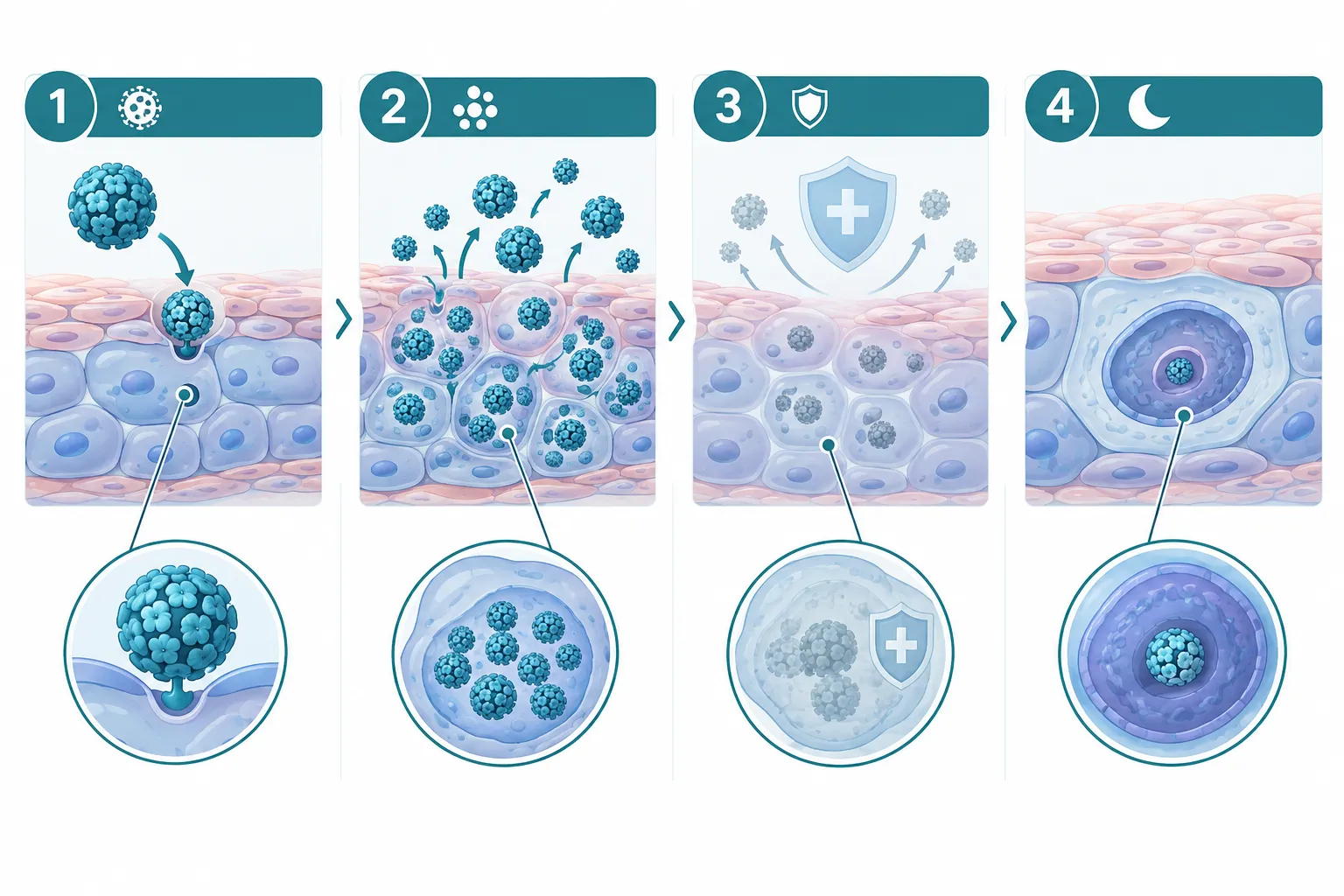
What researchers describe is a spectrum. At one end, active infection: the virus is replicating, detectable by standard testing, and potentially causing cell changes. At the other end, true clearance: the immune system eliminates every infected cell. In between sits a zone that most experts call “subclinical” or “latent” infection, viral DNA present in basal epithelial cells at levels too low for current tests to detect.
Standard HPV tests, including the Aptima and other genotyping assays, have a detection floor. Below that floor, a result reads negative. That doesn’t mean zero viral copies are present.
The HPV testing guide on HPVGuide.org explains how these tests work and what a negative result actually rules out, worth reading if you’re trying to interpret your own results.
How Long Can HPV Stay Undetectable?
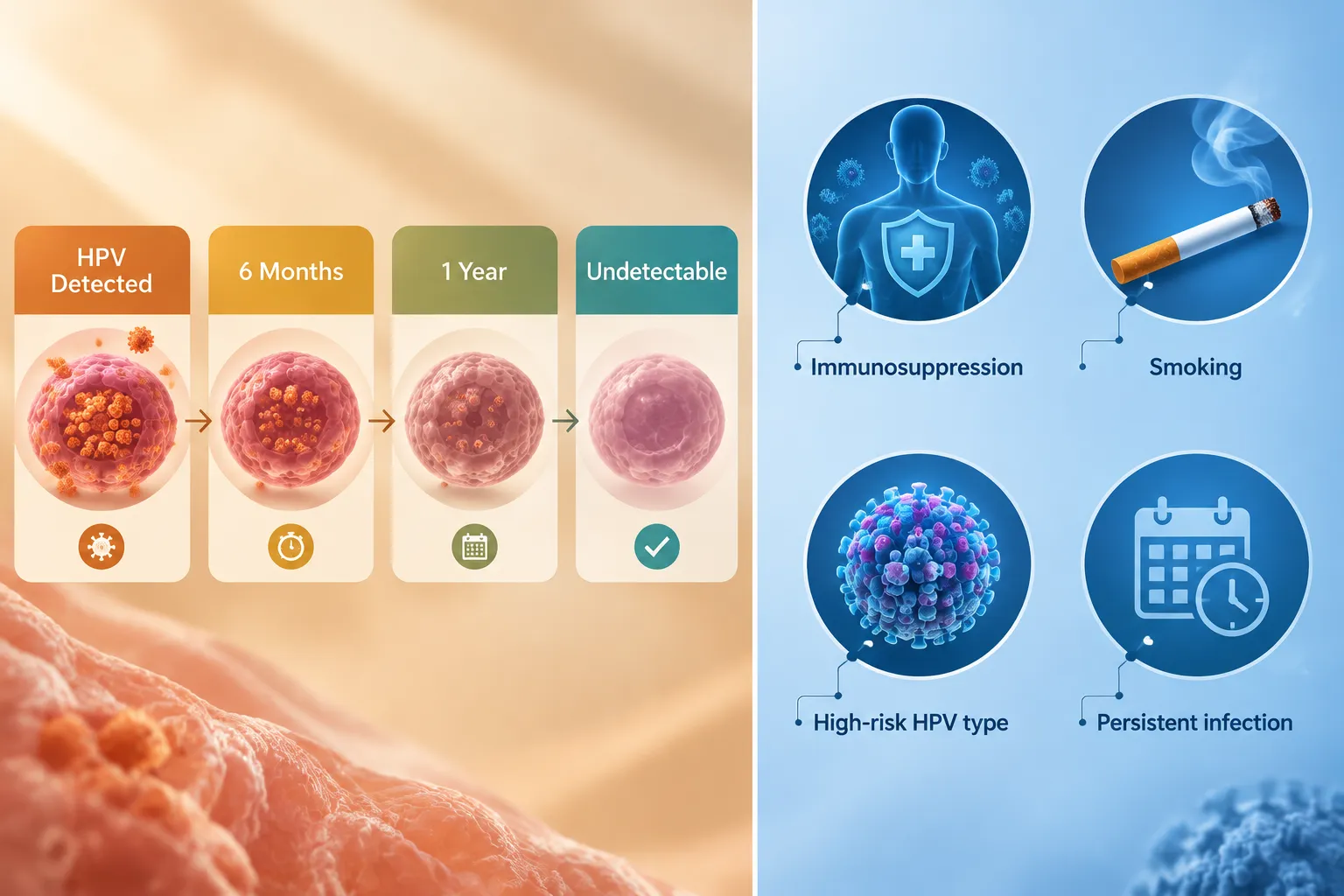
Most HPV infections become undetectable within 12 to 24 months. That timeline holds for both low-risk types (like HPV 6 and 11, which cause genital warts) and high-risk types (like HPV 16 and 18, which are linked to cervical and other cancers).
But “undetectable” and “cleared” are not interchangeable terms, and the distinction isn’t just semantic.
Studies of immunosuppressed populations, people living with HIV, organ transplant recipients on long-term immunosuppressive drugs, show HPV reappearing years after a negative test, often with the same genotype as the original infection. The simplest explanation is reactivation of a dormant reservoir, not re-infection with an identical strain.
Oral HPV follows a similar pattern. Most oral infections resolve within one to two years, but occasional persistence and late recurrence have been documented, particularly in people with compromised immune function.
For HPV in men, the data on clearance and persistence show similar timelines, though detection is harder because there’s no routine screening equivalent to a Pap smear.
Can HPV be Dormant for Years Without Symptoms?
Yes, and this is actually the norm, not the exception.
The vast majority of HPV infections produce no symptoms at all. No warts, no abnormal Pap result, nothing that would prompt a test. The full breakdown of HPV symptoms in men and women makes clear that most people who carry HPV never know it.
A dormant or subclinical infection sits even further below the clinical radar. The virus isn’t causing visible cell changes, isn’t triggering an immune response strong enough to produce symptoms, and isn’t detectable by standard testing. It may stay that way indefinitely. Or, if immune surveillance drops, due to illness, medication, age, or stress on the immune system, it may become active again.
This is why a new positive HPV result after years of negative tests doesn’t automatically mean a new exposure. It may mean a dormant infection has reactivated. The timing of any HPV infection is often impossible to determine with certainty, a fact worth keeping in mind before drawing conclusions about where or from whom it came.
Who’s at Higher Risk for HPV Reactivation?
Certain groups are more likely to experience HPV persistence or reactivation from a dormant state:
- Immunocompromised individuals, people living with HIV, organ transplant recipients, or anyone on long-term immunosuppressive therapy have significantly higher rates of HPV persistence and recurrence.
- Smokers, smoking impairs local immune responses in cervical and oropharyngeal tissue, and is consistently associated with higher rates of HPV persistence.
- People with a history of abnormal Pap results, prior LSIL or HSIL findings suggest the immune system has already had difficulty controlling HPV, which may indicate a higher likelihood of ongoing or recurrent infection.
- Unvaccinated individuals, without vaccine-induced immunity against the highest-risk types, there’s no additional immune layer to suppress viral activity if dormancy breaks.
Does Dormant HPV Still Carry Cancer Risk?
Having a dormant HPV infection is not the same as having a cancer risk that’s ticking away in the background.
The cancer risk associated with HPV, particularly cervical, oropharyngeal, anal, and other HPV-related cancers, is driven by long-term, persistent, active infection with high-risk genotypes. HPV 16 accounts for roughly 50% of cervical cancers; HPV 18 accounts for another 15-20%. The pathway from infection to cancer involves years of ongoing viral activity causing progressive cell changes: from normal cells to low-grade dysplasia (LSIL), to high-grade dysplasia (HSIL), to cancer. That process requires the virus to be actively present and replicating.
A truly dormant infection, one held in check by a functioning immune system, is not driving that progression. The concern arises if dormancy breaks and the infection becomes active again, particularly in someone who isn’t being screened.
That’s exactly what screening is designed to catch. An abnormal Pap smear result, even an ASC-US finding, is an early signal that something warrants a closer look, well before any serious cell change has occurred.
What Happens If Dormant HPV Reactivates?
Reactivation doesn’t mean cancer. It means the virus has become detectable again and may be causing low-level cell changes.
For most people with a functioning immune system, the immune response will suppress it again. For people who are immunocompromised, reactivation can be more sustained and harder to control, which is why more frequent screening is recommended for those groups.
If you’ve had a previous HPV diagnosis and then tested negative, a future positive result should be managed the same way as any new positive: with appropriate follow-up based on the genotype detected and your screening history. An ASCUS Pap result after a period of clear tests is a common scenario and has a clear clinical pathway.
For people with anal exposure or risk factors for anal HPV, the anal HPV screening guide covers what monitoring looks like and when it’s recommended.
Frequently Asked Questions
If my HPV test came back negative, does that mean the virus is gone?
Not necessarily. A negative test means HPV DNA wasn’t detected above the test’s threshold, it doesn’t confirm that every viral copy has been eliminated. For most people, this distinction doesn’t change anything clinically. But it does explain why a future positive result, years later, isn’t always evidence of a new infection.
Can HPV lie dormant for 10 or 20 years?
The evidence suggests long-term dormancy is possible, particularly in immunocompromised individuals where recurrences have been documented years after a negative test. In people with normal immune function, very long dormancy periods are harder to document, but can’t be ruled out. The honest answer is that the science doesn’t yet have a firm upper limit.
Does a dormant HPV infection affect my partner’s risk?
A dormant infection, one below the detection threshold, is generally thought to carry lower transmission risk than an active infection, but “lower” is not “zero.” This is an area where the evidence is incomplete. The transmission guide covering how HPV spreads between partners covers what’s known about transmission risk in practical terms.
Should I get screened more often if I think HPV might be dormant?
Screening frequency is determined by your age, previous results, and immune status, not by whether you suspect dormancy. If you’re immunocompromised, your doctor will likely recommend more frequent Pap smears or HPV co-testing. For everyone else, following standard screening intervals and reporting any new symptoms is the right approach. Bring the question of dormancy up with your doctor if it’s affecting your decisions, it’s a reasonable clinical question.
Does the HPV vaccine help if you already have a dormant infection?
The vaccine protects against types you haven’t yet been infected with. It doesn’t clear an existing infection, dormant or otherwise. If you were infected with HPV 16 before vaccination, the vaccine won’t affect that infection, but it can still protect against other high-risk types you haven’t encountered. The HPV vaccine guide explains who benefits and under what circumstances.
What This Means for You
Dormant HPV is a real and scientifically plausible phenomenon, even if the direct proof in humans is still incomplete. What’s clear is this: most HPV infections become undetectable within two years, a subset may persist at subclinical levels, and reactivation is most likely when immune function is compromised.
The practical takeaway is straightforward. A negative HPV test is genuinely good news, act on it by staying current with screening rather than assuming the question is permanently closed. Cell changes are easiest to manage before they progress, and that’s what regular Pap smears and HPV co-testing are built to catch.
If you’re immunocompromised, pregnant, or have a history of abnormal results, talk to your doctor about whether your current screening schedule accounts for those factors. That conversation is more useful than worrying about whether a dormant virus is present, because the answer to that question doesn’t change what you do next. Screening does.