Last updated: June 9, 2026
Quick Answer
Men get HPV just as often as women — usually without ever knowing, because it most often causes no symptoms and clears on its own. When it does show, it’s usually genital warts. There’s no routine HPV test for men, and persistent high-risk HPV can cause uncommon penile, anal, and throat cancers. The vaccine protects men too.
Table of Contents
Key Takeaways
- HPV is not a “women’s issue” — men are infected at roughly the same rate, and most never know it
- The majority of HPV infections in men clear on their own within one to two years without treatment
- There is no routine, approved HPV screening test for men — diagnosis relies on visual examination of symptoms
- Low-risk HPV types (mainly types 6 and 11) cause genital warts; high-risk types (mainly 16 and 18) are linked to penile, anal, and oropharyngeal cancers
- Oropharyngeal (throat) cancer linked to HPV is rising in men and now accounts for the majority of HPV-related cancers in males in many high-income countries
- HPV spreads through skin-to-skin sexual contact, not just penetrative sex — condoms reduce but do not eliminate the risk
- The HPV vaccine is recommended for males and is most effective when given before sexual activity begins, but provides benefit up to age 26 and, in some cases, through age 45
- Men who have sex with men and immunocompromised individuals face a higher risk of HPV-related anal disease and should discuss targeted screening with a clinician
- No symptom-based self-diagnosis is reliable — any unexplained bump, sore, or persistent throat symptom warrants a clinical evaluation
HPV Is Not a Women’s Issue
For decades, public health messaging around HPV focused almost entirely on women and cervical cancer. That framing left men largely in the dark about their own risk. The reality is that HPV in men is just as common, just as transmissible, and — in certain circumstances — just as capable of causing serious disease.
Most men who carry HPV will never develop symptoms and will never know they were infected. But “no symptoms” does not mean “no consequences.” Understanding how HPV works in the male body, what it can cause, and how to reduce risk is genuinely useful information for any sexually active man.
Can Men Get HPV?
Yes — men get HPV just as often as women. HPV (human papillomavirus) is the most common sexually transmitted infection worldwide. According to the U.S. Centers for Disease Control and Prevention (CDC), nearly all sexually active people will have HPV at some point in their lives if they are not vaccinated.
In men, most infections are asymptomatic and self-limiting. The immune system clears the virus without the person ever knowing they were infected. However, some infections persist, and persistent infection with high-risk HPV types is what creates the potential for cancer over time.
Key points about HPV in men:
- Men can carry and transmit HPV without any visible symptoms
- Infection does not confer long-term immunity — re-infection with the same or different HPV types is possible
- Men who have sex with men (MSM) face a disproportionately higher burden of anal HPV infection and HPV-related anal cancer
- Immunocompromised men (including those living with HIV) are less likely to clear the virus and face higher complication rates
What Exactly Is HPV and How Do Men Get It?
HPV is a group of more than 200 related viruses, of which roughly 40 types infect the genital area. It spreads through direct skin-to-skin contact during sexual activity — including vaginal, anal, and oral sex, as well as genital-to-genital contact without penetration.
You do not need to have penetrative sex to acquire HPV. The virus lives in skin and mucosal cells, not in bodily fluids, which is why condoms provide only partial protection.
How transmission works:
- Vaginal or anal sex with an infected partner is the most common route
- Oral sex can transmit HPV to the throat, where it can cause oropharyngeal infection
- Genital skin contact without penetration can still transfer the virus
- Vertical transmission (from mother to child during birth) is rare but documented and can cause recurrent respiratory papillomatosis in children
A person with no visible symptoms can still transmit HPV. There is no reliable way to know whether a partner currently carries the virus unless they have visible warts, and even then, other HPV types may be present without any sign.
“HPV spreads through skin-to-skin sexual contact — not just penetrative sex. Condoms reduce risk but do not eliminate it because the virus can be present on skin not covered by a condom.”
Risk factors that increase the likelihood of acquiring or retaining HPV:
- Higher number of lifetime sexual partners
- Having a partner with multiple previous partners
- Starting sexual activity at a younger age
- A weakened immune system (HIV, immunosuppressive medication)
- Smoking (associated with reduced viral clearance)
- Not being vaccinated against HPV
What Are the Symptoms of HPV in Men?
Most men with HPV have no symptoms at all. The infection is silent in the majority of cases, which is both why it spreads so easily and why many men dismiss it as “not their problem.”
When HPV does cause visible symptoms in men, the most common sign is genital warts. These are caused by low-risk HPV types (primarily types 6 and 11) and do not become cancerous. High-risk types, by contrast, rarely cause visible symptoms but can lead to cellular changes that eventually produce cancer.
Possible symptoms of HPV in men include:
- Genital warts: Soft, flesh-colored growths that may appear on the penis, scrotum, groin, thighs, or around or inside the anus. They can be flat, raised, single, or clustered (sometimes described as resembling a cauliflower). They are usually painless but may itch or bleed.
- Anal warts: Warts inside or around the anus, which may cause discomfort, itching, or bleeding during bowel movements
- Throat symptoms: In cases of oropharyngeal HPV, a persistent sore throat, hoarseness, difficulty swallowing, or a lump in the neck may develop — though these symptoms are more often caused by other conditions and warrant clinical evaluation regardless
What HPV does not typically cause in men:
- Pain during urination (unless warts are located at the urethral opening)
- Discharge
- Fever or systemic illness
Any unexplained bump, wart, or persistent symptom in the genital or anal area should be evaluated by a clinician — typically a urologist or dermatologist. Do not attempt to self-diagnose based on appearance alone, as other conditions (molluscum contagiosum, skin tags, fordyce spots) can look similar.
How Is HPV Testing Different for Men vs. Women?
There is no routine, approved HPV test for men. This is one of the most important and least understood facts about HPV in men, and it is a genuine limitation of current medical practice.
For women, cervical HPV testing is a standard part of gynecological care because the cervix provides accessible cells for sampling, and the link between cervical HPV and cervical cancer is well-established. For men, there is no equivalent tissue site with a validated, widely approved screening test.
What does exist for men:
- Visual examination: A clinician can identify genital warts by looking at the skin. No lab test is needed to diagnose warts.
- Anal Pap smear / high-resolution anoscopy: For men at higher risk of anal cancer — particularly MSM and HIV-positive men — some clinicians and specialist centers offer anal cytology screening. This is not universally available and is not a standard recommendation for all men. The U.S. Multi-Society Task Force on Colorectal Cancer and other bodies continue to evaluate evidence on this approach.
- Biopsy: If a lesion looks suspicious for cancer (not just warts), a clinician may take a tissue sample for pathology.
- Oral/throat examination: An ENT specialist can examine the throat and tonsils if oropharyngeal HPV-related disease is suspected.
Common mistake: Some men ask their doctor for “an HPV test” expecting a swab or blood test. No such routine test exists for men. If a clinician offers a general HPV blood test as a standard screen, that is not a validated approach. Ask specifically what the test measures and what it can and cannot tell you.
The absence of a routine test means that most men learn they have (or had) HPV only when symptoms appear, when a partner is diagnosed, or in retrospect after a cancer diagnosis. This is a gap in men’s sexual health care, not a reason to avoid the conversation with a doctor.
Genital Warts in Men
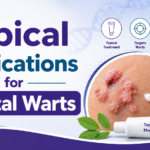
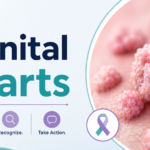
Genital warts are the most visible and most common symptomatic presentation of HPV in men. They are caused by low-risk HPV types 6 and 11 and carry no cancer risk — but they are contagious and can cause significant psychological distress.
Where genital warts appear in men:
- Shaft, head, or foreskin of the penis
- Scrotum
- Groin and inner thighs
- Around or inside the anus
- Rarely, inside the urethra (causing changes in urine stream)
Warts can appear weeks, months, or even years after exposure to HPV, which makes it difficult to identify the source partner. They do not always look the same: some are small and flat, others are raised and clustered. They are generally painless unless irritated.
Treatment options for genital warts in men:
Treatment does not eliminate the underlying HPV infection — it removes the visible warts. Options include:
| Treatment Type | How It Works | Setting |
|---|---|---|
| Topical imiquimod (cream) | Stimulates local immune response | Home (patient-applied) |
| Topical podophyllotoxin (cream/solution) | Destroys wart tissue | Home (patient-applied) |
| Cryotherapy (liquid nitrogen) | Freezes and destroys wart tissue | Clinic |
| Trichloroacetic acid (TCA) | Chemical destruction of warts | Clinic |
| Surgical excision or electrosurgery | Physical removal | Clinic/OR |
| Laser therapy | Destroys wart tissue with laser | Specialist clinic |
Recurrence after treatment is common because HPV can remain in surrounding skin. Multiple treatment sessions are often needed. A urologist or dermatologist should manage genital warts — do not use over-the-counter wart treatments designed for hands or feet on genital skin.
Can HPV Cause Cancer in Men?
Yes, but the absolute risk for any individual man is relatively low. Persistent infection with high-risk HPV types — particularly HPV 16 and 18 — can cause cancer in men, though these cancers are less common than HPV-related cervical cancer in women.
HPV-related cancers in men include:
- Oropharyngeal cancer (base of tongue, tonsils, back of throat): This is now the most common HPV-related cancer in men in the United States and several other high-income countries. The CDC reports that HPV causes about 70% of oropharyngeal cancers in the U.S. Rates in men have been rising over recent decades.
- Anal cancer: HPV causes the majority of anal cancers. MSM and HIV-positive men face substantially elevated risk. According to the American Cancer Society, anal cancer is about twice as common in women overall, but rates among MSM are significantly higher than in the general male population.
- Penile cancer: Rare overall. HPV is detected in approximately 50% of penile cancer cases, according to published literature. Penile cancer accounts for less than 1% of cancers in men in the United States.
What drives cancer risk:
- Persistent infection (not a single, cleared infection) with a high-risk HPV type
- Immune suppression (HIV, organ transplant medications)
- Smoking (strongly associated with oropharyngeal and anal cancer risk in the context of HPV)
- High number of lifetime sexual partners (increases cumulative HPV exposure)
Important distinction: Low-risk HPV types that cause genital warts do not cause cancer. High-risk types that cause cancer rarely cause visible warts. These are different viral types with different biological behavior.
If you notice a persistent sore, lump, or change in the throat, anus, or on the penis that does not resolve within two to three weeks, see a clinician. Early detection significantly improves outcomes for all HPV-related cancers.
Should Men Get the HPV Vaccine?
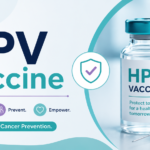
Yes. The HPV vaccine is recommended for males and is one of the most effective tools available to prevent HPV infection and its consequences. The vaccine does not treat existing infections — it prevents new ones.
Current recommendations (as of 2026):
- Ages 11–12: Routine vaccination recommended (two-dose series if started before age 15)
- Ages 13–26: Catch-up vaccination recommended for those not previously vaccinated (three-dose series)
- Ages 27–45: Shared clinical decision-making — the vaccine may benefit some adults in this age group who have not been vaccinated; discuss with a clinician
- MSM and immunocompromised individuals: Vaccination is especially recommended regardless of age, up to 26 (and potentially through 45 with clinical guidance)
What the vaccine protects against:
The most widely used vaccine in the United States, Gardasil 9, protects against nine HPV types: the two low-risk types that cause most genital warts (6 and 11) and seven high-risk types (16, 18, 31, 33, 45, 52, 58) linked to cancer.
Common misconception: Some men believe the vaccine is only for women or only for younger people. Neither is true. The vaccine has been approved and recommended for males since 2009 in the United States, and evidence supports meaningful protection even when started in adulthood, particularly for those not yet exposed to all covered HPV types.
The vaccine does not protect against HPV types a person is already infected with, which is why vaccination before sexual debut is most effective — but partial protection is still meaningful for sexually active adults who have not been vaccinated.
Does HPV Go Away on Its Own in Men?
In most cases, yes. The immune system clears most HPV infections within one to two years without any treatment. This applies to both low-risk and high-risk HPV types.
Research published in peer-reviewed literature consistently shows that a large proportion of HPV infections in men are transient. A landmark prospective cohort study (Giuliano et al., 2011, PMID: 21288095) followed men in the United States, Brazil, and Mexico and found that the median duration of new HPV infections was approximately seven months, with most infections clearing within two years.
What “clearing” means and what it doesn’t:
- Clearing means the immune system has suppressed the virus below detectable levels
- It does not guarantee the virus is completely eliminated from the body
- Re-activation is theoretically possible, particularly with immune suppression
- Clearing one HPV type does not protect against other types
When HPV is less likely to clear:
- In men with HIV or other immune-suppressing conditions
- In heavy smokers
- With certain high-risk HPV types that are more biologically persistent
- In older men (immune response to new infections may be less robust)
Genital warts, once present, may resolve on their own, shrink, stay the same, or grow. They do not become cancerous, but they do not always disappear without treatment. Treating warts removes the visible lesion but does not guarantee the underlying virus is gone.
How Can Men Prevent Getting HPV?
Prevention of HPV in men involves a combination of vaccination, barrier methods, and informed decision-making about sexual health.
Vaccination is the most effective preventive measure. Getting vaccinated before exposure to HPV types covered by the vaccine provides the highest level of protection.
Condoms and dental dams reduce the risk of HPV transmission but do not eliminate it. Because HPV lives in skin cells across the genital area — not just areas covered by a condom — transmission can occur from uncovered skin. Consistent condom use is still strongly recommended because it also reduces risk of other STIs.
Limiting number of sexual partners reduces cumulative HPV exposure risk, though this is a personal decision and not a guarantee of protection.
Regular sexual health check-ups allow for early identification of warts or other symptoms, and provide an opportunity to discuss vaccination status and screening options with a clinician.
Smoking cessation is relevant because smoking impairs immune clearance of HPV and is independently associated with higher risk of HPV-related cancers.
What Are the Long-Term Risks of HPV for Men?
For most men, the long-term risk of HPV is low. The infection clears, leaves no lasting damage, and causes no symptoms. However, a subset of men face meaningful long-term consequences.
Long-term risks by category:
- Recurrent genital warts: Some men experience repeated outbreaks even after treatment, which can affect quality of life and sexual relationships
- Oropharyngeal cancer: The most significant long-term risk for the general male population; rates have been rising and are now higher in men than in women in the U.S.
- Anal cancer: Elevated risk particularly in MSM and HIV-positive men; anal HPV infection rates in MSM are substantially higher than in heterosexual men
- Penile cancer: Rare but real; HPV is a contributing factor in roughly half of cases
- Psychological impact: Diagnosis of genital warts or HPV-related cancer can cause significant anxiety, stigma, and relationship strain — a dimension of HPV that is often underaddressed in clinical settings
Does HPV affect fertility in men? Current evidence does not establish a definitive causal link between HPV infection and male infertility in the general population. Some research has explored whether HPV can attach to sperm cells and affect motility, but findings are mixed and the clinical significance for most men is unclear. Men undergoing fertility evaluation who have concerns about HPV should discuss this specifically with a reproductive urologist or fertility specialist.
Can You Get HPV Even If You Use Condoms?
Yes. Condoms significantly reduce the risk of HPV transmission but do not eliminate it. HPV is present in skin cells across the entire genital area, including areas not covered by a male condom — the base of the penis, scrotum, groin, and perianal skin.
Studies have shown that consistent condom use is associated with lower rates of HPV acquisition and faster clearance of existing infections, but breakthrough transmission still occurs. This is not a reason to avoid condoms — they remain an important tool for reducing HPV risk and protecting against other STIs, including HIV, chlamydia, and gonorrhea.
The most complete protection against HPV comes from combining vaccination with consistent condom use.
FAQ
Can men get HPV?
Yes. Men get HPV just as often as women. HPV is the most common sexually transmitted infection, and nearly all sexually active people who are not vaccinated will acquire at least one HPV type during their lifetime. Most infections in men are asymptomatic and clear without treatment.
What are the symptoms of HPV in men?
Most men with HPV have no symptoms. When symptoms do occur, the most common is genital warts — soft, flesh-colored growths on the penis, scrotum, groin, or around the anus. High-risk HPV types that can cause cancer rarely produce visible symptoms, which is why they often go undetected until a cancer develops.
Can men be tested for HPV?
There is no routine, approved HPV test for men. Genital warts are diagnosed by visual examination. Anal cytology screening is available in some specialist settings for higher-risk men (MSM, HIV-positive individuals) but is not standard for all men. If you have visible symptoms or concerns, a clinician can evaluate you directly.
Can HPV cause cancer in men?
Yes. Persistent infection with high-risk HPV types — particularly HPV 16 and 18 — can cause oropharyngeal (throat), anal, and penile cancers in men. Oropharyngeal cancer is now the most common HPV-related cancer in men in the United States, and its incidence has been rising. These cancers are uncommon overall, but the risk is real, especially for MSM and immunocompromised men.
Should men get the HPV vaccine?
Yes. The HPV vaccine is recommended for males. Routine vaccination is recommended at ages 11 to 12, with catch-up vaccination through age 26. Men aged 27 to 45 should discuss vaccination with a clinician. The vaccine prevents infection with the HPV types most likely to cause genital warts and cancer and is most effective before exposure to those types.
Does HPV go away on its own in men?
In most cases, yes. The immune system clears most HPV infections within one to two years. Persistent infection — the exception rather than the rule — is what creates long-term risk. Men with weakened immune systems or those who smoke are less likely to clear HPV quickly.
Can you transmit HPV without symptoms?
Yes. A man with no visible warts and no other symptoms can still carry and transmit HPV. This is how most transmission occurs, because most infected people do not know they are infected.
Is HPV the same as herpes or HIV?
No. HPV, herpes (HSV), and HIV are three entirely different viruses with different modes of transmission, different health consequences, and different management approaches. HPV is far more common than either herpes or HIV, and most HPV infections resolve on their own.
What should I do if I think I’ve been exposed to HPV?
See a clinician. There is no post-exposure treatment that eliminates HPV, but a clinician can examine you for visible symptoms, discuss your vaccination status, and advise on appropriate follow-up. If you have not been vaccinated, vaccination is still worthwhile even after potential exposure, as it protects against types you may not yet have encountered.
Does having HPV mean my partner cheated?
Not necessarily. HPV can remain dormant for months or years before symptoms appear. A new diagnosis of HPV or genital warts does not indicate recent infidelity — it may reflect an infection acquired long before the current relationship.
Conclusion
HPV in men is common, often silent, and widely misunderstood. The persistent myth that HPV is a women’s health issue has left many men uninformed about their own risk, their role in transmission, and the steps they can take to protect themselves and their partners.
The most important actions any man can take are straightforward:
- Get vaccinated if you have not already — up to age 26 as a routine recommendation, and through age 45 with clinical guidance
- Use condoms consistently, knowing they reduce but do not eliminate HPV risk
- See a clinician if you notice any unexplained genital bumps, persistent sores, or throat symptoms that do not resolve
- Discuss your risk profile with a doctor, particularly if you are an MSM, HIV-positive, or immunocompromised — targeted anal screening may be appropriate
- Do not self-diagnose — genital skin changes have many causes, and only a clinician can distinguish warts from other conditions
- Quit smoking if you smoke — it is one of the modifiable factors most strongly linked to impaired HPV clearance and cancer risk
HPV is not a moral failing or a sign of recklessness. It is an extremely common virus that most sexually active adults encounter. The difference between a cleared infection and a serious outcome often comes down to vaccination status, immune health, and whether symptoms are caught and evaluated early.
References
- Centers for Disease Control and Prevention (CDC). “Genital HPV Infection — Basic Fact Sheet.” cdc.gov/std/hpv. (2023)
- Giuliano AR, et al. “Epidemiology of Human Papillomavirus Infection in Men, Cancers Other Than Cervical and Benign Conditions: The HPV in Men (HIM) Study.” Journal of Infectious Diseases, 2011. PMID: 21288095. doi:10.1093/infdis/jiq108
- World Health Organization (WHO). “Human Papillomavirus (HPV) and Cervical Cancer.” who.int. (2023)
- American Cancer Society. “HPV and Cancer.” cancer.org. (2024)
- National Cancer Institute. “Human Papillomavirus (HPV) Vaccines.” cancer.gov. (2023)
- NHS. “Human Papillomavirus (HPV).” nhs.uk. (2023)
- Chaturvedi AK, et al. “Human Papillomavirus and Rising Oropharyngeal Cancer Incidence in the United States.” Journal of Clinical Oncology, 2011. doi:10.1200/JCO.2011.36.4596
- Palefsky JM. “Anal Cancer Prevention in HIV-Positive Men and Women.” Current Opinion in Oncology, 2009. PMID: 19390327
Disclaimer: This content is for informational purposes only and is not a substitute for professional medical advice, diagnosis, or treatment. Always consult a qualified healthcare provider with any questions about your health.
Author: Dr. Laura Bennett, OB/GYN — Board-Certified Gynecologist, Women’s Integrative Health Center (Private Practice) | Sources: WHO, CDC, ACOG, NHS, NCI, peer-reviewed literature | Last updated: June 9, 2026