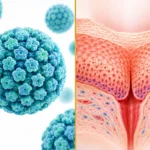
Yes, females do get genital warts, and it is more common than most people realize. Genital warts in women are caused by low-risk HPV types 6 and 11, which together account for roughly 90% of all anogenital wart cases. They are treatable, they do not cause cancer, and having them does not mean anything has gone seriously wrong with your health.
Key Takeaways
- Genital warts in females are caused by HPV types 6 and 11, low-risk strains that do not lead to cervical cancer.
- Warts can appear on the vulva, vagina, cervix, and perianal area.
- Multiple treatment options exist, from prescription creams to cryotherapy and surgical removal.
- Some warts clear on their own without any treatment.
- HPV vaccination targeting types 6 and 11 significantly reduces the risk of ever developing genital warts.
Where Do Genital Warts Appear in Women?
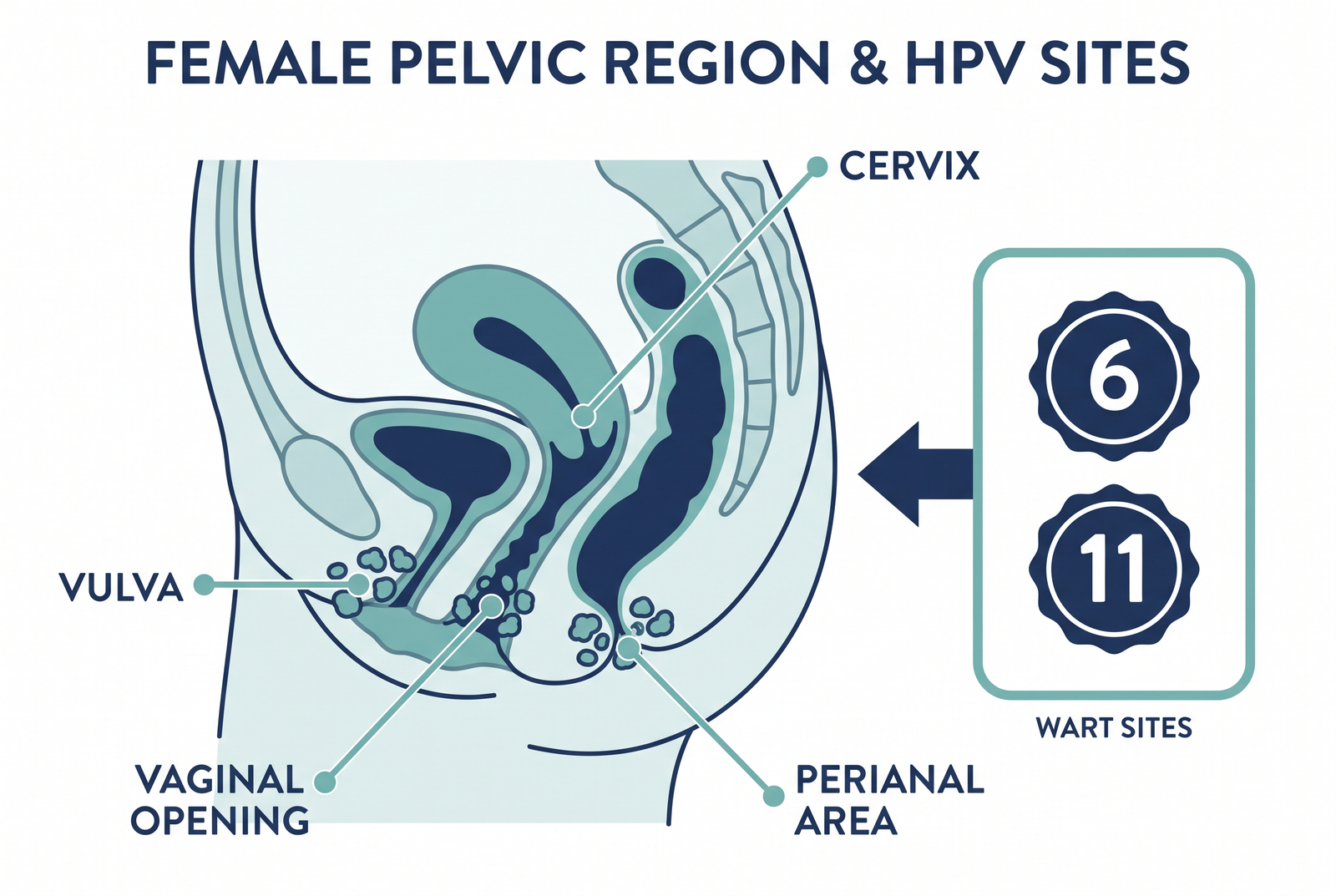
Genital warts in females can develop on the vulva, inside or around the vaginal opening, on the cervix, and around the anus. They sometimes appear on the upper thighs or in the groin area as well.
The warts themselves are caused by HPV types 6 and 11, not the same strains (types 16 and 18) that are linked to cervical cancer. That distinction matters. A genital wart diagnosis does not mean you have a cancer risk from those warts.
Warts vary in appearance. Some are small, skin-colored bumps. Others are flat, raised, or clustered in a cauliflower-like shape. Many cause no symptoms at all, which is why they are sometimes found during a routine gynecological exam rather than noticed at home. Others cause itching, mild discomfort, or, if located near the urethra, a slight change in urine flow.
If you notice any unexplained lumps, bumps, or skin changes in the genital area, a clinician can examine them directly. A visual exam is usually enough to diagnose external genital warts; internal warts on the cervix or vaginal walls may be found during a pelvic exam or Pap smear.
How Do Females Get Genital Warts?
HPV types 6 and 11 spread through skin-to-skin sexual contact, vaginal, anal, and in some cases oral sex. Condoms reduce transmission risk but do not eliminate it, because HPV can be present on skin not covered by a condom.
One thing that catches many people off guard: the time between exposure and visible warts can range from a few weeks to several months, sometimes longer. That makes it genuinely difficult, often impossible, to trace exactly when or from whom the infection came. The timing of an HPV infection is frequently unknowable, and that is a medical fact, not a judgment about anyone’s behavior.
You can also carry HPV types 6 or 11 without ever developing visible warts. Many people clear the virus without knowing they had it. The overview of genital warts covers the full picture of how HPV causes warts and what that means for transmission.
Who Is at Higher Risk for Genital Warts?
Some groups are more likely to develop visible warts or experience more persistent cases:
- Unvaccinated women and girls, those who have not received an HPV vaccine targeting types 6 and 11 have no immune protection against the strains that cause most genital warts.
- Pregnant women, warts often increase in size or number during pregnancy due to hormonal and immune changes, then typically improve after delivery.
- Immunocompromised individuals, women living with HIV, those on immunosuppressive medications after organ transplant, or anyone with a weakened immune system are more likely to have warts that persist or recur.
- People with a history of other STIs, co-infections can affect local immune response and increase susceptibility.
Do Genital Warts in Women Cause Cancer?
Genital warts do not cause cervical cancer. The HPV types responsible for warts, types 6 and 11, are classified as low-risk strains. Cervical cancer and other anogenital cancers are linked to high-risk HPV types, primarily 16 and 18.
That said, having genital warts does mean you have been sexually exposed to HPV. It is possible, though not certain, that you have also been exposed to high-risk types at some point. That is why staying current with cervical screening (Pap tests and, where available, HPV co-testing) matters. The warts themselves are not the concern; routine screening is how high-risk HPV and any resulting cell changes are caught early, when they are easiest to manage.
The relationship between HPV strains and cancer risk is explained in more detail on the page about whether HPV can cause both genital warts and cervical cancer.
What Are the Treatment Options for Females?
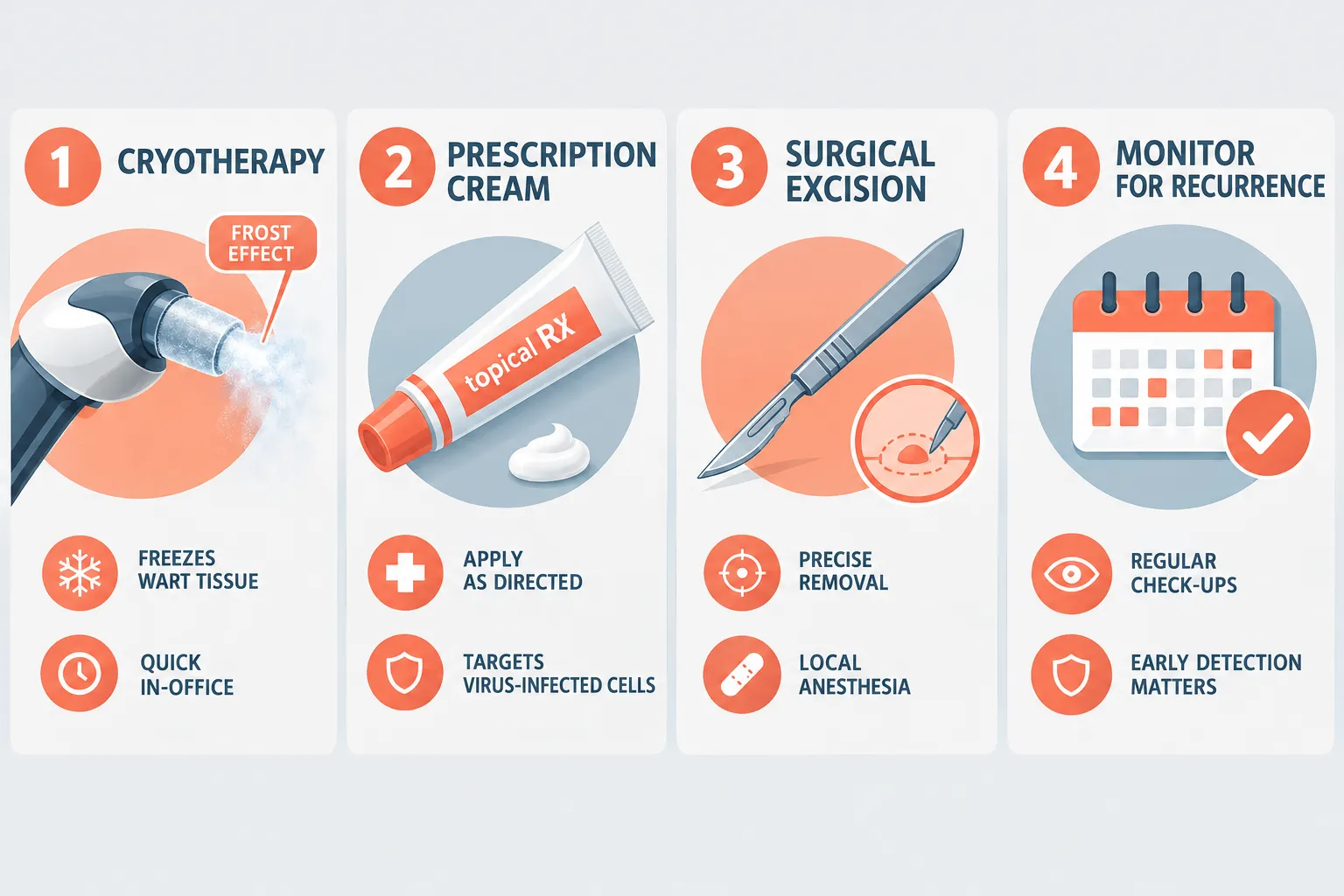
Several effective options exist. No single method is clearly superior to the others, the right choice depends on wart size, number, location, and your own preference.
Topical (applied) treatments:
- Podophyllotoxin, a patient-applied cream or paint, typically used twice daily for three days, then four days off, repeated for up to six cycles. Not safe during pregnancy.
- Imiquimod cream, stimulates local immune response; applied several times per week. Not recommended during pregnancy due to limited safety data.
- Trichloroacetic acid (TCA), applied by a clinician; suitable during pregnancy.
Clinician-administered procedures:
- Cryotherapy, freezing with liquid nitrogen. Effective for external and some vaginal warts. For vaginal warts specifically, cryoprobes are not used inside the vagina due to risk of injury; liquid nitrogen on a swab is used instead.
- Surgical excision, electrosurgery, or laser, used for larger warts or cases where other treatments have not worked.
The guide to topical medications for genital warts explains how each prescription cream works and what to expect during a treatment course. For a closer look at freezing as an option, the cryotherapy for genital warts page covers what the procedure involves.
One important point: surgical removal eliminates the visible wart tissue, but it does not remove the underlying HPV from your body. Recurrence after any treatment is possible, and that is not a treatment failure, it reflects how HPV behaves in skin tissue.
Can Genital Warts Go Away Without Treatment?
Yes. Genital warts in women sometimes clear on their own within months, without any intervention. Choosing to wait and monitor, called expectant management, is a legitimate option when warts are small, not causing symptoms, and you understand that treatment does not guarantee they will not return.
The decision to treat or wait is yours to make with your clinician. Treatment is generally chosen when warts are causing discomfort, are growing, or are a source of significant distress. The page on whether genital warts can go away on their own covers what the evidence shows about spontaneous clearance rates.
Can the HPV Vaccine Prevent Genital Warts in Females?
Yes, and this is one of the clearest preventive wins in sexual health. The HPV vaccines in current use protect against types 6 and 11, and vaccinated populations have seen substantial drops in genital wart rates. Routine vaccination is recommended for girls and young women before sexual debut, with catch-up vaccination available into adulthood.
If you already have genital warts, vaccination may still be worth discussing with your doctor, it can offer protection against HPV types you have not yet been exposed to. The page on getting the HPV vaccine when you already have genital warts addresses that question directly.
Treatment During Pregnancy
Pregnancy is a specific context that changes which treatments are safe. Podophyllotoxin, podophyllin, interferon, and 5-fluorouracil are all contraindicated during pregnancy. Imiquimod is not recommended due to limited safety data.
Safe options during pregnancy include TCA applied by a clinician, cryotherapy, and surgical ablation for larger or problematic warts. Expectant management is also reasonable, warts that grow during pregnancy often improve on their own after delivery. Any treatment decision during pregnancy should be made with your obstetric or sexual health team.
Frequently Asked Questions
Can genital warts appear inside the vagina, not just on the outside?
Yes. Warts can develop on the vaginal walls and on the cervix, not only on external skin. Internal warts are often found during a pelvic exam or Pap smear rather than noticed by the person themselves, because they typically cause no pain or visible symptoms.
Do I need a Pap smear if I have genital warts?
Genital warts do not directly affect your Pap smear results, because warts are caused by low-risk HPV types that do not cause the cell changes a Pap smear screens for. However, being sexually active means you may have been exposed to high-risk HPV types as well, so staying current with cervical screening according to your local guidelines remains important.
Are genital warts in women curable?
Treatment removes visible warts, but HPV can remain in the skin and warts can recur. Many people have no further outbreaks after treatment, especially as the immune system suppresses the virus over time. The genital warts curable page explains what “cured” realistically means in this context.
How long does treatment take for female genital warts?
It varies. Topical treatments are used over several weeks. Cryotherapy may require multiple sessions spaced a few weeks apart. Surgical options can remove warts in a single appointment, though follow-up is still needed. There is no guaranteed timeline, response depends on wart size, location, immune status, and the treatment chosen.
Is it safe to have sex while being treated for genital warts?
Most clinicians advise avoiding sexual contact with the treated area during active treatment, both to protect healing tissue and to reduce transmission risk. Talk to your doctor about when it is appropriate to resume sexual activity and what precautions make sense during that period.
What to Do Next
If you have noticed something that might be a genital wart, the practical next step is a clinical exam, a visual assessment by a doctor or sexual health nurse is usually enough to confirm the diagnosis. From there, you and your clinician can decide whether treatment is the right move now, or whether monitoring makes more sense given your specific situation.
If you want to understand the full range of treatment options available to women, the cure for genital warts in women page covers each approach in detail. Cell changes are easiest to manage before they progress, that is what both treatment and screening are designed to do.