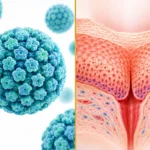
Genital warts are treatable. There is no treatment that permanently eradicates the HPV virus itself, HPV types 6 and 11, which cause nearly all genital warts, can remain in the body after warts clear, but the warts themselves can be removed, and many women find that outbreaks become less frequent or stop entirely over time.
That distinction matters: the goal of treatment is wart clearance and symptom relief, not a cure for the underlying viral infection. Knowing that upfront shapes what you can realistically expect from any option your doctor recommends.
Key Takeaways
- No treatment eliminates HPV from the body, but all current first-line options reliably clear visible warts
- HPV types 6 and 11 cause genital warts, these are low-risk types and are not linked to cervical cancer
- Treatment choice depends on wart location, number, and whether they are internal or external
- Internal warts (vaginal, cervical, intra-anal) require clinician-administered treatment, no self-applied option is safe or effective for those sites
- Recurrence is common in the first few months; this does not mean treatment failed
What Causes Genital Warts and Why “Cure” Is Complicated
Genital warts are caused by HPV types 6 and 11, both classified as low-risk strains, meaning they do not cause cervical cancer. If you want to understand how these strains differ from the high-risk types that appear on a Pap smear, the article on whether HPV can cause both genital warts and cervical cancer explains the distinction clearly.
The virus lives in the skin and mucosal tissue. Treatments destroy the visible wart tissue, but they cannot reach every infected cell in the surrounding skin. That is why recurrence rates within three months of treatment run at roughly 20-30%, regardless of which method is used. It is not a treatment failure, it reflects how the virus behaves in tissue.
Spontaneous regression also happens. Some visible warts clear on their own within a few months without any intervention. Current professional guidelines acknowledge this and explicitly list “no treatment” as a reasonable option for asymptomatic warts, particularly when they are small and not causing discomfort.
Cure for Genital Warts in Women: First-Line Treatment Options That Work
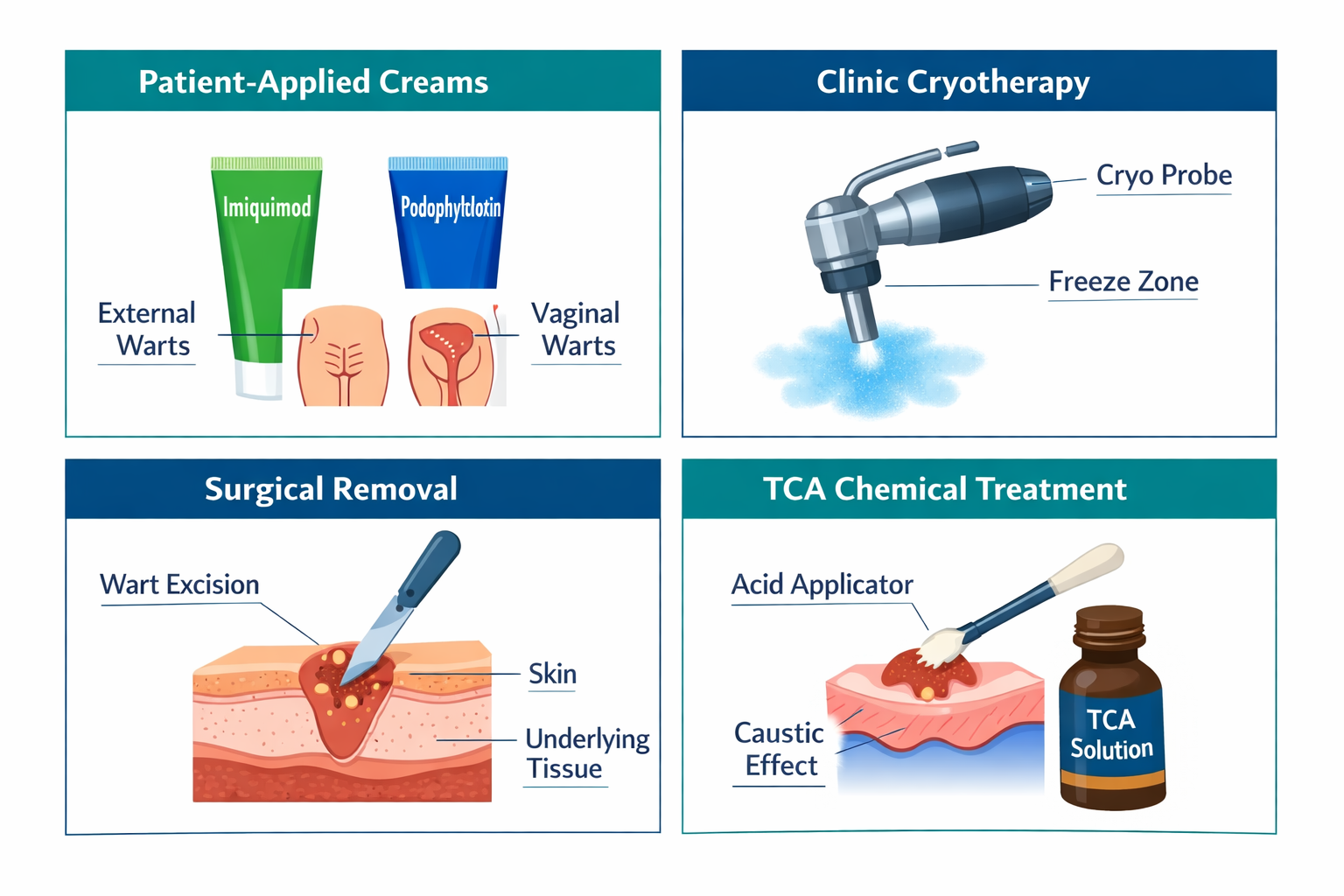
Treatment falls into two broad categories: options you apply at home and options a clinician administers in a procedure room. Which category applies to you depends almost entirely on where the warts are located.
For a detailed breakdown of how prescription creams work at the cellular level, the topical medications for genital warts guide covers dosing schedules, what to expect, and how to apply them correctly.
Patient-Applied (Self-Applied) Treatments
These are used for external warts only, on the vulva, perineum, or perianal skin. They are not appropriate for internal sites.
Imiquimod (Aldara, Zyclara), Applied three times a week for up to 16 weeks. It works by stimulating your immune response to attack infected tissue rather than directly destroying the wart. Clearance rates in clinical trials range from 50-75%. Expect local redness and mild irritation; that is a sign it is working. Wash it off after the recommended contact time.
Podophyllotoxin (Condylox, Warticon), Applied twice daily for three consecutive days, then four days off. This cycle repeats for up to four weeks. It works by disrupting cell division in wart tissue. Clearance rates are similar to imiquimod. It is contraindicated in pregnancy.
Sinecatechins (Veregen), A botanical extract from green tea, applied three times daily for up to 16 weeks. It is the only FDA-cleared botanical option for genital warts. Clearance rates are comparable to other patient-applied treatments, though it tends to cause more local skin reactions.
Clinician-Administered Treatments
Cryotherapy, Liquid nitrogen is applied directly to each wart, freezing and destroying the tissue. It is one of the most widely used office-based options, effective for both small and larger wart clusters. Multiple sessions are usually needed, spaced one to two weeks apart.
Trichloroacetic acid (TCA) or bichloroacetic acid (BCA), A strong acid solution applied by a clinician to individual warts. It works immediately on contact, causing visible whitening of the tissue. It is safe for use during pregnancy, which makes it a common choice when other options are off the table.
Surgical excision or electrosurgery, Used for larger warts, extensive clusters, or cases that have not responded to other treatments. Excision removes wart tissue directly; electrosurgery uses an electrical current to destroy it. Both require local anesthesia and are typically performed in a specialist setting.
Laser therapy, Carbon dioxide laser ablation is reserved for extensive or refractory cases and for warts in locations where other methods are impractical. It is not a routine first-line option.
Internal Warts Require a Different Approach
Vaginal, cervical, and intra-anal warts cannot be treated with self-applied creams. The mucosa at these sites is more sensitive, and applying agents like podophyllotoxin internally carries a real risk of systemic absorption and chemical injury.
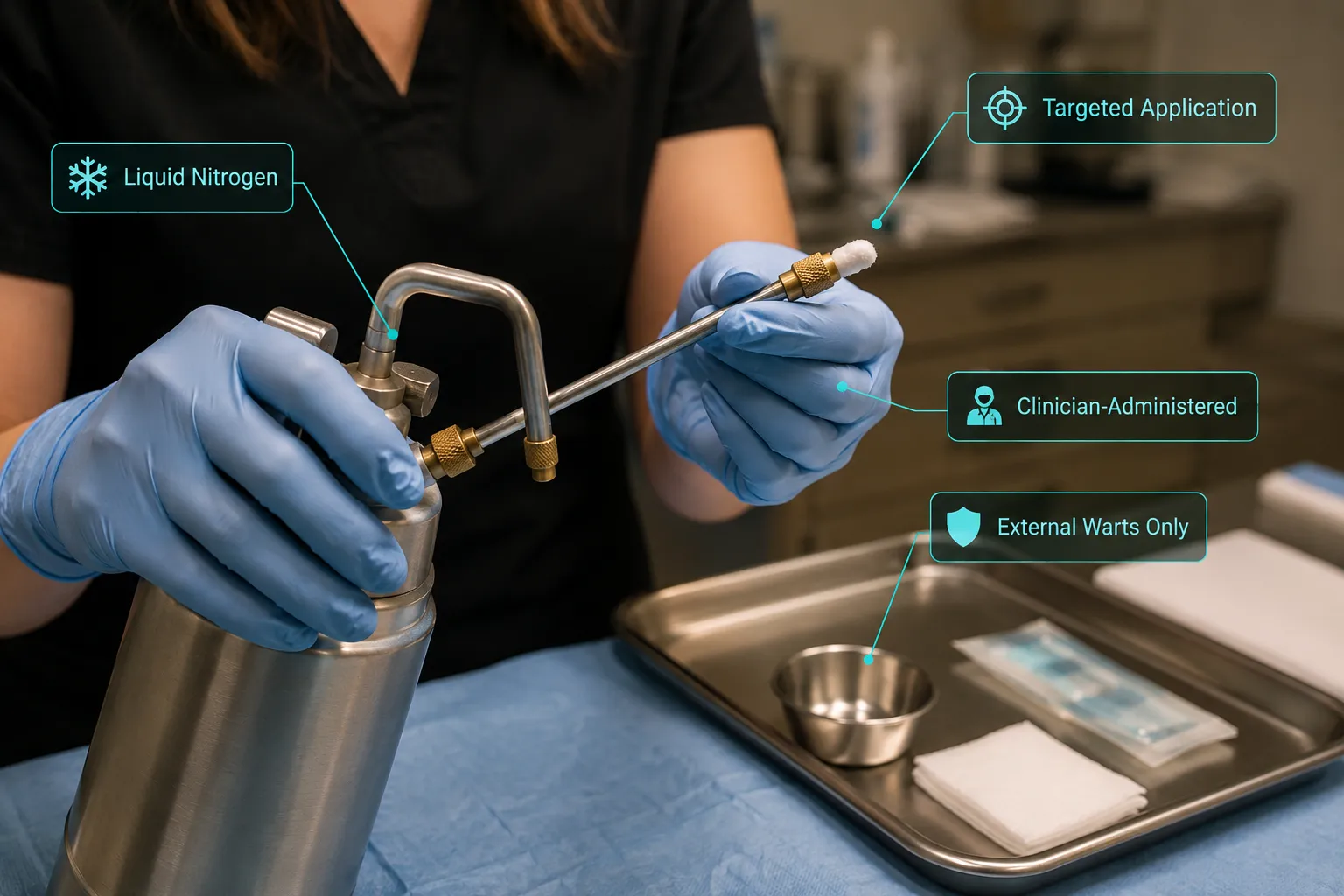
Vaginal warts are typically treated with cryotherapy or TCA applied by a clinician under direct visualization. Cervical warts require colposcopic evaluation first, a clinician needs to assess the cervix before treating anything there. Intra-anal warts are managed by a specialist, usually with TCA, cryotherapy, or surgical excision depending on extent.
If you have been told you have internal warts, the next step is a referral to a gynecologist or colorectal specialist, not a trip to the pharmacy.
Who Is at Higher Risk for Severe or Recurrent Genital Warts?
Most women with genital warts have a straightforward course of treatment. A few groups are more likely to experience extensive warts, faster progression, or poor treatment response:
- Immunocompromised women, including those living with HIV or on immunosuppressive therapy after organ transplant, often have larger wart burdens and higher recurrence rates
- Pregnant women, warts can grow rapidly during pregnancy due to hormonal and immune changes; treatment options are limited to TCA and cryotherapy
- Unvaccinated women, those who have not received the HPV vaccine remain susceptible to reinfection with types 6 and 11 after warts clear
Discouraged and Outdated Treatments
Podophyllin resin, an older, unpurified compound once applied in clinics, has largely been replaced by the more standardized podophyllotoxin. It is no longer recommended in current guidelines.
Over-the-counter salicylic acid products and home cryotherapy kits designed for hand or foot warts should not be used on genital skin. The concentration is wrong for mucosal tissue, and the risk of chemical burns is real. This applies to any OTC wart remover, regardless of how it is marketed.
5-fluorouracil (5-FU) cream is no longer recommended for genital warts in women due to its toxicity profile and the availability of safer alternatives.
Newer Options and What the Research Shows
A nitrizinc complex solution marketed as Verrutop has been included in updated 2026 guidelines as an option for refractory external warts, cases that have not responded to standard first- and second-line treatments. Evidence is still accumulating, but early data suggests it is effective for persistent warts without the systemic absorption concerns of some older agents.
Some women ask about AHCC, a mushroom-derived supplement studied for its effects on HPV clearance. The evidence is preliminary and specific to high-risk HPV strains rather than the wart-causing types. The AHCC benefits for women overview covers what the current data actually shows, without overstating it.
Research into therapeutic vaccines targeting HPV 6 and 11 is ongoing. As of 2026, none have reached approval for clinical use, but several candidates are in phase II trials.
Can the HPV Vaccine Help If You Already Have Warts?
The HPV vaccine (Gardasil 9) does not treat existing warts or clear a current HPV 6 or 11 infection. What it does is protect against the other HPV types not yet acquired. If you have genital warts and have not been vaccinated, vaccination is still recommended, it reduces the risk of acquiring additional high-risk HPV types. The article on getting the HPV vaccine when you already have genital warts explains the timing and rationale in more detail.
How Contagious Are Genital Warts During and After Treatment?
Visible warts are highly contagious through skin-to-skin contact. Treating and clearing the warts reduces, but does not eliminate, transmission risk, because the virus can still be present in surrounding skin without causing visible lesions. The genital warts contagiousness guide explains transmission risk in practical terms, including what barrier protection does and does not cover.
Informing recent sexual partners is worth doing. It is not about blame, the timing of HPV acquisition is often impossible to determine, but partners may want to be examined and consider vaccination if they have not already received it.
Cure for Genital Warts in Women: What to Realistically Expect
Treatment works. Most women who complete a full course of first-line therapy achieve wart clearance. Recurrence in the first three months is common and does not mean the treatment failed or that you did something wrong, it reflects the biology of how HPV persists in skin tissue.
After 12-24 months without recurrence, most clinicians consider the infection to be in long-term remission. New outbreaks after that window are less common, though not impossible in women who are immunosuppressed or under significant physical stress.
The most important next step is a confirmed diagnosis from a clinician, not a self-diagnosis from photos online. A gynecologist can confirm the diagnosis, rule out other conditions, assess whether any warts are internal, and recommend the most appropriate treatment based on your specific situation. Cell changes are easiest to manage when caught early, and that is exactly what regular screening is for.
Frequently Asked Questions
Can genital warts go away without treatment?
Yes, some visible warts do clear on their own, particularly in women with healthy immune systems. Current guidelines list watchful waiting as a reasonable option for asymptomatic warts. That said, untreated warts can also grow larger or spread to adjacent skin, so most clinicians recommend treatment when warts are symptomatic or expanding.
Is it safe to use salicylic acid or OTC wart removers on genital warts?
No. OTC products designed for hand and foot warts use concentrations that are too high and too irritating for genital skin and mucosa. Using them on genital tissue risks chemical burns and will not effectively treat HPV-related warts. Only use treatments that have been prescribed or applied by a clinician for genital warts specifically.
How long does treatment usually take?
This varies depending on the method and the extent of the warts. Patient-applied treatments like imiquimod or podophyllotoxin are used over several weeks. Cryotherapy typically requires two to four sessions spaced one to two weeks apart. Larger or more extensive warts may need surgical excision, which is a single procedure but with a healing period afterward.
Will genital warts affect a Pap smear result?
Genital warts are caused by HPV types 6 and 11, which are not the strains screened for in a standard Pap smear. A Pap smear tests for abnormal cervical cells associated with high-risk HPV types like 16 and 18. Having genital warts does not directly cause an abnormal Pap result, though it is possible to have both a low-risk and a high-risk HPV type at the same time. If you have questions about an ASC-US Pap result, that is a separate issue from genital warts.
Do genital warts increase the risk of cervical cancer?
The HPV types that cause genital warts (6 and 11) are classified as low-risk and are not associated with cervical cancer. Cervical cancer is linked to high-risk types, primarily HPV 16 and 18. Having genital warts does not mean you have a high-risk HPV infection, though co-infection is possible. Regular cervical screening remains important regardless of your genital wart history.
Can genital warts come back after they have been fully treated?
Yes, recurrence is possible. The HPV virus can persist in surrounding skin tissue even after warts are cleared. Recurrence rates are highest in the first three months after treatment. After 12 to 24 months without a new outbreak, recurrence becomes less likely, though not impossible, particularly if immune function changes.