}
Cryotherapy removes genital warts by freezing them with liquid nitrogen, and for most people, it works. A single session clears visible warts in a significant portion of cases, though a few repeat visits are often needed. This guide to cryotherapy for genital warts gives straight answers on how the procedure is done, what to expect, how well it works, and when it makes sense compared to other options.
Key Takeaways
- Cryotherapy uses liquid nitrogen to destroy wart tissue; it does not eliminate the underlying HPV infection
- Clearance rates after a full course of treatment range from roughly 63% to 88%, depending on wart size, location, and immune status
- Most people need two to four sessions, spaced one to three weeks apart
- Recurrence is possible because HPV can persist in surrounding tissue even after warts clear
- Cryotherapy is safe during pregnancy and is one of the few provider-applied options recommended in that setting
How Cryotherapy for Genital Warts Actually Works
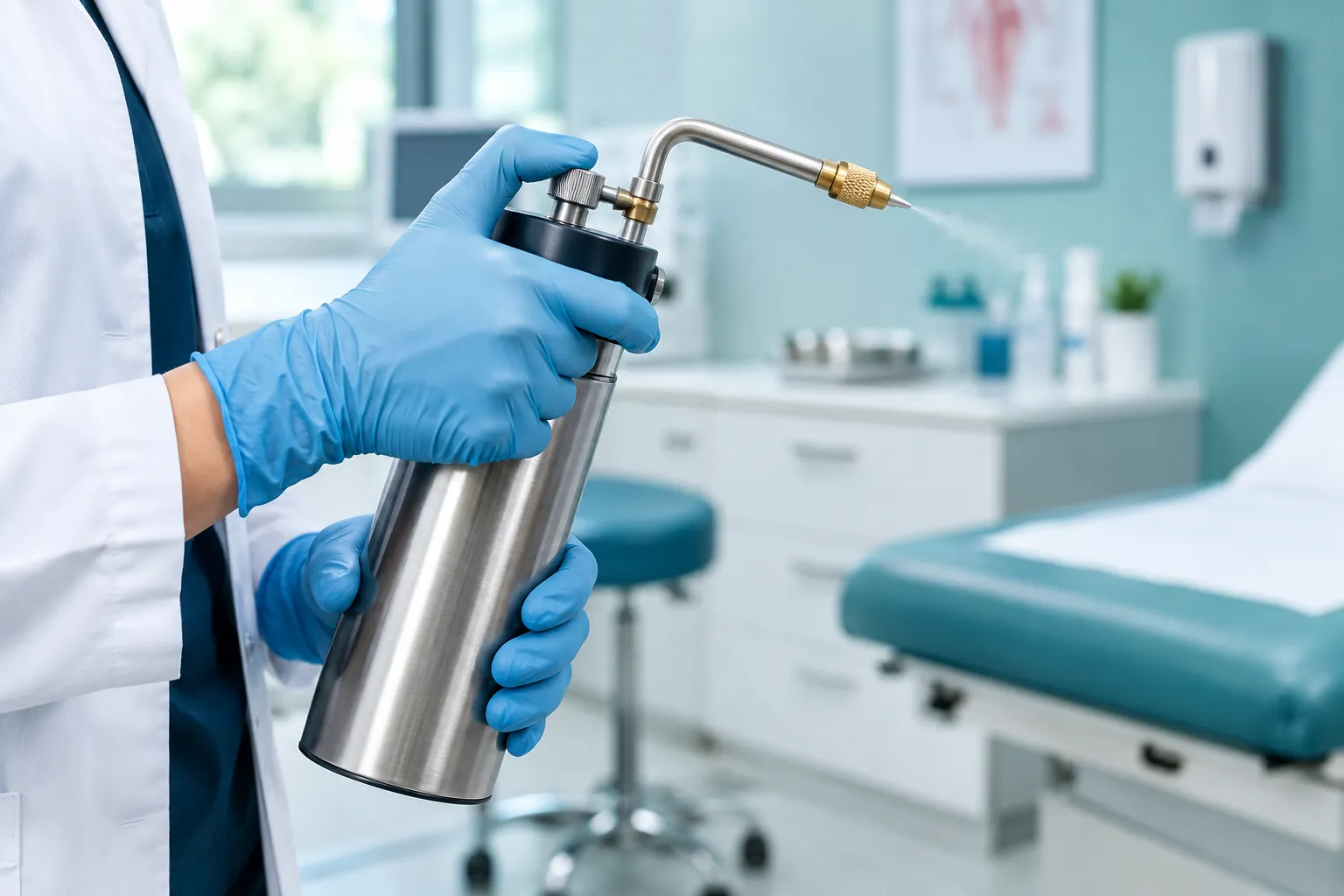
Liquid nitrogen reaches temperatures around -196°C (-321°F). When applied to a wart, it rapidly freezes the water inside infected cells, forming ice crystals that rupture cell membranes and destroy the tissue. The freeze-thaw cycle, freezing, allowing the tissue to thaw, then freezing again, is more effective than a single freeze because the second cycle penetrates deeper and reaches cells that the first pass missed.
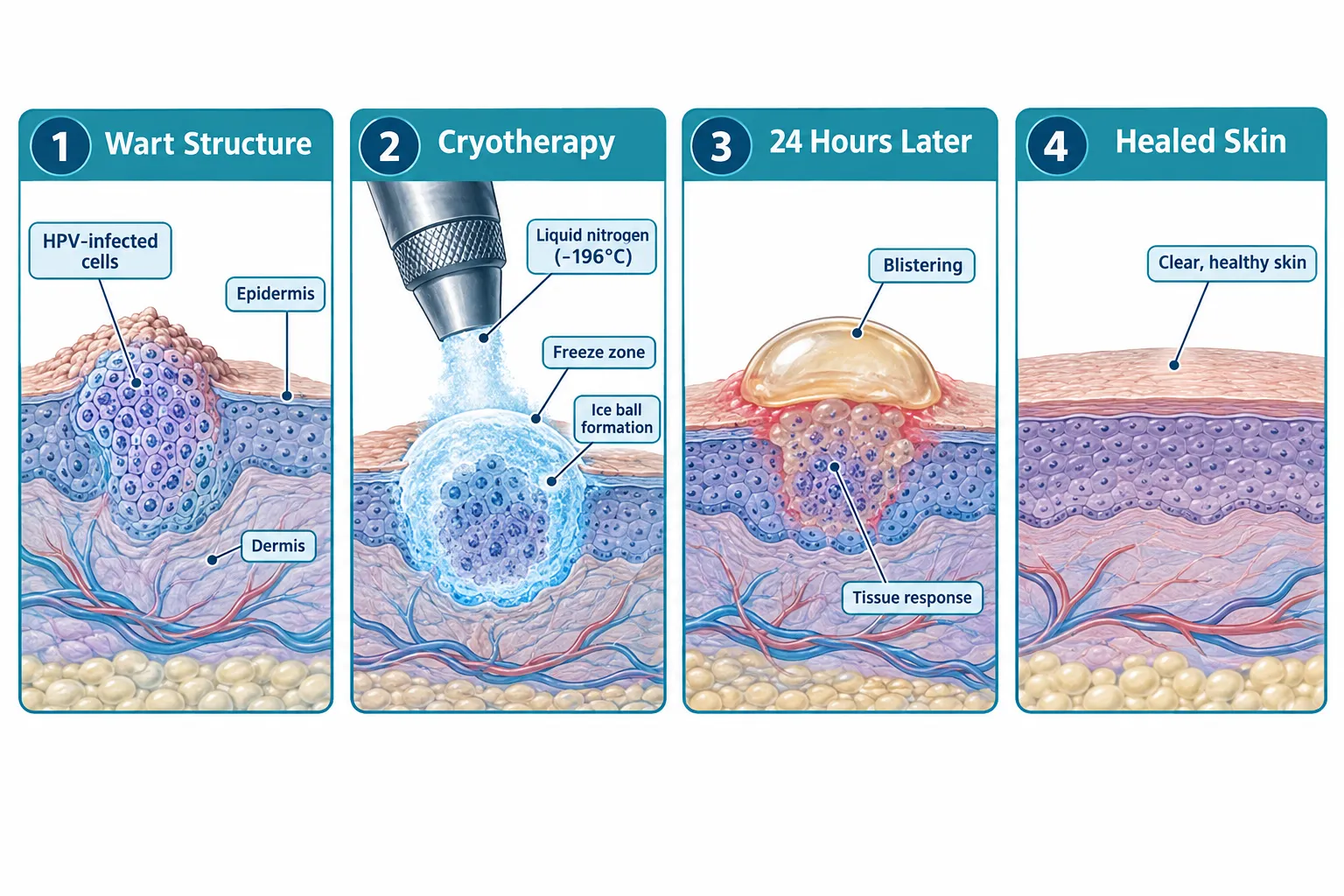
The provider applies liquid nitrogen either with a cryotherapy spray gun or a cotton-tipped applicator, targeting the wart and a small margin of surrounding tissue, typically one to two millimeters. Each wart is treated individually. The entire appointment usually takes five to fifteen minutes depending on the number and size of warts.
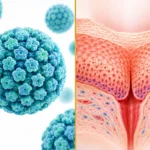
Cryotherapy destroys the visible wart. It does not clear HPV types 6 and 11, the low-risk strains responsible for genital warts, from the surrounding skin. That distinction matters when you’re thinking about recurrence, which is covered below.
What the Procedure Feels Like and What Happens After
Most people describe the sensation as a sharp sting or burning cold during the freeze, followed by a throbbing ache for a few hours afterward. It’s uncomfortable, not unbearable for most. A topical anesthetic can be applied beforehand, particularly for larger wart clusters or sensitive locations like the vaginal introitus or perianal area.
Within 24 to 48 hours, a blister typically forms over the treated site. That blister breaks down over the following days, and the area heals over one to three weeks. Mild swelling, redness, and a clear or slightly cloudy discharge from the blister are all expected. Keeping the area clean and dry speeds healing.
Avoid sexual contact until the treated skin has fully healed, this protects both comfort and reduces the chance of transmitting HPV to a partner. Genital warts are contagious, and broken skin during the healing phase increases transmission risk.
Who’s at Higher Risk for Recurrence After Treatment
Some people are more likely to see warts return after cryotherapy, and knowing that upfront helps set realistic expectations.
- Immunocompromised individuals, those living with HIV, on immunosuppressive therapy after organ transplant, or on long-term corticosteroids, have lower clearance rates and higher recurrence because their immune systems can’t suppress residual HPV as effectively
- People with extensive or large wart clusters, wart burden at baseline is one of the strongest predictors of needing more sessions and of recurrence
- Smokers, smoking impairs local immune surveillance in mucosal tissue, which appears to reduce treatment response rates
- Unvaccinated individuals, the HPV vaccine (types 6 and 11 are covered by Gardasil 9) doesn’t treat existing infections, but vaccination status affects future reinfection risk
How Well Does Cryotherapy Work? The Actual Numbers
Clearance rates in clinical studies vary, but most estimates for cryotherapy fall between 63% and 88% after a complete course of treatment. “Complete course” typically means two to four sessions. A single session clears warts in roughly 40% to 60% of cases, which is why follow-up appointments are the norm, not the exception.
Recurrence rates are the harder number to sit with. Even after full clearance, warts return in approximately 20% to 30% of people within three to six months. This reflects HPV persistence in the surrounding epithelium, not a failure of the procedure itself. The virus can remain in clinically normal-looking skin and cause new warts to form later.
Cryotherapy compares reasonably well to other provider-applied treatments. Trichloroacetic acid (TCA) has similar clearance rates but may be preferred for smaller, fewer warts. Surgical excision clears warts in a single session but requires local anesthesia and carries a higher risk of scarring. For people who prefer home-based treatment, topical medications for genital warts like imiquimod and podofilox are effective alternatives, though they require weeks of consistent self-application.
Site-Specific Guidance: Where Cryotherapy Is and Isn’t Used
Location matters. Cryotherapy is appropriate for external genital warts, on the vulva, penis shaft, scrotum, and perianal skin. It can also be used for vaginal warts, though this requires careful technique to avoid damage to the vaginal wall.
Cervical warts are not treated with cryotherapy in the same office setting as external warts. Cervical lesions require colposcopy and are managed differently. If you have warts on the cervix, your provider will refer you for a separate evaluation.
Intra-anal warts, those inside the anal canal rather than on the perianal skin, require anoscopy for visualization and are typically treated by a specialist. The management of anal genital warts follows its own protocol because of the anatomy involved.
Urethral warts are a distinct challenge. Cryotherapy can be used for meatal warts (at the urethral opening), but warts extending into the urethra require urological referral.
Cryotherapy During Pregnancy
Genital warts often grow faster during pregnancy due to immune and hormonal changes. Treating them matters because large wart clusters can complicate delivery, and, rarely, HPV types 6 and 11 can cause recurrent respiratory papillomatosis in infants born through an infected birth canal.
Cryotherapy is one of the few treatments considered safe in pregnancy. Podophyllin and podofilox are contraindicated. Imiquimod lacks sufficient safety data for use in pregnancy. Cryotherapy, TCA, and surgical excision are the accepted options. Your obstetric provider should be involved in the treatment decision.
Combination Therapy and Recurrent Warts
For warts that don’t clear after three or four cryotherapy sessions, or that keep coming back, combining treatments is a reasonable next step. Cryotherapy followed by imiquimod cream applied at home between sessions has shown better clearance in some studies than either treatment alone. The rationale: cryotherapy destroys visible wart tissue, while imiquimod stimulates local immune response against residual HPV-infected cells.
Extensive wart burden, large clusters, multiple anatomical sites, may be better managed with surgical excision or laser ablation from the start, rather than cycling through multiple cryotherapy sessions. This is a conversation worth having with your provider early if your warts are widespread.
Does Cryotherapy Cure HPV?
No. This is the most common misunderstanding, and it’s worth being direct about it. Cryotherapy clears visible warts. It does not eliminate HPV from your body.
HPV types 6 and 11 can persist in the surrounding skin after wart clearance. For most people with a healthy immune system, the virus becomes undetectable over time, typically within one to two years. But whether genital warts are fully curable depends on how you define “cured.” Warts can be cleared. The virus may or may not persist.
That’s also why genital warts sometimes go away on their own without treatment in some people, the immune system suppresses the virus and the warts resolve. Treatment accelerates that process and reduces the period of transmission risk.

When Cryotherapy Is the Right Choice
Cryotherapy is a strong first-line option when:
- Warts are few in number and clearly defined
- You want a provider-applied treatment rather than a weeks-long home regimen
- You are pregnant and need a safe treatment option
- Warts are located in areas where topical creams are difficult to apply accurately
It may not be the best first choice when warts are very extensive (surgical excision may be more efficient), when you have limited access to repeat clinic visits (home-based topical therapy may be more practical), or when warts are in internal locations that require specialist equipment.
Frequently Asked Questions
How many cryotherapy sessions will I need?
Most people need two to four sessions, spaced one to three weeks apart. The exact number depends on how many warts you have, their size, and how your body responds after the first treatment. Your provider will reassess at each visit and adjust the plan.
Can I have sex after cryotherapy treatment?
Wait until the treated area has fully healed, usually one to three weeks. The blistering and open skin that follow treatment increase both discomfort and the risk of passing HPV to a partner.
Will cryotherapy leave a scar?
Scarring is uncommon when the procedure is done correctly. Hypopigmentation, a lighter patch of skin at the treated site, can occur, particularly with aggressive freezing or in people with darker skin tones. This usually fades over several months.
Is cryotherapy painful?
Most people find it uncomfortable rather than severely painful. The freeze itself stings sharply, and there’s often a dull ache for a few hours after. For sensitive areas or large clusters, a topical anesthetic applied beforehand makes the procedure more tolerable.
If my warts come back, does that mean the treatment failed?
Not exactly. Recurrence after cryotherapy usually reflects HPV persisting in surrounding tissue, not a procedural failure. It’s common enough, around 20% to 30% within six months, that your provider should discuss it with you upfront rather than treating it as a surprise.
Does having genital warts mean I have a high-risk HPV type?
No. Genital warts are caused by HPV types 6 and 11, which are low-risk strains, they do not cause cervical or other HPV-related cancers. Genital warts are an STD caused by a distinct set of HPV types from those linked to cancer. If you have concerns about high-risk HPV, that’s a separate question your provider can address through cervical screening or HPV testing.
Moving Forward After Cryotherapy
Cryotherapy is an effective, well-established treatment. Most people who complete a full course clear their visible warts. The practical next steps: keep your follow-up appointments, protect healing skin between sessions, and have a direct conversation with your provider about recurrence risk given your specific situation, immune status, wart burden, and location all affect the picture. Cell changes and persistent infections are easiest to manage when caught and addressed early, that’s what consistent follow-up is for.