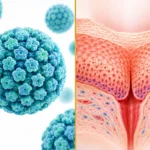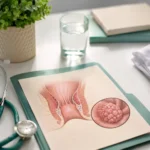
Genital warts are caused by low-risk HPV types, most often HPV 6 and 11, and cryotherapy is one of the most established ways to remove them. It works. It’s safe in most situations, including pregnancy. And understanding what cryotherapy for genital warts actually involves, the technique, the timeline, the realistic outcomes, puts you in a much better position to decide whether it’s right for your situation.
Key Takeaways
- Cryotherapy uses liquid nitrogen to freeze and destroy genital wart tissue, with clearance rates of roughly 80-88% after three to four sessions for solitary warts.
- Sessions are repeated every one to four weeks; most treatment courses run six to eight visits over up to 16 weeks.
- Recurrence after treatment is common, around 25-40%, because cryotherapy removes visible warts but does not eliminate the underlying HPV infection.
- It is considered safe during pregnancy and is a first-line option in most major clinical guidelines as of 2026.
- No single treatment is clearly superior to all others; lesion type, location, immune status, and your own preferences all shape the best choice.
How Cryotherapy for Genital Warts Actually Works
Cryotherapy destroys wart tissue by applying extreme cold, typically liquid nitrogen, directly to the lesion. The rapid freeze causes ice crystals to form inside and between cells, rupturing them. The tissue dies, blisters, and eventually sloughs off as the skin heals underneath.
The technical parameters matter more than most people realize. Canadian STI guidelines recommend freezing each wart for up to 15 seconds, producing a visible frozen halo of 1-2 mm around the lesion, with one to three freeze, thaw cycles per session. UK BASHH guidance similarly advises freezing until a 1 mm halo is visible, for up to 20 seconds, then allowing full thaw before repeating. Provincial guidance in British Columbia describes cycles of 5-10 seconds each, repeated two to three times per visit.
These aren’t arbitrary numbers. Too little freezing leaves viable wart cells behind. Too much risks scarring or damage to surrounding healthy tissue, particularly important in sensitive anogenital locations.
Sessions are typically spaced every one to four weeks, and a full course can run up to 16 weeks. Most people need more than one visit. That’s expected, not a sign that treatment is failing.
What the Procedure Feels Like
Pain during cryotherapy is common and real. Most people describe a sharp stinging or burning sensation during the freeze, followed by a dull ache afterward. Blistering at the treatment site is normal and usually resolves within one to two weeks. Temporary changes in skin pigmentation, either lightening or darkening, can occur, especially in people with darker skin tones.
Scarring is possible if treatment is too aggressive, which is why dosing and the number of cycles per session are carefully calibrated by the provider.
Clearance Rates, Recurrence, and What to Expect
Cryotherapy clears visible genital warts in roughly 80-88% of cases after three to four treatment sessions for solitary lesions. That’s a meaningful result. It’s also not the whole picture.
Recurrence rates sit around 25-40% even after successful clearance. This happens because cryotherapy removes the visible wart tissue but does not eliminate HPV itself from the surrounding skin. The virus can remain dormant in nearby cells and trigger new wart growth weeks or months later.
This isn’t a failure of the treatment, it reflects how HPV behaves. For most people, the immune system eventually suppresses the virus on its own. The genital warts treatment overview covers the full range of options, including how recurrence rates compare across different approaches.
No single treatment has been shown to be clearly superior across all outcomes. Cryotherapy, topical options like podophyllotoxin and imiquimod, trichloroacetic acid, laser, and surgical excision all show broadly similar clearance and recurrence ranges in the evidence. What drives the choice is your specific situation: lesion size and location, pregnancy status, immune function, and what’s practically accessible to you.
Cryotherapy vs. Other Treatments: A Quick Comparison
| Treatment | Applied By | Suitable in Pregnancy | Notes |
|---|---|---|---|
| Cryotherapy (liquid nitrogen) | Provider | Yes | First-line; good for keratinized or long-standing warts |
| Imiquimod 5% cream | Self-applied | Not recommended | Immune-modulating; takes weeks; see topical medications for genital warts |
| Trichloroacetic acid (TCA) | Provider | Yes | Chemical destruction; good for small, moist lesions |
| CO₂ laser | Specialist | Situational | Roughly twice the clearance rate of cryotherapy in some studies for refractory or immunocompromised cases |
| Surgical excision | Provider | Situational | Immediate removal; useful for large or pedunculated warts |
Who’s at Higher Risk for Difficult-to-Treat Genital Warts
Some people are more likely to have warts that are resistant to standard cryotherapy courses or that recur frequently.
- Immunocompromised individuals, including people living with HIV and organ transplant recipients on immunosuppressive therapy, often have larger, more persistent wart burdens that may require laser or combination approaches.
- Pregnant people have limited treatment options; cryotherapy and TCA are considered acceptable, but warts can grow more rapidly during pregnancy due to immune changes.
- People with extensive or perianal wart involvement may need more sessions or adjunct therapy; the guide to anal genital warts covers that specific presentation in more detail.
- Smokers have generally slower immune clearance of HPV, which can affect both wart persistence and recurrence rates after treatment.
When Cryotherapy Is, and Isn’t, the Right Choice
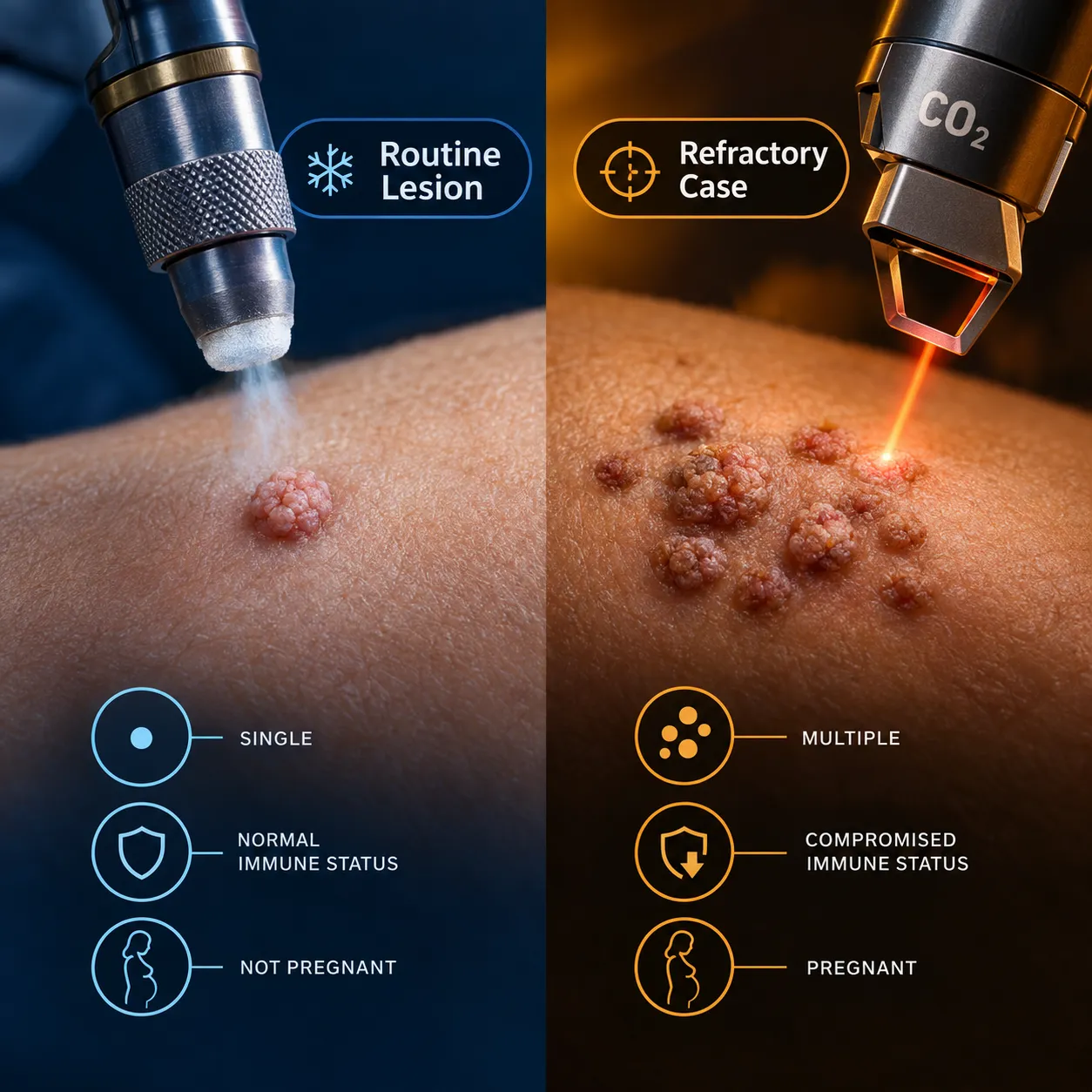
Cryotherapy is well-suited to keratinized or long-standing warts, and it’s often the default first-line choice precisely because it’s effective, doesn’t require a prescription, and leaves minimal scarring when applied correctly. It’s also one of the few treatment options considered safe during pregnancy and lactation.
There are situations where it’s not the best fit. The CDC explicitly advises against using a cryoprobe inside the vagina due to the risk of vaginal perforation and fistula formation, application site and device choice are not interchangeable. Over-the-counter cryotherapy products sold for hand or plantar warts are not appropriate for genital warts; the concentration, technique, and tissue sensitivity are entirely different, and a clinical diagnosis should come before any treatment begins.
For warts that haven’t responded after multiple cryotherapy sessions, or in people who are immunocompromised, CO₂ laser therapy has shown roughly twice the clearance rate of cryotherapy in some comparative studies. That’s a meaningful difference for refractory cases, and it’s shaping current expert opinion toward laser as the preferred option when cryotherapy has already been tried.
Combination approaches are also increasingly used: imiquimod to reduce overall wart burden in a larger area, followed by cryotherapy for remaining lesions, or photodynamic therapy alongside physical treatments to lower recurrence. A 2024 randomized trial found no statistically significant difference between supervised 5% potassium hydroxide solution and cryotherapy for overall treatment response, a finding that underscores how closely matched several options are when used correctly.
If you’re weighing whether treatment is even necessary, the page on whether genital warts go away on their own lays out what the evidence shows about spontaneous clearance. And if you’re earlier in the process of understanding what you’re dealing with, the genital warts overview covers diagnosis and what to look for.
A Note on HPV Type and Long-Term Risk
Genital warts are caused by low-risk HPV types, primarily HPV 6 and 11. These types do not cause cervical cancer or the other HPV-related cancers associated with high-risk types like HPV 16 and 18. Treating the warts addresses the visible lesion; it doesn’t change your long-term cancer risk profile, which is determined by which HPV types you carry. The HPV types explainer covers the distinction between low-risk and high-risk strains in plain terms.
Cryotherapy Genital Warts: Practical Steps Before and After Treatment
Before your first session, a provider needs to confirm the diagnosis clinically. Genital warts have a characteristic appearance, but other conditions can look similar, and treating the wrong lesion with liquid nitrogen causes unnecessary tissue damage.
After treatment, expect some soreness and possible blistering at the site. Keep the area clean and dry. Avoid sexual contact until the treated skin has healed, typically one to two weeks. If blistering is severe, the area shows signs of infection (increasing redness, warmth, discharge), or pain is not manageable, contact your provider.
Attend all scheduled follow-up appointments. Skipping sessions is the most common reason a course of cryotherapy doesn’t achieve full clearance. The treatment depends on cumulative freeze-thaw cycles over time, not a single session.
If warts return after a completed course, that’s common and treatable, not a sign that something went wrong. Talk to your doctor about whether to repeat cryotherapy, switch to a different modality, or add a topical agent. The full treatment options guide outlines how providers typically approach recurrent cases.
Frequently Asked Questions
How many cryotherapy sessions does it take to clear genital warts?
Most people need between three and eight sessions, spaced one to four weeks apart. Solitary warts tend to respond faster; multiple or larger lesions typically require more visits. A full treatment course can run up to 16 weeks. If there’s no meaningful response after several sessions, your provider will likely reassess and consider alternative approaches.
Is cryotherapy for genital warts painful?
Yes, it causes real discomfort. Most people feel a sharp stinging or burning sensation during the freeze, followed by a dull ache for several hours afterward. Blistering is normal and usually resolves within one to two weeks. Pain intensity varies depending on lesion location and the number of warts treated per session.
Can genital warts come back after cryotherapy?
Recurrence is common, roughly 25-40% of people see warts return after successful clearance. Cryotherapy removes visible wart tissue but doesn’t eliminate HPV from surrounding skin. The virus can remain dormant and trigger new growth later. Most people’s immune systems eventually suppress it, but timing varies considerably.
Are there genital warts that cryotherapy can’t treat?
Cryotherapy is not recommended inside the vagina using a cryoprobe due to perforation risk. For warts in the anal canal, internal vaginal walls, or cervix, other approaches are used. For warts that have not responded after multiple cryotherapy sessions, particularly in immunocompromised people, CO₂ laser or surgical excision may be more effective.
Does treating genital warts reduce the risk of passing HPV to a partner?
Removing visible warts reduces but does not eliminate transmission risk. HPV can be present in skin surrounding the treated area even when no warts are visible. Condom use lowers transmission risk but doesn’t eliminate it entirely, since HPV spreads through skin-to-skin contact in the genital region. The HPV in men guide covers transmission and risk in more detail.
Can I use over-the-counter wart treatments on genital warts?
No. OTC cryotherapy products and salicylic acid treatments designed for hand or plantar warts are not appropriate for genital warts. Genital skin and mucosa are far more sensitive, and using the wrong product can cause chemical burns or tissue damage. Genital warts require a clinical diagnosis and provider-supervised treatment.