Genital warts caused by HPV types 6 and 11 are treatable, and most people who go through condyloma genital warts treatment see visible lesions clear with the right approach. Treatment does not eliminate the virus from your body, but it does remove the warts, reduce symptoms, and lower, though not eliminate, the chance of passing HPV to a partner. Knowing what the process actually looks like, from the first appointment through follow-up, makes it easier to move through it.
Key Takeaways
- Condyloma acuminata (genital warts) are caused by low-risk HPV types 6 and 11, not the types linked to cervical cancer.
- Treatment removes visible warts; it does not clear the underlying HPV infection.
- Options range from self-applied creams at home to in-clinic procedures like cryotherapy, electrocautery, and laser removal.
- Recurrence is common, follow-up visits matter as much as the initial treatment.
- Over-the-counter wart products meant for hands or feet should never be used on genital tissue.
What Condyloma Acuminata Actually Is
Genital warts, clinically called condyloma acuminata, are soft, skin-colored growths that appear on or around the genitals, perineum, or anus. They are caused by HPV types 6 and 11, which are classified as low-risk strains. That means they are not the types associated with cervical, anal, or oropharyngeal cancers. If you’ve been told you have genital warts, you do not have a cancer diagnosis, and these strains do not cause one.
The warts themselves can be flat or raised, single or clustered, small or extensive. Some cause itching or discomfort; many cause no symptoms at all. The full picture of what genital warts look like and how they’re identified covers the visual range in more detail.
One thing worth knowing before starting any treatment: the goal is symptom relief and removal of visible lesions, not a cure for the virus. HPV can persist in surrounding skin even after warts are gone, which is why recurrence happens and why follow-up is built into every treatment plan.
Who’s at Higher Risk for Extensive or Recurrent Condyloma
Not everyone with HPV types 6 or 11 develops warts, and not everyone who develops warts has the same experience with treatment. A few groups tend to have more extensive lesions or higher recurrence rates:
- Immunocompromised individuals, including people living with HIV and organ transplant recipients on immunosuppressive therapy, often develop larger, more widespread warts that respond more slowly to standard treatments.
- Pregnant people, warts can grow faster during pregnancy due to hormonal and immune changes, and some treatment options are restricted.
- Unvaccinated adults, people who haven’t received the HPV vaccine (which covers types 6 and 11) have no prior immune protection against these strains.
- People with a history of anal receptive intercourse, at higher risk for anal canal condyloma, which requires a different clinical approach than external warts.
Your First Appointment: What the Doctor Will Do
The first visit is mostly an assessment. Your provider will take a brief sexual and medical history, review any current medications, and examine the affected area. For external genital warts, this is usually a straightforward visual exam. For warts near or inside the anal canal, an anoscopy may be needed.
Biopsy is not routine for typical-appearing warts, but your provider may recommend one if a lesion looks unusual, doesn’t respond to standard treatment, or raises any concern about a different diagnosis. This is not a sign that something is wrong, it’s standard practice for atypical presentations.
Do not use over-the-counter wart removers designed for hands or feet on genital tissue. The skin in the genital area is far more sensitive, and these products can cause serious chemical burns. Genital warts need to be diagnosed and treated by a healthcare provider.
Condyloma Genital Warts Treatment: What to Expect From Each Option
Treatment falls into two broad categories: things you apply at home, and procedures done in a clinic. Your provider will recommend an approach based on the size, number, and location of warts, your overall health, and your preference.
Patient-Applied Topical Treatments
These are prescription creams or gels you use at home on external warts. They are not suitable for internal lesions.
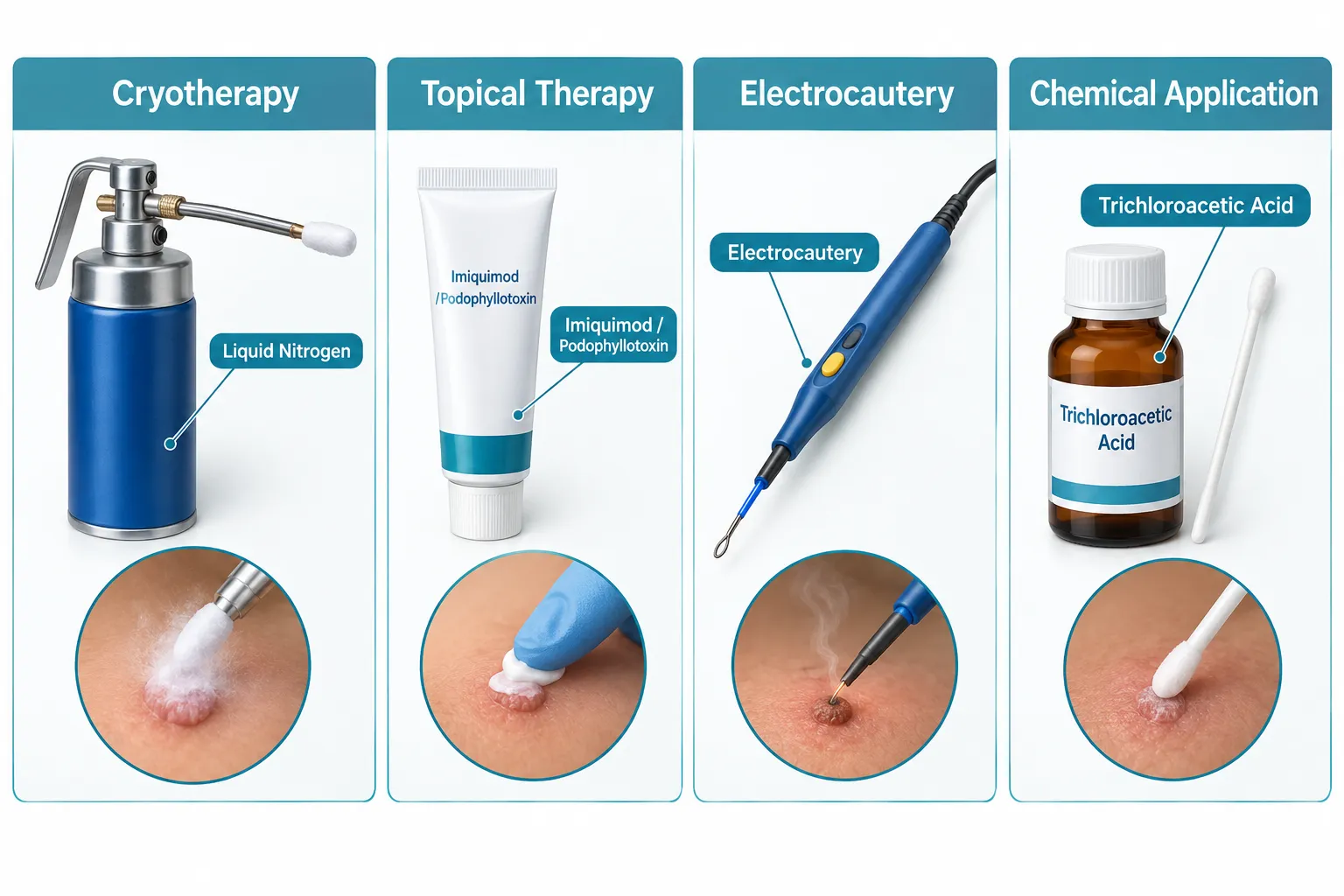
- Podophyllotoxin (0.5% solution or 0.15% cream), applied twice daily for three consecutive days, followed by four days off. This cycle repeats for several weeks. It works by disrupting the cell division of wart tissue.
- Imiquimod 5% cream, applied three times per week for up to 16 weeks. It works by stimulating a local immune response rather than directly destroying tissue. Skin redness and irritation at the application site are expected.
- Sinecatechins 15% ointment, a green tea extract-based treatment applied three times daily for up to 16 weeks. It’s an option for people who don’t tolerate imiquimod well.
All three require consistent application over weeks. Missing applications or stopping early reduces effectiveness.
Provider-Applied and In-Clinic Treatments
These are performed at a sexual health clinic, dermatology office, or gynecology practice.
- Cryotherapy, liquid nitrogen is applied directly to warts, freezing and destroying the tissue. It’s effective but often requires multiple sessions spaced one to two weeks apart. Expect local pain, swelling, and blistering after each session.
- Trichloroacetic acid (TCA), a chemical applied by the provider that causes controlled destruction of wart tissue. It can be used on mucous membrane surfaces where topical creams are not appropriate.
- Electrocautery and surgical excision, wart tissue is burned or cut away. This is more commonly used for larger or more extensive lesions, or when other treatments haven’t worked. Recovery involves wound care and some post-procedure discomfort.
- Laser ablation, used for extensive warts, warts during pregnancy, or lesions that haven’t responded to other methods. It requires anesthesia for larger areas and carries a small risk of scarring.
For anal canal condyloma specifically, more involved approaches, including layer-by-layer electrocautery under anesthesia, may be needed. The guide to anal genital warts covers what that process involves.
Watchful Waiting
This is a legitimate option. Some warts resolve on their own without treatment, particularly in people with healthy immune systems. If warts are small, not causing symptoms, and not in a location that creates practical problems, your provider may discuss observation as a reasonable path. The evidence on whether genital warts can go away without treatment is worth reading if you’re weighing this option.
Treatment During Pregnancy
If you’re pregnant and have genital warts, the approach changes. Podophyllin and imiquimod are generally avoided during pregnancy due to potential fetal risk. Cryotherapy and surgical removal are the preferred options for managing symptomatic or large warts while minimizing risk. Warts can grow more rapidly during pregnancy, so monitoring is important even if you choose not to treat immediately.
What Happens After Treatment: Follow-Up and Recurrence
This is the part most people aren’t prepared for. Recurrence after treatment is common, not because the treatment failed, but because HPV can remain in surrounding skin cells even after visible warts are gone. A recurrence is not a sign that something went wrong.
Follow-up visits are standard after any treatment course. Your provider will confirm that all lesions have cleared, check for new ones, and decide whether another treatment cycle is needed. Most people need more than one treatment session regardless of which method is used.
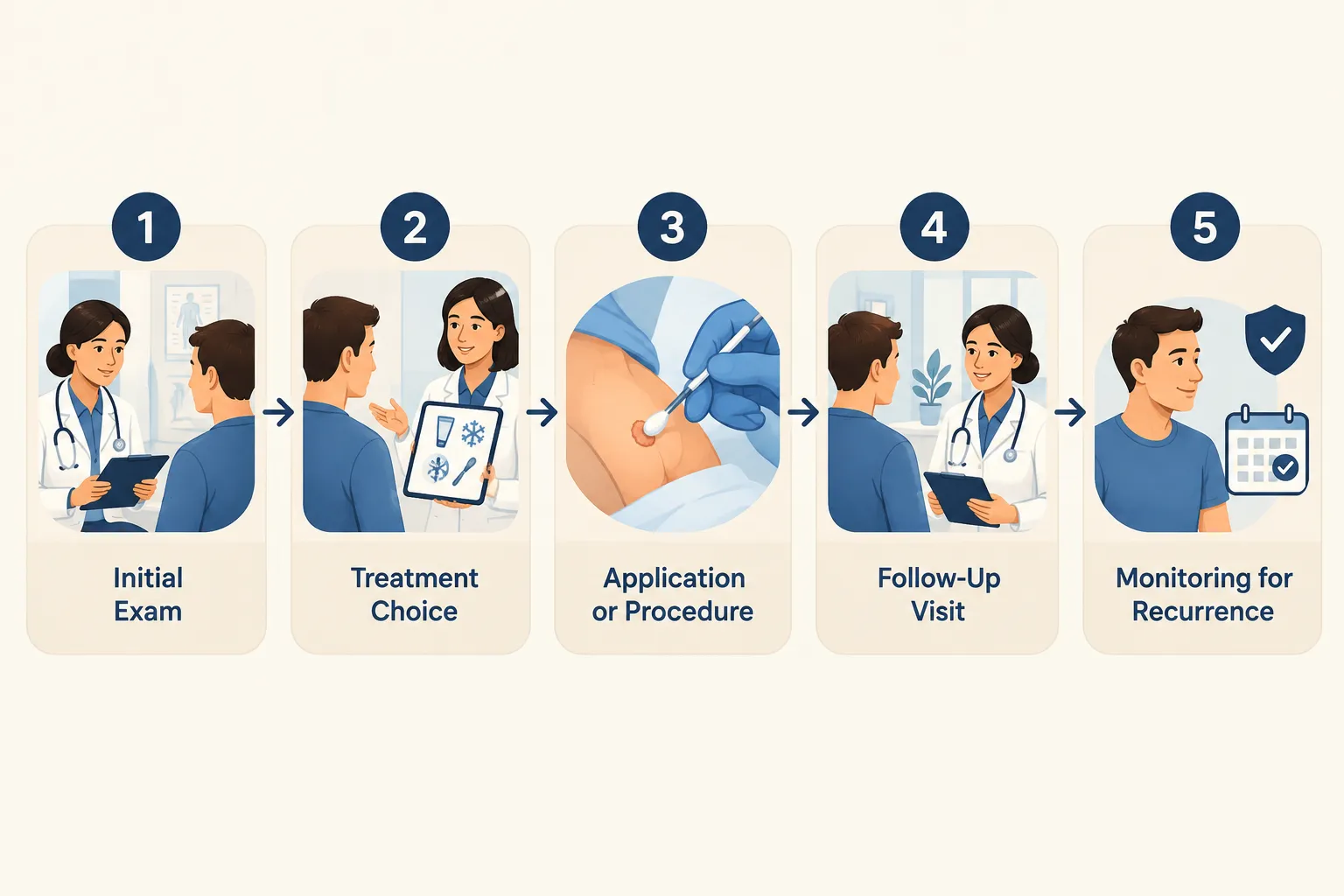
The full breakdown of genital warts treatment options and how they work goes deeper into comparing approaches if you want to prepare specific questions for your provider.
The Role of HPV Vaccination
The HPV vaccine, specifically the nine-valent Gardasil 9, covers types 6 and 11, the strains responsible for the vast majority of genital warts. It is highly effective at preventing new infections with these types. It does not treat existing warts or clear an active HPV infection.
If you’ve already been diagnosed with genital warts, vaccination can still provide protection against HPV types you haven’t been exposed to. The question of whether you can get the HPV vaccine if you already have genital warts is answered in detail on this site. For broader context on how HPV types differ, the plain-English guide to HPV types and risks is a useful starting point.
Frequently Asked Questions
How long does condyloma genital warts treatment take?
It depends on the method and how your body responds. Topical treatments like imiquimod can run for up to 16 weeks. In-clinic procedures like cryotherapy often require multiple sessions over several weeks. There is no single timeline that applies to everyone, immune status, wart size, and location all affect how long treatment takes.
Can genital warts come back after they’ve been treated?
Yes. Recurrence is common because treatment removes visible warts but doesn’t eliminate HPV from surrounding tissue. Most recurrences happen within three months of treatment, which is why follow-up visits are scheduled during that window. Some people have no recurrence; others need repeated treatment cycles.
Is it still possible to transmit HPV after warts have cleared?
Yes. HPV can be present on genital skin that shows no visible warts and that isn’t covered by a condom. Treatment reduces but does not eliminate transmission risk. Discussing this openly with a partner, and understanding how genital warts are transmitted, helps both people make informed decisions.
Are there any treatments being studied that aren’t standard yet?
Photodynamic therapy using 5-aminolevulinic acid (ALA) is being studied as an adjunct treatment for condyloma acuminata, particularly in cases that haven’t responded to standard methods or following surgical removal. It is not yet part of first-line treatment guidelines, but it may be discussed in specialized settings for refractory cases.
Should I tell a partner I’ve had genital warts?
This is a personal decision, but the medical facts are relevant: HPV can be transmitted even when warts aren’t visible, and most sexually active adults will have at least one HPV infection in their lifetime. Disclosure allows partners to make informed choices about vaccination and screening. There is no single right answer, but having accurate information makes the conversation easier.
Moving Forward After Condyloma Genital Warts Treatment
Completing a treatment course is the first step, not the last one. Schedule your follow-up appointment, even if the warts appear to have cleared. Keep that appointment, early recurrences are easiest to address when caught quickly. If you haven’t been vaccinated, ask your provider whether you’re still in an eligible age range; vaccination now protects against strains you haven’t yet encountered.
Genital warts are one of the most common STI-related presentations seen in sexual health clinics. The treatment process is well-established, and most people move through it without serious complications. Cell changes from low-risk HPV types 6 and 11 don’t progress to cancer, that’s what the evidence shows, and that’s worth holding onto as you go through treatment.