Genital warts caused by HPV can go away on their own, and for many people, they do. Roughly one in three cases of visible genital warts clears up without any treatment within three to six months. Whether yours will depends on how well your immune system responds to the low-risk HPV strains, types 6 and 11, that cause them.
That said, “may go away” is not the same as “will go away.” Some warts persist for months or years. Others disappear and then return. Knowing what actually drives clearance, and when treatment makes more sense than waiting, helps you make a better decision with your doctor.
Key Takeaways
- Genital warts are caused by low-risk HPV types 6 and 11, not the high-risk strains linked to cancer.
- About one-third of visible warts clear on their own within three to six months; most HPV infections clear within two years.
- Even after warts disappear, HPV may remain in the body and could cause new warts later.
- Treatment speeds up resolution and reduces symptom burden, it is a real option, not just a shortcut.
- Certain groups, including immunocompromised people and pregnant people, are less likely to clear warts without help and should seek clinical assessment promptly.
What Causes Genital Warts and Why That Matters for Clearance
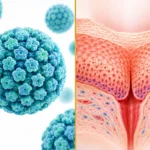
Genital warts are caused by human papillomavirus, specifically types 6 and 11. These are classified as low-risk HPV strains, meaning they are not associated with cervical, anal, or other HPV-related cancers. If you want a fuller picture of how HPV types differ from one another, the HPV types explained guide covers the distinction between low-risk and high-risk strains in plain terms.
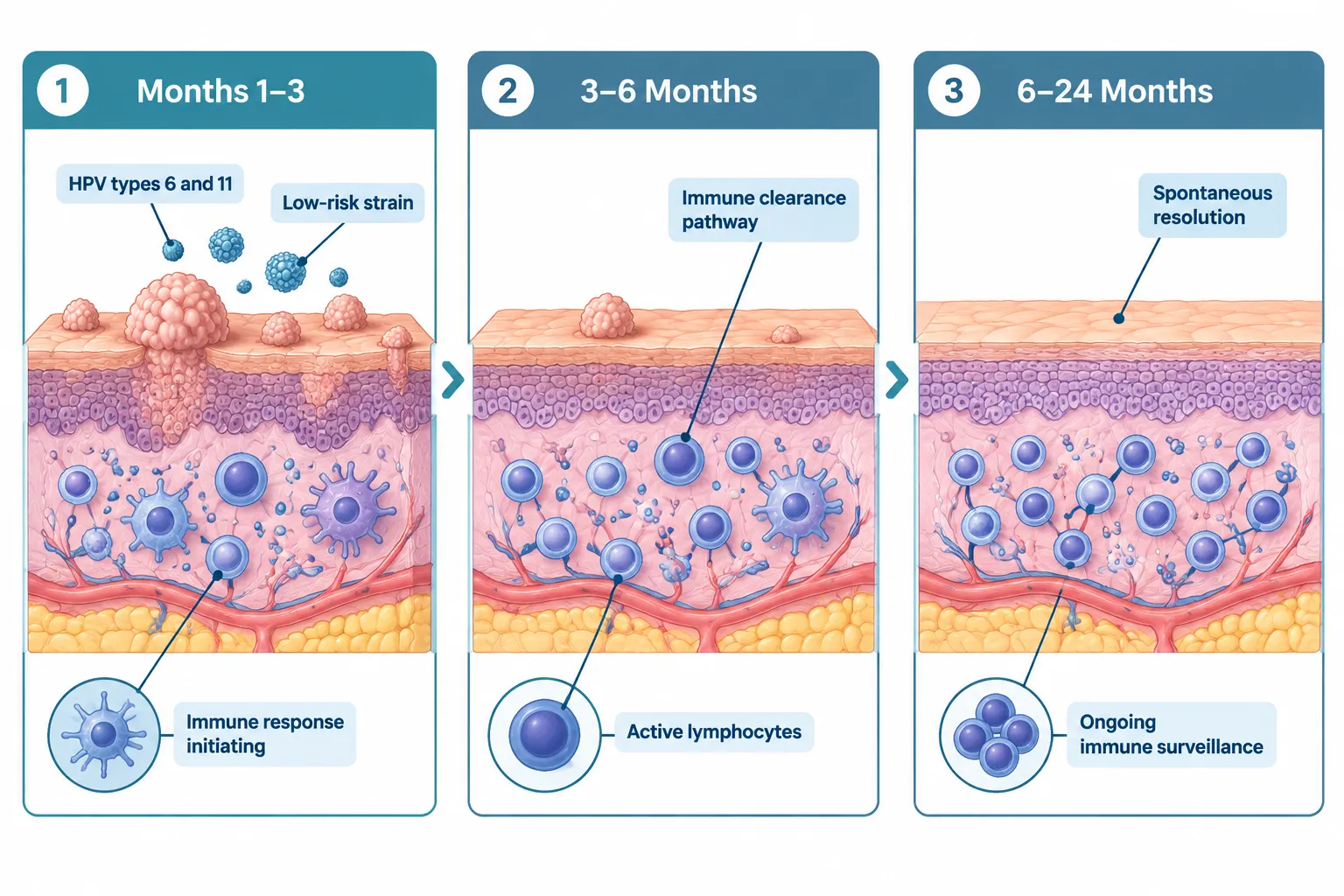
The warts themselves are the immune system’s visible response to the virus. Your body is already working on the infection from the moment it takes hold. Whether that work results in clearance, and how fast, depends largely on immune function.
Most HPV infections, including the ones that cause warts, clear on their own within one to two years. That statistic covers the underlying viral infection, not just the visible warts. The warts may resolve before the virus fully clears, or they may persist while the infection is still active.
One detail worth knowing: the time between initial HPV infection and the appearance of visible warts can range from a few weeks to several months. So if warts appear now, the infection itself may have started well before you noticed anything. This is explained in more detail in the how HPV spreads guide, which also covers why tracing the source of an infection is often medically impossible.
Can Genital Warts Go Away on Their Own, What the Evidence Shows
Yes. Spontaneous clearance of genital warts is well-documented. Major public health agencies, including the CDC and NHS, acknowledge that untreated warts may resolve on their own, stay the same, or increase in size or number. All three outcomes are genuinely possible.
Here is what the data suggests:
- Approximately one-third of visible genital warts clear without treatment within about three to six months.
- Around 80% of people clear the underlying HPV infection within 18 to 24 months.
- Warts that do not clear on their own within two years are less likely to resolve spontaneously after that point.
The NHS notes that treatment is not always required because warts sometimes disappear within about six months, but it still recommends clinical assessment. The CDC similarly states that some people choose to wait for spontaneous resolution, provided they are properly counseled and monitored.
“Monitored” is the operative word. Watching and waiting is a legitimate clinical choice, not a passive one. It means scheduled follow-up, awareness of changes in size or number, and a clear plan for when to reassess.
One more thing the evidence shows: even after warts visibly clear, the HPV virus may remain in skin cells and become active again. About one in four people develop new warts at some point after initial clearance, whether they were treated or not.
Who Is at Higher Risk for Persistent or Recurring Genital Warts
Some people are significantly less likely to clear genital warts without treatment, and more likely to see them spread or return.
- Immunocompromised individuals, people living with HIV, organ transplant recipients on immunosuppressive drugs, or anyone with a condition that reduces immune function, have a much harder time clearing HPV. Warts in this group tend to be more extensive and more resistant to treatment.
- Pregnant people, hormonal and immune changes during pregnancy can cause existing warts to grow rapidly in size and number. Certain topical treatments are not safe during pregnancy, so early clinical assessment matters here.
- Unvaccinated people, those who have not received the HPV vaccine and are exposed to types 6 and 11 have no pre-existing immune protection against the strains that cause warts.
- Smokers, smoking is associated with impaired local immune response in genital tissue, which may slow clearance of HPV-related lesions.
Does Treating Genital Warts Speed Up Clearance?
Treatment does not eliminate the HPV virus itself, there is no antiviral medication that eradicates HPV from the body. What treatment does is remove visible warts, reduce symptom burden, and in some cases, appear to stimulate a broader immune response that helps clear the infection faster.
A recent dermatology study found evidence of spontaneous regression at untreated wart sites following treatment of warts at other sites, suggesting that local immune activation from treatment may have broader effects. The research is still limited, but it adds nuance to the “wait and see” versus “treat now” question.
The main options your doctor may discuss include:
- Patient-applied topicals, imiquimod (which works by activating the immune response), podofilox, and sinecatechins
- Provider-administered treatments, cryotherapy (freezing), trichloroacetic acid (TCA), and surgical excision
The genital warts treatment guide covers how each of these works and what to expect from each approach. For a closer look at the prescription cream options specifically, the topical medications for genital warts guide breaks down how imiquimod and podofilox differ in mechanism and use.
Treatment is worth considering, not because waiting is wrong, but because visible warts that are extensive, uncomfortable, or causing distress do not need to be endured while the immune system works on its own timeline.

What Happens If You Leave Genital Warts Untreated
Three outcomes are possible when genital warts are left without treatment:
- They clear on their own, the most common outcome within the first year.
- They stay the same size and number for months or longer.
- They increase in size or number as the virus continues to replicate.
There is no way to predict which outcome applies to you without monitoring over time. The warts themselves, caused by low-risk HPV types 6 and 11, do not become cancerous. That is a separate concern linked to high-risk HPV strains like types 16 and 18, which do not cause visible warts. The HPV symptoms overview explains the difference between what low-risk and high-risk HPV infections look and feel like.
What untreated warts do not do is resolve the underlying question of transmission. Even if warts are not visible, HPV can still be passed to a sexual partner. Condoms reduce, but do not eliminate, that risk, since the virus can be present on skin not covered by a condom.
Reducing Your Risk of New Warts and Reinfection
If your warts have cleared, with or without treatment, these steps reduce the likelihood of new ones:
- HPV vaccination, if you have not been vaccinated, the vaccine protects against HPV types 6 and 11, the strains that cause genital warts. It will not clear an existing infection, but it can protect against strains you have not yet been exposed to. The HPV vaccine guide covers eligibility and timing in detail.
- Consistent condom use, reduces transmission risk, though not to zero.
- Partner communication, a partner who has also been exposed may benefit from their own clinical assessment. The genital warts overview includes information relevant to both partners.
Frequently Asked Questions
How long does it take for genital warts to go away without treatment?
It varies. Roughly one-third of visible warts clear within three to six months on their own. Most HPV infections, the underlying cause, resolve within one to two years. Warts that persist beyond two years are less likely to clear spontaneously and are generally worth treating.
If my genital warts go away, does that mean the HPV is gone too?
Not necessarily. The visible warts clearing is a sign that your immune system is responding, but the virus can remain dormant in skin cells. New warts can appear weeks or months after initial clearance, which is why follow-up with a clinician is still useful even after warts resolve.
Can genital warts spread to other parts of the body?
HPV types 6 and 11 are site-specific, they are not the same strains that cause common hand or foot warts. Genital warts can spread to nearby genital or anal skin through direct contact, but they do not typically spread to hands, mouth, or other distant body sites in the same way.
Should I tell a new partner if my warts have cleared?
This is a personal decision, but the medical fact is that HPV can still be transmissible even when warts are not visible. Most sexual health clinicians recommend disclosure so that partners can make informed decisions about their own screening and vaccination.
Is it safe to have sex while waiting for genital warts to go away on their own?
Sexual activity is not medically prohibited, but transmission risk is real. Condoms reduce, but do not eliminate, the risk of passing HPV to a partner. Discussing the situation with a clinician before resuming sexual activity gives you accurate, personalized guidance based on your specific situation.
What to Do Next
If you have visible warts that have not been assessed by a clinician, getting that assessment is the right first step, not because genital warts are dangerous, but because a clinician can confirm the diagnosis, rule out other conditions, and help you weigh whether watchful waiting or active treatment makes more sense for your situation.
If your warts have already cleared on their own, a follow-up visit is still useful. It confirms clearance, checks for any new lesions, and gives you a chance to discuss vaccination if you have not already been immunized.
Cell changes and persistent infections are easiest to manage when they are caught and monitored early, that is what clinical follow-up is for.