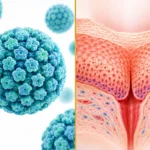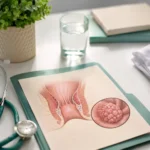
Genital warts appear in roughly 1 in 100 sexually active adults at any given time, making them one of the most common sexually transmitted infections in the world, and most people who develop them had no idea anything was happening until a bump appeared. The early signs of genital warts explained here are not always obvious, and that gap between infection and visible symptom is exactly where confusion starts. Understanding what to look for, and what it means, helps you get the right evaluation rather than spending weeks guessing.
Key Takeaways
- Genital warts are caused by HPV types 6 and 11, low-risk strains that do not cause cervical cancer
- Early warts often appear as small, flesh-colored bumps that may be flat or slightly raised
- Symptoms can range from none at all to mild itching, irritation, or occasional bleeding
- The time between HPV exposure and visible warts ranges from a few weeks to over a year
- Self-diagnosis is unreliable, a sexual health evaluation is the right next step if you notice changes
What Genital Warts Actually Look Like in the Early Stages
Genital warts are caused by HPV types 6 and 11. These are low-risk HPV strains, meaning they do not cause cervical cancer or other HPV-related cancers, a distinction worth knowing immediately if that fear is sitting at the back of your mind. You can read more about how HPV types differ and what each one means for your health.
Early warts often start as very small bumps, sometimes no larger than a pinhead. They can be flesh-colored, pinkish, or slightly grayish-white, and their surface may be smooth or finely textured. The classic “cauliflower-like” cluster that most people associate with genital warts usually develops over time; in the earliest stage, a single flat or slightly raised papule is more typical.
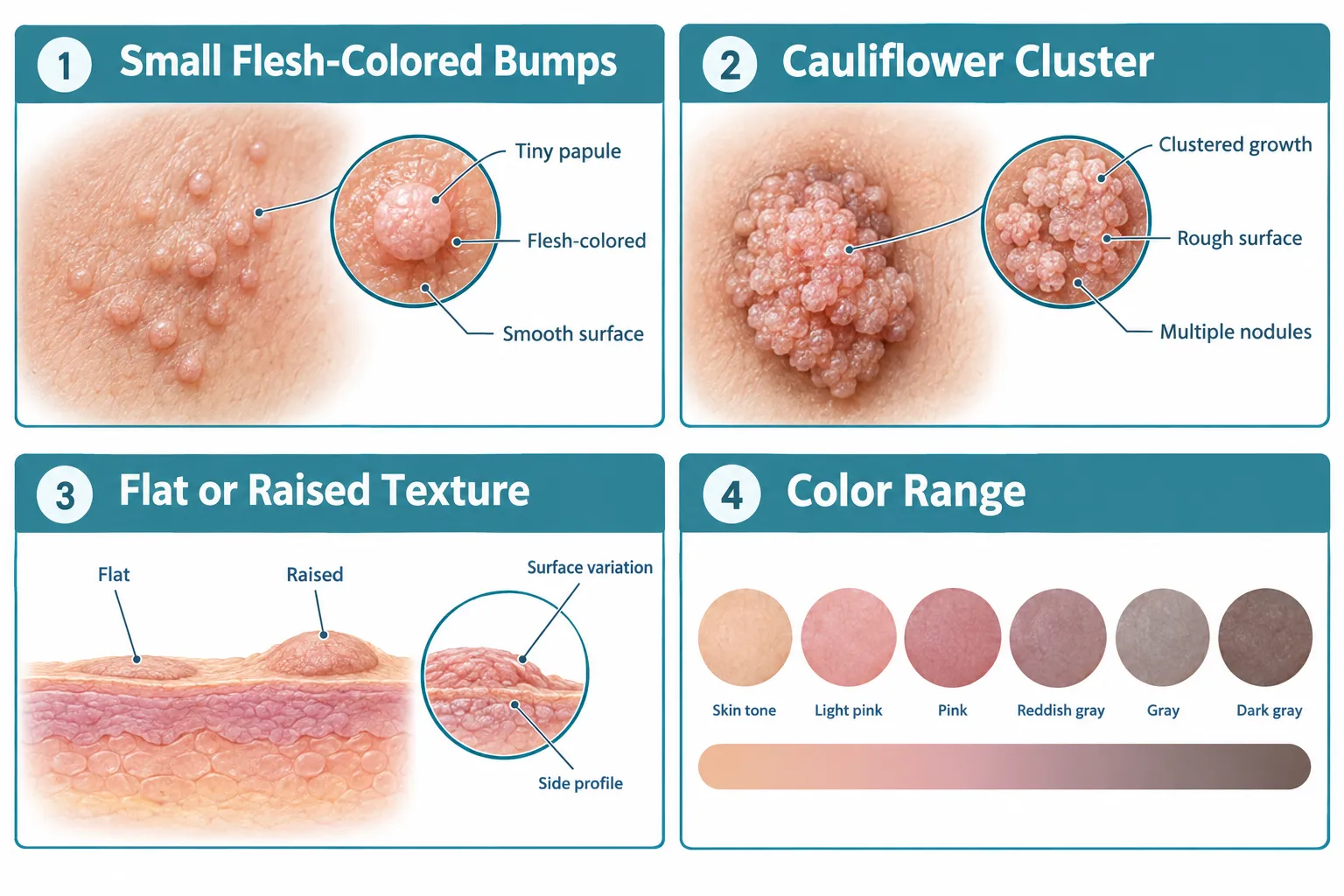
Texture and consistency are useful early clues. Early warts tend to feel soft, not hard or firm like a cyst. They do not typically have a head or fill with fluid. If you notice something that looks more like a smooth, soft skin tag, the difference between skin tags and HPV warts covers exactly that comparison in detail.
Common early locations include:
- The vulva, vaginal opening, or vaginal walls
- The shaft, base, or foreskin of the penis
- The scrotum
- The perineum (the skin between the genitals and anus)
- Around or just inside the anus
- Rarely, around the urethral opening
Internal warts, inside the vagina, cervix, or urethra, are less visible and often only found during a clinical examination.
Early Symptoms Beyond What You Can See
Many early genital warts cause no symptoms at all. That is not a reassuring platitude, it is a clinical fact confirmed by current sexual health guidelines. Asymptomatic warts are common, which is one reason a physical examination matters more than waiting to feel something.
When symptoms do occur, they are usually mild:
- Itching or irritation in the affected area, often described as a persistent low-grade itch rather than intense discomfort
- Tenderness when the area is touched or during sexual activity
- Occasional light bleeding during or after sex, particularly with warts near the vaginal opening or anus
- A feeling of moisture or dampness in the perianal area that does not resolve
Changes in urinary flow, a weak stream, slight discomfort when urinating, or a sense of incomplete emptying, can signal warts near or inside the urethra. These symptoms are less common but worth mentioning to a doctor, since peri-urethral warts are not visible without examination.
Skin changes without an obvious lump can also represent early or subclinical infection. A subtle thickening, a slight color change, or a texture difference in the genital skin may precede a visible wart. These changes are easy to dismiss, which is why expert consensus points toward a sexual health evaluation rather than self-diagnosis when anything seems off.
For a broader overview of what genital warts are and what the full clinical picture looks like, the complete guide to genital warts covers presentation, diagnosis, and management in one place.
How Long After Exposure Do Early Signs Appear?
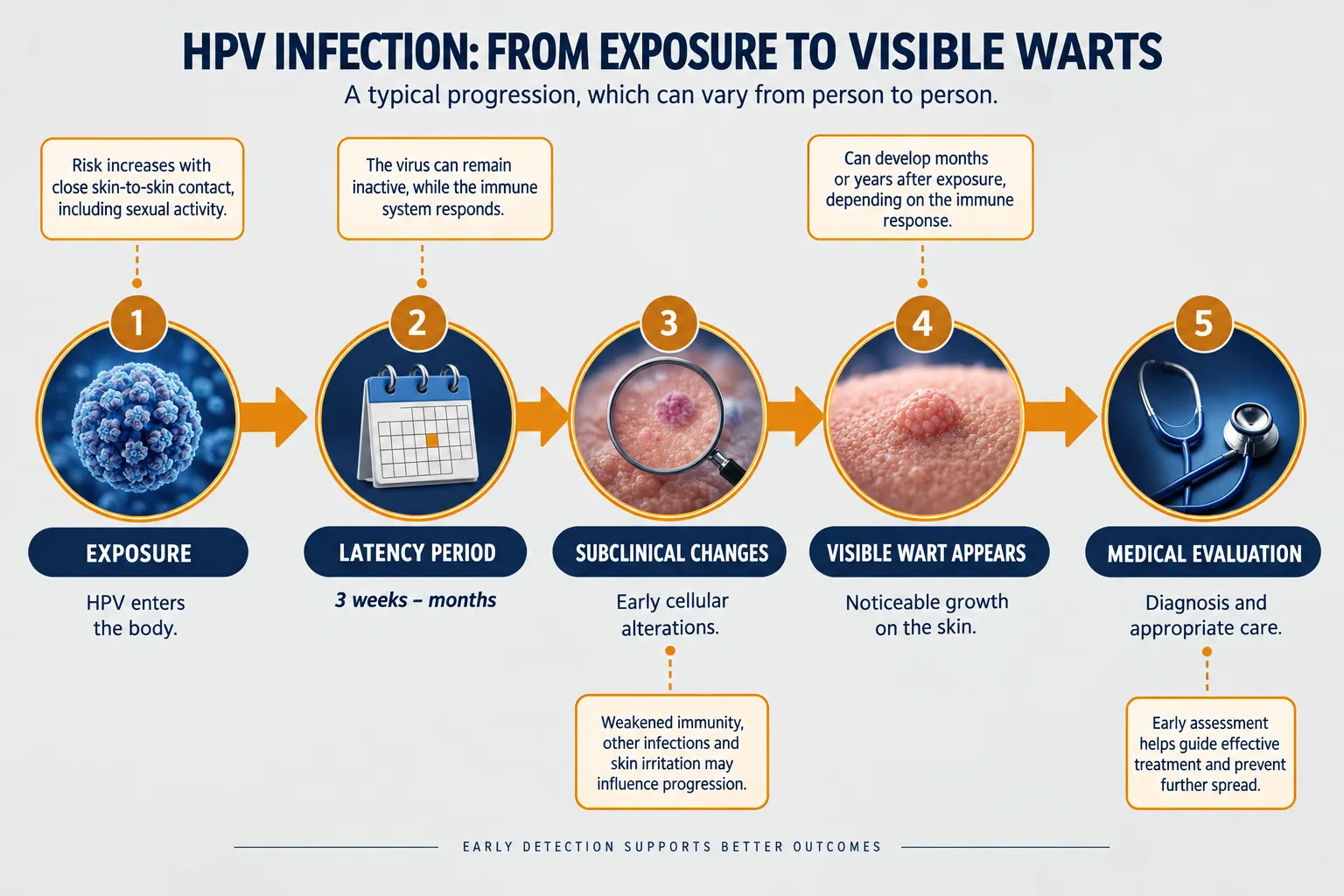
This is one of the most common questions, and the honest answer is that timing varies considerably. The incubation period for HPV types 6 and 11 ranges from about three weeks to several months, and in some cases visible warts do not appear until a year or more after initial exposure. That wide range makes it genuinely difficult to trace when or from whom an infection was acquired.
HPV can remain latent in skin cells without producing any visible change. Immune status plays a significant role in whether and when warts appear. Someone with a healthy immune system may clear the virus before warts ever develop; someone under immune stress, from illness, medication, or other factors, may see warts emerge months after the initial exposure.
This is also why a new wart does not necessarily mean a recent new exposure. It’s common, and worth knowing.
Who Is at Higher Risk for Developing Genital Warts?
Genital warts can affect anyone who has had sexual contact, but certain groups are more likely to develop visible warts or experience more extensive outbreaks:
- Unvaccinated people, HPV types 6 and 11 are directly prevented by the quadrivalent and 9-valent vaccines; unvaccinated adults remain fully susceptible
- Immunocompromised individuals, people living with HIV, organ transplant recipients, or anyone on long-term immunosuppressive therapy are more likely to develop larger, more persistent, or recurrent warts
- Pregnant people, hormonal and immune changes during pregnancy can cause existing warts to grow rapidly or new ones to appear
- People who smoke, smoking is associated with reduced local immune response in genital tissue, which may affect the body’s ability to suppress HPV
The HPV vaccine’s role in preventing genital warts is well established, vaccination before exposure offers the most protection, but catch-up vaccination in adults still provides meaningful benefit.
Early Signs vs. Other Conditions: Why Self-Diagnosis Falls Short
Early genital warts are frequently mistaken for other things: molluscum contagiosum, Fordyce spots (normal sebaceous glands), ingrown hairs, folliculitis, or skin tags. The visual overlap is real, and it exists even for clinicians examining patients without magnification.
This matters because the treatment approach differs significantly depending on the actual diagnosis. Applying over-the-counter wart treatments to something that is not a wart can cause unnecessary skin irritation without any benefit. A sexual health clinician can usually diagnose genital warts by visual examination alone, though in some cases a biopsy is used to confirm atypical presentations.
If you are wondering whether genital warts and cervical cancer are connected, the short answer is: not directly. The relationship between genital warts and cervical cancer explains why the strains that cause warts are different from the high-risk strains linked to cancer.
What Happens After Early Warts Are Identified
Noticing early signs should lead to a sexual health evaluation, not because warts are dangerous, but because accurate diagnosis determines the right treatment path. Several effective options exist, from topical prescription creams to in-office procedures. The overview of condyloma and genital wart treatment covers what to expect at each stage, and topical medications for genital warts explains how prescription creams work and which are used in different situations.
Some warts resolve on their own without treatment, this happens in a meaningful proportion of cases, particularly in people with healthy immune systems. Others persist or grow without intervention. Treatment clears visible warts; it does not eliminate HPV from the body entirely, which is why follow-up and partner notification are part of standard care.
Cell changes are easiest to manage before they progress, that is what early recognition and evaluation are for.
Frequently Asked Questions
Can genital warts appear just once and never come back?
Yes, this happens. Some people have a single outbreak that resolves, either on its own or with treatment, and never recur. Others experience repeat outbreaks, particularly if immune function is reduced. There is no reliable way to predict which course an individual infection will take.
Do genital warts always itch?
No. Most early genital warts cause no itching at all. When itching does occur, it is usually mild and intermittent. Significant or persistent itching is more likely to have a different cause, such as a yeast infection or contact dermatitis, and warrants its own evaluation.
Can a partner have genital warts without knowing it?
Yes. HPV types 6 and 11 can be present in genital skin without producing any visible warts or symptoms. This is called subclinical infection. It means someone can transmit the virus without being aware they carry it, which is why the timing of a new wart diagnosis rarely points clearly to a specific exposure event.
Are genital warts the same as the HPV that causes cancer?
No. Genital warts are caused by HPV types 6 and 11, which are classified as low-risk strains. The HPV types associated with cervical, anal, and oropharyngeal cancers are different strains, primarily types 16 and 18. It is possible to have both low-risk and high-risk HPV at the same time, but one does not cause the other.
Is it safe to have sex if early warts are present?
This is a question to discuss directly with a clinician, since the answer depends on your specific situation, whether treatment is underway, and your partner’s vaccination and health status. Condoms reduce but do not eliminate transmission risk, since HPV can be present on skin not covered by a condom.