The HPV vaccine does prevent HPV, specifically, it prevents new infections with the HPV types it covers, with near-100% efficacy in people who haven’t yet been exposed to those types. That’s a meaningful distinction worth understanding, because the vaccine works differently depending on when you get it and what your prior exposure has been.
This is not a debate about whether vaccines work. The evidence here is unusually strong, built from decades of clinical trials and real-world population data. What’s worth unpacking is exactly what “prevention” means in this context, who benefits most, and what the vaccine cannot do.
Key Takeaways
- The HPV vaccine prevents new infections with the HPV types it targets, it does not clear existing infections or treat current disease.
- Efficacy approaches 100% against vaccine-targeted types in people with no prior exposure to those types.
- Protection is durable, studies show no meaningful waning through at least 10 to 12 years of follow-up.
- The vaccine is most effective when given before sexual debut, but still offers real protection for adults up to age 45.
- Single-dose regimens are showing very high efficacy, a significant development that may reshape vaccination programs globally.
How the HPV Vaccine Actually Prevents Infection
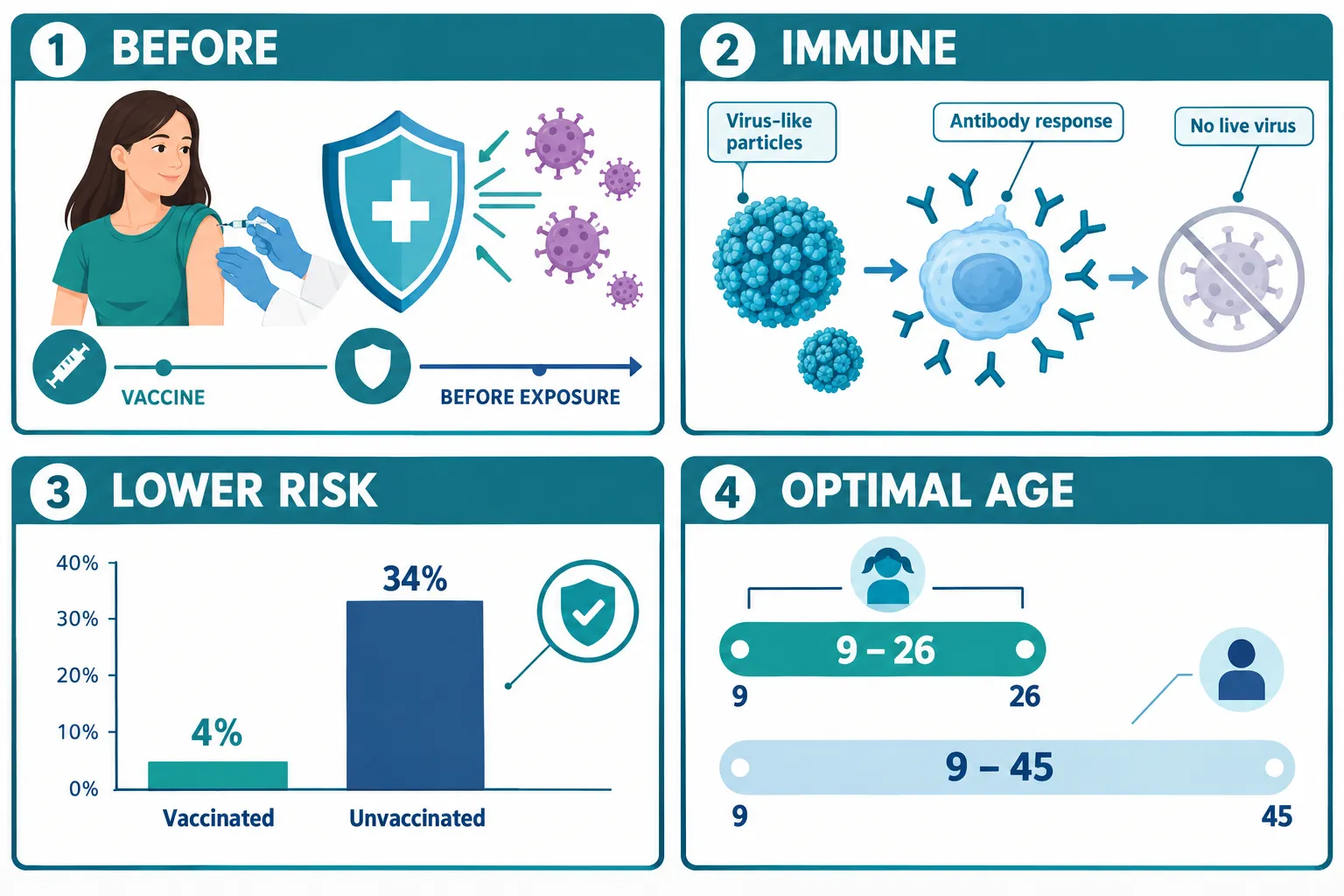
The vaccine works by training your immune system to recognize HPV before you ever encounter it. It contains virus-like particles, protein shells that look like HPV to your immune system but carry no viral DNA and cannot cause infection. Your body mounts an antibody response, and those antibodies are ready to neutralize the actual virus if you’re exposed later.
This is why “prophylactic” is the precise clinical term. The vaccine is prophylactic, meaning it prevents infection from taking hold. It is not therapeutic, it doesn’t treat an infection you already have, and it doesn’t accelerate clearance of an existing infection.
The currently available vaccine, Gardasil 9, covers nine HPV genotypes: types 6 and 11 (responsible for roughly 90% of genital warts) and types 16, 18, 31, 33, 45, 52, and 58 (the high-risk types responsible for the majority of HPV-related cancers). Together, these nine types account for the vast majority of HPV-related disease burden.
In clinical trials involving HPV-naïve participants, people with no prior infection with the targeted types, efficacy against persistent infection and related disease endpoints was essentially 100%. Real-world data from countries with high vaccination uptake have since confirmed this: population-level declines in HPV 16 and 18 infections have been dramatic, with some studies showing reductions exceeding 80% in vaccinated age groups.
Understanding how HPV spreads and how it doesn’t helps clarify why blocking infection at the point of first exposure is so effective, and why timing matters.
Does the HPV Vaccine Prevent HPV If You’re Already Sexually Active?
This is the question most adults have, and the honest answer is: it depends on what you’ve already been exposed to.
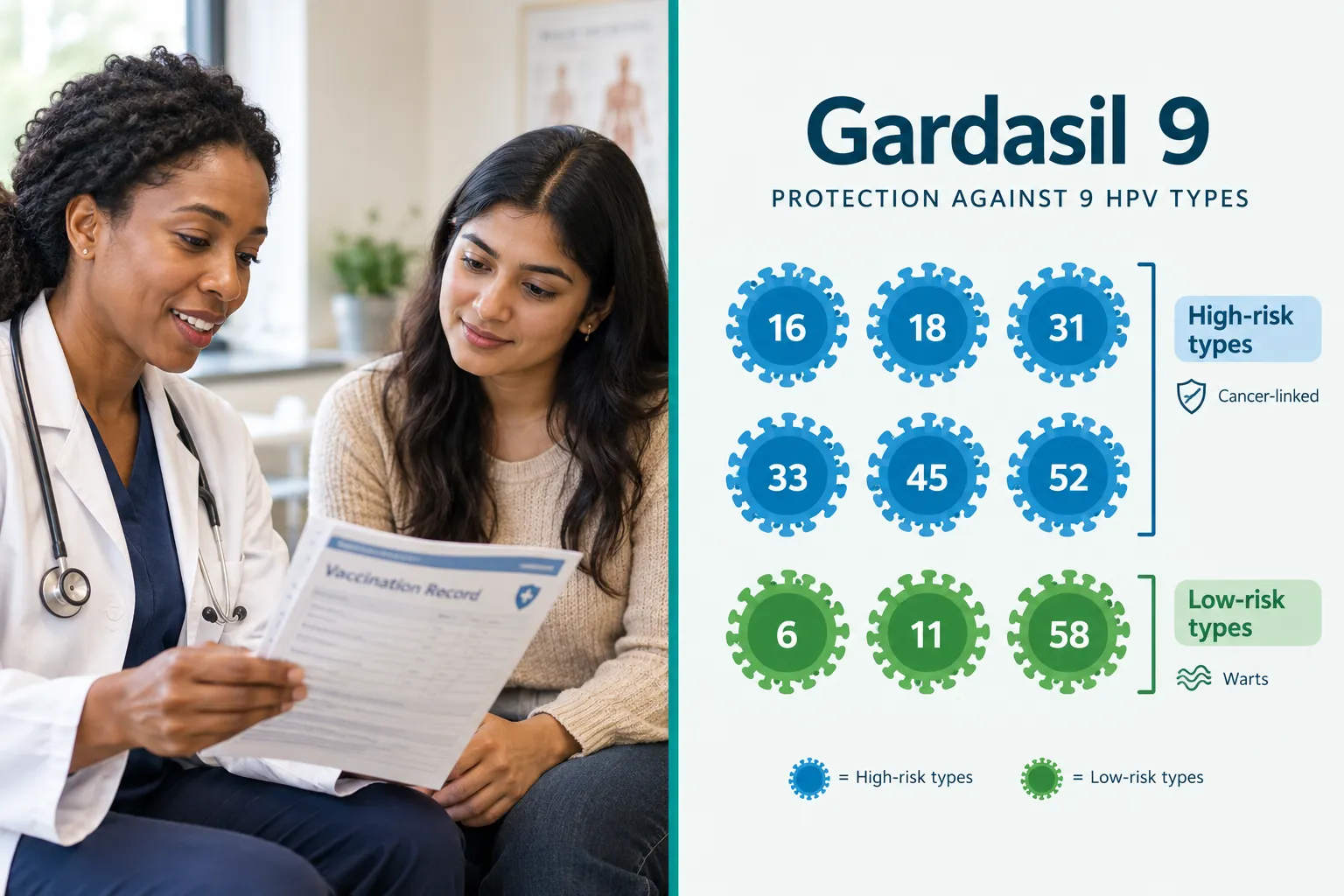
If you’ve had prior sexual contact, you may already have been infected with one or more HPV types. The vaccine offers no benefit against types you’ve already acquired. But here’s what matters: most sexually active people have not been infected with all nine types the vaccine covers. The vaccine still protects against the types you haven’t yet encountered.
Studies in adults aged 27 to 45, the group now eligible for vaccination in many countries, show meaningful protection, though efficacy is somewhat lower than in adolescents, simply because older adults are more likely to have prior exposure to some covered types. The benefit is real, but it’s more individualized. A conversation with your doctor about your specific situation is the most useful next step.
The HPV vaccine for men covers this in more detail, including what the evidence shows for men who already have HPV when they’re vaccinated.
Who Benefits Most from HPV Vaccination?
The clearest benefit goes to people vaccinated before any HPV exposure, typically adolescents aged 9 to 14, which is why most national programs target this age group. At this age, with no prior exposure, the vaccine delivers its maximum efficacy.
The benefit is still significant for people vaccinated in their late teens and early twenties, and real (if variable) for adults up to 45.
Who’s at Higher Risk for HPV-Related Disease?
- People who are immunocompromised, including those living with HIV or on immunosuppressive therapy after organ transplant, are less likely to clear HPV naturally and face higher risk of progression to dysplasia or cancer.
- Unvaccinated adults, particularly those with multiple sexual partners or early sexual debut, have had more opportunities for exposure to multiple HPV types.
- People with a history of abnormal Pap results (ASC-US, LSIL, or HSIL) have already experienced the downstream effects of HPV infection and benefit from protection against additional types.
- Smokers face higher risk of HPV persistence and cervical dysplasia progression, since smoking impairs local immune response in cervical tissue.
How Long Does HPV Vaccine Protection Last?
Protection is durable. Follow-up data from the original clinical trials, now extending 10 to 12 years, show no meaningful decline in antibody levels or protection against infection. There is no current evidence that booster doses are needed, though long-term surveillance continues.
The mechanism behind this durability is immunological memory. After vaccination, your immune system retains the ability to mount a rapid response if it encounters the actual virus, similar to how other well-established vaccines provide long-term protection.
For the cervix-specific protection the HPV vaccine provides, the downstream effect of this durable infection prevention is a substantial reduction in cervical dysplasia and cervical cancer risk in vaccinated populations.
One Dose or Two? What the Latest Evidence Shows
The standard schedule for adolescents under 15 has been two doses, six to twelve months apart. Adults and those who start the series at 15 or older have typically received three doses.
A significant development in 2026 is the growing body of evidence supporting single-dose efficacy. Multiple large studies, including data from Kenya and other settings where completing multi-dose schedules is logistically challenging, show that a single dose of Gardasil 9 provides very high protection against vaccine-targeted HPV types. Efficacy estimates from these studies are comparable to two-dose regimens.
The WHO’s Strategic Advisory Group of Experts on Immunization has reviewed this evidence and moved toward recommending one- or two-dose schedules as equivalent for most populations. This matters enormously for global vaccination coverage: a single-dose program is far easier to implement and sustain.
This does not mean you should skip doses if you’re mid-schedule. Current national guidelines in most countries still specify two or three doses depending on age. Follow the schedule your provider recommends until official guidance in your country is updated.
What the HPV Vaccine Cannot Do
Being clear about the limits is as important as stating the benefits.
The vaccine does not treat existing HPV infections. If you test positive for HPV 16 today, getting vaccinated will not clear that infection or reverse any cell changes it may have already caused. It protects against other types you haven’t yet encountered, but it is not a treatment.
The vaccine does not prevent all HPV-related cancers. Gardasil 9 covers the types responsible for approximately 90% of cervical cancers, but not 100%. Cervical screening (Pap smears and HPV co-testing) remains essential even for vaccinated people, because a small proportion of cervical cancers arise from types not covered by the vaccine.
The vaccine does not replace other prevention methods. Condoms reduce HPV transmission risk, though they don’t eliminate it entirely since HPV can be transmitted through skin-to-skin contact beyond what a condom covers. Using both vaccination and barrier methods offers layered protection.
If you already have genital warts, the question of whether to vaccinate is still worth discussing with your provider, the guidance on getting the HPV vaccine if you have genital warts explains the reasoning.
Does the HPV Vaccine Prevent HPV-Related Cancers?
Yes, indirectly, and very effectively. The vaccine prevents persistent infection with the high-risk HPV types that drive cancer development. No persistent infection means no HPV-driven cell changes, which means no progression to dysplasia or cancer from those types.
Population data from countries with high vaccination uptake show this working in practice. Australia, which launched a national HPV vaccination program in 2007, has seen cervical cancer rates drop to levels that put elimination of the disease as a public health problem within reach. Similar trends are documented in the UK, Scandinavia, and the United States.
For anal HPV specifically, a significant concern for men who have sex with men and for immunocompromised individuals, the vaccine’s protection against HPV 16 and 18 translates directly into reduced risk of anal dysplasia and anal cancer. The anal HPV screening and prevention guide covers what monitoring looks like for higher-risk groups.
What to Do With This Information
If you haven’t been vaccinated and are under 26, vaccination is straightforward, most guidelines recommend it without qualification. If you’re between 27 and 45, the decision is more individual. Your provider can help weigh your likely prior exposure against the potential benefit.
If you’re vaccinated, continue cervical screening on your usual schedule. The vaccine is not a reason to skip Pap smears or HPV co-testing, it works alongside screening, not instead of it.
Cell changes are easiest to treat before they progress. That’s what screening is for, and it remains the mechanism that catches what vaccination doesn’t cover.
Frequently Asked Questions
Can you get HPV even after being vaccinated?
Yes, but only from types not covered by the vaccine, or from types you were already infected with before vaccination. The vaccine provides near-complete protection against the nine types it targets in people who weren’t previously infected with those types. It doesn’t create a blanket shield against all 200-plus HPV types in existence.
Does the HPV vaccine work if you already have HPV?
It doesn’t treat or clear an existing infection. If you have HPV 16, for example, the vaccine won’t affect that infection. It can still protect you against the other covered types you haven’t yet encountered, which is why vaccination is still discussed even in people who have tested positive for one HPV type.
Is the HPV vaccine safe for adults over 30?
The safety profile is well-established across all approved age groups. The most common side effects are injection-site reactions, soreness, redness, mild swelling, and occasional brief dizziness after the shot. Serious adverse events are rare. The HPV vaccine isn’t recommended during pregnancy, but it can be given to people who are breastfeeding.
Does the HPV vaccine protect against genital warts?
Yes. HPV types 6 and 11 cause approximately 90% of genital warts, and both are covered by Gardasil 9. In people with no prior exposure to these types, the vaccine is highly effective at preventing genital warts.
How does HPV vaccination affect HPV testing results?
Vaccination doesn’t affect HPV test results for infections you already have. If you test positive for a covered type after vaccination, it most likely reflects an infection acquired before the vaccine took effect, not a vaccine failure. The vaccine takes a few weeks to generate full antibody protection after each dose.
Does the HPV vaccine help prevent HPV in men?
Yes. The evidence for men, including protection against penile, anal, and oropharyngeal cancers linked to HPV 16 and 18, as well as genital warts from types 6 and 11, is solid. The HPV vaccine for men guide covers the specifics of who benefits and at what age.