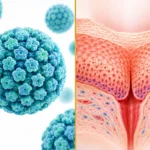
HPV is the most common sexually transmitted infection in the world, and most people who have it can get pregnant. Having HPV does not mean pregnancy is off the table. What it does mean is that certain aspects of prenatal care and fertility planning deserve closer attention, and that a few specific risks are worth understanding clearly.
Key Takeaways
- Most people with HPV conceive without difficulty, and HPV does not directly block pregnancy
- HPV infection, especially in male partners, is linked to modestly reduced fertility and a slightly higher risk of early pregnancy loss
- Cervical screening continues during pregnancy, but the approach is adjusted to protect the fetus
- Genital warts can be treated in pregnancy, though some medications are avoided
- Vertical transmission (passing HPV to a newborn) is possible but uncommon, and serious complications are rare
Does HPV Affect Your Ability to Get Pregnant?
HPV does not cause infertility in most people. That said, the evidence shows a more nuanced picture than a simple yes or no.
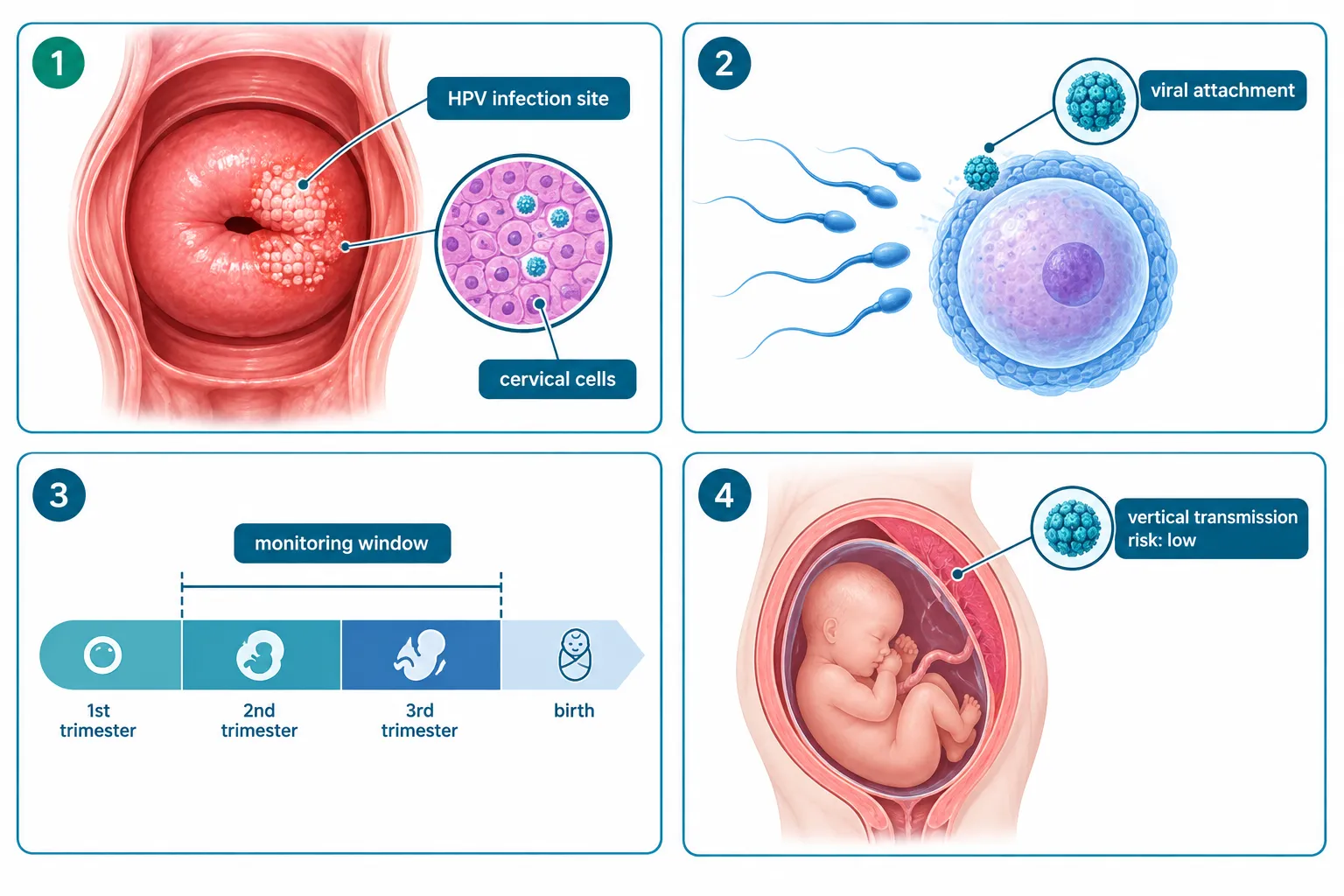
In women, persistent high-risk HPV infection, particularly types 16 and 18, has been associated with changes to cervical mucus and the cervical environment that may make conception slightly harder. This is not a guaranteed outcome, and for most people with HPV, conception happens without any medical intervention.
The male side of the equation matters more than many couples expect. HPV can attach to sperm cells and affect sperm motility and DNA integrity. Couples where the male partner carries HPV have shown lower fertilization rates in assisted reproduction settings and a modestly higher rate of early miscarriage. This is one reason both partners are relevant in a fertility workup.
For a deeper look at how HPV interacts with fertility specifically, the article on whether HPV can cause infertility in women covers the cervical and hormonal mechanisms in more detail.
Who Is at Higher Risk for Fertility Complications with HPV?
Not everyone with HPV faces the same fertility picture. These groups are more likely to experience complications:
- People with persistent high-risk HPV (types 16, 18, 31, 33) who have had previous cervical procedures such as LEEP or cone biopsy, which can affect cervical length and mucus production
- Immunocompromised individuals, including those living with HIV or on immunosuppressive therapy after organ transplant, who are less likely to clear HPV naturally and more likely to develop progressive cervical changes
- Couples using IVF or ICSI where the male partner has HPV, since viral attachment to sperm appears to reduce embryo quality and implantation rates
- Smokers with HPV, as smoking impairs the immune clearance of HPV and compounds the risk of cervical dysplasia progressing during pregnancy
Can You Get Pregnant with HPV Naturally, or Is IVF Harder?
For most couples, natural conception is unaffected by HPV. The association between HPV and reduced fertility is real but modest, it does not translate to an inability to conceive for the majority of people.
Assisted reproduction is where the data becomes more clinically relevant. Studies in IVF and ICSI settings have found that when the male partner tests positive for HPV, fertilization rates and embryo development outcomes are measurably lower. The virus appears to interfere with sperm-egg binding and may trigger an immune response in the uterine lining that reduces implantation success.
If you are pursuing IVF and HPV has been identified in either partner, your reproductive endocrinologist should be aware. It does not rule out IVF, it informs how your team monitors the cycle. The article on whether HPV can prevent pregnancy addresses the distinction between reduced fertility and true infertility.
How Is HPV Managed During Pregnancy?
Pregnancy does not dramatically change how HPV behaves. The virus does not accelerate cervical disease simply because you are pregnant, and the management thresholds used by clinicians are broadly similar to those for non-pregnant patients.
What does change is the approach to investigation and treatment.
Cervical screening in pregnancy Pap smears and HPV co-testing continue during pregnancy if they are due. If results show low-grade changes (LSIL or ASC-US), colposcopy may be performed to rule out high-grade disease, but biopsy is generally deferred unless high-grade squamous intraepithelial lesion (HSIL) is suspected. The priority is surveillance, not aggressive intervention, because most low-grade lesions regress after delivery. The guide on what happens after an abnormal Pap smear explains the colposcopy and follow-up process in plain terms.
Genital warts in pregnancy Genital warts caused by low-risk HPV types 6 and 11 can grow more rapidly during pregnancy due to hormonal and immune shifts. Treatment is possible and sometimes recommended if warts are large or obstructive. However, certain topical medications, including imiquimod and podophyllin, are avoided during pregnancy. Trichloroacetic acid (TCA) and cryotherapy are the preferred options. Your OB-GYN or dermatologist will guide the choice based on wart location and size.
Mode of delivery Caesarean section is not routinely recommended solely because of HPV infection or genital warts. The decision about delivery mode is made on obstetric grounds. Very large warts obstructing the birth canal are a rare exception where surgical delivery may be considered.
What Is the Risk of Passing HPV to a Newborn?
Vertical transmission, the passage of HPV from a birthing parent to a newborn, does occur, but serious outcomes are uncommon.
The primary concern is recurrent respiratory papillomatosis (RRP), a rare condition where HPV types 6 or 11 cause wart-like growths in a child’s airway. The overall risk of a child born to a parent with genital warts developing RRP is estimated to be very low, well under 1%, and caesarean section does not reliably prevent it, which is one reason it is not routinely recommended for this indication alone.
Neonatal HPV infection detected at birth often clears on its own. Monitoring is appropriate, but this is not a reason to avoid pregnancy or to choose surgical delivery without other clinical indications.
HPV Vaccination and Pregnancy: What You Need to Know
The HPV vaccine is not recommended during pregnancy. This is a precautionary position, not because there is evidence of harm, but because the clinical trials that established vaccine safety did not include pregnant participants, so data is limited.
If you receive a dose of the HPV vaccine before realizing you are pregnant, that is not a reason to end the pregnancy. Post-marketing surveillance data from inadvertent vaccination during pregnancy has not identified a pattern of fetal harm. The recommended approach is to pause the remaining doses and complete the series after delivery.
If you are planning pregnancy and have not completed your HPV vaccine series, finishing it before conception is the practical option. The HPV vaccine for men page covers how vaccination applies to male partners, which is relevant for couples planning a family together.
Can You Get Pregnant with HPV After Cervical Treatment?
Previous cervical procedures for HPV-related dysplasia, particularly LEEP (loop electrosurgical excision procedure) or cold knife cone biopsy, can affect future pregnancies. The main concern is cervical incompetence or a shortened cervix, which raises the risk of preterm birth in subsequent pregnancies.
This does not mean pregnancy is unsafe after cervical treatment. It means your obstetric team needs to know about any prior procedures so they can monitor cervical length during pregnancy and take appropriate precautions if needed. Most people who have had a single LEEP procedure go on to have uncomplicated pregnancies.
If you have had abnormal results and are unsure what they mean for your fertility or pregnancy plans, the ASCUS Pap result guide explains the grading system and what each result level typically requires.
Practical Steps If You Have HPV and Are Planning a Pregnancy
- Tell your OB-GYN or midwife about your HPV status at your first prenatal appointment
- Ensure cervical screening is up to date before conception if possible
- If your male partner has not been evaluated, discuss this with a reproductive specialist, particularly if you are pursuing IVF
- Do not discontinue cervical surveillance during pregnancy; it is safe and important
- If you have genital warts, discuss treatment timing with your provider before or early in pregnancy
- Complete your HPV vaccine series before conception if you have not already done so
For couples who are concerned about transmission between partners during this period, the article on having sex with HPV addresses risk reduction and what consistent condom use does and does not protect against.
Frequently Asked Questions
Does having HPV mean I will have a high-risk pregnancy?
Not automatically. Most pregnancies in people with HPV are uncomplicated. The main adjustments are closer cervical surveillance and, if genital warts are present, monitoring their size and location. High-risk HPV types require the same cervical screening approach as outside of pregnancy, the thresholds for intervention are similar, and most low-grade changes resolve after delivery.
Can HPV cause a miscarriage?
There is a modest association between HPV infection, particularly in male partners, and early pregnancy loss. This does not mean HPV causes most miscarriages, or that a miscarriage in an HPV-positive couple was caused by the virus. Miscarriage is common and has many contributing factors. If you have experienced recurrent pregnancy loss, HPV status in both partners is worth discussing with a reproductive specialist as part of a broader workup.
Should my partner get tested for HPV before we try to conceive?
There is no standard HPV test approved for routine use in men, but HPV can be detected in semen and has been linked to reduced sperm function. If you are pursuing IVF or have experienced unexplained fertility difficulties, raising HPV testing with a reproductive endocrinologist is reasonable. The article on whether HPV can be detected in men covers what testing options currently exist.
Will HPV affect my baby after birth?
In most cases, no. Vertical transmission is possible but uncommon, and the most serious complication, recurrent respiratory papillomatosis, is rare. Newborns exposed to HPV during delivery are not routinely tested unless symptoms develop. Your pediatric team will monitor your baby’s development in the normal way.
If I clear HPV before pregnancy, is there still any risk?
Once HPV has cleared, meaning it is no longer detectable on testing, the associated risks largely resolve. If you had cervical treatment for HPV-related dysplasia, the structural effects on the cervix remain relevant and should be disclosed to your obstetric team. Clearing the infection itself, however, is a good baseline for pregnancy planning.