
HPV on the tongue rarely looks dramatic in its earliest stages, which is exactly what makes it easy to miss. Searching for early HPV on tongue pictures to understand what early signs actually look like is a reasonable first step, but a photograph can only tell you so much. What a clinician looks for goes well beyond what any image shows.
HPV now accounts for the majority of oropharyngeal cancers, those affecting the back of the throat, the base of the tongue, and the tonsils. That shift has happened steadily over the past two decades, and it matters for how early changes are recognized and evaluated.
Key Takeaways
- Most early HPV-related tongue changes produce no noticeable symptoms and are found incidentally during dental or medical exams.
- HPV types 16 and 18 are the high-risk strains most associated with oropharyngeal cancer; types 6 and 11 cause benign oral warts.
- A photograph, even a clinical one, cannot diagnose HPV on the tongue; only a biopsy and pathology can confirm it.
- Certain groups face a meaningfully higher risk of HPV-related oral disease, including smokers and immunocompromised individuals.
- Vaccination with the 9-valent HPV vaccine covers the high-risk types most linked to tongue and throat cancers.
What Does Early HPV on the Tongue Actually Look Like?
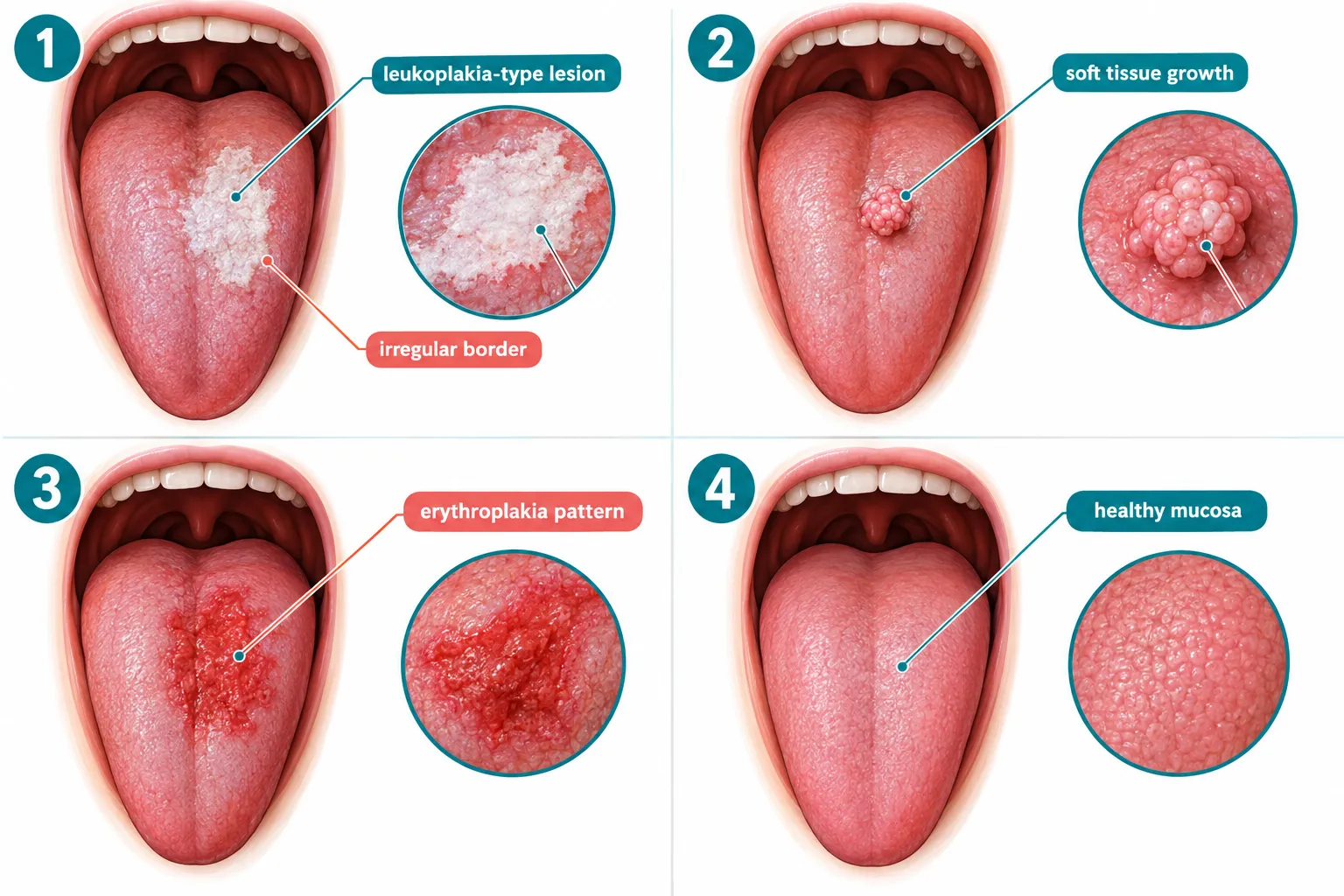
This is the question behind most searches for early HPV on tongue pictures, and the honest answer is that early changes are often invisible to the naked eye.
When HPV does produce visible changes in the mouth or on the tongue, they fall into a few categories:
- Squamous papillomas: Small, soft, wart-like growths with a cauliflower or finger-like surface. These are typically caused by low-risk HPV types 6 and 11 and are benign.
- Leukoplakia-type patches: Flat or slightly raised white areas on the tongue surface or underside. Not all leukoplakia is HPV-related, but some lesions carry precancerous potential.
- Erythroplakia: Red, velvety patches that are less common but carry a higher risk of dysplasia and warrant prompt evaluation.
- Subtle mucosal changes: Slight thickening or texture irregularity that looks almost normal but feels different to the tongue or to a clinician’s gloved finger.
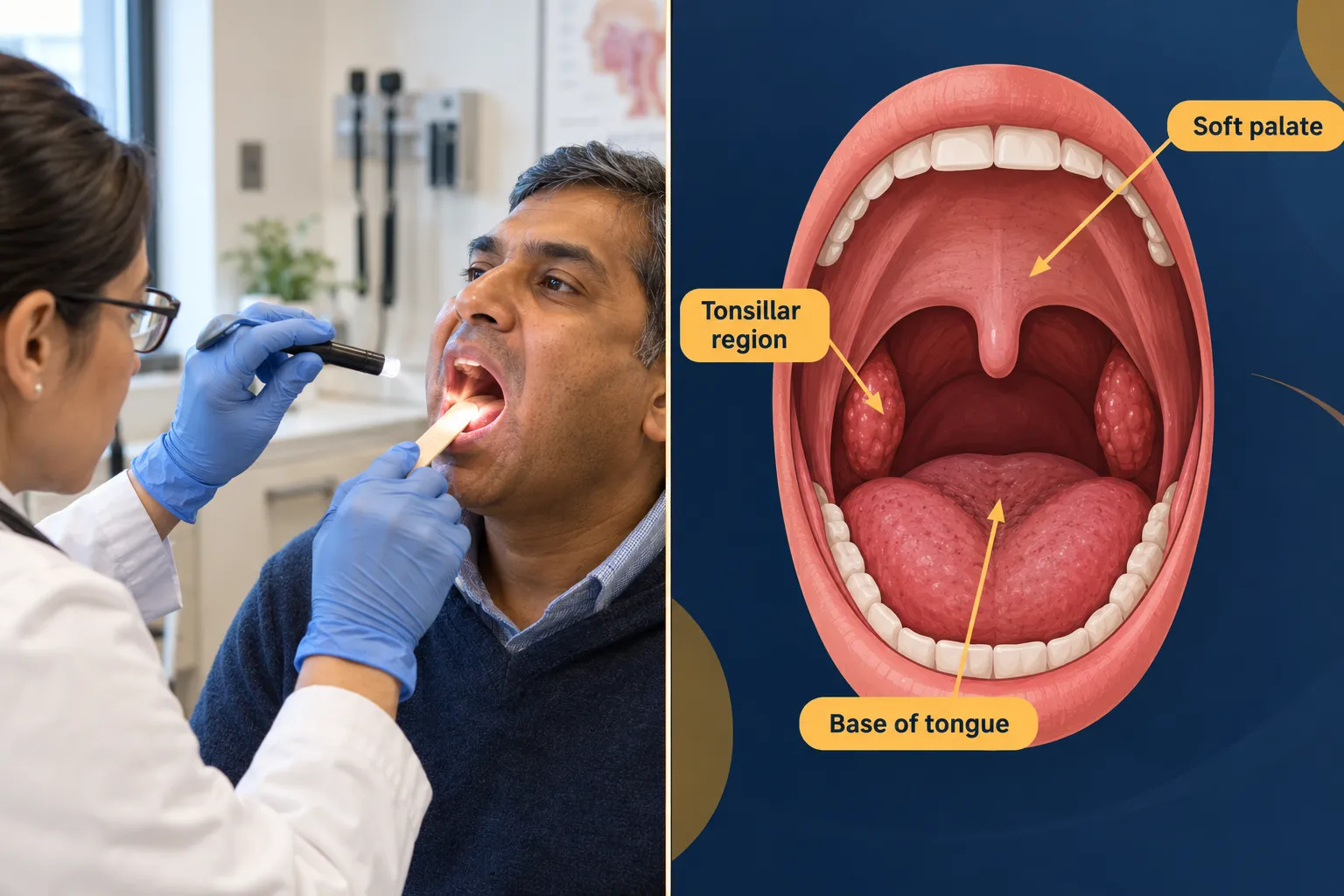
The base of the tongue, the part you cannot see without specialized equipment, is actually the most common site for HPV-related oropharyngeal cancers. That location is why most high-risk HPV changes at the tongue’s base go unnoticed until a lump appears in the neck or swallowing becomes uncomfortable.
A visible wart or white patch on the front of the tongue is more likely to be caught early. Changes at the back are not.
Why Pictures Alone Cannot Diagnose HPV on the Tongue
Looking at early HPV on tongue pictures online can help you recognize that something looks different, but it cannot tell you what that difference means clinically.
Several common, benign conditions look almost identical to HPV-related lesions in photographs:
| Appearance | Possible Benign Cause | Possible HPV-Related Cause |
|---|---|---|
| White patch | Canker sore, trauma, candidiasis | Leukoplakia, early dysplasia |
| Raised soft growth | Fibroma, irritation polyp | Squamous papilloma (HPV 6/11) |
| Red velvety area | Geographic tongue, inflammation | Erythroplakia, dysplasia |
| Firm lump at base | Lingual tonsil tissue | HPV-related oropharyngeal lesion |
The distinction between a harmless fibroma and an HPV-related papilloma, or between geographic tongue and early dysplasia, requires a physical examination, and often a biopsy. Pathology is the only definitive answer.
This is not a reason to panic about every mouth sore. It is a reason to have anything that persists beyond two to three weeks evaluated by a dentist, oral medicine specialist, or ENT physician.
Early Symptoms That May Accompany Tongue HPV Changes
Most early HPV infections in the oral cavity produce no symptoms at all. The virus can be present in the mucosal tissue for months or years without causing any change you would notice.
When symptoms do appear, they are often vague:
- A persistent sore throat that does not resolve with standard treatment
- Mild difficulty swallowing or a sensation that something is caught in the throat
- A painless lump in the neck (often the first sign of HPV-related oropharyngeal cancer that has spread to a lymph node)
- Hoarseness lasting more than a few weeks
- A visible lesion or growth on the tongue or soft palate that does not heal
Pain is not a reliable early indicator. Many HPV-related oral lesions are painless, especially at the base of the tongue and tonsillar region.
The absence of symptoms is why routine dental examinations matter. A dentist performing a standard oral cancer screening can identify lesions that a patient has never noticed.
Who Is at Higher Risk for HPV-Related Tongue and Oral Changes?
Oral HPV is common, prevalence studies consistently show it in a significant portion of the adult population, but certain groups face a higher risk of persistent infection and disease progression.
- Smokers and tobacco users: Tobacco impairs local immune response in the oral mucosa, making it harder for the body to clear HPV naturally.
- Immunocompromised individuals: People living with HIV, organ transplant recipients on immunosuppressive therapy, and others with impaired immunity are at substantially higher risk of persistent HPV infection and lesion development.
- Unvaccinated adults: Those who have not received the 9-valent HPV vaccine (Gardasil 9) lack protection against HPV types 16 and 18, which drive the majority of HPV-related oropharyngeal cancers.
- People with a history of high oral HPV exposure: Oral HPV transmission through oral sex is well-established; cumulative exposure over time increases the likelihood of persistent infection.
How HPV Reaches the Tongue and Oral Cavity
HPV is transmitted through direct skin-to-skin or mucosa-to-mucosa contact. In the oral cavity, the primary transmission route is oral sexual contact, though HPV can also spread through kissing in some circumstances.
The timing of infection and the appearance of any lesion can be separated by years. That gap makes it genuinely impossible, in most cases, to trace when or from whom an oral HPV infection was acquired. This is a medical fact about the virus’s biology, not a reflection of anyone’s behavior or relationship history.
Understanding whether condoms reduce HPV transmission risk is relevant here: barrier methods reduce but do not eliminate transmission, because HPV spreads through contact with areas not covered by a condom or dental dam.
What a Clinician Does When They Find a Suspicious Tongue Lesion
A visible lesion that raises concern will not be diagnosed from appearance alone. The clinical process typically follows these steps:
- Visual and tactile examination, the clinician assesses size, color, texture, borders, and whether the lesion is fixed or mobile.
- History review, duration, any change in size, associated symptoms, smoking history, vaccination status.
- Watchful waiting (short-term), for lesions that may be traumatic or inflammatory, a two-to-four-week recheck after removing any irritant source.
- Biopsy, if the lesion persists, grows, or has features suggesting dysplasia, a tissue sample is taken and sent for histopathology.
- HPV genotyping on biopsy tissue, confirms whether HPV is present and identifies the specific type (e.g., HPV 16 or 18 versus 6 or 11).
If cancer is confirmed, staging typically involves imaging and may include the kind of detailed evaluation described in what a colposcopy and HPV virus workup involves, though for oropharyngeal disease, the staging pathway differs from cervical disease.
Cell changes are easiest to treat before they progress, that is what early evaluation is for.
Can the HPV Vaccine Protect Against Tongue and Oral HPV?
The 9-valent HPV vaccine (Gardasil 9) covers HPV types 6, 11, 16, 18, 31, 33, 45, 52, and 58. Types 16 and 18 together account for the large majority of HPV-positive oropharyngeal cancers, including those at the base of the tongue.
The vaccine is most effective when given before exposure to the relevant HPV types, ideally in early adolescence, but it is approved for use up to age 45 in many countries. If you are unsure whether vaccination still makes sense given your current situation, the question of getting the HPV vaccine when you already have HPV covers that directly.
Vaccination does not treat an existing infection, but it does protect against types not yet acquired. That protection is real and meaningful even in adults.
Frequently Asked Questions
Can a dentist detect HPV on the tongue during a routine checkup?
A dentist can identify visible lesions, white patches, soft growths, or red areas, that warrant further evaluation. They cannot diagnose HPV from a visual exam alone. Routine oral cancer screenings, which most dentists perform, are the most practical way to catch early changes before symptoms develop.
How long can HPV stay in the mouth before causing visible changes?
The incubation period varies considerably. Some people develop visible lesions within weeks of exposure; others carry the virus for years without any visible change. Most oral HPV infections clear on their own within one to two years, similar to genital HPV, but persistent high-risk infection is what drives cancer risk over time.
Does oral HPV always come from sexual contact?
Oral sexual contact is the primary transmission route for oral HPV. Whether HPV can spread through kissing is a more nuanced question, the evidence suggests it is possible but less efficient than transmission through oral sex. Casual contact like sharing utensils carries very low risk.
If I have genital HPV, does that mean I have oral HPV too?
Not necessarily. HPV infects the site of contact. Having a genital HPV infection does not automatically mean the virus is present in your oral cavity, though it is possible to carry HPV at multiple sites. The HPV types most common in genital infections and those most common in oral infections do overlap, particularly types 16 and 18.
What happens if a biopsy confirms HPV-related dysplasia on the tongue?
The management depends on the grade of dysplasia and the specific location. Mild dysplasia may be monitored closely. Moderate to severe dysplasia or carcinoma in situ typically requires surgical removal. Early-stage HPV-positive oropharyngeal cancers generally respond well to treatment, the HPV-positive subtype has a better prognosis than HPV-negative oropharyngeal cancer. Your treatment team will outline the specific options based on staging.
Should I be worried about every white spot I notice on my tongue?
Most white spots on the tongue are benign, minor trauma from a sharp tooth, a healing canker sore, or geographic tongue. The threshold for getting something checked is persistence: any lesion that has not resolved within two to three weeks without an obvious cause deserves a professional look. That is not alarm, it is just the practical standard for oral mucosal changes.