HPV can spread through kissing, but the risk is low and depends heavily on the type of kissing involved. Casual, closed-mouth contact carries no documented transmission risk. Deep, open-mouth kissing, the kind involving prolonged contact with oral mucosa, is the scenario researchers have linked to oral HPV transmission, and even then, the probability of passing the virus in a single encounter is considered uncommon.
That said, “low risk” is not the same as “no risk,” and if you’re asking this question, you deserve a straight answer rather than vague reassurance.
Key Takeaways
- Casual kissing is not a documented route for HPV transmission; deep open-mouth kissing carries a small but real risk
- The HPV types most associated with oral transmission include high-risk type 16, which is linked to oropharyngeal cancers
- Oral HPV is relatively uncommon in the general population, and most infections clear without causing disease
- Certain groups, people who are immunocompromised, smokers, and those with oral lesions, face a higher risk if exposed
- There is no routine screening test for oral HPV, but knowing your risk helps you make informed decisions about the HPV vaccine and regular dental and throat exams
How Does HPV Spread Through Oral Contact?
HPV is a skin-to-skin and mucosa-to-mucosa virus. It does not travel through the air, survive on surfaces in any clinically meaningful way, or pass through saliva alone. The mechanism that matters is direct contact between the virus and susceptible epithelial tissue, the moist lining of the mouth, throat, and lips.
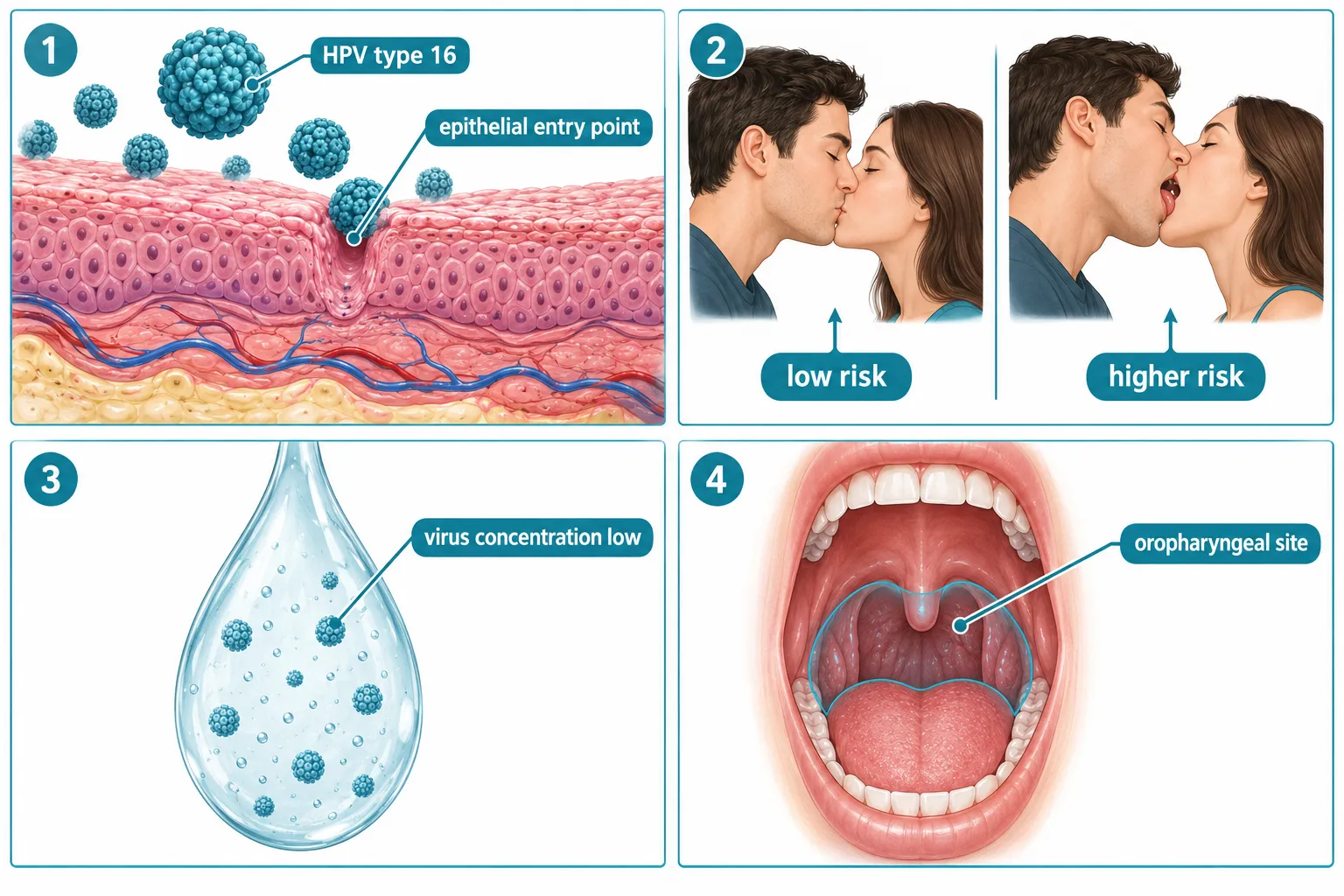
In deep, open-mouth kissing, the oral mucosa of two people comes into extended, direct contact. If one person carries HPV in their oral cavity, particularly on the tongue, tonsils, or inner cheek, that contact creates an opportunity for transmission. The virus does not need a visible sore or lesion to be present; HPV can shed from tissue that looks completely normal.
Closed-mouth kissing does not create this kind of mucosal contact. Saliva by itself is not an efficient carrier. Studies looking at HPV in saliva have found that the concentration of viral particles is generally too low to establish infection without direct tissue contact. This is why sharing a drink or a quick peck on the lips is not considered a transmission route.
The full picture of how HPV spreads goes well beyond kissing, genital-to-genital contact and oral sex are the primary routes, but oral transmission through deep kissing is a real, if uncommon, pathway worth understanding.
Can HPV Spread by Kissing? What Studies Have Found
Several studies have examined the relationship between kissing behavior and oral HPV prevalence. The consistent finding is that deep, open-mouth kissing, particularly with multiple partners over a lifetime, is associated with a modestly increased likelihood of carrying oral HPV.
One important distinction: association is not the same as proven transmission in a single encounter. Most of what researchers know comes from population-level data showing that people who report more kissing partners have slightly higher rates of oral HPV. Controlled studies tracking transmission event by event are difficult to design and rare.
What is well-established is which HPV types are involved. HPV type 16 is the strain most commonly detected in the oral cavity and oropharynx, and it is the same high-risk genotype responsible for the majority of HPV-related oropharyngeal cancers. HPV types 6 and 11, the low-risk types that cause most genital warts, can also appear in the oral cavity, where they are linked to a rare condition called recurrent respiratory papillomatosis (RRP). RRP involves wart-like growths in the throat and airways, and while it is most often transmitted from mother to infant during childbirth, oral HPV exposure is considered a contributing factor in some adult cases.
Oral HPV infection in the general adult population sits at roughly 7% in most large surveys, and high-risk oral HPV is considerably rarer. The vast majority of people who acquire oral HPV clear it without ever developing symptoms or disease.
Who Is at Higher Risk for Oral HPV from Kissing?
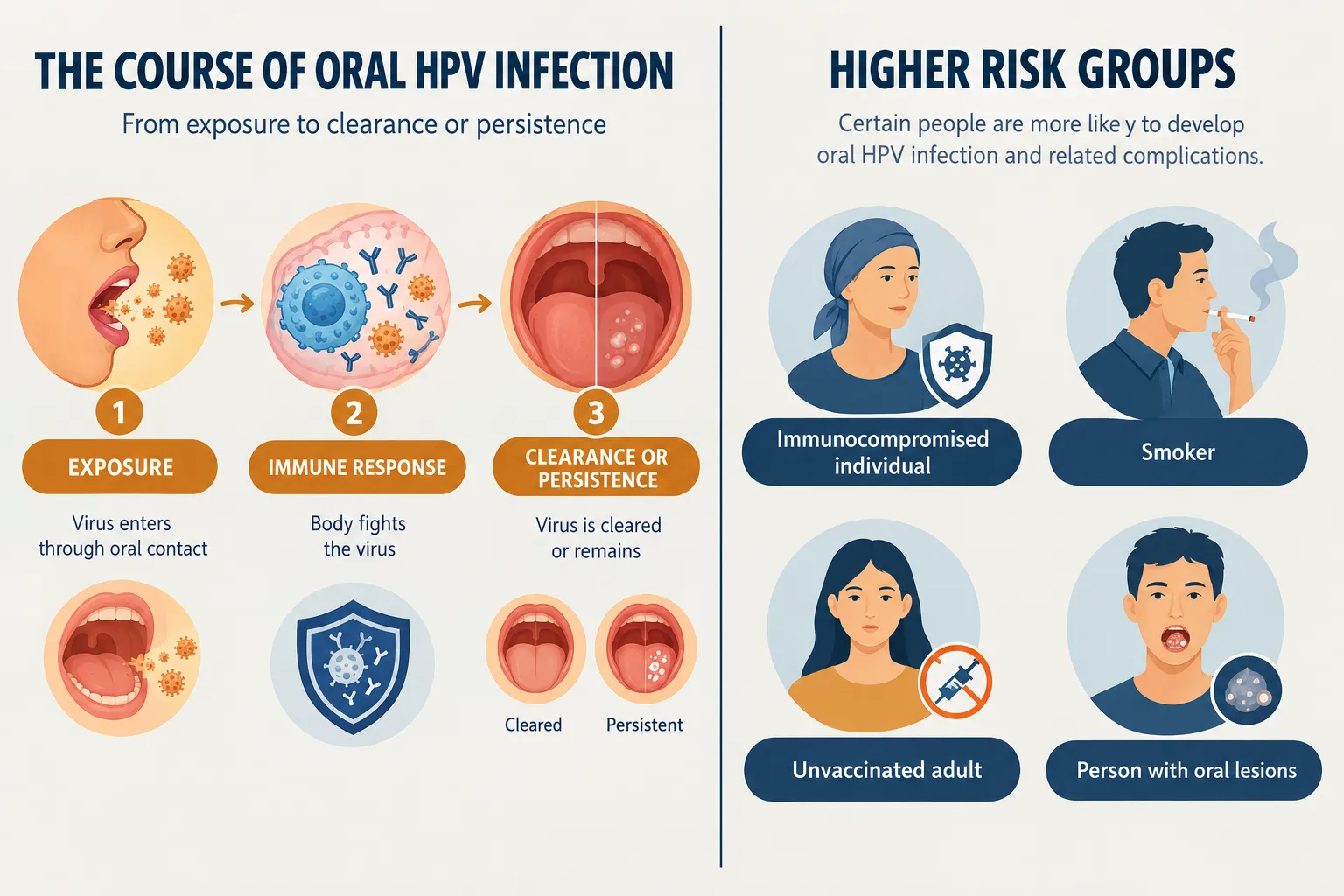
Not everyone faces the same level of risk from the same exposure. Four groups stand out:
- Immunocompromised individuals, people living with HIV, organ transplant recipients on immunosuppressive drugs, or anyone with a weakened immune response are less able to clear HPV after exposure, making any transmission route more consequential
- Smokers, tobacco use damages oral mucosal tissue and impairs local immune defenses, creating conditions where HPV is more likely to persist rather than clear
- Unvaccinated adults, the HPV vaccine covers types 16 and 18 (and in the case of the 9-valent Gardasil, seven additional high-risk types); unvaccinated people have no immune protection against these strains if exposed orally
- People with active oral lesions or compromised mucosal barriers, cuts, ulcers, or inflammation in the mouth may lower the threshold for viral entry
What Kissing Scenarios Actually Raise the Risk?
The distinction between casual and deep kissing matters clinically. Here is how the risk picture breaks down:
Lower-risk contact:
- Closed-mouth kissing
- Brief lip contact
- Kissing on the cheek or forehead
Higher-risk contact:
- Prolonged deep kissing with tongue contact (sometimes called French kissing)
- Deep kissing with someone who has known oral HPV or oropharyngeal lesions
- A high cumulative number of deep-kissing partners over a lifetime
No single kiss with an HPV-positive person guarantees transmission. The immune system clears most exposures before an infection is established. But repeated exposure, combined with any of the risk factors above, shifts the odds.
It is also worth noting that most people who carry oral HPV do not know it. There is no routine clinical test for oral HPV, no swab offered at a standard checkup. The virus is typically asymptomatic, and the absence of visible symptoms does not mean the virus is absent.
Does Oral HPV Lead to Cancer?
Oral HPV infection and oropharyngeal cancer are connected, but the path from one to the other is neither automatic nor quick. Most oral HPV infections, including those caused by high-risk type 16, clear on their own within one to two years. Persistent infection, particularly with type 16, is what raises cancer risk over time.
Oropharyngeal cancers linked to HPV most often develop in the tonsils and base of the tongue. They are distinct from oral cavity cancers caused by tobacco and alcohol. HPV-related oropharyngeal cancer has been increasing in incidence over recent decades, particularly in men over 50, but the absolute lifetime risk for any individual with oral HPV remains low.
There is currently no cervical-cancer-style screening program for oropharyngeal HPV. If you have concerns about throat symptoms, a persistent sore throat, difficulty swallowing, a lump in the neck, or a voice change lasting more than a few weeks, those warrant evaluation by a doctor, not because they are likely to be cancer, but because cell changes are easiest to address before they progress.
The HPV vaccine guide covers which strains the vaccine protects against and why vaccination before first exposure offers the strongest protection, including for oral HPV.
Frequently Asked Questions
Can you get HPV from a casual peck on the lips?
No documented evidence supports transmission through a brief, closed-mouth kiss. The virus requires direct mucosal contact to establish infection, and a quick lip-to-lip contact does not create that exposure. The risk scenario involves deep, prolonged open-mouth kissing.
If my partner has oral HPV, does that mean I will get it from kissing?
Not necessarily. Exposure does not equal infection. Your immune system clears most HPV exposures before the virus establishes itself. The risk increases with repeated exposure, immune suppression, smoking, and the absence of vaccine protection against the relevant HPV type.
Is there a test for oral HPV?
There is no FDA-approved routine screening test for oral HPV available in standard clinical practice as of 2026. Some research settings and specialty clinics use oral rinse or swab samples, but these are not part of routine care. The HPV testing guide explains what tests are available, what they detect, and who should consider getting tested.
Does the HPV vaccine protect against oral HPV?
Yes, to the extent that it covers the relevant genotypes. Gardasil 9 protects against HPV types 16, 18, 31, 33, 45, 52, and 58, all high-risk types, as well as types 6 and 11. If you are exposed to one of those types orally, prior vaccination significantly reduces the likelihood of infection taking hold.
Can HPV spread by kissing if there are no visible symptoms?
Yes. HPV sheds from epithelial tissue that can appear completely normal. The absence of visible warts, sores, or lesions does not mean the virus is absent. This is one reason HPV is so common, most transmission happens without either person knowing an infection is present.
Should I tell a partner if I have oral HPV before kissing?
This is a personal decision, and the medical facts are worth knowing before you make it. Oral HPV is common, often asymptomatic, and usually clears on its own. There is no clinical consensus requiring disclosure for kissing the way there is for sexual contact. That said, if you have been told you have oral HPV or oropharyngeal lesions, a conversation with your doctor about what that means for partners is reasonable. For a broader look at how HPV affects men specifically, including oral and throat considerations, that page covers the details.