Having HPV during pregnancy, whether it just showed up on a test or has been sitting quietly in your records for years, does not mean your pregnancy is in danger. Dormant HPV and pregnancy is a topic that genuinely warrants attention, but the picture is far less alarming than most people fear when they first hear the two words together. Most HPV infections, including previously dormant ones that become detectable again during pregnancy, do not alter standard prenatal care and do not pose a direct threat to the baby.
Key Takeaways
- Dormant HPV can become detectable again during pregnancy due to normal hormonal and immune shifts, this is reactivation, not necessarily a new infection.
- HPV is not directly harmful to a developing fetus, and vertical transmission to the baby is rare.
- Cervical changes found during pregnancy are usually monitored with colposcopy and treated after delivery, not during.
- The HPV vaccine is not recommended during pregnancy, delay any remaining doses until postpartum.
- Prior excisional treatment of cervical precancer (such as LEEP) carries more documented pregnancy risk than HPV detection alone.
What Does “Dormant HPV” Actually Mean in Pregnancy?
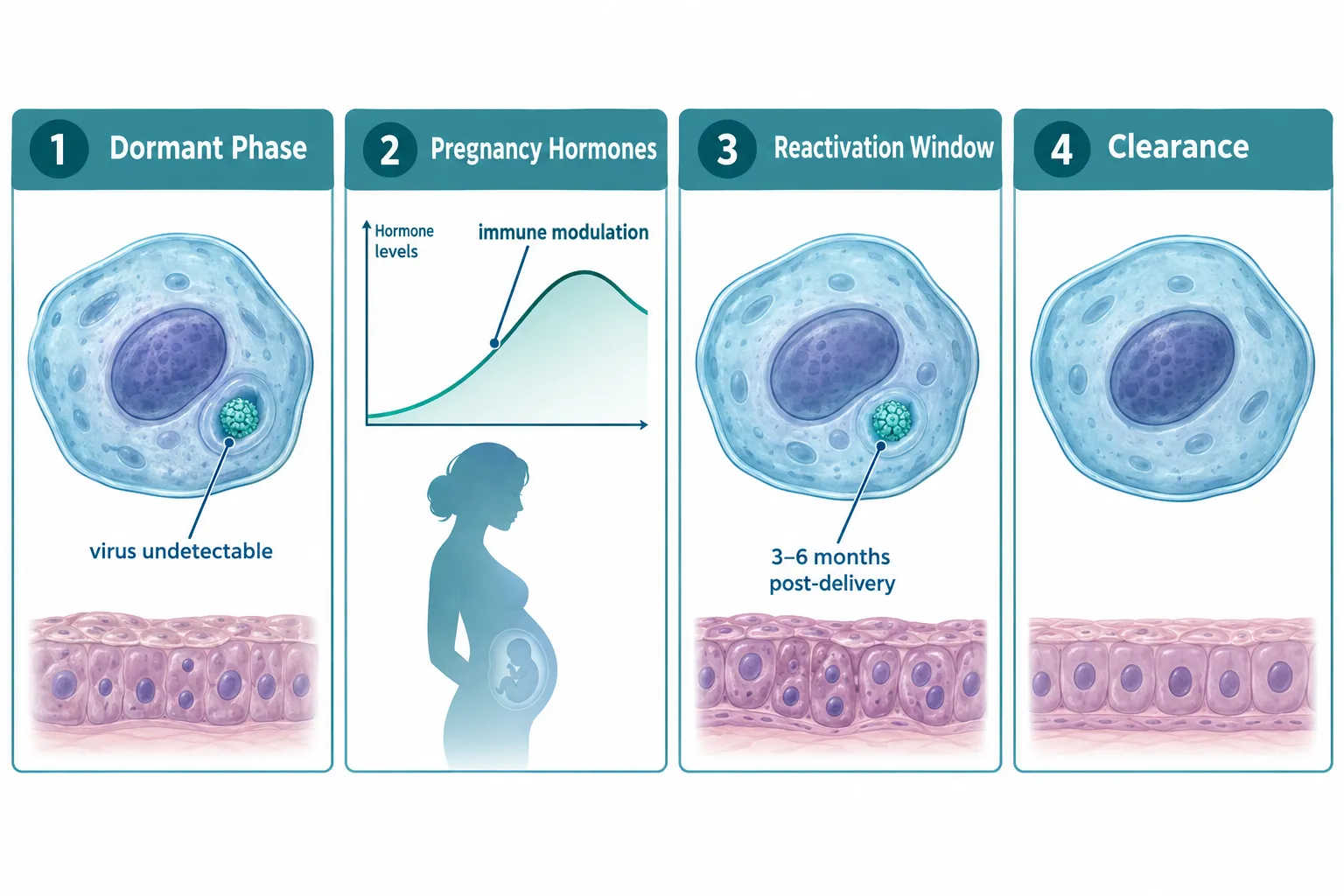
HPV can stay in your body at levels too low to detect on standard testing. The virus isn’t gone, it’s suppressed by a healthy immune response. This is what clinicians mean by latent or dormant infection, and understanding whether HPV can be dormant helps explain why a test can come back positive years after you thought the virus had cleared.
Pregnancy changes the equation. Hormonal shifts, a naturally modulated immune system, and changes in the cervical microbiome can all lower the threshold at which HPV becomes detectable again. Long-term cohort data show that some women who test HPV-negative through most of their pregnancy show a rise in detectable HPV three to six months after delivery, a pattern consistent with reactivation of a dormant infection rather than a brand-new exposure.
This matters because a “new positive” result around pregnancy doesn’t automatically mean a new infection. The timing of HPV acquisition is often impossible to determine. Pregnancy itself may simply be unmasking something that was already there.
How Common Is HPV During Pregnancy?
More common than most people expect. Reported HPV prevalence among pregnant women ranges from roughly 5% to 40% across studies, depending on the population and testing method used. High-risk oncogenic types, particularly HPV 16 and HPV 18, are more likely to persist during pregnancy than low-risk types like HPV 6 and 11, which are associated with genital warts.
Current evidence suggests HPV infection is approximately twice as common in pregnant women as in non-pregnant individuals of the same age. That gap almost certainly reflects reactivation of dormant infections rather than a sudden surge in new exposures. Pregnancy is a period of higher detectable infection, the virus isn’t more dangerous, it’s just more visible.
For a broader look at how HPV affects women across different life stages, the HPV in women overview covers cervical risk, screening timelines, and what different results actually mean.
Does Dormant HPV Affect the Baby?
The risk to the baby from maternal HPV, including dormant or asymptomatic infection, is low. HPV DNA has been detected in amniotic fluid and placental tissue, but vertical transmission is rare, and most infants who test positive appear to clear the virus on their own. Infection is usually not clinically significant.
HPV is not teratogenic, meaning it does not directly cause birth defects. Some research suggests persistent infection may indirectly affect placental function or cervical structural integrity, and certain studies have reported associations between active HPV infection and outcomes like preterm premature rupture of membranes (PPROM) and preterm birth. Those associations exist in the literature, but causality has not been established, and confounding factors are likely involved.
The most consistent finding, and this is worth holding onto, is that the reproductive risks most clearly linked to HPV are tied to prior treatment of cervical precancer (procedures like LEEP or cone biopsy), not to HPV detection itself. If you’ve had excisional treatment in the past, that’s worth discussing specifically with your obstetrician.
Who Is at Higher Risk for HPV Reactivation During Pregnancy?
Not every pregnant person with a history of HPV faces the same picture. A few groups warrant closer monitoring:
- Immunocompromised individuals, including those living with HIV or on immunosuppressive therapy, are more likely to experience HPV reactivation and persistence. Coordinated care between obstetrics and infectious disease is recommended in these cases.
- People with a history of abnormal Pap results or prior cervical treatment, previous HSIL, LEEP, or cone biopsy increases the complexity of monitoring and raises the risk of preterm birth independent of current HPV status.
- Unvaccinated individuals, those who have never received the HPV vaccine have a broader range of HPV types they remain susceptible to, including high-risk genotypes.
What Happens to Cervical Screening and Monitoring During Pregnancy?
HPV testing in pregnancy typically happens as part of routine cervical screening, a Pap test combined with HPV co-testing, rather than as a pregnancy-specific protocol. If you’re due for screening, pregnancy doesn’t change that schedule.
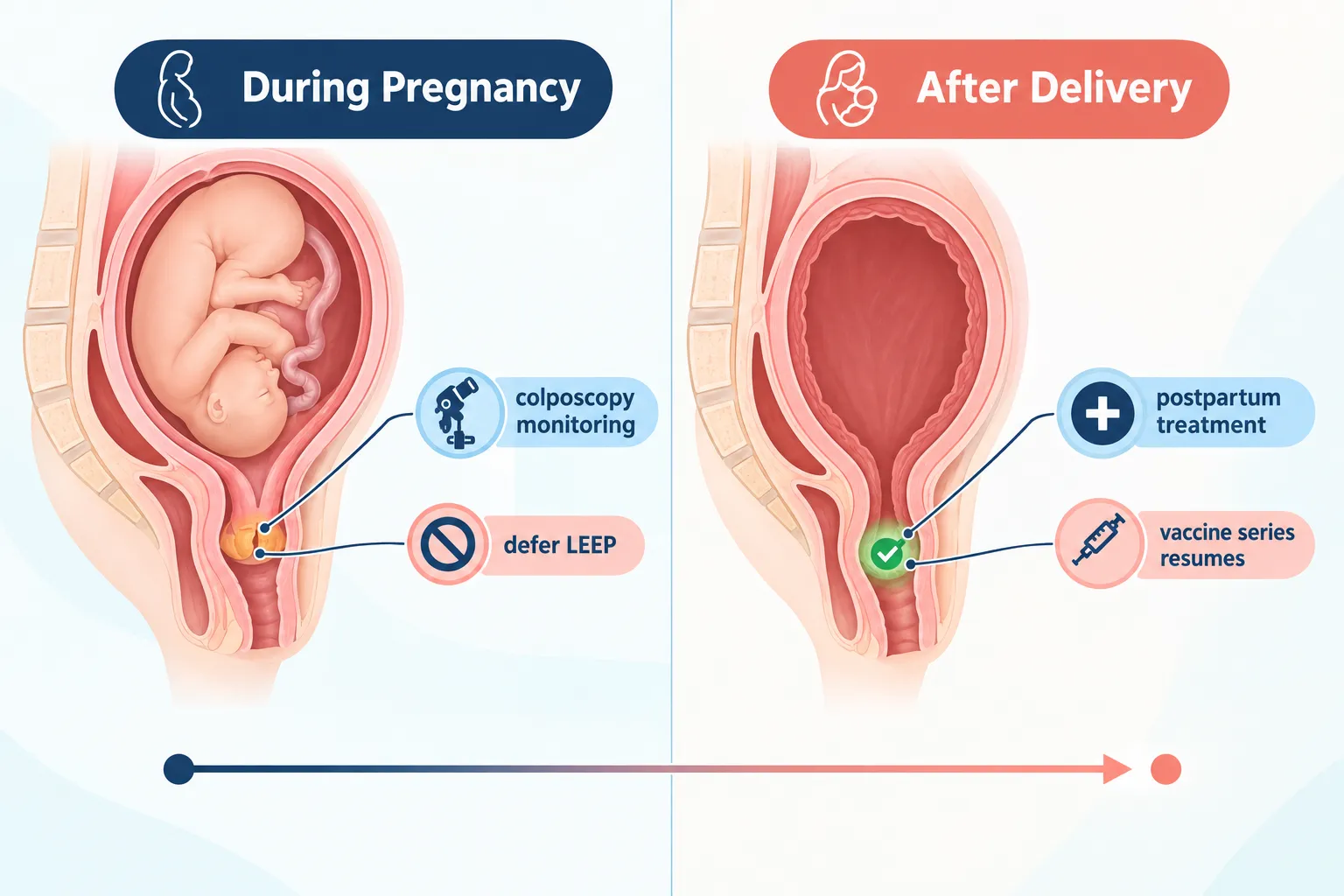
When cervical changes are found, the approach shifts. Colposcopy is safe during pregnancy and is the standard next step after an abnormal Pap smear result. What changes is the treatment timeline. Excisional procedures like LEEP are generally deferred until after delivery unless there is confirmed invasive cancer requiring individualized management. Mild to moderate abnormalities, LSIL, low-grade changes, are monitored through pregnancy and re-evaluated postpartum.
The cervical smear HPV test guide explains how co-testing works and how to read your results if you’re unsure what the numbers and categories mean.
Treating Genital Warts During Pregnancy
Low-risk HPV types 6 and 11 can cause genital warts, and warts sometimes grow faster or become more noticeable during pregnancy due to immune and hormonal changes. Small, asymptomatic warts are often managed expectantly, meaning watched rather than treated, during pregnancy.
Podophyllin and podophyllotoxin should not be used during pregnancy. Maternal and fetal deaths have been reported following use on large vascular warts. Safer alternatives exist and should be discussed with your provider if treatment is needed.
Warts do not typically require a cesarean delivery. Transmission of HPV 6 or 11 to a newborn during vaginal delivery is possible but rare, and the resulting condition, recurrent respiratory papillomatosis, is uncommon.
The HPV Vaccine and Pregnancy
The HPV vaccine is not recommended during pregnancy. If you’re pregnant and partway through a vaccine series, delay the remaining doses until after delivery.
Pregnancy testing before vaccination is not required, and inadvertent vaccination around the time of conception has not been linked to adverse pregnancy or fetal outcomes. If that happened to you, the only action needed is to pause the series and complete it postpartum. The vaccine can be given after delivery, including during breastfeeding when otherwise indicated.
If you’re curious whether HPV status can affect your ability to conceive in the first place, the HPV and pregnancy question is addressed separately.
Frequently Asked Questions
If I had HPV years ago and it cleared, can it come back during pregnancy?
Yes, this is what reactivation means. A dormant infection can become detectable again when the immune system is naturally modulated during pregnancy. A new positive result doesn’t necessarily mean a new exposure; the virus may have been present at low levels for years.
Will my baby be born with HPV?
Vertical transmission is rare. Most infants who test positive for HPV DNA appear to clear the virus without developing any clinical illness. HPV is not considered directly teratogenic, and the overall risk to a newborn from maternal HPV infection is low.
Do I need extra prenatal appointments because of HPV?
Not automatically. Most people with HPV, including those with dormant or low-grade infection, follow standard prenatal care. If you have a history of high-grade cervical changes, prior excisional treatment, or are immunocompromised, your provider may recommend additional colposcopy visits or specialist coordination.
Can I finish my HPV vaccine series while pregnant?
No. Delay remaining doses until after delivery. Inadvertent vaccination early in pregnancy has not been linked to harm, but the recommendation is to complete the series postpartum. The vaccine is safe to receive while breastfeeding.
What if I’m found to have HSIL during pregnancy?
High-grade squamous intraepithelial lesions (HSIL) found during pregnancy are typically managed with colposcopy and close monitoring rather than immediate excisional treatment. Definitive treatment is usually deferred until after delivery unless invasive cancer is confirmed. Your provider will determine the appropriate monitoring interval based on the severity of the findings.