
A cervical smear HPV test is a routine screening procedure, not a diagnosis of cancer, and not a reason to panic. Most people who test positive for high-risk HPV clear the infection on their own, and the entire point of the cervical smear HPV test: what to expect process is to catch any cell changes early, when they are easiest to manage.
Here is what actually happens, from booking your appointment through getting your results.
Key Takeaways
- The HPV test is now the primary cervical screening method for adults aged 25-65 in the US and across much of Europe.
- A positive HPV result does not mean you have cervical cancer, it means your doctor has useful information and knows what to monitor.
- The procedure itself takes under five minutes and involves a speculum exam and a small brush sample from the cervix.
- Self-collection options are now formally accepted in updated guidelines and are being rolled out at scale in several countries in 2026.
- Most people with a positive result will either test negative at their next screen or be referred for a colposcopy, a closer look, not an emergency.
How the HPV Test Fits Into Cervical Screening
Cervical screening has shifted significantly over the past decade. The HPV test has replaced the traditional Pap smear as the primary screening tool for most adults aged 25 to 65 in the United States, and updated guidance from the EU Council in 2026 has moved European programs firmly in the same direction.
The reason is straightforward: HPV causes virtually all cervical cancers, and testing directly for the virus is more sensitive than looking at cells alone. HPV testing, how it works, who should get it, and what your results mean covers the broader science behind this. What matters here is that the test looks for high-risk HPV types, particularly types 16 and 18, which together account for around 70% of cervical cancers, rather than waiting for cell changes to appear first.
In practice, most screening programs now use one of two approaches: an HPV test alone (primary HPV screening), or co-testing, where an HPV test and a cervical cytology sample are collected at the same time. Your doctor or clinic will tell you which applies to your situation.
Screening intervals vary by age and result history. For most adults with a negative HPV result, the recommended interval is every five years. That longer gap is a direct result of how reliable a negative HPV test is, not a sign that screening matters less.
What Happens During a Clinic-Based Cervical Smear HPV Test
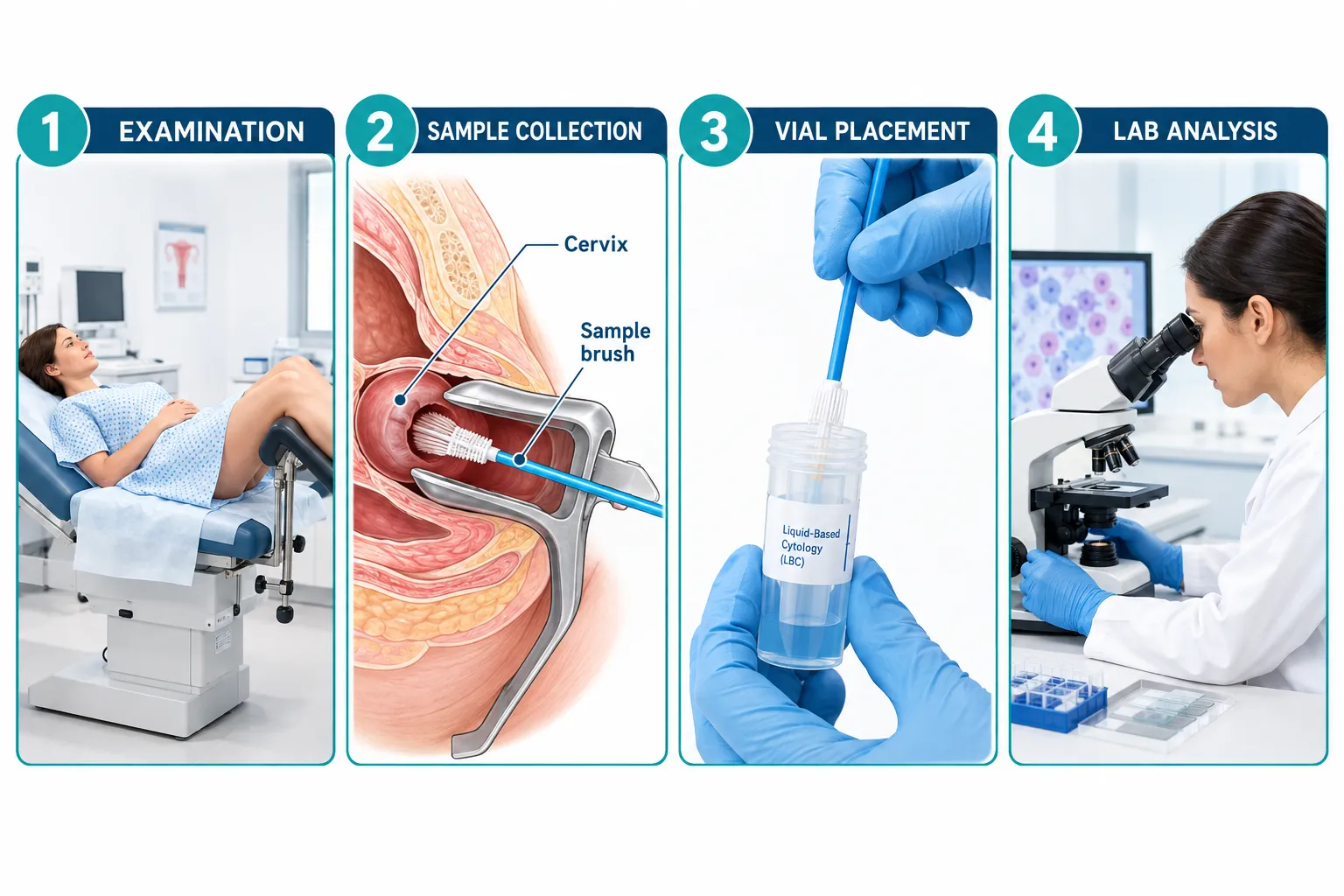
The procedure is brief. Most appointments, including the conversation beforehand, take around 15 to 20 minutes. The sample collection itself is usually under five minutes.
Before the test: You will be asked to undress from the waist down and lie on the examination table, usually with your knees bent and feet resting in stirrups or on the table. A healthcare provider, a doctor, nurse, or nurse practitioner, will explain each step before doing it.
During the test: A speculum, a small hinged instrument, is gently inserted into the vagina to hold the walls apart and give the provider a clear view of the cervix. A soft brush or small spatula is then used to collect cells from the cervix and the area just inside the cervical opening. The sample goes into a small vial of liquid (liquid-based cytology) and is sent to a laboratory.
What it feels like: Most people feel mild pressure or a brief cramping sensation, similar to period pain. Some feel nothing at all. If you find speculum exams uncomfortable, telling the provider beforehand allows them to use a smaller speculum or adjust their approach.
After the test: There may be light spotting for a day or two. No recovery time is needed, and you can return to normal activities immediately.
For context on how different HPV tests are analyzed in the lab, the Aptima HPV test guide explains one of the commonly used testing platforms and how it differs from other methods.
Self-Collection: What the New Guidelines Mean for You
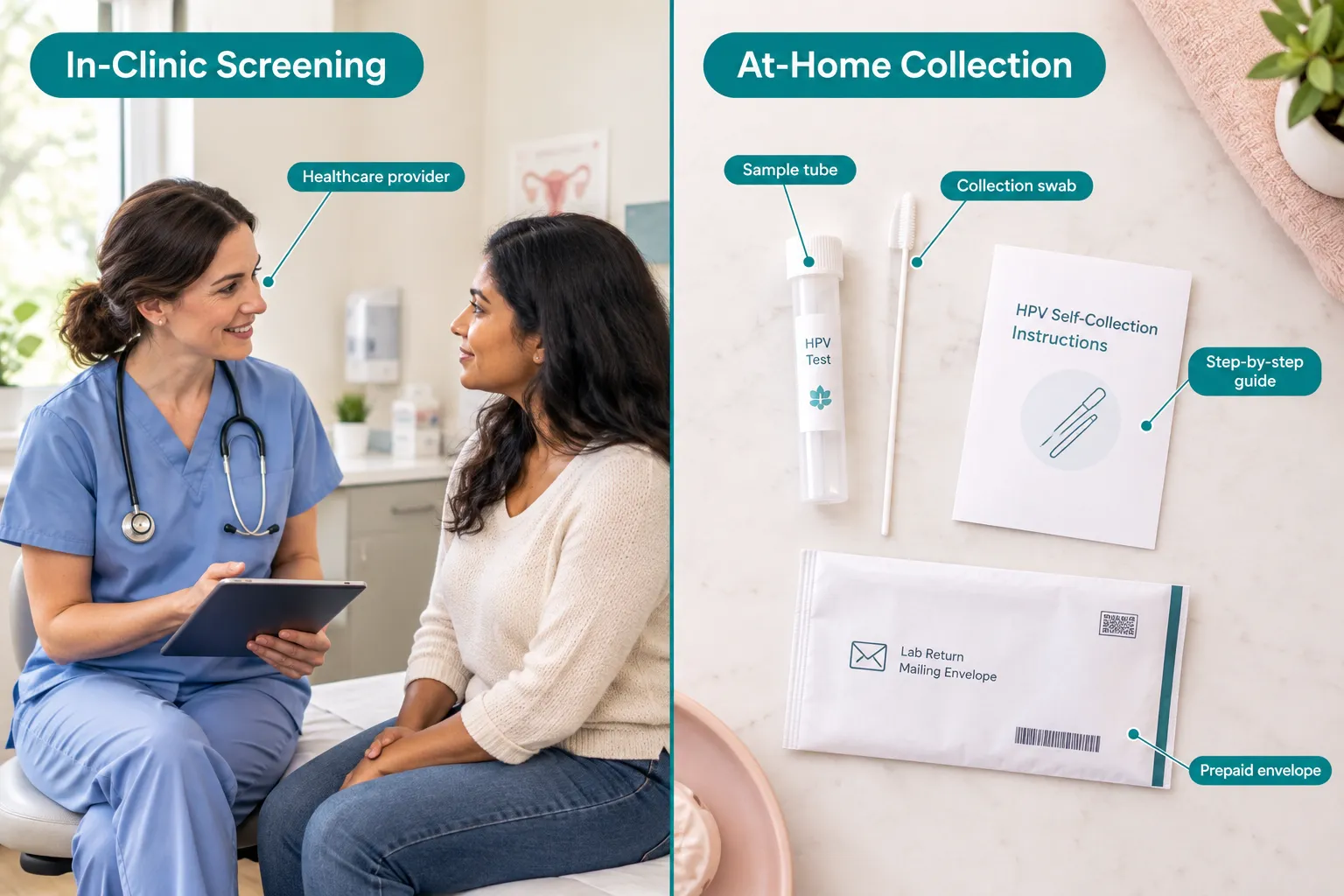
In 2026, self-collected HPV samples are formally accepted in updated guidelines in both the US and Europe. England launched a large-scale home HPV self-testing rollout in August 2026, and the EU Council’s updated recommendation explicitly includes self-collection as part of national screening programs.
Self-collection means you take the vaginal swab yourself, either at a clinic or at home, and the sample is tested for high-risk HPV types in the same laboratory as a clinician-collected sample.
The evidence shows that self-collected samples are highly accurate for detecting high-risk HPV. They are not yet considered equivalent to clinician-collected samples for cytology, meaning if your self-test is positive, you will still need a clinic appointment for follow-up. Professional bodies are clear that self-testing supplements, rather than replaces, in-clinic screening for people who are already attending regularly.
Where self-collection makes a real difference is access. People who avoid screening due to discomfort, past trauma, disability, or logistical barriers now have a pathway that removes those specific obstacles. That is a meaningful public health gain.
Who Is at Higher Risk for Cervical HPV and Should Prioritize Screening
Cervical screening applies to everyone with a cervix, but some groups face a higher risk of persistent HPV infection or faster progression to cell changes:
- Immunocompromised individuals, including people living with HIV and organ transplant recipients, are more likely to have persistent high-risk HPV and may need more frequent screening than the standard interval.
- Smokers, smoking impairs the local immune response in cervical tissue, making it harder for the body to clear HPV on its own.
- People with a history of abnormal Pap or HPV results, a previous LSIL, HSIL, or positive HPV result means closer monitoring is already part of your care plan, and keeping those follow-up appointments matters.
- Unvaccinated adults, people who did not receive the HPV vaccine have no protection against types 16, 18, or the other high-risk genotypes, making regular screening the primary safety net.
The broader picture of HPV in women, symptoms, screening, cervical risk, and what it means covers how these risk factors interact over time.
What Your Results Mean and What Comes Next
Negative for high-risk HPV: No high-risk HPV types were detected. You are due for your next screen in five years under most guidelines. No further action is needed now.
Positive for high-risk HPV, normal cells: High-risk HPV was found, but the cells collected look normal under the microscope. In most cases, this leads to a repeat test in one year rather than immediate referral. Many of these infections clear without any intervention.
Positive for HPV types 16 or 18: These two types carry the highest risk of progression. Most guidelines recommend referral for colposcopy, a closer examination of the cervix using a magnifying instrument, rather than waiting a year. This is a precaution, not a diagnosis.
Positive HPV with abnormal cells (ASC-US, LSIL, HSIL): The combination of a positive HPV result and abnormal cytology typically leads to colposcopy. If you receive this result, what to expect after an abnormal Pap smear explains the colposcopy process and what the different cell-change grades actually mean for your health.
An ASCUS HPV-negative result, where cells look slightly atypical but no HPV is found, follows a different pathway and generally carries a low risk of progression.
Cell changes are easiest to treat before they progress. That is what the screening pathway is designed to catch.
Coverage and Cost in the United States
Under the Affordable Care Act, cervical cancer screening, including the HPV test, is classified as a preventive service and must be covered at no cost to the patient when performed by an in-network provider. This applies to most private insurance plans and to Medicaid.
If you are uninsured or underinsured, the CDC’s National Breast and Cervical Cancer Early Detection Program (NBCCEDP) provides free or low-cost screening in every US state. Eligibility is based on income and age. Your local health department can direct you to the nearest participating clinic.
Frequently Asked Questions
Does the cervical smear HPV test hurt?
Most people feel mild pressure or brief cramping during the speculum exam, similar to period cramps. Some feel nothing at all. The sample collection takes only a few seconds. Telling your provider if you have had painful exams before allows them to adjust their technique or use a smaller speculum.
How long does it take to get results?
Lab turnaround is typically one to three weeks, depending on the laboratory and your clinic’s system. Some practices send results through a patient portal; others call or send a letter. If you have not heard back within three weeks, it is reasonable to contact your clinic directly.
Can I have a cervical smear HPV test while on my period?
It is generally better to schedule the test for a time when you are not menstruating, as heavy bleeding can affect the quality of the sample. Light spotting is usually acceptable. If your period starts unexpectedly before your appointment, call the clinic, they will advise whether to reschedule.
What happens if I keep testing positive for HPV?
Persistent high-risk HPV, meaning the same type detected on two or more tests over one to two years, does carry a higher risk of cell changes than a single positive result. This is when colposcopy becomes more likely. Persistent infection does not mean cancer is present; it means closer monitoring is the appropriate next step.
Is the HPV test different from the Pap smear?
They use the same sample collection method, a brush swab from the cervix, but analyze different things. The Pap smear looks at the appearance of cervical cells under a microscope. The HPV test detects the genetic material of high-risk HPV types directly. Many clinics now collect both from a single sample (co-testing), but primary HPV testing alone is the current recommended approach for most adults.
Do I still need screening if I received the HPV vaccine?
Yes. The vaccine protects against the most common high-risk types (16 and 18) and the two low-risk types that cause most genital warts (6 and 11), but it does not cover all high-risk genotypes. Vaccinated people still need cervical screening on the standard schedule.
What to Do Next
If you are due for screening or overdue, booking the appointment is the single most useful action. The test is brief, the follow-up pathway is well-defined, and the earlier any cell changes are found, the more straightforward the management tends to be.
If you received a positive result and are trying to understand what it means for your longer-term health, the HPV in women overview and the HPV testing guide both provide context on how the immune system handles infection and what monitoring looks like over time. Bring your specific result to your next appointment, your provider can walk you through exactly which pathway applies to your situation.