
A standard Pap smear does not test for HPV. It looks for abnormal cervical cells, the damage HPV can cause, but it does not identify the virus itself. A separate HPV test is needed to detect the virus directly, and the two tests are often run together on the same sample.
This distinction matters more than it might seem. Many people leave a routine cervical screening unsure whether they were tested for HPV at all. Understanding what each test does, and when each one is used, helps you ask the right questions at your next appointment.
Key Takeaways
- A Pap smear checks for abnormal cell changes in the cervix; it does not detect HPV itself.
- An HPV test identifies the virus’s genetic material (DNA or RNA) and can distinguish high-risk genotypes like HPV 16 and 18.
- Co-testing runs both a Pap smear and an HPV test on the same cervical sample at the same visit.
- Current guidance from ACOG and the American Cancer Society favors primary HPV screening (HPV test alone) for people aged 30-65, with the Pap smear used as a follow-up or backup.
- If your Pap result comes back abnormal, an HPV test is often run automatically on the same sample, this is called reflex HPV testing.
What a Pap Smear Actually Tests For
A Pap smear collects cells from the surface of the cervix and sends them to a lab, where a pathologist examines them under a microscope. The lab is looking at the shape and structure of those cells, specifically, whether any show signs of dysplasia, which is the term for abnormal cell changes that can, over time, progress toward cervical cancer.
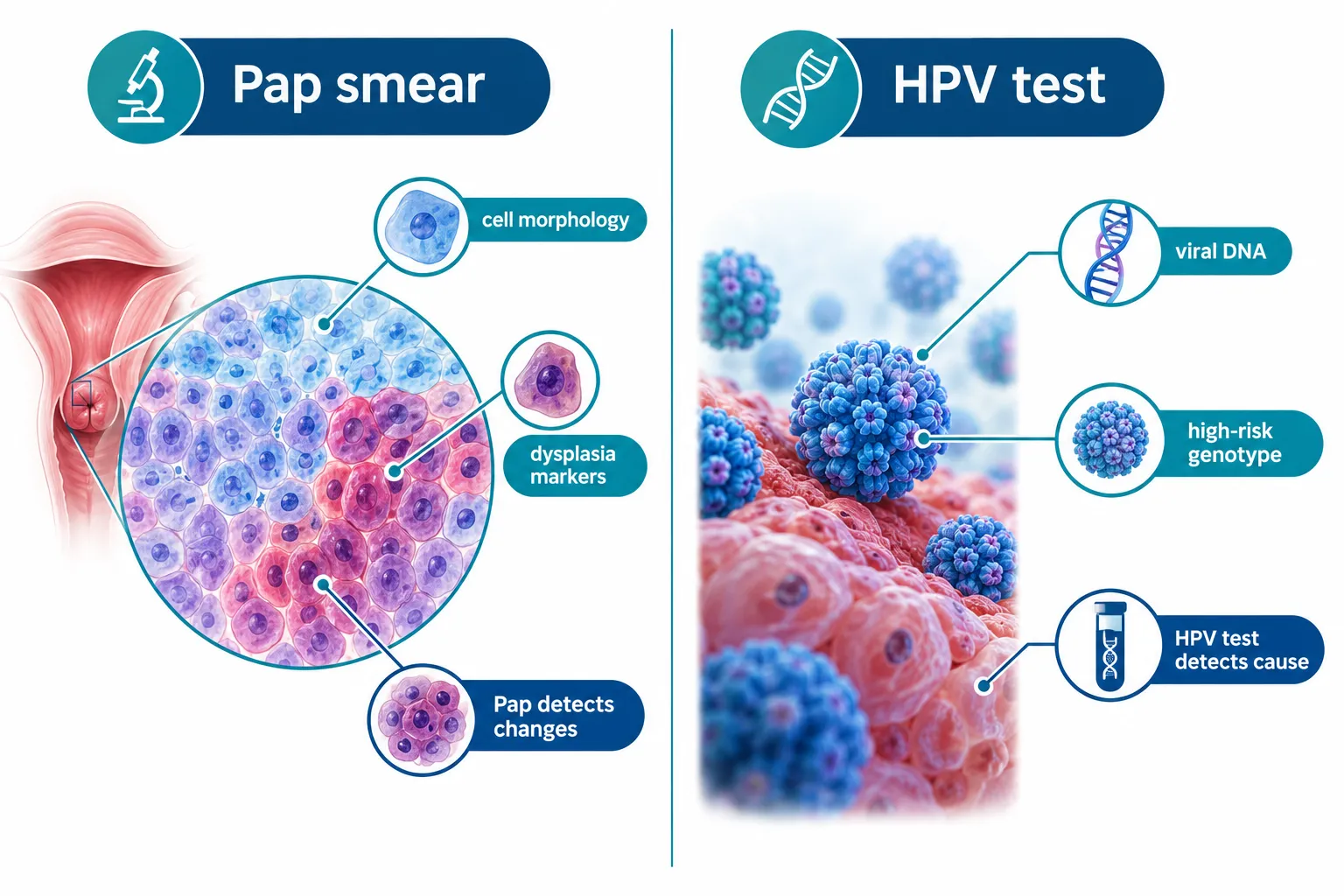
The Pap smear has been the backbone of cervical cancer prevention for decades. It works. Cervical cancer rates dropped dramatically after routine Pap screening became standard practice. But the Pap smear is not designed to find a virus. It finds the consequences of a persistent infection, cell changes that have already developed, not the infection itself.
Results from a Pap smear fall into categories you may have seen on a lab report: normal, ASC-US (atypical squamous cells of undetermined significance), LSIL (low-grade squamous intraepithelial lesion), HSIL (high-grade squamous intraepithelial lesion), or more serious findings. Each category carries different follow-up steps. If you’ve received one of these results and want to understand what comes next, the Abnormal Pap Smear, What to Expect guide walks through each category in detail.
How an HPV Test Is Different
An HPV test looks for the virus’s genetic material, specifically, HPV DNA or RNA, in the cervical cells collected during the same type of pelvic exam. It doesn’t assess cell appearance. It asks a more direct question: is HPV present, and if so, is it a high-risk genotype?
There are more than 14 high-risk HPV types. HPV 16 and HPV 18 together account for roughly 70% of cervical cancers, so most clinical HPV tests flag those two genotypes separately. A positive result for HPV 16 or 18 carries a different clinical weight than a positive result for “other high-risk types.”
This is why the HPV test has become central to cervical cancer prevention. Cell changes take time to develop, sometimes years. HPV testing can identify a high-risk infection before the cervix shows any visible abnormality at all. For a fuller picture of how HPV testing works and what your results mean, the HPV Testing: How It Works, Who Should Get It, and What Your Results Mean page covers the process end to end.
Does Pap Smear Test HPV? The Co-Testing Approach Explained
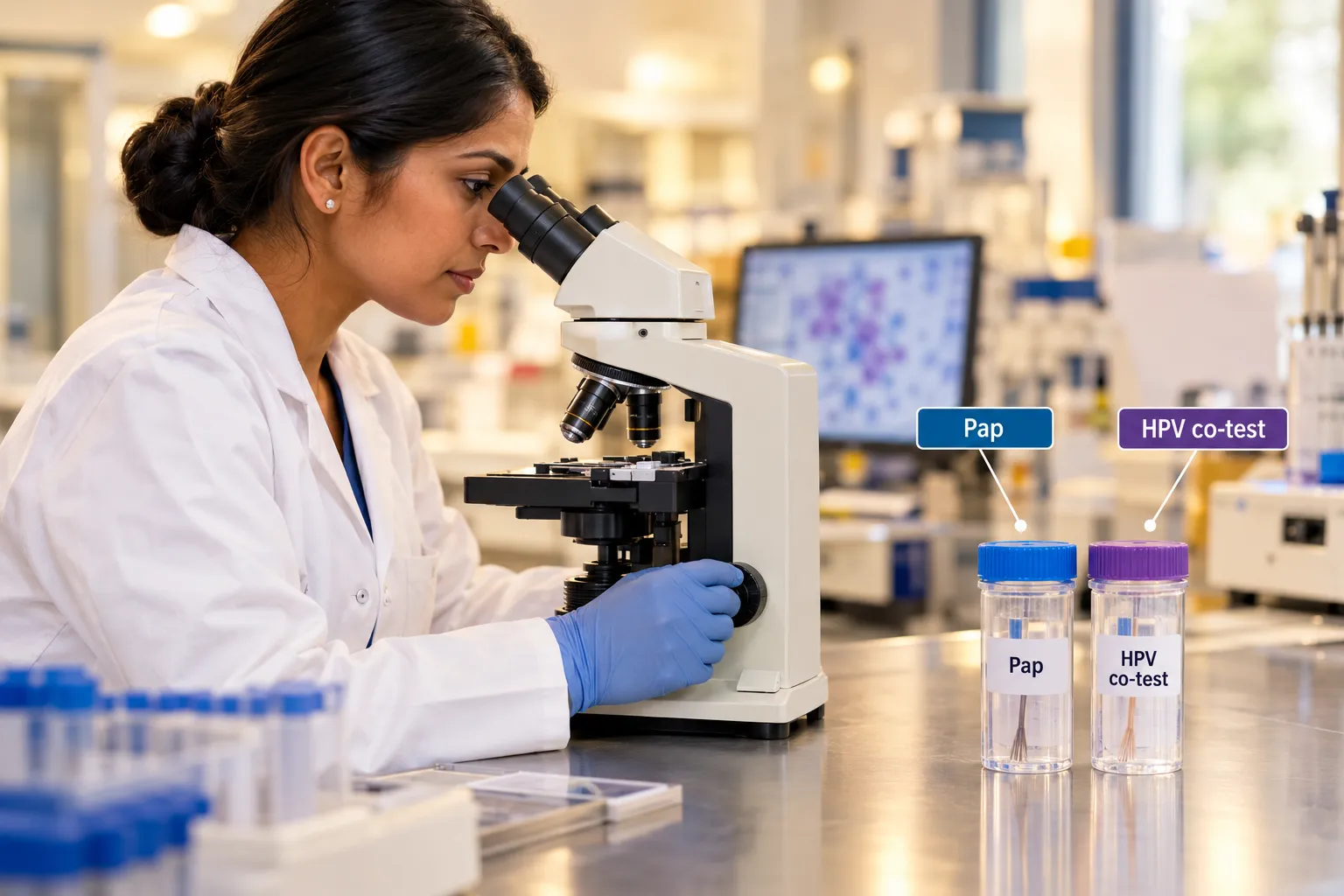
Co-testing is the practice of running both a Pap smear and an HPV test on the same cervical sample, collected at the same visit. The sample goes to the lab once; the lab performs both analyses. You don’t need two separate procedures.
For many years, co-testing was the standard recommendation for people aged 30-65. The logic: the Pap catches existing cell changes, and the HPV test catches the virus before changes appear. Together, they give a more complete picture than either test alone.
Current guidance has shifted. ACOG and the American Cancer Society now favor primary HPV screening, meaning the HPV test is run first, and the Pap smear is used as a follow-up or triage tool rather than a co-equal test. For people aged 21-29, Pap smear alone (every three years) remains the standard, because HPV infections in younger people are common and usually clear on their own without causing lasting cell changes. Adding HPV testing in this age group tends to generate unnecessary follow-up.
For people 30 and older, the three main options are: HPV test alone every five years, co-testing every five years, or Pap smear alone every three years. The cervical smear HPV test: what to expect page explains the practical experience of each approach.
What Is Reflex HPV Testing?
Reflex HPV testing is what happens when a Pap smear comes back with an ASC-US result, the most common type of mildly abnormal finding, and the lab automatically runs an HPV test on the same sample without requiring a second appointment or a new sample collection.
If the reflex HPV test is negative, the abnormal Pap result is less concerning. The cell changes were likely minor and not driven by a high-risk HPV infection. If the HPV test is positive, particularly for HPV 16 or 18, the clinical response is more active, typically a referral for colposcopy.
This is a practical example of how the Pap and HPV tests work together. The Pap flags something worth looking at; the HPV test helps determine how urgently to look. If a colposcopy is recommended after your results, the colposcopy: what the results mean page explains what that procedure involves and how findings are interpreted.
Who’s at Higher Risk for Cervical HPV and Abnormal Screening Results?
Some groups face a higher chance of persistent HPV infection or faster progression to cell changes, which makes consistent screening especially important for them.
- Immunocompromised people, including those living with HIV or who have had an organ transplant, are less able to clear HPV naturally and are at higher risk for high-grade dysplasia.
- People with a history of abnormal Pap results, prior HSIL or CIN2/CIN3 findings indicate the cervix has already responded to HPV in a significant way, and ongoing monitoring is essential.
- Smokers, tobacco use is an established co-factor that increases the risk of HPV-related cell changes progressing.
- Unvaccinated people, those who did not receive the HPV vaccine before exposure to high-risk types, particularly HPV 16 and 18, have no immunological protection against the most cancer-associated genotypes.
Does Pap Smear Test HPV in Men?
No. The Pap smear is a cervical screening test. It has no equivalent for people without a cervix. There is no routine, widely available HPV screening test approved for use in men in most countries.
HPV can cause anal, penile, and oropharyngeal cancers in men, but standard screening programs for these sites don’t exist in the same way cervical screening does. Anal Pap smears and HPV testing are used in some clinical settings for people at elevated risk, including men who have sex with men and immunocompromised individuals. The anal HPV test: what to expect page covers how that works in practice. For a broader look at detection options, can HPV be detected in men? addresses what’s currently available and what isn’t.
The Future of HPV Screening: Self-Collected Samples
One development gaining clinical traction is self-collected vaginal sampling for HPV testing. Rather than requiring a speculum exam in a clinical setting, a person collects their own sample using a swab, which is then sent to a lab for HPV DNA analysis.
Early data suggests self-collected samples perform comparably to clinician-collected samples for HPV detection. This matters because screening rates drop when access to in-person pelvic exams is a barrier, whether due to geography, cost, or personal discomfort with the procedure. Self-collection doesn’t replace the Pap smear, but in a primary HPV screening model, it could bring testing to people who currently aren’t being screened at all.
Frequently Asked Questions
If my Pap smear was normal, does that mean I don’t have HPV?
Not necessarily. A normal Pap result means no abnormal cell changes were found, it doesn’t confirm the absence of HPV. You could have an active HPV infection that hasn’t yet caused detectable cell changes. If you want to know whether HPV is present, a separate HPV test is needed.
Can I ask for an HPV test even if my doctor only ordered a Pap?
Yes. If you’re 30 or older and want co-testing or primary HPV screening, that’s a reasonable request to make at your appointment. Your doctor can order an HPV test on the same sample collected during your pelvic exam, as long as it’s processed before the sample is discarded.
What happens if my HPV test is positive but my Pap is normal?
This result, positive HPV, normal Pap, is more common than people expect. In most cases, the recommendation is repeat co-testing in one year, or immediate genotyping to check whether the positive result is HPV 16 or 18 specifically. A positive result for those two types typically leads to colposcopy even with a normal Pap.
How does HPV cause the cell changes a Pap smear detects?
High-risk HPV types produce proteins that interfere with the normal cell cycle in cervical tissue. Over time, usually years, this disruption can cause cells to grow abnormally, which is what the Pap smear detects as dysplasia. The cervical cancer HPV infection explained page covers this mechanism in more detail.
Does a negative HPV test mean I’ll never develop cervical cancer?
A negative HPV test is reassuring, but it isn’t a lifetime guarantee. HPV can be acquired at any point, and testing reflects your status at the time of the sample. Continuing to screen at recommended intervals is what keeps the risk low over time.