
An abnormal Pap smear or a positive high-risk HPV test doesn’t tell you what’s actually happening at the cellular level. That’s what colposcopy is for, and understanding what the results mean is where most of the anxiety sits.
A colposcopy result is either normal or abnormal. Normal means no precancerous or cancerous cells were found on biopsy, and you return to routine screening. Abnormal means the biopsy detected cell changes, and in the vast majority of cases, those changes are precancerous, not cancer. Knowing the difference between those two outcomes, and what each one leads to, is what this article covers.
Key Takeaways
- A normal colposcopy result means no concerning cell changes were found; you return to routine cervical screening.
- An abnormal result most often shows precancerous changes (CIN1, CIN2, or CIN3), not invasive cancer.
- CIN grades determine whether you need monitoring or treatment, not every abnormal result requires immediate intervention.
- The definitive meaning of your colposcopy comes from the biopsy pathology report, not just what the doctor observed during the exam.
- Roughly 6 in 10 people referred for colposcopy after an abnormal screen will have some degree of abnormal result, this is expected in a high-risk screening population.
Why You’re Having a Colposcopy in the First Place
Colposcopy is a next-step examination, not a first-line test. You’re typically referred after an abnormal Pap result, such as LSIL, HSIL, or ASC-US with persistent high-risk HPV, or after a positive HPV test for a high-risk type like HPV 16 or HPV 18. The abnormal Pap smear guide on HPVGuide.org explains the referral pathway in detail.
During the procedure, a clinician uses a magnifying instrument to examine your cervix closely. A dilute acetic acid solution is applied; areas with abnormal cells turn white (called acetowhite epithelium). Atypical blood vessel patterns, polyps, or unusual tissue texture may also be visible. Any suspicious area is biopsied, a small tissue sample is removed and sent to a pathologist.
Biopsy results typically take one to two weeks. The pathology report, not the visual impression alone, is what determines your diagnosis and next steps.
What a Normal Colposcopy Result Actually Means
Normal doesn’t mean “nothing happened.” It means the biopsy showed no precancerous or cancerous cells. The pathologist found no changes that put you at short-term risk.
After a normal result, you return to routine cervical screening at the interval your clinician recommends based on your age and screening history. You don’t need treatment. Cellular risk can change over time, so continued screening remains important, but a normal result is genuinely reassuring.
About 4 in 10 people referred for colposcopy in high-risk screening populations receive a normal result. If you’ve been told your colposcopy was normal, that’s a meaningful finding, not a technicality.
What an Abnormal Colposcopy Result Means, and What Comes Next
Abnormal means the biopsy found cervical cell changes. The word “abnormal” covers a wide range, and the grade of change is what drives the decision about monitoring versus treatment.
Abnormal results are classified using a grading system based on what the pathologist sees in the tissue sample:
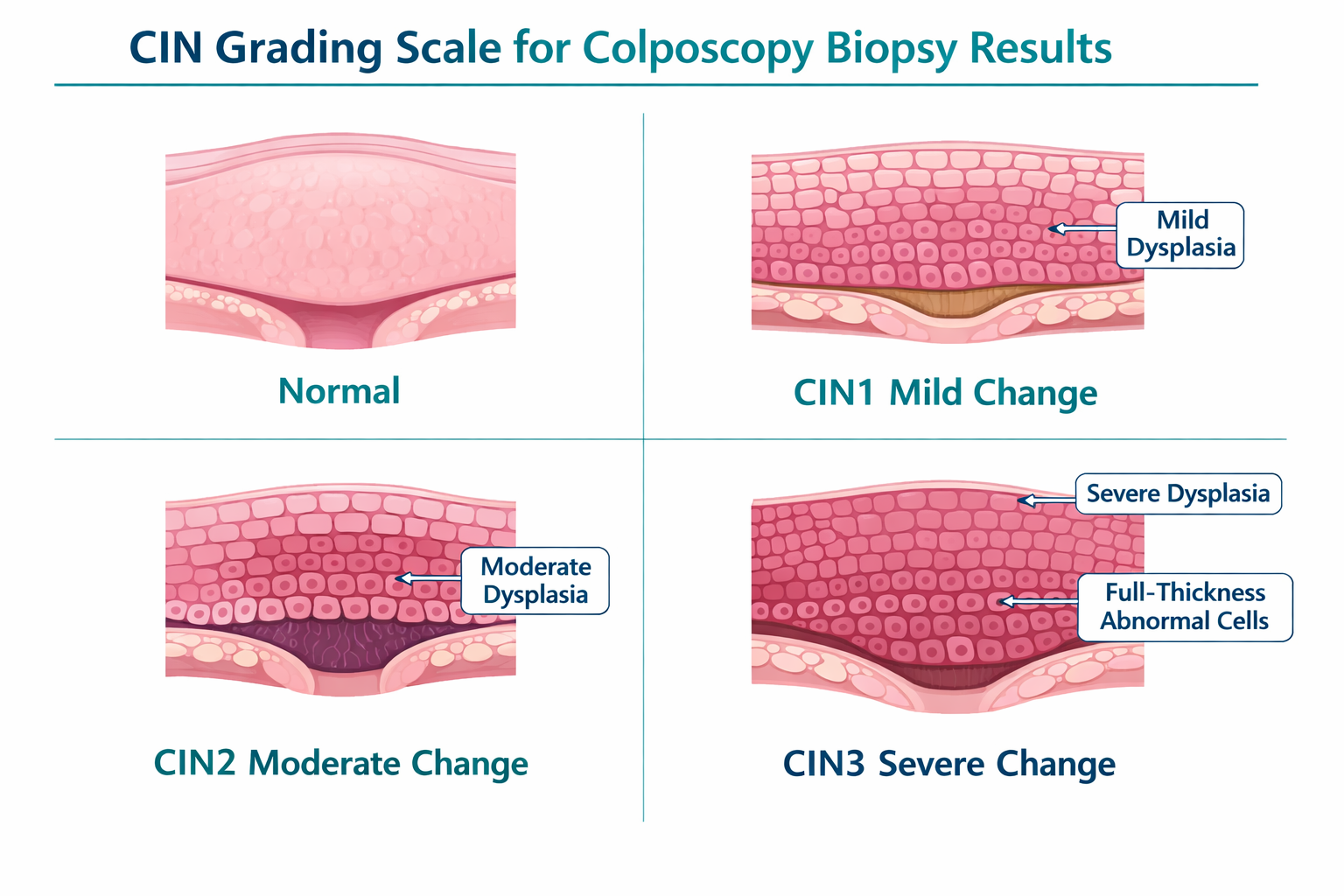
CIN1 (mild change): Cells show low-grade changes, usually linked to an active HPV infection. CIN1 is considered low risk. Most clinicians offer close follow-up, a repeat Pap or repeat colposcopy, rather than immediate treatment, because many CIN1 changes resolve on their own as the immune system clears the HPV infection.
CIN2 (moderate change): A medium-risk finding. Some clinicians offer monitoring; others recommend treatment to remove the abnormal cells. The decision depends on your age, immune status, and whether the abnormal area is fully visible. Understanding how high-risk and low-risk HPV types differ can help you understand why certain HPV types are more likely to drive progression from CIN2 to higher grades.
CIN3 (severe change): High-risk. CIN3 means the full thickness of the surface cell layer is abnormal. Treatment to remove the affected tissue is typically recommended. CIN3 is not cancer, but left untreated over years, it carries a meaningful risk of progressing to invasive cervical cancer.
CGIN (cervical glandular intraepithelial neoplasia): This involves the glandular cells inside the cervical canal rather than the surface cells. CGIN is also high-risk and usually requires treatment. It’s less common than squamous CIN but important to identify because glandular abnormalities can sit higher up the canal and may not be visible during a standard colposcopy exam.
What Happens When the Colposcopy Is Unsatisfactory
Sometimes the clinician cannot see the entire transformation zone, the area where normal and abnormal cells meet. This is called an unsatisfactory or Type 3 colposcopy. In these cases, endocervical sampling is often performed to check for high-grade disease that isn’t visible on the outer cervix. This doesn’t mean something is wrong; it means the exam needs supplementing to be complete.
When Colposcopy Finds Cancer
Invasive cervical cancer is rarely found at colposcopy, most abnormal results are precancerous changes caught well before cancer develops. That’s the point of screening. In rare cases, however, biopsy does reveal cervical cancer. If that happens, you’re referred promptly to a specialist oncology team to discuss treatment options. The referral is urgent, and the team will outline what the findings mean and what treatment involves.
Who’s at Higher Risk for Severe Colposcopy Findings
Not everyone referred for colposcopy has the same likelihood of a high-grade result. These groups are more likely to have CIN2, CIN3, or CGIN on biopsy:
- People with immunosuppression, including those living with HIV or on immunosuppressive therapy after organ transplant, are less able to clear high-risk HPV, making progression to high-grade dysplasia more likely.
- Smokers, tobacco use is consistently linked to a higher risk of high-grade cervical cell changes, likely because smoking impairs local immune surveillance in cervical tissue.
- People with a history of previous abnormal Pap results, persistent abnormality over multiple screening cycles raises the probability of finding CIN2 or higher at colposcopy.
- Unvaccinated people with high-risk HPV types 16 or 18, these two types account for the majority of CIN3 and cervical cancer cases.
How Risk-Based Guidelines Shape Your Follow-Up
The specific follow-up or treatment you’re offered isn’t arbitrary. Guidelines from bodies like the American Society for Colposcopy and Cervical Pathology (ASCCP) use a risk-based framework: your calculated risk of having CIN3 or worse, based on your full screening history, determines whether surveillance or treatment is the right next step.
This means two people with the same biopsy result might receive different recommendations if their prior screening histories differ. Someone with a first-ever low-grade result has a different risk profile than someone with years of persistent high-risk HPV and escalating Pap results.
If you received an ASCUS result before your colposcopy referral, the ASCUS HPV research overview explains how that initial finding feeds into the risk calculation. For those who had an ASCUS result with a negative HPV co-test, the ASCUS HPV-negative explainer covers what that combination means for your follow-up interval.
Treatment options for confirmed high-grade changes typically include loop electrosurgical excision procedure (LEEP), also called LLETZ in the UK, or cold knife conization. These procedures remove the abnormal tissue and allow the pathologist to examine the full excised sample to confirm the margins are clear.
Cell changes are easiest to manage before they progress, that’s what the entire screening and colposcopy pathway is designed to catch.
Frequently Asked Questions
Does an abnormal colposcopy result mean I have cancer?
No. The large majority of abnormal colposcopy results show precancerous cell changes, CIN1, CIN2, or CIN3, not invasive cancer. Cancer is found at colposcopy only in a small minority of cases. Precancerous changes are treatable, and catching them is the purpose of the screening pathway.
How long does it take to get colposcopy biopsy results?
Biopsy samples are examined by a pathologist, and results typically come back within one to two weeks. Your clinician will contact you with the findings and explain what they mean for your next steps.
If I have CIN1, will it turn into cancer?
Most CIN1 resolves on its own without treatment as the immune system clears the underlying HPV infection. It doesn’t become cancer in the short term, which is why monitoring rather than immediate treatment is the standard approach. Your clinician will set a follow-up interval to confirm the changes are resolving.
Can I have a colposcopy if I’m pregnant?
Yes. Colposcopy can be performed safely during pregnancy when clinically indicated. Biopsy may be limited to cases where cancer is suspected, since many clinicians prefer to defer treatment until after delivery for lower-grade findings. Talk to your doctor about what’s appropriate for your specific situation.
What does it mean if my colposcopy was “unsatisfactory”?
It means the clinician couldn’t fully visualize the transformation zone, not that something dangerous was found. Additional sampling of the cervical canal is usually performed to ensure nothing is missed. An unsatisfactory colposcopy is a technical finding, not a diagnosis.
Should I be tested for HPV after my colposcopy results?
HPV testing is often part of the follow-up schedule after colposcopy, particularly after treatment for high-grade changes. Persistent high-risk HPV after treatment is a signal that closer monitoring is needed. Your clinician will specify when and how often HPV testing should occur as part of your post-colposcopy plan. The Aptima HPV test overview explains one commonly used HPV test and how its results are interpreted.