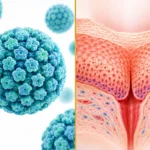
Condyloma refers to wart-like growths in the anogenital region caused by human papillomavirus, and finding them does not mean you have cancer, or that you will. The vast majority of condyloma cases are caused by low-risk HPV types 6 and 11, which do not lead to cervical or anal cancer. What they do cause is a common, treatable skin condition that millions of sexually active people deal with every year.
This condyloma overview covers what these growths look like, how they spread, who is more likely to develop them, and what treatment actually involves, so you can have an informed conversation with your doctor rather than going in blind.
Key Takeaways
- Condyloma acuminata (genital warts) are caused primarily by low-risk HPV types 6 and 11, not the high-risk types linked to cancer.
- They appear as soft, flesh-colored or cauliflower-like growths on moist anogenital skin and mucous membranes.
- Transmission is through direct skin-to-skin contact, primarily sexual, and condoms reduce but do not eliminate risk.
- Treatment options range from clinician-applied procedures (cryotherapy, trichloroacetic acid, laser) to patient-applied topical creams; recurrence is common and often requires more than one round of therapy.
- The HPV vaccine (Gardasil 9) protects against types 6 and 11 and is the most effective prevention tool available.
What Condyloma Actually Is
Condyloma acuminata is the clinical term for anogenital warts. The word “condyloma” comes from the Greek for a rounded swelling, and the “acuminata” part refers to the pointed or spiked surface many of these lesions develop.
These growths are benign, meaning they are not cancerous and do not become cancerous on their own. They are caused by HPV infection, specifically low-risk genotypes. Understanding HPV types and what the numbers mean helps clarify why a condyloma diagnosis is a different situation from a high-risk HPV finding on a cervical screen.
Condyloma can appear on the vulva, vagina, cervix, penis, scrotum, perineum, perianal skin, and inside the anal canal. They can also develop in the mouth or throat, though this is less common. Lesions are often multifocal, meaning several may appear at different sites simultaneously, which is why a thorough examination of the entire anogenital area matters before any treatment plan is set.
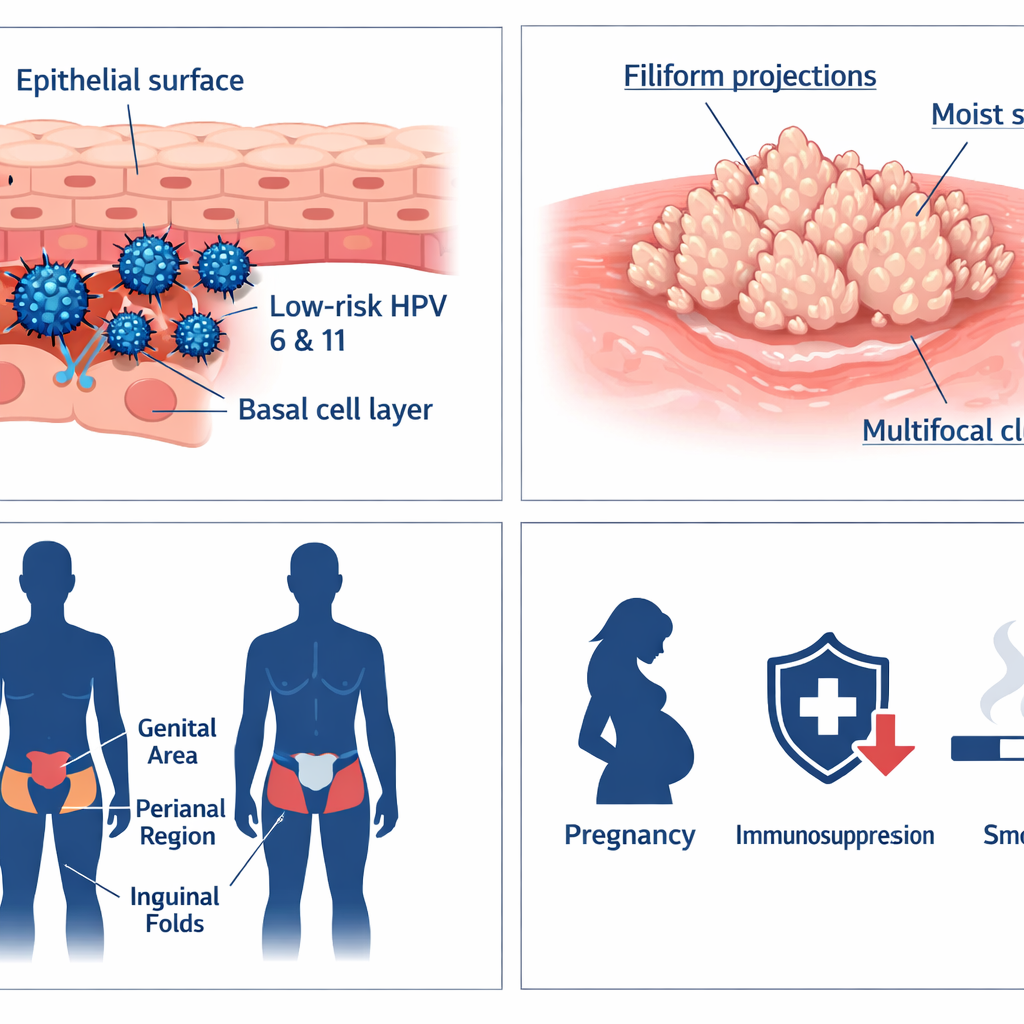
The growths themselves vary. Some are small and flat; others develop the soft, irregular, cauliflower-like surface most people associate with genital warts. Color ranges from skin-toned to white, pink, purple, or reddish-brown depending on location and individual skin tone. They are usually painless, though some people notice itching, mild irritation, or bleeding with friction.
How Condyloma Spreads
Condyloma is transmitted through direct skin-to-skin contact with an infected area, primarily during vaginal, anal, or oral sexual activity. The virus does not need a visible wart to be present to spread; someone can transmit HPV without knowing they have it.
The full picture of how HPV spreads includes some nuance worth knowing: condoms reduce transmission risk significantly but do not eliminate it, because HPV can live on skin not covered by a condom. Transmission through casual contact, shared towels, toilet seats, or drinking glasses, is not a documented route for genital HPV types.
One detail that catches many people off guard: the incubation period for condyloma can range from a few weeks to several months, and in some cases longer. This makes it genuinely impossible to pinpoint exactly when or from whom an infection was acquired. Timing alone cannot answer that question.
Vertical transmission, from a pregnant person to a newborn during delivery, is possible but uncommon. When it does occur, it can cause recurrent respiratory papillomatosis in the child, a rare condition affecting the larynx.
What Condyloma Looks Like: Symptoms to Recognize
Most people with condyloma notice a new growth or cluster of growths in the genital or anal area. The full range of HPV symptoms in men and women covers this in more detail, but for condyloma specifically, the signs are usually visible rather than felt.
Common features include:
- Soft, flesh-colored or slightly pigmented bumps on the vulva, penis, scrotum, or perianal skin
- A cauliflower-like surface texture when multiple lesions cluster together
- Flat, smooth lesions on drier skin areas versus more raised, irregular ones on moist mucosal surfaces
- Occasional itching, discharge, or light bleeding, though many people have no symptoms at all
Internal lesions, inside the vagina, on the cervix, or inside the anal canal, are often found only during a clinical examination. This is one reason routine screening matters: an anal HPV test or a pelvic exam can detect lesions a person would never feel or see on their own.
Diagnosis is typically clinical, a trained provider can identify condyloma by appearance. In unclear cases, a biopsy may be taken to confirm the diagnosis and rule out other conditions.
Who Is at Higher Risk for Condyloma?
Anyone who is sexually active can acquire genital HPV, but certain groups face a higher likelihood of developing condyloma or experiencing more severe or persistent disease:
- Immunocompromised individuals, people living with HIV, organ transplant recipients on immunosuppressive therapy, and others with reduced immune function are more likely to develop extensive, treatment-resistant condyloma.
- Unvaccinated people, those who have not received the HPV vaccine (Gardasil 9) lack protection against types 6 and 11, the two types responsible for roughly 90% of condyloma cases.
- Pregnant people, hormonal and immune changes during pregnancy can cause existing condyloma to grow rapidly or become more numerous; lesions sometimes resolve after delivery.
- Smokers, smoking is associated with impaired local immune response in genital tissues, which may affect both susceptibility and the body’s ability to clear the infection.
How Condyloma Is Treated
Condyloma does not have a single universally accepted treatment algorithm, and that is not a gap in care, it is a reflection of the fact that different lesion types, locations, and patient circumstances call for different approaches.
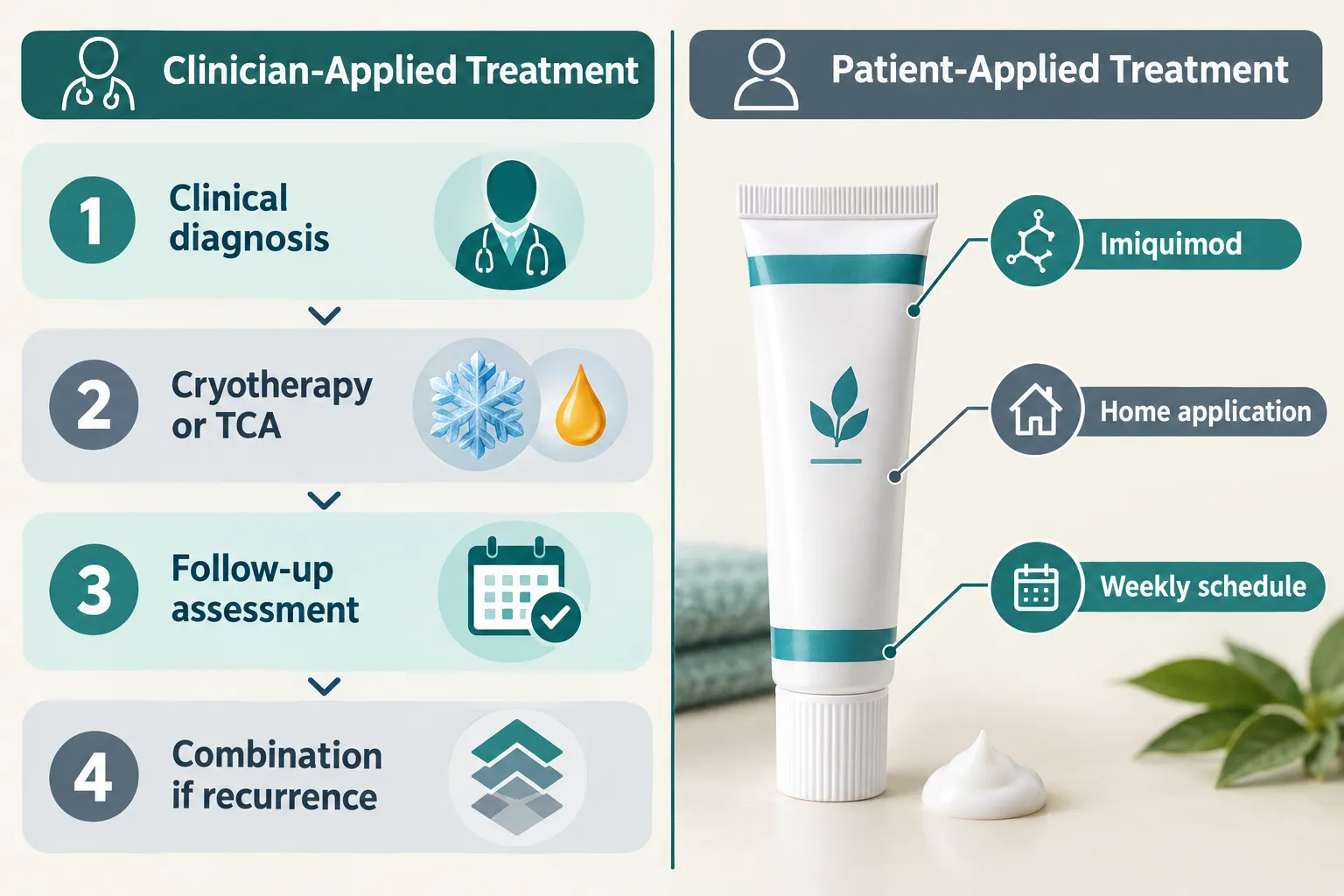
Treatment falls into two broad categories:
Clinician-applied options:
- Cryotherapy (freezing with liquid nitrogen), complete response rates in the 54-72% range across studies
- Trichloroacetic acid (TCA), a chemical applied directly to lesions, with response rates around 78%
- Surgical excision, electrosurgery, or CO2 laser, generally the highest efficacy, particularly for larger or refractory lesions
- Potassium hydroxide (KOH) solution, an emerging lower-cost option showing complete response rates of 65-89% in recent systematic reviews, comparable to established methods
Patient-applied options:
- Imiquimod cream, a topical immune-response modifier applied at home on a set schedule; suitable for external genital warts in selected cases
- Podophyllotoxin, a topical antimitotic agent applied directly to warts
For detailed information on topical prescription options, including how each cream works and what to expect during a course of treatment, that guide covers the specifics.
Recurrence is common regardless of which method is used. Many people require multiple treatment sessions, and some need combination therapy, for example, surgical debulking followed by a topical agent to address residual or recurring lesions. The realistic goal of treatment is control and clearance, not a guaranteed one-time cure. Recent research confirms that HPV subtype, whether low-risk or high-risk, does not reliably predict whether condyloma will recur, so treatment decisions are based on clinical factors rather than genotype alone.
Prevention: Vaccination and Safer Sex
The HPV vaccine is the most effective tool for preventing condyloma. Gardasil 9 covers HPV types 6 and 11, the two types that cause approximately 90% of anogenital warts, along with several high-risk types linked to cancer. Vaccination before first sexual exposure offers the greatest protection, but it provides benefit across a wider age range than many people realize.
Condoms and dental dams reduce transmission risk during sexual activity. They do not provide complete protection because HPV spreads through skin contact in areas a condom does not cover, but consistent use meaningfully lowers the probability of transmission. Whether genital warts are contagious, and exactly how contagious, is a question worth understanding clearly before having conversations with a partner.
Partner notification is a standard part of condyloma management. A current or recent partner may benefit from examination and, if unvaccinated, from receiving the HPV vaccine.
Condyloma and High-Risk HPV: Keeping the Distinction Clear
Condyloma acuminata is caused by low-risk HPV. It is not caused by HPV 16 or 18, the types most strongly associated with cervical, anal, oropharyngeal, and other cancers. Having genital warts does not mean you have a cancer-causing HPV infection.
That said, it is possible to carry both low-risk and high-risk HPV types at the same time. A condyloma diagnosis does not rule out a separate high-risk HPV infection, which is why cervical screening (Pap smear and HPV co-test) continues on its normal schedule regardless of a wart diagnosis. If a recent Pap result has come back abnormal, the guide to abnormal Pap smear results explains what the different result categories mean and what happens next.
For women specifically, HPV in women, including cervical risk, screening, and pregnancy considerations, covers the broader picture of how HPV affects female reproductive health beyond condyloma alone.
Frequently Asked Questions
Can condyloma go away without treatment?
Yes. Some condyloma lesions resolve on their own as the immune system clears the HPV infection. This is more likely in people with healthy immune function and smaller, fewer lesions. However, spontaneous clearance can take months to years, and during that time the lesions remain contagious. Treatment accelerates clearance and reduces transmission risk.
Is condyloma the same thing as genital warts?
Yes. Condyloma acuminata is the clinical name for what is commonly called genital warts. Both terms refer to the same HPV-caused anogenital growths. “Condyloma” is used more often in clinical and research settings; “genital warts” is the more common patient-facing term.
Can condyloma come back after successful treatment?
Recurrence is common, this is one of the defining challenges of condyloma management. The HPV virus can persist in surrounding tissue even after visible lesions are cleared, and new warts can develop weeks or months later. Recurrence does not mean treatment failed; it means the virus was still present in the tissue. Follow-up appointments are scheduled specifically to catch and treat recurrence early.
Does having condyloma affect fertility or pregnancy?
Condyloma itself does not affect fertility. During pregnancy, lesions may grow more rapidly due to hormonal and immune changes, and very large lesions can occasionally complicate vaginal delivery. In rare cases, the virus can pass to a newborn during birth and cause recurrent respiratory papillomatosis. These risks should be discussed with an obstetric provider, they are manageable with appropriate monitoring and planning.
How is condyloma different from molluscum contagiosum?
Both conditions cause benign genital growths, but they are caused by different viruses. Molluscum contagiosum is caused by a poxvirus, not HPV. Molluscum lesions typically have a distinctive central dimple (umbilication) and a pearly appearance, while condyloma tends to have a rougher, more irregular surface. A clinician can usually distinguish them by appearance; a biopsy confirms the diagnosis when there is doubt.