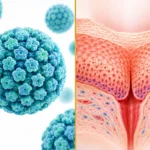
Having HPV does not mean your sex life is over. Most people with HPV, including high-risk types, continue to have sex, and no major clinical guideline recommends permanent abstinence for people with an HPV diagnosis.
That said, there are real decisions to make: when to wait, how to reduce transmission risk, what to tell a partner, and what protection actually does and doesn’t do. Those are the questions this article answers.
Key Takeaways
- Most people with HPV can have sex; the question is how to do so responsibly, not whether to stop entirely.
- HPV spreads through skin-to-skin genital contact, not just penetrative sex, condoms reduce risk but don’t eliminate it.
- Active genital warts or healing treatment sites are the clearest reason to pause sexual activity temporarily.
- In long-term monogamous relationships, partners typically already share the same HPV type, so ongoing sex rarely changes the risk picture.
- Vaccination, regular screening, and honest communication with partners are the practical tools that matter most in 2026.
What “Having Sex with HPV” Actually Means
HPV is not one virus, it’s a family of more than 200 related strains. About 40 of those affect the genital area. Low-risk types like HPV 6 and 11 cause genital warts. High-risk types like HPV 16 and 18 are linked to cervical, anal, oropharyngeal, and other cancers. The type you have shapes the conversation about sex in different ways.
Nearly all sexually active people will carry at least one HPV type at some point in their lives. That context matters. The virus is so common that the question isn’t really “should someone with HPV have sex”, it’s “what does responsible sexual activity look like with an active or recent infection.”
The honest answer: it looks a lot like it does for most sexually active adults, with a few specific situations that call for a pause or a conversation.
For a fuller picture of how HPV affects women specifically, including cervical screening timelines, the HPV in women guide covers symptoms, screening, and what an abnormal result actually means.
How HPV Spreads During Sex
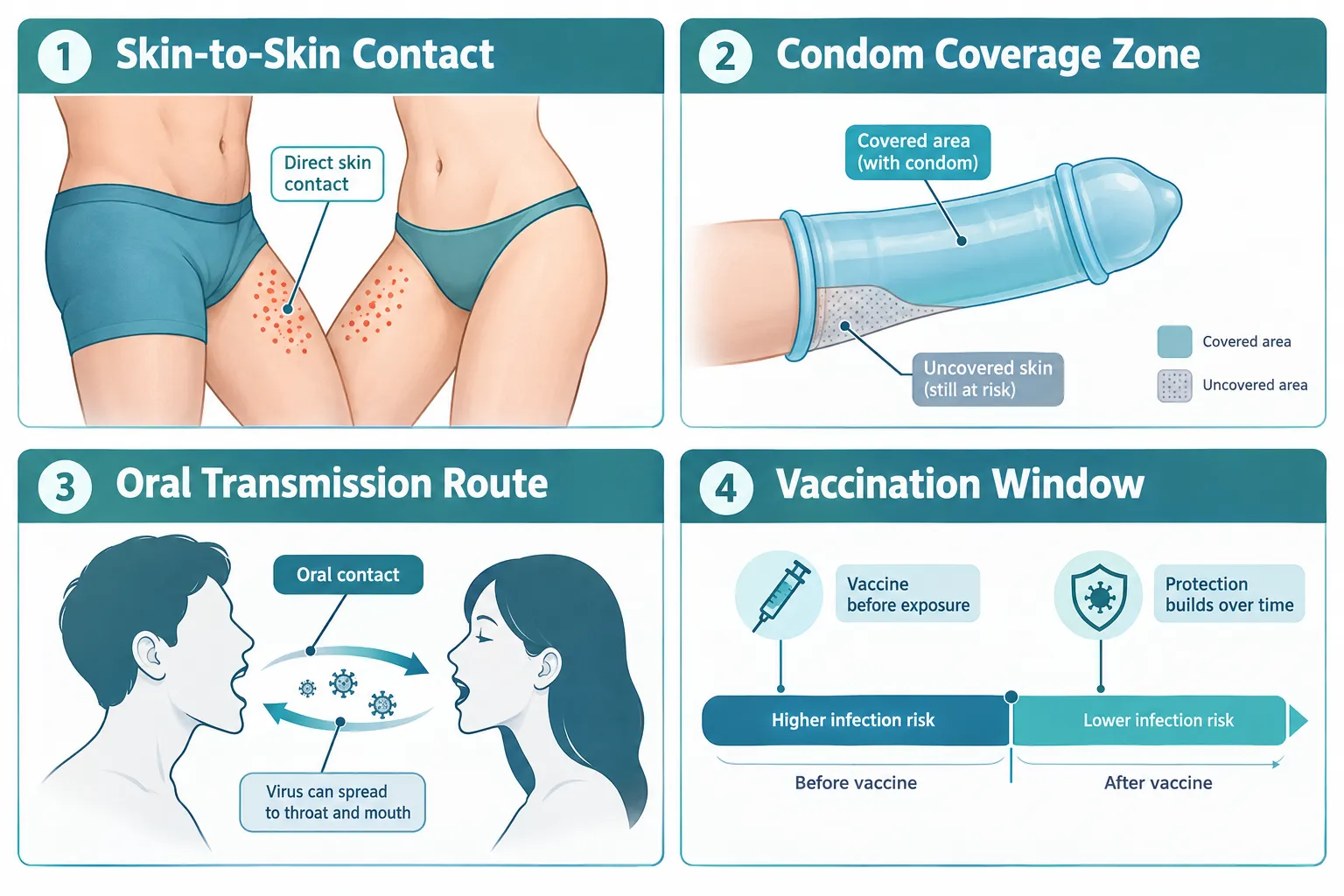
HPV spreads through direct skin-to-skin contact with infected genital tissue. That includes vaginal sex, anal sex, and oral sex. It also includes genital rubbing without penetration.
This is the part that surprises most people: you don’t need to have intercourse to transmit HPV, and you don’t need visible symptoms. Most people who pass HPV to a partner have no idea they’re infected.
Condoms and dental dams do reduce transmission risk, studies consistently show lower HPV rates in people who use them consistently, but they don’t cover all potentially infected skin. HPV can live on the inner thighs, scrotum, vulva, and perianal skin that a condom doesn’t reach.
A few specific routes worth knowing:
- Vaginal and anal sex carry the highest transmission risk.
- Oral sex can transmit HPV to the throat; HPV 16 is the type most associated with oropharyngeal cancer.
- Genital skin contact without penetration can still transmit the virus.
For more detail on oral transmission specifically, the article on whether HPV can be transmitted by kissing explains where the evidence is clear and where it’s less certain.
When You Should Actually Wait Before Having Sex
There is one situation where pausing sex is genuinely recommended: active genital warts, or skin that is still healing after wart treatment.
Genital warts caused by HPV 6 or 11 are highly contagious during an active outbreak. Having sex while visible warts are present significantly increases the chance of passing the virus to a partner. The same applies after treatment, whether that’s cryotherapy, topical medication, or excision, because the treated area needs time to heal before the skin barrier is restored.
Outside of active warts or healing tissue, there is no universal waiting period that clears someone to have sex “safely.” HPV infections often become undetectable within 6 to 24 months, but there’s no reliable test that confirms the virus is gone. Decisions about resuming or continuing sex are individualized, and your clinician is the right person to help you think through timing.
If you’re managing visible warts, the genital warts treatment guide walks through what each treatment option involves and what to expect during recovery.
Who’s at Higher Risk for HPV Transmission During Sex?
Some people face a meaningfully higher risk of both acquiring HPV and developing complications from it:
- Immunocompromised individuals, including people living with HIV and organ transplant recipients, are less likely to clear HPV naturally and more likely to develop persistent high-risk infections.
- Unvaccinated people have no immune protection against the types covered by current vaccines, making first exposure more likely to establish infection.
- People with multiple new partners face more frequent exposure events, increasing the cumulative probability of encountering a high-risk type.
- Smokers have a higher risk of HPV-related cell changes progressing, particularly for cervical and anal dysplasia.
Sex in a Monogamous Relationship When One Partner Has HPV

If you and a long-term partner have been sexually active together, there’s a strong chance you’ve already shared the same HPV type. Continuing to have sex in that context generally doesn’t change the risk picture for either of you in a meaningful way.
What it does mean: if one partner receives an HPV diagnosis, the other partner has likely been exposed. That’s not a reason for alarm, and it doesn’t imply anything about either person’s history. HPV can remain dormant for years before triggering a detectable immune response, the article on whether HPV can be dormant explains how that works.
The more relevant question for established couples is screening, not abstinence. A partner with a vulva should be up to date on cervical screening. A partner with a penis who has sex with men should discuss anal screening with their doctor. Neither of these is urgent in the sense of “act immediately”, but cell changes are easiest to manage before they progress, and that’s what screening is designed to catch.
Talking to a New Partner About HPV
Disclosure to a new partner is one of the harder practical questions, and guidelines don’t give a single clean answer. There is no legal requirement to disclose an asymptomatic HPV infection in most jurisdictions, but there are ethical reasons to have the conversation, especially if you have visible warts or a recent high-risk HPV result.
A few things that help frame the conversation:
- HPV is extraordinarily common. Most sexually active adults have had it.
- The vaccine covers the most dangerous types. If your partner is unvaccinated and under 45, that’s worth discussing with their doctor.
- Condoms reduce, but don’t eliminate, transmission risk.
The HPV vaccine guide covers who should get vaccinated, what the current schedule looks like, and what protection it actually provides. For male partners specifically, the article on the HPV vaccine for men addresses whether vaccination still makes sense after an existing infection.
Does HPV Affect Fertility or Pregnancy?
HPV itself does not prevent pregnancy, and most people with HPV conceive without difficulty. The virus is not known to cause infertility in the straightforward sense. However, treatments for HPV-related cervical cell changes, particularly LEEP or cone biopsy, can affect the cervix in ways that may have implications for future pregnancies.
If you’re planning to conceive and have had cervical treatment, that’s a conversation to have with your OB or gynecologist before trying. The article on whether HPV can cause infertility in women covers this in more detail.
Frequently Asked Questions
Can you have sex with HPV if you have no symptoms?
Yes, in most cases. Asymptomatic HPV is extremely common, and no guideline recommends abstinence simply because a test came back positive. The practical steps are using barrier methods to reduce transmission risk, disclosing to new partners, and staying current on screening.
Does using a condom mean your partner won’t get HPV?
Condoms significantly reduce the risk, but they don’t eliminate it. HPV can infect genital skin that isn’t covered by a condom, the base of the penis, the scrotum, the vulva, and the perianal area. Consistent condom use is still strongly recommended; it just isn’t a guarantee.
How long after an HPV diagnosis should you wait before having sex again?
There is no fixed waiting period that applies to everyone. If you have active genital warts or recently treated warts, wait until the area has fully healed. For high-risk HPV without visible lesions, the decision depends on your specific situation, your clinician can help you think through timing based on your type, treatment status, and partner circumstances.
Can a man give HPV to a woman, or does it only go one way?
Transmission goes in all directions. Any person with genital HPV can pass it to a partner through skin-to-skin contact, regardless of anatomy. The article on whether a man can give a woman HPV addresses this directly, including what’s known about transmission rates between different partner types.
If my partner has HPV, do I need a special test?
Not necessarily. There is no approved HPV test for people with a penis. For people with a cervix, routine Pap and HPV co-testing at the recommended intervals is the right approach, not additional testing just because a partner was diagnosed. Your screening schedule doesn’t need to change unless your own results indicate otherwise.