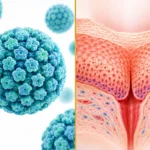
HPV on the hands is possible, but it is not a significant route of transmission for the genital strains of the virus. The question “can you get HPV on your hands?” comes up often, and the short answer is that different HPV types infect different body sites, and the strains that cause genital infections rarely establish themselves on hand skin.
That said, there are a few specific scenarios worth understanding clearly.
Key Takeaways
- Different HPV types have strong preferences for specific body sites, the strains causing genital infections are not the same ones causing common hand warts.
- Hands can transiently carry genital HPV after direct contact with infected secretions, but this is not considered a major transmission route.
- Common hand warts are caused by HPV types 1, 2, and 4, not the high-risk types linked to cancer.
- Transferring hand warts to the genital area is unlikely but not impossible, particularly if skin is broken.
- Standard handwashing is considered adequate after genital contact; this is not a high-risk scenario requiring special precautions.
How HPV Actually Infects the Skin
HPV needs a route through the skin barrier to establish an infection. On intact, healthy skin, the virus cannot simply land and take hold, it needs a micro-abrasion, a small cut, or a break in the surface layer to gain entry. This is true whether the exposure happens on the hands, the genitals, or anywhere else.
There are over 200 known HPV genotypes, and each one has a strong preference, called viral tropism, for specific tissue types. HPV types 1, 2, and 4 thrive in the thick, keratinized skin of the hands and feet. HPV types 6 and 11 cause genital warts. HPV types 16 and 18 are the high-risk strains linked to cervical and other cancers. These groups overlap very little in practice.
So if you have a wart on your finger, it almost certainly came from a low-risk, skin-type HPV, not from a genital strain. And if you have a genital HPV infection, it did not start on your hands. The biology keeps these populations largely separate.
Understanding the full range of HPV types, low-risk, high-risk, and what the numbers mean helps put this in context.
Can You Get HPV on Your Hands from Genital Contact?
This is the more specific concern most people are asking about. The answer is nuanced.
Genital HPV types can be detected on fingers and hands after direct contact with infected genital tissue or secretions. Studies using DNA detection methods have found genital HPV strains on the fingertips of people who had just had sexual contact. However, detection is not the same as infection. The virus being present on the skin surface is transient, it does not mean it has established a replicating infection in the hand tissue.
For genital HPV to actually infect hand skin, it would need to enter through broken skin, and it would need to find that environment hospitable, which, given its tropism for mucosal tissue, it typically does not. This is why clinical guidance consistently treats hand-to-genital transmission as a low-probability route, not a primary concern.
The more relevant direction is the reverse: hands contaminated with genital secretions touching mucosal tissue elsewhere. That scenario carries more biological plausibility, though it is still considered a minor route compared to direct genital contact. The question of whether warts on hands can be transferred to the genital area covers that specific scenario in more detail.
Who’s at Higher Risk for HPV on the Hands?
Most people asking this question have a very low practical risk. A few groups warrant a closer look:
- People who are immunocompromised, including those with HIV or organ transplant recipients on immunosuppressive therapy, are more likely to develop persistent warts anywhere on the body, including the hands, and may have reduced ability to clear any HPV exposure.
- People with skin conditions causing frequent breaks in the skin barrier, eczema, psoriasis, or chronic hand dermatitis, have more potential entry points for the virus.
- Children and adolescents who share surfaces, sports equipment, or have frequent minor skin injuries have higher rates of common hand and foot warts, though these are caused by low-risk HPV types unrelated to genital infection.
Do Common Hand Warts Pose a Genital HPV Risk?
Having a wart on your hand does not mean you have a genital HPV infection, and it does not put a partner at risk for genital HPV. The HPV types responsible for common warts, types 1, 2, and 4, do not cause genital warts or cervical cell changes.
That said, some research has found a statistical association between a history of hand or foot warts and a higher likelihood of also testing positive for genital HPV. The mechanism is not fully understood. It may reflect shared exposure patterns, people who encounter HPV in one context may encounter it in others, rather than one type directly causing the other.
The practical takeaway: a hand wart is a hand wart. Treat it if it bothers you, but it is not a genital health concern for you or a partner. The genital warts overview explains what genital HPV actually looks like and how it spreads.
What About Self-Infection, Can You Spread HPV from Your Genitals to Your Own Hands?
Self-inoculation, spreading HPV from one part of your own body to another, is theoretically possible but rarely a clinical concern for the hands. The main reason is that hand skin, being thick and keratinized, is not a hospitable environment for mucosal HPV types. Even if your hands come into contact with infected genital tissue, intact hand skin with a normal barrier is unlikely to develop a new infection.
Standard handwashing after genital exams or sexual contact is considered adequate by clinical guidelines. Gloves used in clinical settings are primarily for standard infection-control precautions, not because HPV transmission via hands is considered a significant risk.
If you are already managing a genital HPV infection and wondering what your options are, the HPV treatment overview covers how both the virus and its symptoms are managed.
What This Means for Everyday Precautions
The evidence does not support treating hands as a major vector for HPV spread. No clinical guideline recommends special hand precautions beyond ordinary hygiene in the context of HPV.
A few practical points:
- Wash hands with soap and water after sexual contact, this is good general hygiene, not an HPV-specific emergency measure.
- Treat hand warts if they are bothersome or spreading on your own skin; over-the-counter salicylic acid treatments are effective for common warts.
- If you have concerns about genital HPV, the conversation to have is with a clinician about cervical screening, genital examination, or vaccination, not about hand contact.
The HPV testing guide explains how HPV is actually detected, who should be tested, and what results mean. And if you have questions about HPV and sexual activity more broadly, the guide to sex with HPV addresses transmission risk in practical terms.
Frequently Asked Questions
Can touching a genital wart with your hand give you a wart on your hand?
It is very unlikely. Genital warts are caused by HPV types 6 and 11, which are adapted to mucosal tissue, not the thick skin of the hands. Even if the virus is transiently present on your fingertips, it would need a break in the skin to enter, and it would still be in an environment that does not suit it. Clinical practice does not treat this as a meaningful risk.
Can you spread HPV to a partner through hand contact during sex?
This is possible in theory if hands are directly contaminated with infected secretions and then contact a partner’s mucosal tissue. The risk is considered low, but it is not zero. It is one reason why handwashing is a reasonable hygiene step, not because hand contact is a primary transmission route but because it is a simple measure with no downside.
Are warts on children’s hands a sign of genital HPV?
No. Warts on children’s hands are almost always caused by HPV types 1, 2, or 4, common skin-type strains spread through everyday contact with surfaces or minor skin injuries. These strains have no connection to genital HPV infections. A wart on a child’s hand is a common, benign skin condition.
If I have HPV, should I avoid touching my own genitals to prevent spreading it to my hands?
There is no clinical recommendation to avoid normal self-contact. The risk of establishing a new HPV infection on intact hand skin from your own genital HPV is very low. Standard handwashing is sufficient. If you are concerned about your HPV status or what it means for your health, that conversation is best had with a clinician who can review your specific situation.
Does the HPV vaccine protect against hand warts?
The current HPV vaccines, including the 9-valent Gardasil 9, protect against HPV types 6, 11, 16, 18, and five additional high-risk types. These are genital and cancer-associated strains. The vaccine does not target the HPV types (1, 2, 4) that cause common hand and foot warts, so it will not prevent or treat those.
The information on this page is for educational purposes and does not replace advice from a qualified healthcare provider. See the full medical disclaimer.