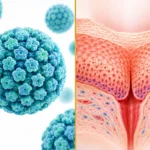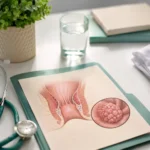
HPV is almost always transmitted through sexual contact, but not always. Non-sexual transmission is real, documented in the medical literature, and worth understanding clearly, especially if you’re trying to make sense of a diagnosis that doesn’t fit your history.
The short version: skin-to-skin contact, vertical transmission from mother to newborn, and shared contaminated surfaces can all carry HPV under the right conditions. These routes are far less common than sexual transmission, but they are not theoretical.
Key Takeaways
- Sexual contact, including non-penetrative skin-to-skin genital contact, is the primary route for genital HPV transmission.
- Non-sexual transmission is documented and includes mother-to-newborn passage, shared skin contact, and potentially contaminated surfaces.
- Common and plantar warts (caused by HPV types 1, 2, and 4) spread easily through non-sexual routes, including shared floors and towels.
- Fomites (objects and surfaces) can carry HPV DNA, but evidence that they cause genital infection is weak.
- An HPV diagnosis does not automatically mean recent sexual exposure, the virus can remain dormant for years.
How HPV Normally Spreads
HPV is a skin virus. It infects epithelial cells, the cells that line skin and mucous membranes, and it spreads when those cells come into contact with another person’s skin or mucosa. That contact is usually sexual, but the biology doesn’t require it to be.
There are more than 200 HPV genotypes. High-risk types like HPV 16 and HPV 18 are strongly associated with cervical, oropharyngeal, and other cancers. Low-risk types like HPV 6 and HPV 11 cause genital warts. Entirely separate genotypes, types 1, 2, 3, and 4, cause the common hand warts and plantar warts that most people have had at some point in their lives. Understanding how HPV types differ matters here, because the route of transmission often depends on the specific genotype.
Sexual transmission includes penetrative sex, oral sex, and genital-to-genital skin contact without penetration. Condoms reduce transmission risk but don’t eliminate it because HPV lives on skin that a condom doesn’t cover.
Can You Get HPV Non Sexually? The Routes That Are Documented
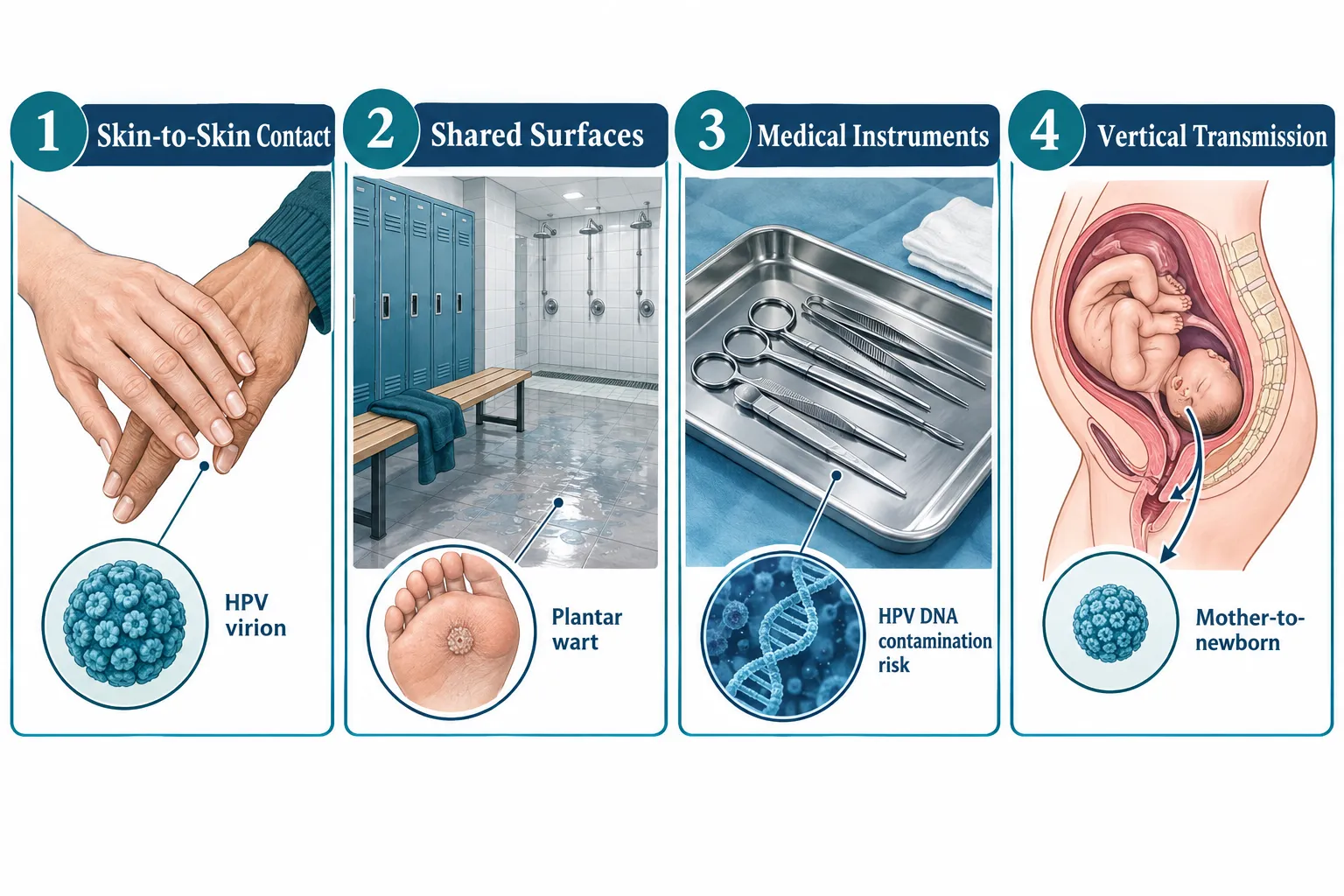
The answer is yes, though the route and the HPV type involved matter considerably.
Skin warts and plantar warts are the clearest example of non-sexual HPV transmission. HPV types 1, 2, and 4 spread through direct skin contact and contaminated surfaces. Walking barefoot in communal showers, locker rooms, and pool areas is a well-established risk factor for plantar warts. Sharing towels or nail files with someone who has a hand wart can transfer the virus. These are non-sexual HPV infections, full stop. The question of whether all warts are caused by HPV is worth reading if you’re sorting out what type of wart you’re dealing with.
Vertical transmission, from a birthing parent to a newborn during delivery, is rare but recognized. A newborn exposed to genital HPV in the birth canal can develop a condition called recurrent respiratory papillomatosis (RRP), where HPV 6 or HPV 11 causes wart-like growths in the larynx. This is uncommon, and most exposed infants clear the virus without developing RRP, but it is a documented non-sexual transmission route.
Medical and cosmetic instruments can carry HPV DNA if not properly sterilized. Studies have detected HPV genetic material on surgical tools, colposcopes, and even dental instruments after use. Whether contaminated instruments cause new infections in practice, rather than simply testing positive for DNA, is harder to prove, but the finding has driven stricter infection-control protocols in clinical settings.
Close non-sexual contact between household members is plausible, particularly for skin-type HPV. Shared razors, towels, or skin-to-skin contact in caregiving situations have been proposed as routes. The evidence is suggestive rather than definitive for genital HPV types, but it’s more solid for common wart genotypes.
What About Fomites, Toilet Seats, Surfaces, Everyday Objects?
This is the question most people are actually asking. HPV is environmentally stable, it can survive on surfaces longer than many other viruses. Studies have detected HPV DNA on gym equipment, examination tables, and even toilet seats.
Detection of DNA is not the same as transmission. No study has convincingly demonstrated that someone acquired a genital HPV infection from a toilet seat or a doorknob. The virus needs to reach a susceptible mucosal surface in sufficient quantity, and casual contact with a contaminated object is a very inefficient way for that to happen.
The CDC and WHO both identify sexual contact, including non-penetrative genital contact, as the primary transmission route for genital HPV. Everyday surfaces are not considered a realistic source of genital infection.
That said, for plantar warts and hand warts, surface contamination is a genuine route. Wet, warm environments like communal showers are particularly favorable for HPV survival on surfaces.
Who Is at Higher Risk for Non-Sexual HPV Transmission?
A few groups face meaningfully higher exposure or reduced ability to clear the virus:
- Immunocompromised individuals, people living with HIV, organ transplant recipients on immunosuppressive drugs, or those undergoing chemotherapy, are less able to suppress HPV after exposure, making any transmission route more likely to result in persistent infection.
- Children and infants, vertical transmission during birth and close household skin contact put young children at risk for non-genital HPV types, including the rare but serious recurrent respiratory papillomatosis.
- People who use communal facilities regularly, athletes, swimmers, and gym users have elevated rates of plantar warts and hand warts due to repeated exposure to contaminated wet surfaces.
- Unvaccinated individuals, regardless of transmission route, those without HPV vaccination have no immune protection against the covered genotypes, making any exposure more likely to establish infection.
Can HPV Appear Without Any Sexual Contact at All?
This comes up most often when someone is diagnosed with HPV and has no recent sexual history, or when a young person tests positive. A few things are worth knowing.
HPV can remain dormant for months or years before showing up on a test. A positive result in 2026 may reflect an infection acquired years earlier. The question of whether HPV can come back without being sexually active covers dormancy in more detail, it’s a real phenomenon, not a rare edge case.
Studies of people who report no sexual activity have occasionally found HPV-positive results. These cases are uncommon, and some involve definitional questions about what counts as sexual contact. But they do exist, and they support the idea that non-sexual transmission, while uncommon for genital HPV types, is not impossible.
If you’ve received an abnormal Pap smear result and are trying to understand where the infection came from, the honest medical answer is that timing is often unknowable. HPV doesn’t come with a timestamp.
Does Non-Sexual Transmission Change Anything Clinically?
Not really. The clinical management of HPV, monitoring, screening, treatment of cell changes, is the same regardless of how the infection was acquired.
High-risk genotypes like HPV 16 and 18 require the same follow-up whether they were transmitted sexually or otherwise. An LSIL or HSIL result on a Pap smear gets evaluated the same way. Cell changes are most treatable before they progress, that’s what cervical screening is designed to catch early.
For genital warts caused by HPV 6 or 11, the route of acquisition doesn’t change the treatment options. Those are direct, effective, and covered in the genital warts treatment guide if you want to understand your options.
For women navigating an HPV diagnosis more broadly, HPV in women: symptoms, screening, and what it means provides a fuller picture of what to expect at each stage.
Frequently Asked Questions
Can you get genital HPV from a toilet seat?
No credible evidence supports this. HPV DNA has been detected on surfaces including toilet seats, but no study has demonstrated actual genital infection from toilet seat contact. The virus needs to reach a mucosal surface in sufficient quantity, casual surface contact is not an efficient route for genital HPV types.
Can a child get HPV without any sexual contact?
Yes. Children can acquire non-genital HPV types (such as types 1, 2, and 3) through skin contact, shared objects, or household transmission. Rarely, a newborn can acquire HPV 6 or 11 during birth, which may later cause recurrent respiratory papillomatosis. Any HPV finding in a child should be evaluated carefully by a clinician.
If my partner has HPV but we haven’t had sex, could I still get it?
Non-penetrative genital skin contact is a recognized transmission route for genital HPV types. Oral contact is also a documented route, HPV spread through kissing is a separate question worth reading. Penetration is not required for transmission.
Does the HPV vaccine protect against non-sexually acquired HPV?
The current 9-valent vaccine (Gardasil 9) covers HPV types 6, 11, 16, 18, 31, 33, 45, 52, and 58. It protects against those genotypes regardless of how exposure occurs. It does not cover the genotypes that cause common hand warts or plantar warts (types 1, 2, 4).
Can HPV be transmitted through blood or saliva?
HPV is not a bloodborne virus, it is not transmitted through blood transfusions or needle sharing. Saliva transmission is theoretically possible for oral HPV types, but the evidence for transmission via casual kissing or saliva alone is limited. Genital HPV types are primarily transmitted through direct skin and mucosal contact.
What This Means for You
Non-sexual HPV transmission is real for skin warts and documented, if rare, for genital HPV types. For most adults with a genital HPV diagnosis, sexual contact remains the most likely source. But the timing of infection is often impossible to determine, and dormancy means a current diagnosis may reflect an old exposure.
The route of transmission does not change what your doctor will recommend. Screening schedules, follow-up intervals, and treatment decisions are based on the HPV type and any cell changes found, not on how or when you were exposed. Talk to your doctor about what monitoring schedule makes sense for your specific result, and ask which genotype was detected if that information is available.