
}

HPV can come back without any new sexual exposure, and this is more common than most people realize. What looks like a new infection on a test result is often the same virus reactivating after years of lying dormant, not evidence of a recent encounter. Understanding the difference between reactivation and reinfection changes how you interpret a positive result, and it matters for how you and your doctor respond.
Key Takeaways
- HPV can establish true latency in tissue, meaning the virus goes quiet below detectable levels rather than being fully eliminated
- A positive HPV test after a period of abstinence or no new partners is frequently reactivation of an old infection, not proof of new exposure
- Immune suppression, from illness, medication, stress, or aging, is the most common trigger for reactivation
- “Clearance” on an HPV test means the virus dropped below the detection threshold, not that it was completely eradicated
- People who are immunocompromised or have a history of HPV are at the highest risk of reactivation
What “Cleared” HPV Actually Means
Getting a negative HPV test after a previous positive one feels like good news, and it is. But it does not mean the virus is gone.
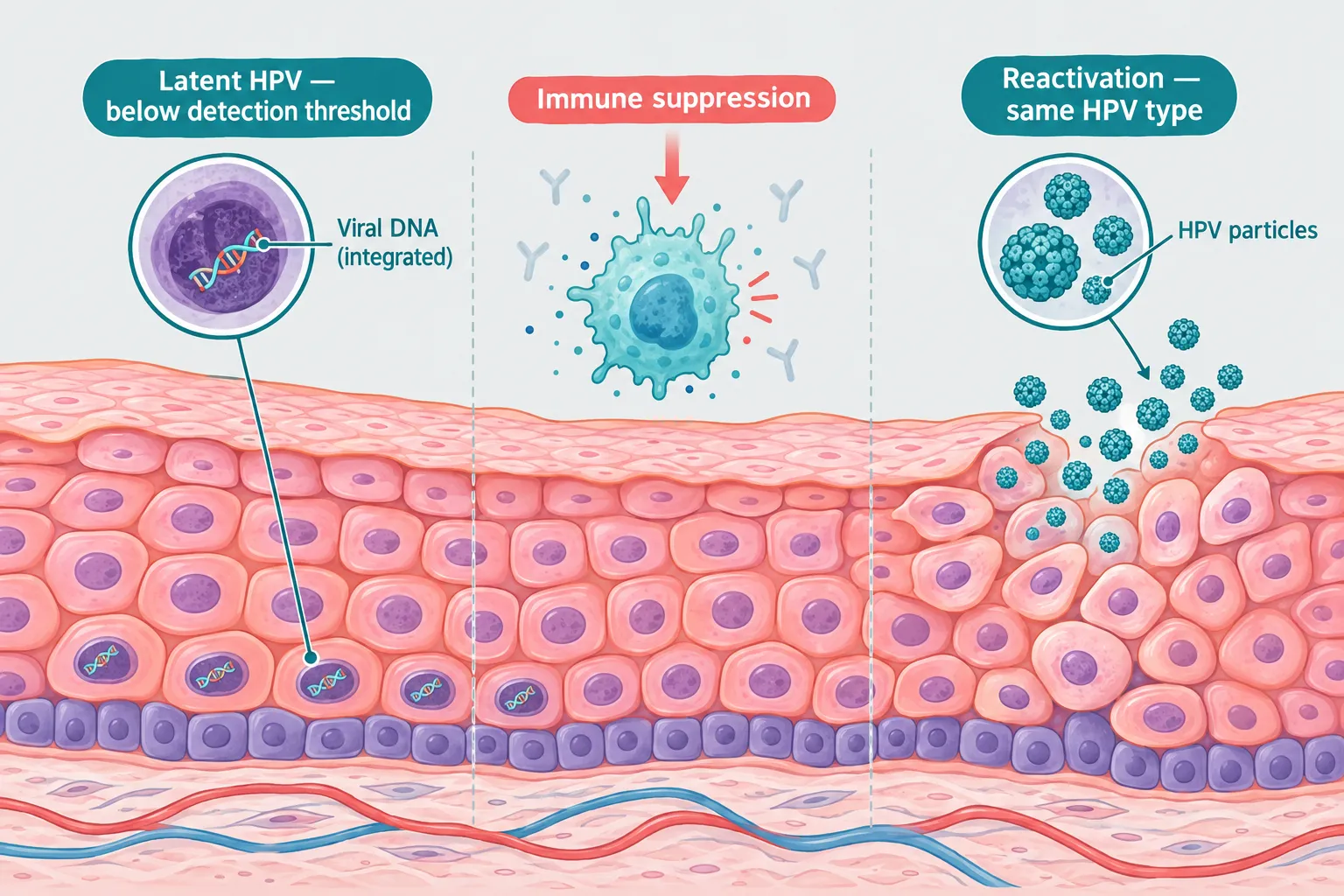
HPV is a DNA virus that can integrate into the nucleus of basal epithelial cells and remain there in a suppressed state. The immune system controls the infection well enough that viral replication drops below what current tests can detect. That is what “clearance” means clinically: undetectable, not eradicated.
This distinction is important. Most standard HPV tests, including the cobas and Aptima platforms covered in the HPV testing guide, detect viral DNA or mRNA above a set threshold. If the virus is present but replicating at very low levels, the test reads negative. The virus can still be there.
Studies tracking women over time have found that when the same HPV genotype reappears after a negative test, even years later, with no new partners, the most likely explanation is reactivation of the original infection, not a brand new exposure. This is especially true for high-risk types like HPV 16 and HPV 18.
Can HPV Come Back without Being Sexually Active? The Mechanism Explained
Yes. The process is called reactivation, and it follows a recognizable pattern.
When the immune system is functioning well, it keeps latent HPV suppressed. The virus stays dormant inside basal cells, not replicating, not causing symptoms, not triggering a positive test. Then something shifts immune function downward, and the virus begins replicating again.
That shift can be temporary or long-term. Acute illness, prolonged stress, pregnancy-related immune changes, aging, or medications that suppress the immune system can all reduce the immune surveillance that was keeping HPV quiet. Once viral replication crosses the detection threshold again, a test turns positive, and from the outside, it can look like a new infection.
This is one reason a positive HPV result after years of abstinence is not, by itself, evidence of a new sexual contact. The HPV transmission guide explains how the virus spreads, but reactivation operates entirely outside that pathway, no new exposure is needed.
There is also a smaller mechanism called auto-inoculation, where the virus spreads from one site on the body to another through skin-to-skin contact with oneself. This is less well-studied but may contribute to recurrence in some cases, particularly with genital warts caused by low-risk types like HPV 6 and 11.
Who Is at Higher Risk for HPV Reactivation?
Some people are significantly more likely to experience HPV coming back without new sexual activity.
- Immunocompromised individuals, people living with HIV, organ transplant recipients on immunosuppressive drugs, or those undergoing chemotherapy have reduced immune surveillance, making reactivation substantially more likely
- Older adults, immune function naturally declines with age; older women in particular show higher rates of HPV redetection after apparent clearance, often with no new partners involved
- People with a prior history of abnormal Pap results, LSIL, HSIL, or a previous positive HPV test indicates the virus was present and integrated; that baseline raises reactivation risk
- Smokers, smoking impairs local immune responses in cervical tissue specifically, which may reduce the body’s ability to keep latent HPV suppressed
Does Immune Suppression Trigger HPV to Come Back?
This is the clearest and most documented pathway for HPV reactivation without sexual activity.
The immune system’s T-cell response is what keeps latent HPV in check. When T-cell function is compromised, whether from HIV infection, corticosteroid therapy, or post-transplant immunosuppression, the virus loses its primary constraint and can begin replicating again. HPV 16 and HPV 18, the two types responsible for the majority of HPV-related cancers, are both capable of this kind of latent reactivation.
This is also why people with HIV are screened more frequently for HPV-related cell changes. The HPV and cancer overview covers the connection between persistent high-risk HPV and cervical, anal, and oropharyngeal cancers, and persistent infection is far more likely when immune control is weakened.
Even without a diagnosed immune condition, temporary immune dips matter. Severe prolonged stress, nutritional deficiency, or a serious illness can create a window where a previously dormant virus becomes detectable again.
What a Positive HPV Test After Abstinence Actually Means
A positive result after years without a new partner is disorienting. The medical reality is that it does not confirm new exposure.
Researchers tracking HPV in long-term monogamous couples and in women who reported no new sexual partners have found redetection of the same HPV genotype after intervals of several years. The pattern, same type, same person, no new partners, points to reactivation rather than reinfection.
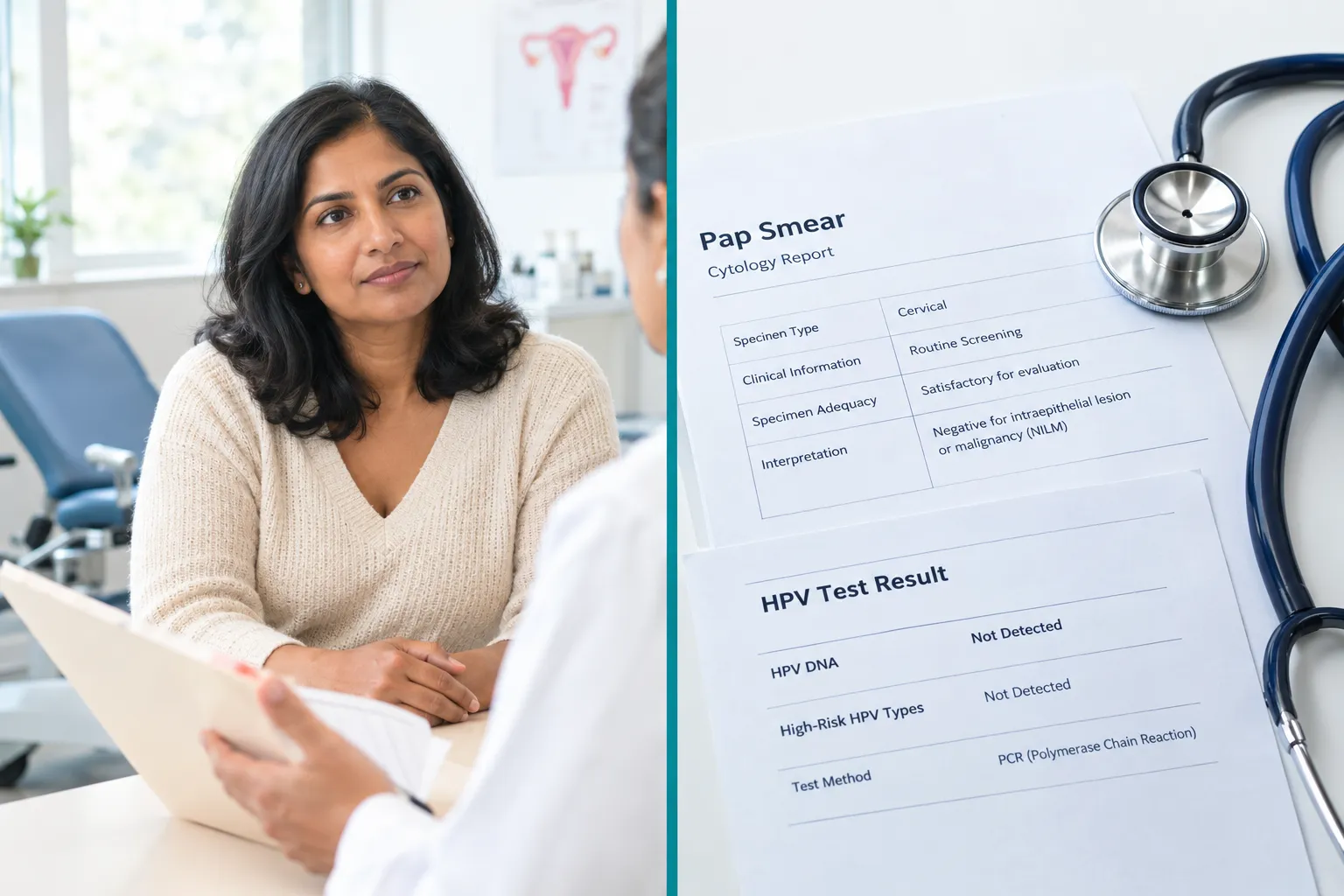
This has real clinical implications. If you test positive for HPV 16 after a long gap with no new partners, the next step is not to determine how the exposure happened. The next step is to assess whether any cell changes have occurred, through a Pap smear, and if indicated, a colposcopy. Cell changes are easiest to manage before they progress; that is what monitoring is designed to catch.
An abnormal Pap smear result does not mean cancer. It means the cervical cells need a closer look, and in most cases the finding is low-grade and resolves on its own.
Can HPV Come Back without Being Sexually Active After Treatment for Warts or Dysplasia?
Treatment removes visible warts or abnormal cells, it does not eliminate the underlying virus.
Procedures like cryotherapy, LEEP, or laser ablation address the physical manifestation of HPV. The viral DNA that may remain in surrounding tissue is not removed. This is why recurrence after treatment is well-documented and why follow-up testing is standard after any procedure for HPV-related changes.
Genital warts can recur even without reinfection from a partner, because the virus persists in nearby tissue. Similarly, cervical dysplasia can return after treatment if the immune system does not fully suppress the remaining virus. This is not a treatment failure in most cases, it is the nature of a virus that integrates into host cells.
The HPV types involved in warts (6 and 11) are low-risk and do not cause cancer, but they can be persistent. The topical medications used for genital warts work by stimulating local immune response, which is, in essence, the same mechanism the body uses to keep HPV suppressed in the first place.
FAQ
If HPV came back, does that mean my partner was unfaithful?
Not necessarily, and in many cases, no. HPV reactivation from a dormant infection is a well-documented phenomenon that occurs without any new sexual contact. The timing of an HPV infection is often impossible to determine, and a positive test after a gap does not establish when or from whom the virus was originally acquired.
Can HPV reactivate after menopause?
Yes. Post-menopausal women show higher rates of HPV redetection than younger women, and this is thought to reflect age-related changes in immune function rather than new sexual exposure. Routine cervical screening guidelines vary by age and history, talk to your doctor about what schedule applies to your situation.
Does a negative HPV test mean I am no longer contagious?
A negative test means viral levels are below the detection threshold, not that the virus is definitively absent. Whether low-level latent HPV can be transmitted is not fully established, but the general clinical guidance is that transmission risk is substantially lower when tests are consistently negative.
Should I get vaccinated if I have already had HPV?
The HPV vaccine can still offer protection against types you have not yet been exposed to. The HPV vaccine guide covers who benefits, at what ages, and what the evidence shows about vaccinating people who have had a prior infection.
Is there anything that can help the immune system suppress HPV?
No supplement or lifestyle change has been proven to eliminate HPV. Some research has looked at AHCC, a mushroom extract, as a potential immune support, the evidence on AHCC for HPV is preliminary and not yet sufficient to make a clinical recommendation. Quitting smoking and managing conditions that suppress immunity are the best-supported steps for supporting the body’s natural HPV control.
How long can HPV stay dormant before reactivating?
There is no fixed upper limit. Studies have documented redetection of the same HPV type after intervals of five years or more. How long the virus remains latent depends on immune status, the specific HPV genotype, and individual variation, it is genuinely person-to-person.
The Answer, Plainly
HPV can come back without any new sexual activity. The virus establishes latency in tissue, and “clearance” on a test reflects immune control, not eradication. Reactivation is most likely when immune function dips, whether from aging, illness, medication, or a diagnosed immune condition. A positive test after a long gap is not, by itself, evidence of new exposure. What matters clinically is whether cell changes have occurred, and that is what screening is designed to find.