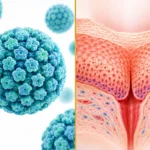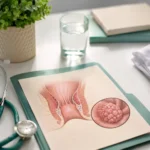
Yes, men can absolutely get HPV from women. HPV spreads through skin-to-skin genital contact, not through body fluid exchange, which means transmission can happen during vaginal, anal, or oral sex, and even through close genital touching without full intercourse. Most men who acquire HPV from a female partner will never know they have it, because the infection produces no symptoms and often clears on its own within one to two years.
That doesn’t mean the risk is trivial. The evidence shows that female-to-male HPV transmission actually occurs at a higher rate than male-to-female transmission, and men carry a substantial global burden of HPV infection as a result.
Key Takeaways
- Men can get HPV from female partners through vaginal, anal, or oral sex, and through genital skin-to-skin contact without penetration
- Female-to-male transmission rates are measurably higher than the reverse in heterosexual couples
- Most male HPV infections are asymptomatic and clear on their own, but a subset persists and can lead to penile, anal, or oropharyngeal cancer
- No approved HPV test exists for men, but vaccination significantly reduces the risk of acquiring infection from a partner
- Oral HPV, acquired through oral sex, is more prevalent in men than women and is linked to rising rates of throat cancer
How Does HPV Pass from a Woman to a Man?
HPV is not transmitted through blood, semen, or vaginal fluid. It lives in the surface cells of genital skin and mucous membranes, and it passes when those surfaces make contact. That’s what makes it different from most other sexually transmitted infections, a condom reduces risk but doesn’t eliminate it, because it doesn’t cover all the skin involved.
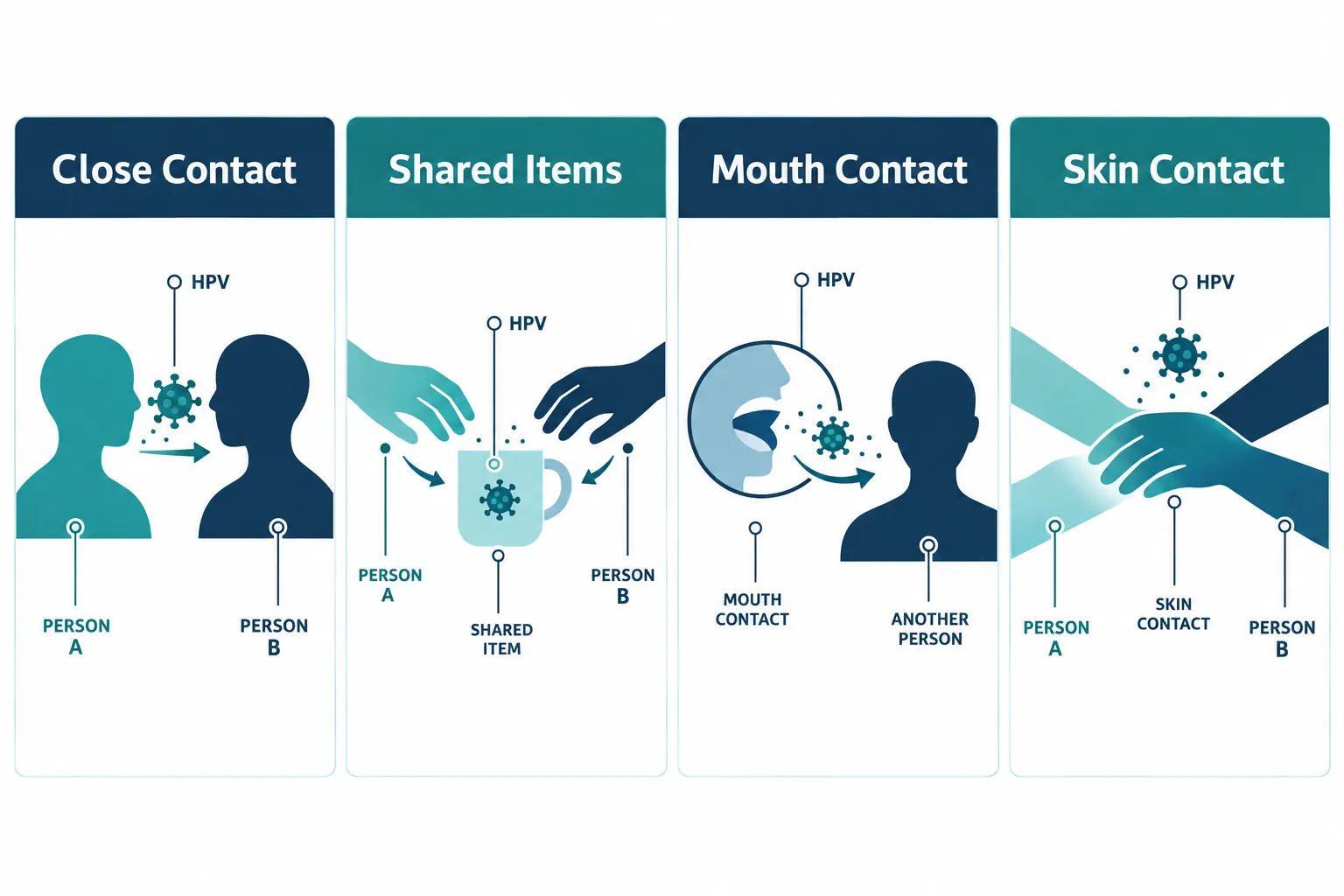
The main routes by which a man can acquire HPV from a female partner are:
- Vaginal sex, the most common route
- Anal sex, relevant for both partners
- Oral sex, a significant and often overlooked pathway
- Genital skin-to-skin contact, even without penetration
A woman doesn’t need to have visible warts or any symptoms at all to transmit the virus. Most HPV infections in women are completely asymptomatic, yet the virus is still present on genital skin and fully capable of passing to a partner. The HPV symptoms guide covering signs in men and women explains why the absence of symptoms is one of the reasons HPV spreads so widely.
Oral HPV deserves specific mention. U.S. data show oral HPV prevalence of 11.5% in men compared to 3.2% in women, with cancer-causing HPV type 16 found at six times the rate in men. Men who have multiple oral sex partners carry a substantially higher risk of acquiring oral HPV from female partners, and oral HPV is directly linked to oropharyngeal (throat) cancer.
How Common Is Female-to-Male HPV Transmission?
More common than most people realize. A systematic review of HPV natural history studies found pooled female-to-male genital HPV transmission rates of approximately 37 per 1,000 person-months, compared with about 20 per 1,000 person-months for male-to-female transmission. That means, in heterosexual relationships, women transmit HPV to male partners at roughly 1.7 times the rate of the reverse.
A 2023 Lancet Global Health meta-analysis, covering 65 studies and nearly 45,000 men, found that close to 1 in 3 men worldwide over age 15 carry at least one genital HPV type, and about 1 in 5 carry a high-risk (oncogenic) type. These are not rare infections. They reflect the cumulative result of transmission from female partners over a lifetime of sexual activity.
Men’s risk rises sharply with the number of female sex partners. Having 21 or more lifetime female partners has been associated with two to three times the odds of HPV infection compared to men with fewer partners. That relationship is direct evidence that exposure to infected women is a primary driver of male HPV acquisition.
For a broader picture of how HPV spreads between partners in both directions, the article on how HPV spreads and how it doesn’t covers the full transmission picture.
What Are the Risks for Men Who Get HPV from a Female Partner?
Most male HPV infections are transient. One U.S. study of penile HPV found a median time to clearance of about 5.9 months, and a 12-month cumulative incidence of roughly 29%. The immune system handles the majority of infections without any intervention.
But “most infections clear” is not the same as “all infections clear.” A subset persists, and persistent infection with high-risk HPV types, particularly HPV 16 and HPV 18, is what drives cancer risk in men. The cancers most directly linked to HPV in men are:
- Penile cancer, relatively rare, but the majority of cases are HPV-related
- Anal cancer, strongly associated with HPV 16; anal HPV symptoms, screening, and prevention covers this in detail
- Oropharyngeal cancer, the fastest-growing HPV-related cancer in men in many high-income countries
Low-risk HPV types, particularly HPV 6 and HPV 11, cause genital warts rather than cancer. These are common, treatable, and not life-threatening, though they can be distressing to deal with. The genital warts overview covers what they look like and what treatment involves.
Who’s at Higher Risk for HPV Infection from a Female Partner?
Not every man faces the same level of risk. Several factors increase the likelihood that an HPV exposure leads to a detectable or persistent infection:
- Unvaccinated men, the HPV vaccine provides strong protection against the types most likely to cause cancer and warts; unvaccinated men have no immune head start against the virus
- Men with multiple female sex partners, cumulative exposure is the clearest risk factor in the epidemiological data
- Immunocompromised individuals, men living with HIV, or those who have had an organ transplant and are on immunosuppressive therapy, are significantly less able to clear HPV infections and face higher rates of persistence and cancer progression
- Smokers, smoking impairs local immune responses in genital and oral tissue, increasing the likelihood that an HPV infection persists rather than clears
Can Men Get HPV from Women Without Knowing It?
Yes, and this is the norm rather than the exception. There is no approved HPV test for men. Unlike women, who have access to cervical HPV co-testing alongside a Pap smear, men have no equivalent routine screening. A man can acquire HPV from a female partner, carry the infection for months or years, and have no way of knowing unless visible warts appear, which only happens with low-risk types, and only in some people.
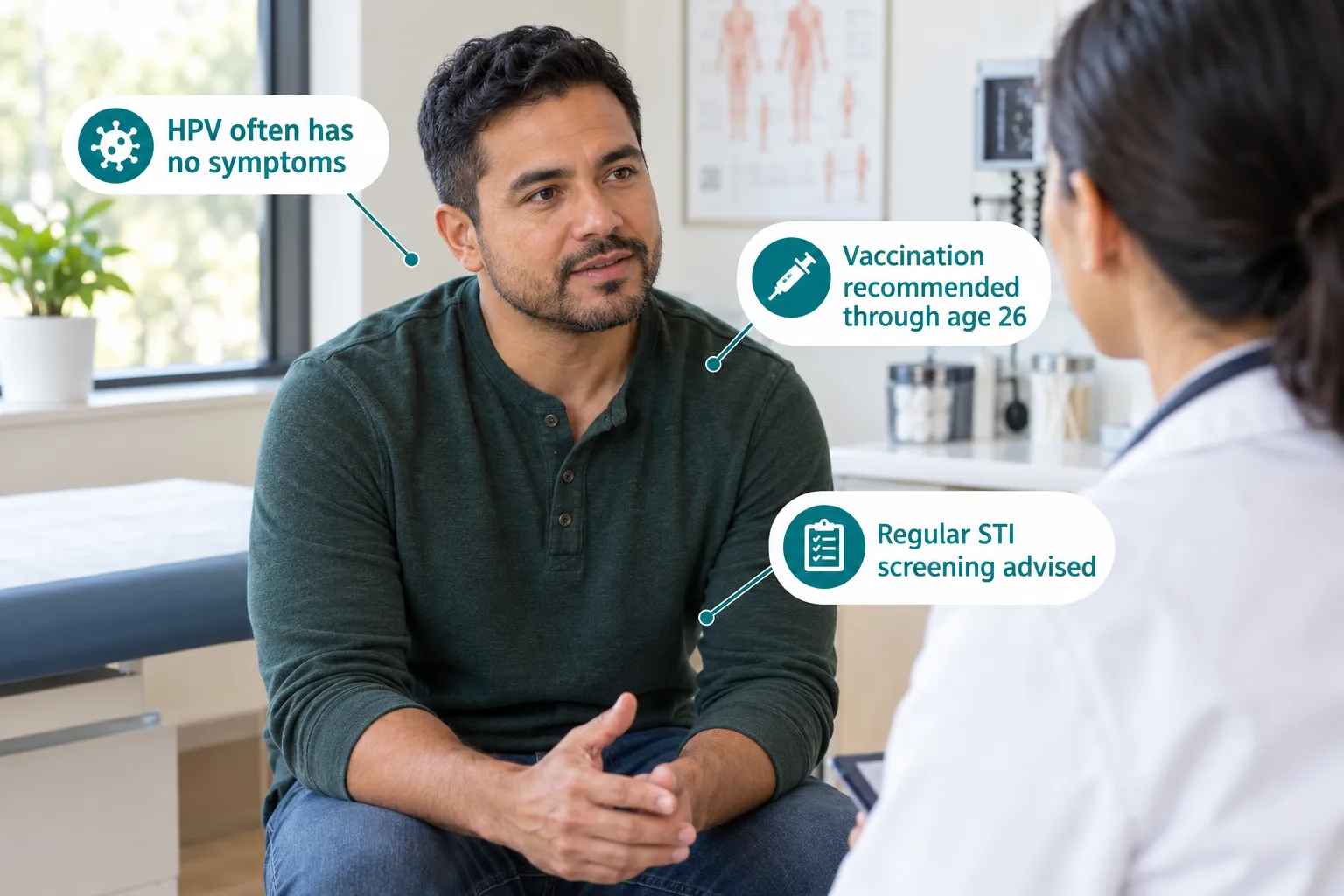
This isn’t a gap in the system that’s easily fixed. HPV testing in men is not currently recommended as a routine clinical tool because the available tests are not validated for penile or scrotal swabs in the same way they are for cervical samples. What men do have access to is vaccination, and that’s the most effective tool available for reducing the risk of acquiring HPV from a partner in the first place.
A 2025 survey found that most respondents did not realize how common HPV is in men or that men face a meaningful risk of HPV-related cancers. Electra Paskett, PhD, noted that more men are infected with HPV than women and can unknowingly spread it to their partners, a cycle that vaccination is specifically designed to interrupt.
The HPV vaccine for men covers who should get it, whether it helps if you already have HPV, and what the current schedule looks like.
Does the HPV Vaccine Protect Men Against Female-to-Male Transmission?
Yes. The HPV vaccine, specifically the 9-valent Gardasil 9, targets HPV types 6, 11, 16, 18, 31, 33, 45, 52, and 58. Together, these cover the types responsible for the majority of HPV-related cancers and virtually all HPV-related genital warts. Vaccination before first sexual exposure provides close to complete protection against the covered types.
CDC recommendations advise routine vaccination at ages 11-12, with catch-up vaccination for men through age 26. For men aged 27-45, vaccination is a shared clinical decision, the benefit decreases with age because the likelihood of prior HPV exposure increases, but it doesn’t become zero.
The vaccine doesn’t treat existing infections. If you’ve already been exposed to a specific HPV type, the vaccine won’t clear it. But it does protect against types you haven’t yet encountered, which matters even in men who are already sexually active.
Evidence from vaccination programs shows that vaccinating males interrupts transmission chains between women and men, reducing both the burden of male infection and the risk of men subsequently passing HPV back to female partners. The full HPV vaccine guide covers how it works and the safety data behind it.
Frequently Asked Questions
Can a man get HPV from a woman even if she has no symptoms?
Yes. Most women with HPV have no symptoms at all, no warts, no pain, no visible signs. The virus lives on genital skin and is transmissible regardless of whether the infected person knows they have it or shows any outward signs. This is one of the reasons HPV is the most common sexually transmitted infection globally.
Does using a condom prevent men from getting HPV from women?
Condoms reduce the risk of HPV transmission but don’t eliminate it. HPV spreads through skin-to-skin contact across the entire genital area, and a condom doesn’t cover all of that skin. Consistent condom use is still worthwhile, it lowers transmission probability and also reduces the risk of other STIs, but it’s not a complete barrier against HPV.
If a man gets HPV from a woman, can he pass it to another female partner?
Yes. A man who acquires HPV from one partner can transmit it to future partners. This is one of the reasons public health guidance emphasizes vaccination for men, not only to protect men themselves, but to reduce onward transmission. The article on whether a man can give a woman HPV covers the transmission dynamics in that direction.
How long after sex with an infected woman would a man develop symptoms?
Most men never develop symptoms at all. If genital warts appear, they typically show up weeks to months after exposure, but there’s no fixed incubation period, and warts only occur with low-risk HPV types (6 and 11), not with the high-risk types that cause cancer. High-risk HPV produces no symptoms in most men and can only be detected indirectly through cancer screening if it progresses.
Is there any way for a man to find out if he has HPV?
There is no approved routine HPV test for men. If genital warts appear, a clinician can usually diagnose low-risk HPV visually. For high-risk HPV, there’s no standard penile or scrotal swab test available in clinical practice. Men who have receptive anal sex may be candidates for anal HPV screening, the anal HPV test guide explains how that works and who it’s recommended for.
Should a man get vaccinated if his female partner has HPV?
Vaccination is still worth discussing with a doctor even if a partner has HPV. The vaccine covers multiple HPV types, if a partner has one type, a man may not yet have been exposed to the others covered by the vaccine. The benefit depends on age and prior exposure history, but for men under 26, vaccination is routinely recommended regardless of a partner’s status.