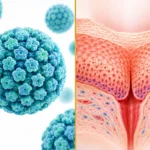
HPV, human papillomavirus, is the single virus that can cause genital warts and cervical cancer, but not the same strains of it. The types that produce warts are biologically distinct from the types that drive cancer, and understanding that difference changes how you think about your own risk.
Having HPV does not mean you have cancer, or that you will get it. Most infections clear on their own. The ones that don’t, and the specific types involved, are what determine whether the concern is a treatable skin condition or something that needs closer monitoring.
Key Takeaways
- HPV 6 and 11 cause the vast majority of genital warts, these are non-oncogenic types and do not lead to cervical cancer
- HPV 16 and 18 are high-risk, oncogenic types responsible for roughly 66% of all cervical cancers worldwide
- Most HPV infections, including high-risk types, clear on their own within one to two years
- Persistent infection with a high-risk type, not a single positive test, is what creates meaningful cancer risk
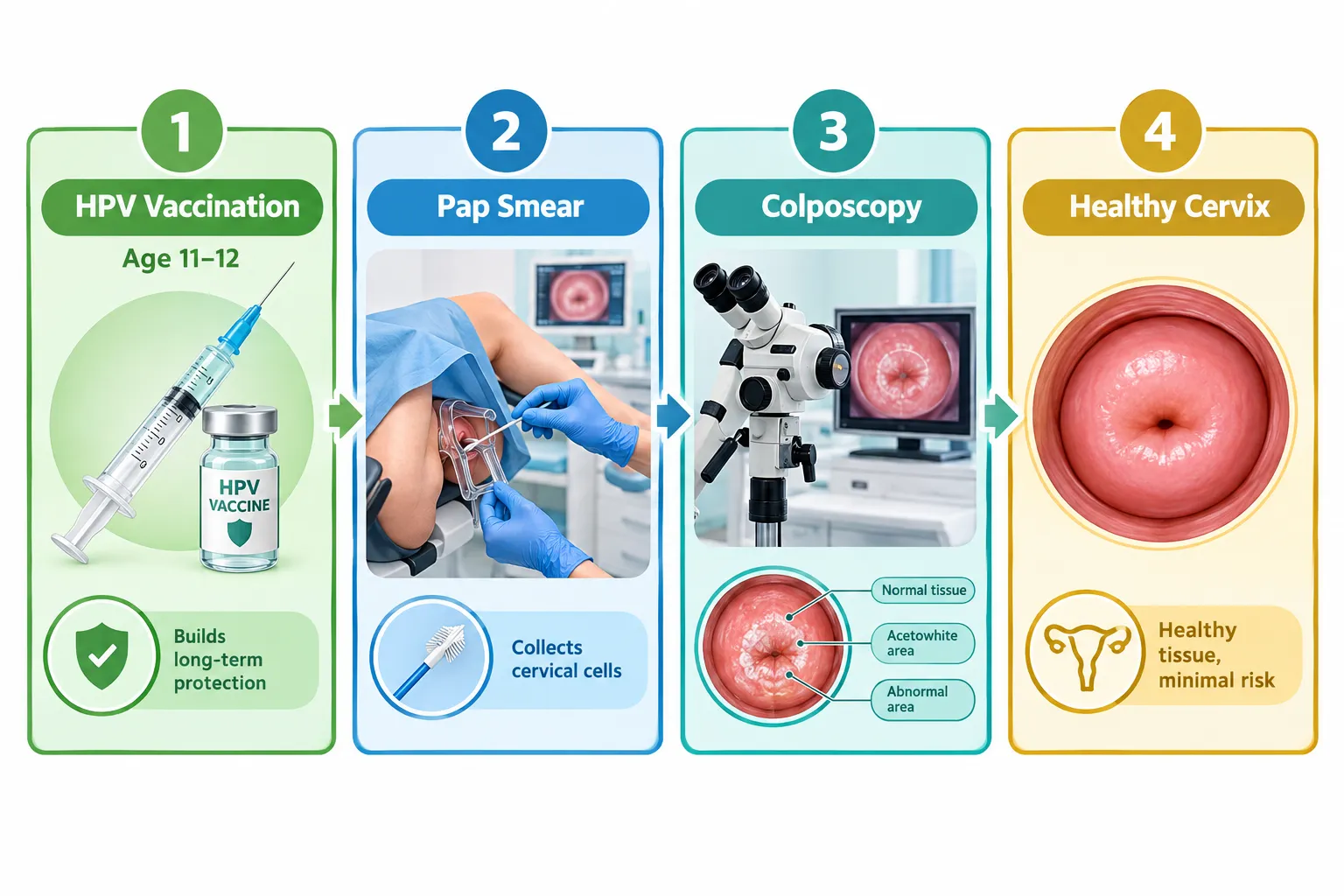
- Vaccination, Pap screening, and colposcopy together can prevent most HPV-related cancers
How One Virus Can Cause Genital Warts and Cervical Cancer
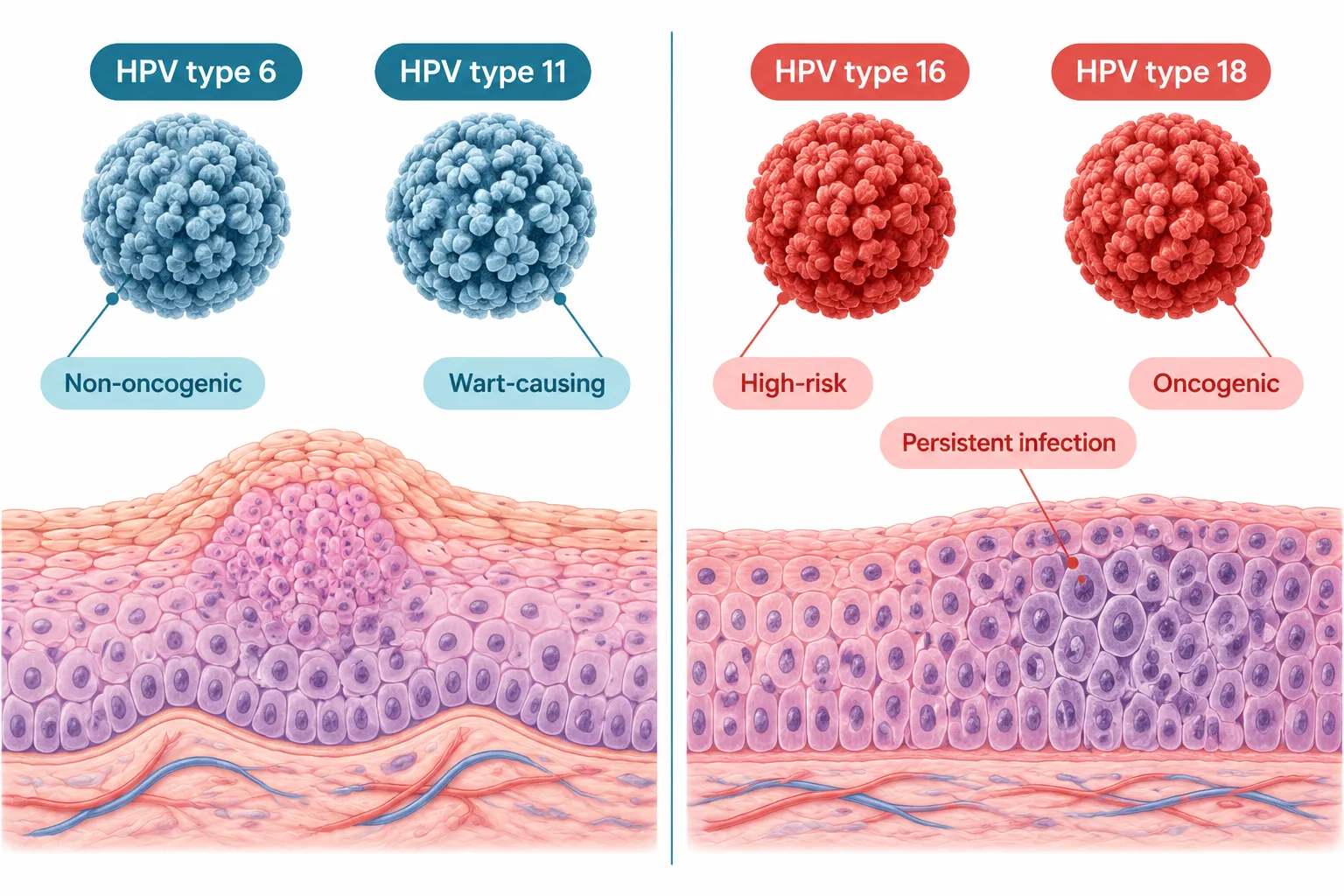
There are more than 200 known HPV genotypes. About 40 of them infect the anogenital area. They divide into two broad categories: low-risk types and high-risk types.
Low-risk types, primarily HPV 6 and 11, cause genital warts, also called condylomata acuminata. These types produce benign growths on the skin and mucous membranes. They are not oncogenic, meaning they do not have the biological mechanism to trigger cancerous cell changes. Genital warts are common, they are treatable, and they do not turn into cancer even if left untreated.
High-risk types, most importantly HPV 16 and 18, act as carcinogens. Type 16 alone accounts for approximately 50% of cervical cancers globally. Together, types 16 and 18 are responsible for roughly 66% of all cervical cancer cases. These types can also drive cancers of the vulva, vagina, penis, anus, and oropharynx.
The critical point: if you have genital warts, you almost certainly have a low-risk HPV type. That is not a cancer diagnosis, and it is not a cancer risk. If a Pap smear or HPV test shows a high-risk type, that is a different conversation, one about monitoring, not about assuming the worst.
What Actually Happens Inside the Cervix
A single high-risk HPV infection is not enough to cause cervical cancer. The process takes years, sometimes more than a decade.
When high-risk HPV infects cervical cells and the immune system does not clear it, the virus can integrate into the cell’s DNA. Over time, this can cause abnormal cell changes, called dysplasia, that progress through stages classified as LSIL (low-grade squamous intraepithelial lesion) or HSIL (high-grade squamous intraepithelial lesion). HSIL is the precancerous stage that, if untreated, can eventually become invasive cervical cancer.
This is exactly why cervical screening exists. Pap smears and HPV co-testing detect these cell changes before they become cancer. Results like ASC-US or LSIL often resolve without intervention. HSIL findings prompt colposcopy and, if needed, a biopsy to assess the extent of the changes.
HPV is also estimated to cause more than 90% of anal and cervical cancers, about 70% of vaginal and vulvar cancers, and roughly 60% of penile cancers. Cervical cancer is the only HPV-associated cancer for which routine population screening is currently recommended, because the Pap smear and HPV test give clinicians a reliable window into the progression timeline. For a broader look at the full cancer connection, the article on HPV and cancer, which cancers are linked, how it happens, and how it’s prevented covers each cancer type in detail.
Who’s at Higher Risk for HPV-Related Cervical Disease?
Not everyone with a high-risk HPV infection progresses to cervical precancer. Several factors raise the odds that an infection will persist rather than clear.
- People with HIV or other immunosuppressive conditions, including organ transplant recipients on immunosuppressant therapy, are significantly less likely to clear HPV naturally and face higher rates of dysplasia progression
- Smokers, tobacco use is an independent co-factor for cervical cancer; it impairs local immune response in cervical tissue
- People with a history of abnormal Pap results, prior LSIL or HSIL findings indicate the immune system has already had difficulty clearing a previous infection
- Unvaccinated individuals, those who did not receive the HPV vaccine before exposure to high-risk types have no pre-existing immunity against HPV 16 or 18
Does Having Genital Warts Mean You’re at Risk for Cervical Cancer?
No. This is one of the most common misunderstandings about HPV.
Genital warts are caused by HPV 6 and 11, low-risk, non-oncogenic types. These types do not cause the DNA damage that leads to cervical cancer. You can have genital warts and test negative for every high-risk HPV type. The two conditions share a virus family but not a mechanism.
That said, HPV infections are not mutually exclusive. It is possible, though not guaranteed, to carry both a low-risk type causing warts and a high-risk type at the same time. If you have genital warts and have not had a recent Pap smear or HPV co-test, that test is still worth having, not because the warts signal cancer risk, but because cervical screening is recommended regardless.
For practical information on genital warts treatment options and what to expect, the clinical picture is straightforward: warts are manageable, recurrence is possible, and treatment does not eliminate the underlying HPV type from the body.
How Vaccination Addresses Both Conditions
The nonavalent (9-valent) HPV vaccine, currently the standard formulation, covers HPV types 6, 11, 16, 18, and five additional high-risk types (31, 33, 45, 52, 58). This means a single vaccine addresses the types that can cause genital warts and the types that can cause cervical cancer, simultaneously.
Current guidance recommends routine vaccination starting at age 11 or 12, with the option to begin as early as age 9. Catch-up vaccination is recommended through age 26. For adults aged 27 to 45, vaccination is available through shared clinical decision-making with a doctor.
The evidence shows that HPV vaccination can prevent more than 90% of HPV-related cancers when administered before exposure. Vaccination does not treat an existing infection, but it does protect against types not yet acquired, which is why vaccination is still recommended even for people with a prior HPV diagnosis or history of abnormal Pap results.
The HPV vaccine is not recommended during pregnancy. If you are pregnant and within the recommended age range, vaccination can be deferred until after delivery.
Screening does not stop after vaccination. Cell changes are easiest to treat before they progress, that is what regular Pap smears and HPV co-testing are for, even in vaccinated people. For women specifically, HPV in women: symptoms, screening, cervical risk, and what it means covers how screening timelines work by age and risk profile.
Treatment Options for Each Condition
Genital warts and cervical precancer are treated differently, because they are different problems.
For genital warts, options include topical prescription medications, such as imiquimod or podophyllotoxin, as well as in-office procedures like cryotherapy, laser ablation, or surgical removal. A detailed breakdown of topical medications for genital warts and how they work explains the prescription options and what to expect from each. Warts can recur after treatment because the underlying virus may remain in surrounding tissue, but recurrence does not mean treatment failed.
For cervical precancer (HSIL confirmed on biopsy), the standard approach is a LEEP procedure (loop electrosurgical excision procedure) or cone biopsy to remove the affected tissue. Ablative methods like cryotherapy are used in some settings. These procedures are highly effective at preventing progression to invasive cancer when cell changes are caught at the precancerous stage.
Some people also ask about adjunctive supplements. The evidence on AHCC and cervical cancer, what to know reviews the current research on AHCC as a potential immune-support tool, though it is not a replacement for standard screening or treatment.
Frequently Asked Questions
Can you have both genital warts and a high-risk HPV type at the same time?
Yes. HPV infections are not mutually exclusive. It is possible to carry HPV 6 or 11 (causing warts) and HPV 16 or 18 (high-risk) simultaneously. Having warts does not confirm or rule out a high-risk type, that requires an HPV co-test or Pap smear.
If my HPV test came back positive for a high-risk type, does that mean I’ll get cervical cancer?
No. A single positive result for a high-risk type means the virus is present, not that cancer is developing. Most high-risk HPV infections clear on their own within one to two years. Persistent infection over many years, not a one-time positive, is what creates a meaningful risk. Your doctor will recommend follow-up testing to determine whether the infection is clearing or persisting.
How long does it take for HPV to cause cervical cancer if it doesn’t clear?
The progression from initial infection to invasive cervical cancer typically takes ten to twenty years, passing through detectable precancerous stages along the way. This long window is why regular screening is so effective, cell changes at the LSIL or HSIL stage are far easier to treat than invasive cancer.
Does treating genital warts remove the HPV virus?
No. Treating warts removes the visible lesions but does not eliminate HPV 6 or 11 from the body. The immune system typically suppresses the virus over time, but the virus can remain in surrounding tissue and warts may recur. Most people’s immune systems eventually control the infection without further treatment.
Do men need to worry about HPV-related cancer too?
Yes. High-risk HPV types cause penile cancer, anal cancer, and oropharyngeal cancer in men. Anal cancer risk is particularly elevated in men who have sex with men and in immunocompromised individuals. HPV vaccination is recommended for all sexes, and the evidence shows it reduces cancer risk across all these sites.
Can I get the HPV vaccine if I’ve already been diagnosed with genital warts?
Yes. A diagnosis of genital warts means you have been exposed to HPV 6 or 11, but the vaccine still protects against the high-risk types you may not yet have encountered, including HPV 16 and 18. Vaccination after a diagnosis is still clinically appropriate within the recommended age range.