}
Most HPV infections clear on their own without treatment. Around 90% of infections resolve within two years, handled quietly by the immune system, often without the person ever knowing they had the virus. Does HPV go away on its own? For most people, yes. But “most” is not “all,” and the exceptions are exactly what screening is designed to catch.
Key Takeaways
- Roughly 90% of HPV infections clear naturally within one to two years through normal immune activity.
- High-risk HPV types, especially types 16 and 18, can persist and, over many years, lead to cell changes that may progress to cancer if unmonitored.
- There is no antiviral medication that clears HPV directly; the immune system does the work.
- A negative HPV test after a positive one usually means the infection has cleared or become undetectable, not that you were misdiagnosed.
- Regular cervical screening and the HPV vaccine remain the most reliable tools because clearance is not guaranteed for every infection.
How Does HPV Clear on Its Own?
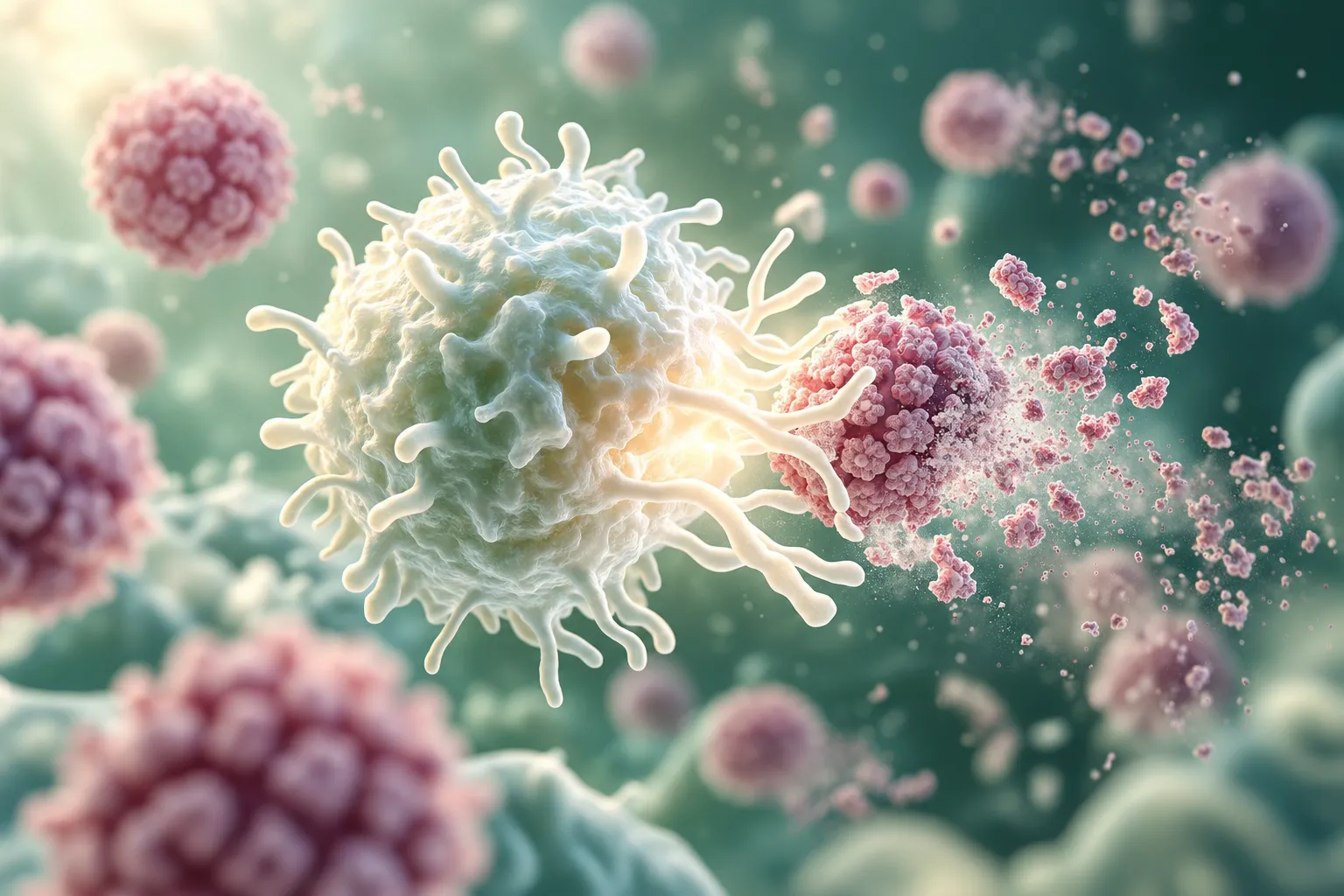
HPV is a DNA virus that infects the surface cells of skin and mucous membranes. In most cases, the immune system identifies the infected cells and eliminates them over months to years, a process that happens below the threshold of symptoms for the vast majority of people.
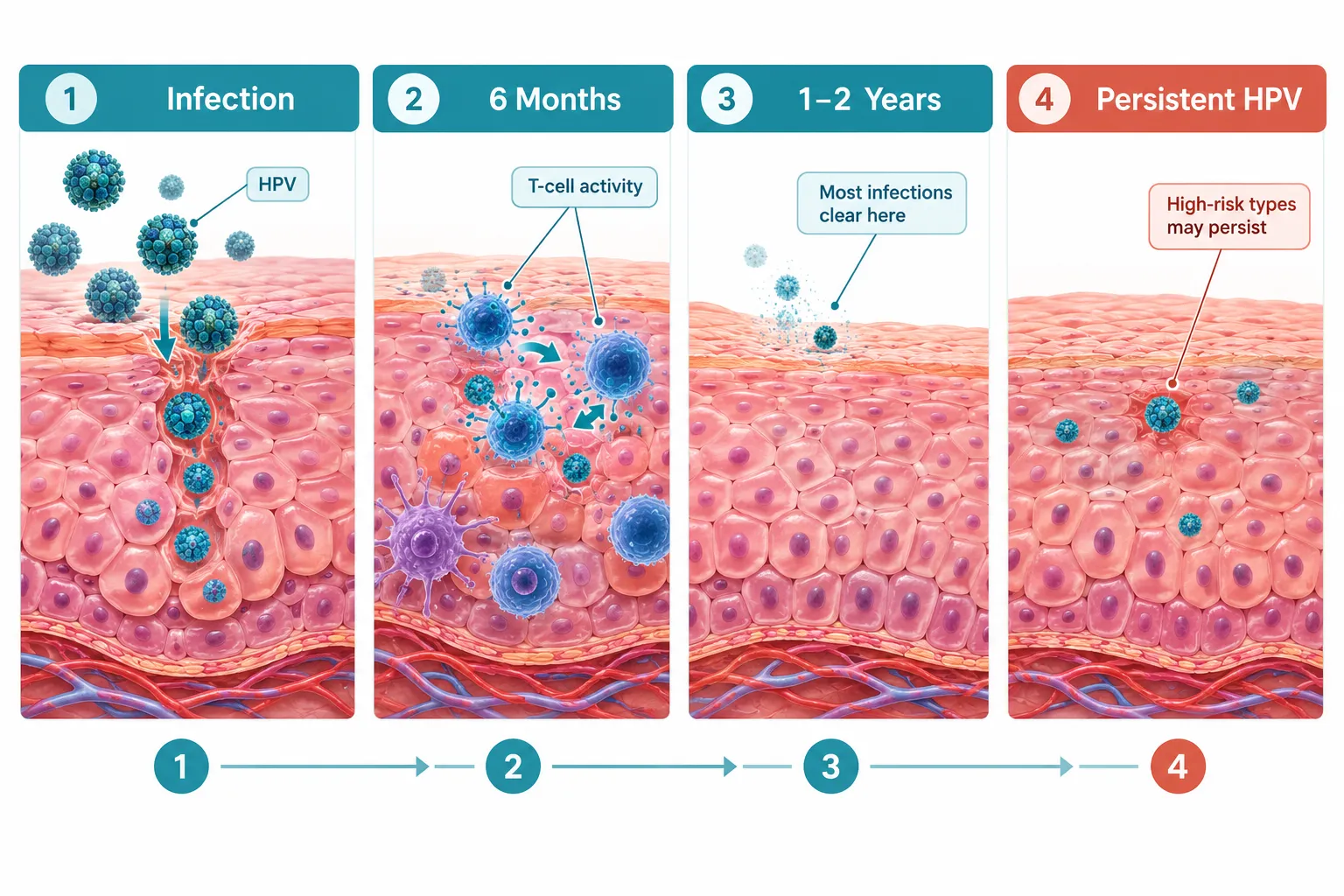
The clearance rate is genuinely high. Studies consistently show that about 70% of new HPV infections resolve within one year, and roughly 90% clear within two years. Younger people, particularly those under 30, tend to clear infections faster and at higher rates, which is one reason cervical screening guidelines differ by age group.
The process isn’t always complete elimination. HPV can become latent, meaning the virus retreats to very low levels that standard tests cannot detect. A positive test that later comes back negative most likely reflects true clearance or latency, not a lab error. The distinction matters because latent HPV can, in rare cases, reactivate if immune function drops significantly.
Clearance also doesn’t equal immunity. Clearing one HPV type doesn’t protect you from reinfection with the same type or from a new type. That’s a separate biological process.
Does HPV Go Away on Its Own, or Does It Stay?
This is the question that matters most, and the answer depends largely on the HPV genotype involved.
There are more than 200 HPV types. About 40 affect the genital area. These divide into two broad categories:
Low-risk types (such as HPV 6 and 11) cause genital warts but are not associated with cancer. These infections are very likely to clear on their own, though the warts themselves may need treatment. The guide to whether genital warts go away on their own covers that specific question in more detail.
High-risk types (such as HPV 16 and 18) are linked to cervical, anal, oropharyngeal, and other cancers. These types are more likely to persist than low-risk types, and persistent infection, not initial infection, is what drives cancer risk.
HPV 16 and 18 together account for approximately 70% of cervical cancers worldwide. The critical word is “persistent.” A single positive test for HPV 16 is not a cancer diagnosis. It is a signal that monitoring matters. Cell changes, graded as LSIL, HSIL, or more specific classifications like ASC-US, develop over years, not weeks. An abnormal Pap smear result is the point at which that monitoring becomes actionable.
The timeline from persistent high-risk HPV to cancer, when it happens at all, is typically measured in years to decades. Screening exists precisely because that window is long enough to intervene effectively.
Who Is at Higher Risk for Persistent HPV?
Not every HPV infection follows the same path. Certain factors make it more likely that an infection will persist rather than clear.
- Immunocompromised individuals, people living with HIV, organ transplant recipients on immunosuppressive drugs, or anyone with a significantly weakened immune system clear HPV at lower rates and are at higher risk for persistent infection and cell changes.
- Smokers, cigarette smoking is associated with impaired local immune response in cervical tissue, making it harder for the body to clear high-risk HPV.
- People with a history of abnormal Pap results, prior LSIL or HSIL findings indicate that high-risk HPV has already caused detectable cell changes, which signals a higher likelihood of persistence.
- Unvaccinated individuals, those who have not received the HPV vaccine have no pre-existing immune response to the highest-risk types, leaving them more vulnerable to persistent infection with types 16 and 18.
What Happens If HPV Doesn’t Go Away?
Persistent high-risk HPV infection is the necessary precondition for HPV-related cancers, but persistence alone doesn’t mean cancer is inevitable.

What happens in practice: if a high-risk HPV test comes back positive on repeat testing, or if a Pap smear shows abnormal cells, the next step is usually a colposcopy, a closer examination of the cervix. A colposcopy may include a biopsy to grade any cell changes precisely. Grades matter: low-grade changes (CIN 1) often resolve without intervention, while high-grade changes (CIN 2 or CIN 3) are treated because they carry a meaningful risk of progression.
Treatment at the CIN 2/3 stage is highly effective. The point of regular screening is to find cell changes at this stage, before they become invasive cancer. That’s not a reassurance; it’s a description of what the system is designed to do.
For men, there is no approved HPV screening test equivalent to the cervical Pap smear. The guide to HPV detection in men explains what testing options currently exist and what they can and cannot tell you.
Can You Speed Up HPV Clearance?
There is no antiviral drug that directly targets and eliminates HPV. The immune system does the clearing, and there is no proven way to meaningfully accelerate that process.
General immune health, not smoking, managing chronic stress, and maintaining adequate nutrition, supports the immune system broadly, but none of these are HPV-specific treatments. Some people ask about AHCC, a mushroom-derived supplement that has been studied in small trials for HPV clearance. The evidence is preliminary and not yet sufficient to recommend it as a standard approach. The overview of AHCC benefits and what’s proven covers the current state of that research honestly.
What does have strong evidence: the HPV vaccine. It won’t clear an existing infection, but it protects against the high-risk types you haven’t yet been exposed to. The HPV vaccine guide covers who it’s recommended for and the evidence behind it.
Treatments exist for HPV’s symptoms and complications, genital warts, abnormal cervical cells, but these treat the effects, not the virus itself. The HPV treatment overview covers what’s available and how each approach works.
What a Positive HPV Test Actually Means in 2026
A positive HPV test tells you the virus is present and detectable right now. It does not tell you when you acquired it, whether it will persist, or whether cell changes are present. HPV can remain dormant for years before appearing on a test, which means a positive result in a long-term relationship does not indicate recent transmission, the timing of HPV infection is often genuinely unknowable.
The follow-up steps depend on the type of test, your age, your screening history, and whether cell changes are also present. An ASC-US Pap result, a common finding, often triggers reflex HPV testing and, depending on the result, either a colposcopy referral or a repeat test in one year.
A positive result is a starting point for monitoring, not a diagnosis of anything beyond the infection itself.
Moving Forward After an HPV Diagnosis
The most useful thing you can do after a positive HPV test is keep your follow-up appointments. Cell changes are easiest to manage before they progress, that’s the entire rationale for screening intervals.
If you’ve been told you have high-risk HPV, ask your provider specifically: which type was detected, what the recommended follow-up interval is, and whether any cell changes were found on the Pap smear. Those three answers define your actual situation far more precisely than the positive result alone.
If you haven’t been vaccinated and are within the recommended age range, the vaccine is still worth discussing with your provider, it protects against types you haven’t yet encountered.
Frequently Asked Questions
If my HPV test came back negative after a positive one, does that mean it’s gone?
Most likely, yes, either the infection cleared or it dropped below the level the test can detect. Both outcomes are common and generally favorable. A follow-up negative doesn’t guarantee the virus is completely absent, but it is a good sign, and your provider will advise on whether further monitoring is needed based on your history.
Can HPV come back after it has cleared?
HPV doesn’t typically “come back” from a true clearance the way some viruses do. However, if the virus became latent rather than fully eliminated, it can reactivate, particularly if immune function drops. Reinfection with the same or a different HPV type from a new exposure is also possible, since clearing one infection doesn’t create lasting immunity.
Does having HPV mean my partner was unfaithful?
No. HPV can remain dormant for months or years before showing up on a test, which makes it impossible to determine when or from whom a specific infection was acquired. A positive test in a long-term relationship says nothing reliable about recent sexual activity.
Is there any point in treating HPV if it usually goes away on its own?
HPV itself isn’t treated directly, there’s no antiviral for it. What gets treated are its effects: genital warts and abnormal cervical cells. Treating those effects matters because warts can be uncomfortable and contagious, and high-grade cell changes carry a real risk of progression if left unmonitored.
Do men need to worry about HPV clearance too?
Yes, though the monitoring landscape is different. Most HPV infections in men also clear on their own, but persistent infection can cause penile, anal, and oropharyngeal cancers. Men who have sex with men are at higher risk for anal HPV-related disease and may be offered anal Pap testing in some clinical settings.
At what point should I be concerned that my HPV hasn’t cleared?
If a high-risk HPV type is still detectable on repeat testing after one to two years, or if a Pap smear shows high-grade cell changes (HSIL), that warrants closer follow-up, typically a colposcopy. Your provider will set the appropriate interval based on your specific results and risk factors.