{“cover”:”Editorial medical photography, landscape format 1536×1024. A clean, well-lit kitchen counter scene showing two glass tumblers of water side by side, one slightly tipped toward the other, soft natural daylight from a window, cool blue-white palette with warm wood tones in background. Shallow depth of field focuses on the glasses. No text, no labels. Magazine-quality composition, rule of thirds, calm clinical aesthetic evoking a health information article about drink sharing and virus transmission.”,”content”:[“Annotated four-panel scientific illustration, landscape format 1536×1024, teal-and-slate palette on white background. Panel 1: cross-section diagram of oral mucosa with HPV virion particles shown at skin-to-skin contact point, callout label ‘skin-to-skin route’. Panel 2: saliva droplet magnified with sparse HPV DNA strands visible, callout label ‘viral DNA detected’. Panel 3: shared glass icon with a crossed-out transmission arrow, callout label ‘no documented route’. Panel 4: sexual contact icon with a confirmed transmission arrow, callout label ‘primary transmission’. Thin callout lines, short labels 1-5 words each, clean medical-guide editorial polish, no full sentences as image text.”,”Split-screen editorial infographic, landscape format 1536×1024, warm amber and deep navy palette. Left half: close-up of two people kissing, soft bokeh background, amber lighting, with a small annotated callout arrow pointing to lip contact zone labeled ‘mouth-to-mouth contact’. Right half: flat illustrated risk-level meter graphic showing a spectrum from ‘negligible’ to ‘high’, with a marker positioned near the negligible end and a second marker near the high end for sexual transmission, clean sans-serif panel labels, no full sentences, crisp contrast between the two halves, documentary-photography meets infographic style.”]

Sharing a drink with a friend, a partner, or a family member is something most people do without a second thought. If you’ve recently been diagnosed with HPV, or your partner has, the question of whether everyday contact like this could spread the virus is a fair one to ask. The short answer: there is no documented evidence that you can contract HPV from sharing drinks. HPV is not transmitted through saliva the way cold viruses or mono are, and casual oral contact with a glass or straw is not a recognized route of infection.
That said, the fuller picture is worth understanding, because HPV and saliva do have a relationship, just not the one most people assume.
Key Takeaways
- Sharing drinks is not a documented or recognized route of HPV transmission.
- HPV spreads primarily through direct skin-to-skin contact, most commonly during sexual activity.
- HPV DNA has been detected in saliva, but detection of viral DNA does not equal proven transmission through shared beverages.
- Oral HPV infections are linked to sexual behavior and deep kissing, not casual drink sharing.
- If you’ve shared a drink with someone who has HPV, routine testing specifically for that exposure is not typically indicated.
How HPV Actually Spreads
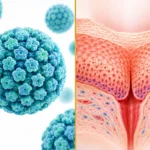
HPV, human papillomavirus, is primarily a skin-to-skin infection. It enters the body through tiny breaks or abrasions in the skin or mucous membranes, and the vast majority of transmissions happen during sexual contact: vaginal, anal, or oral sex. There are more than 200 HPV genotypes, and the ones that matter most clinically are the high-risk types (such as HPV 16 and 18, which are linked to cervical and other cancers) and the low-risk types (such as HPV 6 and 11, which cause most genital warts).
The virus does not survive well outside the body. It needs direct mucosal or epithelial contact to establish infection, which is why activities like sharing a towel, a toilet seat, or a glass are not considered transmission routes. How HPV spreads, and how it doesn’t covers the full picture of documented and non-documented routes in more detail.
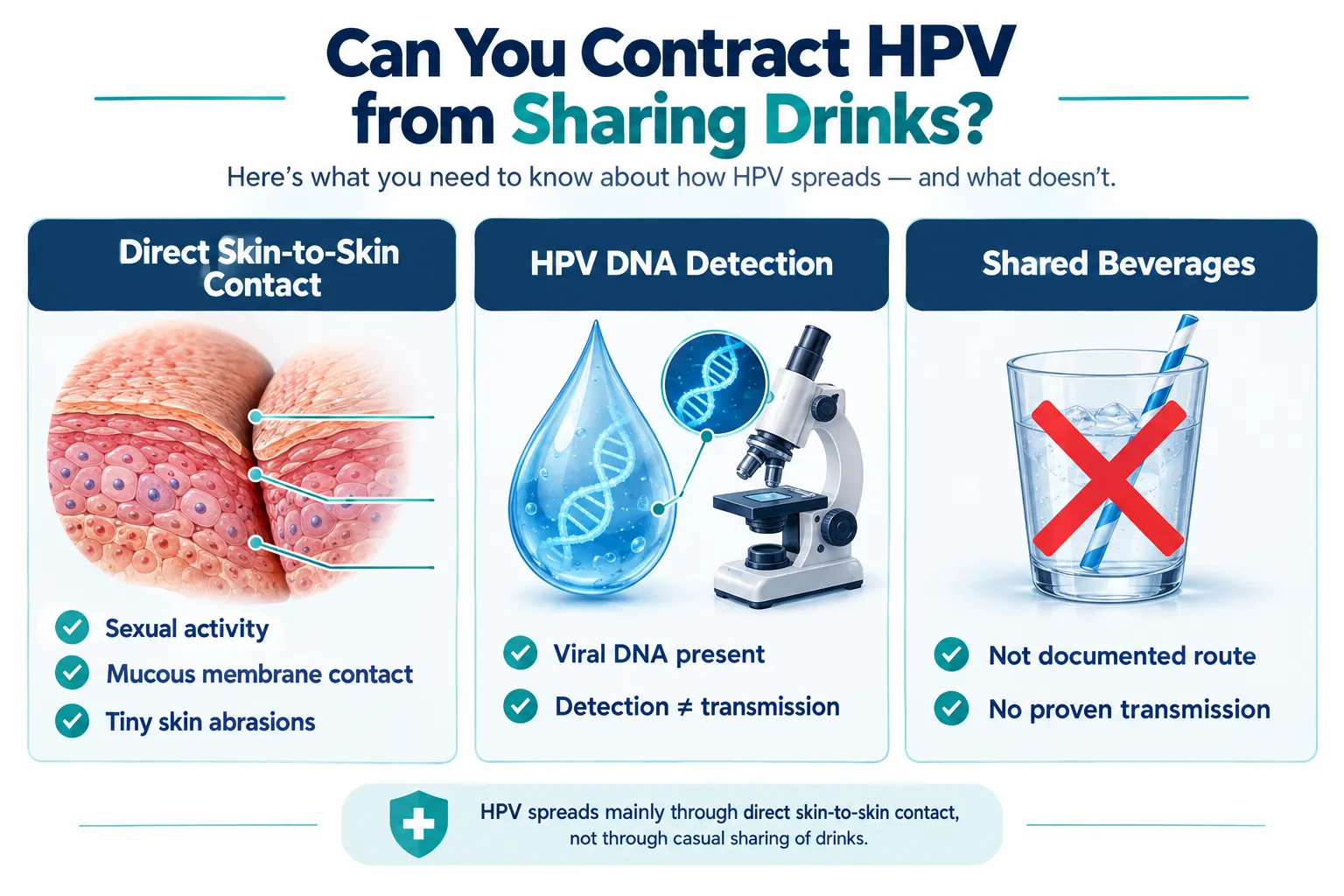
The distinction matters here: the virus needs a suitable entry point and sustained contact with living tissue. A shared rim of a glass does not provide that.
Can You Contract HPV from Sharing Drinks? What the Science Says
HPV DNA has been detected in saliva samples, that part is real. But finding viral DNA in saliva is not the same as proving that saliva is an efficient transmission route, and it is certainly not evidence that sharing a drink transmits the virus.
Researchers who have studied oral HPV look at partner studies, behavioral surveys, and prevalence data. What those studies consistently show is that oral HPV infection correlates strongly with sexual behavior, number of oral sex partners, in particular, and with deep kissing. Casual oral contact, including sharing food or drinks, does not show a statistically meaningful association with oral HPV acquisition.
The distinction between kissing and drink-sharing matters here. Whether HPV can be transferred through saliva addresses the saliva question directly, and whether HPV can be transmitted by kissing covers the evidence on mouth-to-mouth contact specifically. Both are more plausible routes than drink-sharing, and even those are considered low-probability compared to sexual transmission.
If you shared a drink with someone who has HPV, the risk is considered negligible. Routine HPV testing prompted solely by that exposure is not something most clinicians would recommend.
Why Saliva Isn’t an Efficient Vehicle for HPV
Understanding why sharing drinks poses negligible risk requires a quick look at how HPV behaves biologically.
HPV is an epitheliotropic virus, it infects epithelial cells, the cells that line skin and mucous membranes. For transmission to occur, the virus needs to reach a susceptible cell layer, typically through microabrasions. Saliva contains enzymes and antibodies that can degrade or neutralize viral particles. The concentration of viable virus in saliva, even in someone with an active oral HPV infection, is low compared to what is found at the site of a genital lesion or wart.
A shared glass or straw introduces a small amount of saliva to the next person’s lips or mouth. There is no friction, no mucosal disruption, and no sustained contact. The biological conditions for transmission are simply not met in any meaningful way.
This is different from, say, HPV transmission during oral sex, where there is direct mucosal contact with a high-viral-load site for an extended period.
Who Is at Higher Risk for Oral HPV?
Most people who acquire oral HPV never know they have it, it clears on its own, usually within one to two years, without causing symptoms or cell changes. But some groups face a meaningfully higher risk of acquiring oral HPV or of having it persist:
- People with multiple oral sex partners, the strongest behavioral risk factor for oral HPV acquisition.
- Immunocompromised individuals, including people living with HIV, organ transplant recipients on immunosuppressive therapy, and others with impaired immune function. HPV infections in general are harder to clear when the immune system is compromised.
- Smokers, tobacco use is associated with impaired mucosal immunity and higher rates of persistent oral HPV infection.
- Unvaccinated adults, particularly those who were not vaccinated before becoming sexually active, since the HPV vaccine does not clear existing infections.
Oral HPV and the Routes That Actually Matter
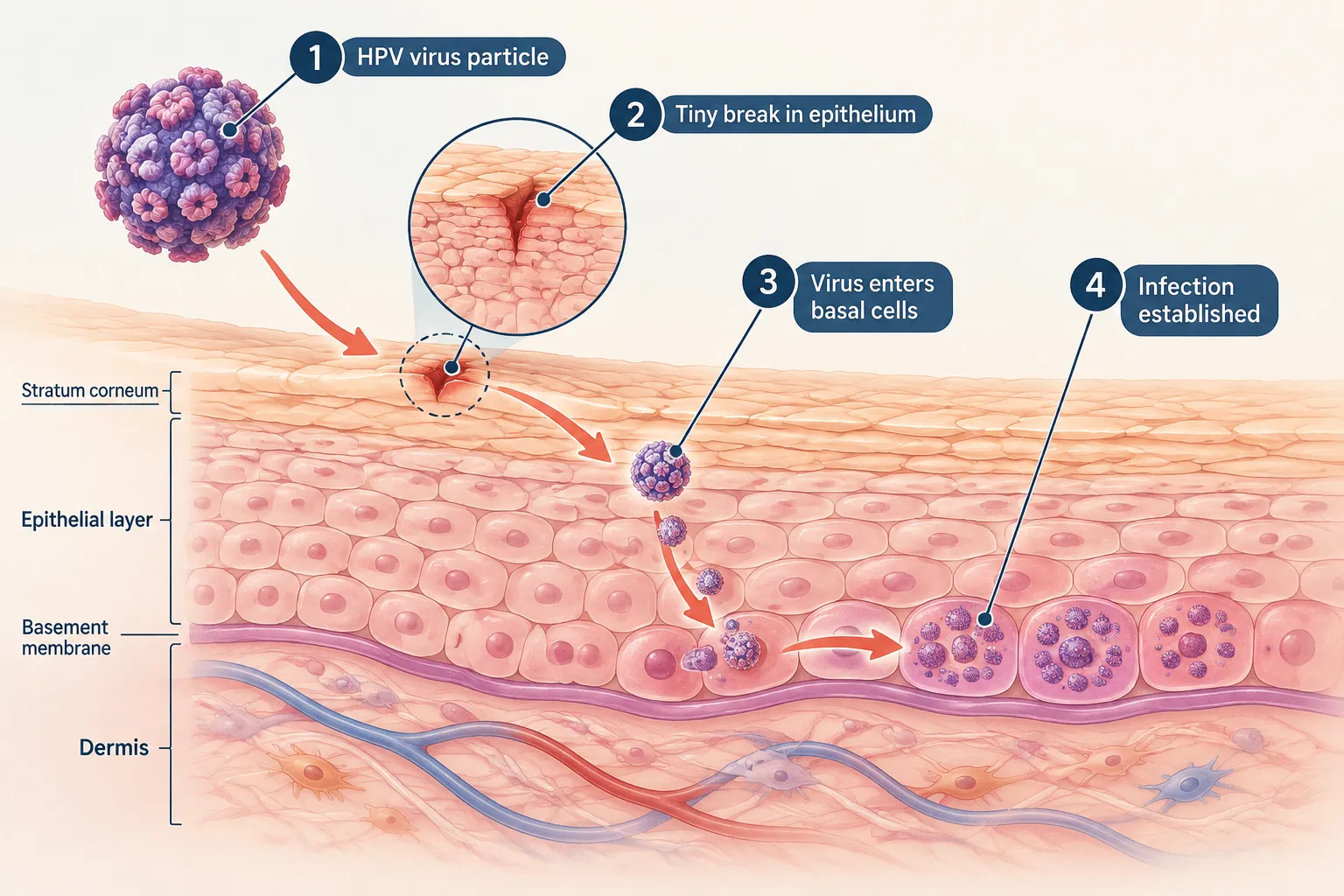
Oral HPV, meaning HPV infection of the mouth, throat, or tonsils, is a real clinical concern, primarily because persistent infection with high-risk types like HPV 16 is linked to oropharyngeal cancers. The CDC estimates that HPV causes the majority of oropharyngeal cancers diagnosed each year in the United States. That is a genuine risk worth knowing about.
But that risk comes from sexual transmission, not from a shared coffee cup. Partner studies on oral HPV consistently point to oral sex and deep kissing as the relevant exposure routes. Casual social contact, sharing drinks, eating from the same plate, brief social kissing, has not been identified as a driver of oral HPV prevalence in any population studied.
If you have concerns about oral HPV specifically, the relevant conversation with your doctor is about your sexual history and vaccination status, not about whether you shared a straw. HPV symptoms: signs in men and women, and why most people have none explains what oral HPV does and doesn’t look like clinically.
What About Household or Non-Sexual Transmission?
There is a small body of literature on non-sexual HPV transmission, mostly in children. Some studies have found HPV DNA in the oral cavities of children who have no plausible sexual exposure, which suggests that some non-sexual transmission can occur, possibly through close household contact or birth canal exposure. This is described mainly in the context of recurrent respiratory papillomatosis, a rare condition caused by HPV 6 and 11.
This research is sometimes cited to argue that casual contact could spread HPV more broadly. The evidence does not support that conclusion. The cases in children involve specific circumstances, vertical transmission from mother to infant, or prolonged close contact, not the kind of brief, incidental sharing that happens when two adults use the same glass.
The household transmission literature does not change the clinical guidance: sharing drinks with someone who has HPV is not a recognized risk factor for acquiring the infection.
If You’re Worried About an Exposure
If you’ve recently been diagnosed with HPV and are trying to work out how you got it, or if a partner’s diagnosis has you rethinking everyday contact, it’s worth knowing that the timing of HPV infection is often genuinely unknowable. The virus can remain dormant for months or years before detection. Whether HPV can be dormant covers that in detail.
What you can do that is actually useful: make sure your cervical screening is current if you have a cervix, what happens after an abnormal Pap smear explains the follow-up process clearly. If you haven’t been vaccinated and are within the recommended age range, talk to your doctor about whether the HPV vaccine is still appropriate for you. The vaccine protects against the highest-risk genotypes and remains effective even if you’ve been exposed to one HPV type, as long as you haven’t been exposed to all the types the vaccine covers.
Sharing drinks with a partner who has HPV does not require any special precautions or testing.
Frequently Asked Questions
Can HPV survive on a glass or straw long enough to infect someone?
HPV does not survive well on inanimate surfaces. The virus requires direct contact with living epithelial tissue to establish infection, and it degrades quickly outside the body. There is no documented case of HPV transmission via an object like a glass or utensil.
Does finding HPV DNA in saliva mean a person is contagious through saliva?
Not in any practical sense for casual contact. HPV DNA can be detected in saliva using sensitive molecular tests, but the presence of viral genetic material does not mean there is enough viable virus to infect someone through incidental oral contact. Transmission requires the right biological conditions, conditions that a shared drink does not create.
Is oral HPV something I should be tested for after a partner’s diagnosis?
There is currently no approved clinical test for oral HPV in routine screening. If your partner has been diagnosed with genital HPV, that does not automatically mean you have oral HPV, and there is no standard protocol for oral HPV testing in this situation. Talk to your doctor about what follow-up, if any, makes sense based on your specific history.
Can the HPV vaccine protect against oral HPV?
Yes. The Gardasil 9 vaccine covers HPV types 16, 18, 31, 33, 45, 52, and 58, the high-risk types most associated with oropharyngeal cancer, as well as types 6 and 11. Vaccination before exposure to these types offers meaningful protection against oral HPV as well as genital HPV.
If I shared a drink with someone who has HPV, do I need to tell future partners?
No. Sharing a drink is not a recognized transmission event, and there is no clinical or ethical basis for disclosing it to sexual partners as an HPV exposure. Standard guidance on HPV disclosure relates to sexual contact, not casual social interactions.
The Practical Takeaway
Sharing drinks does not transmit HPV. The virus spreads through direct skin-to-skin and mucosal contact during sexual activity, that is where the evidence points, consistently and clearly. If you have HPV or have been exposed to it, the steps worth taking are the ones your doctor can actually act on: keeping up with cervical screening, discussing vaccination, and understanding what monitoring looks like for your specific situation. Avoiding shared glasses is not one of those steps.