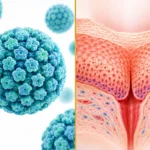
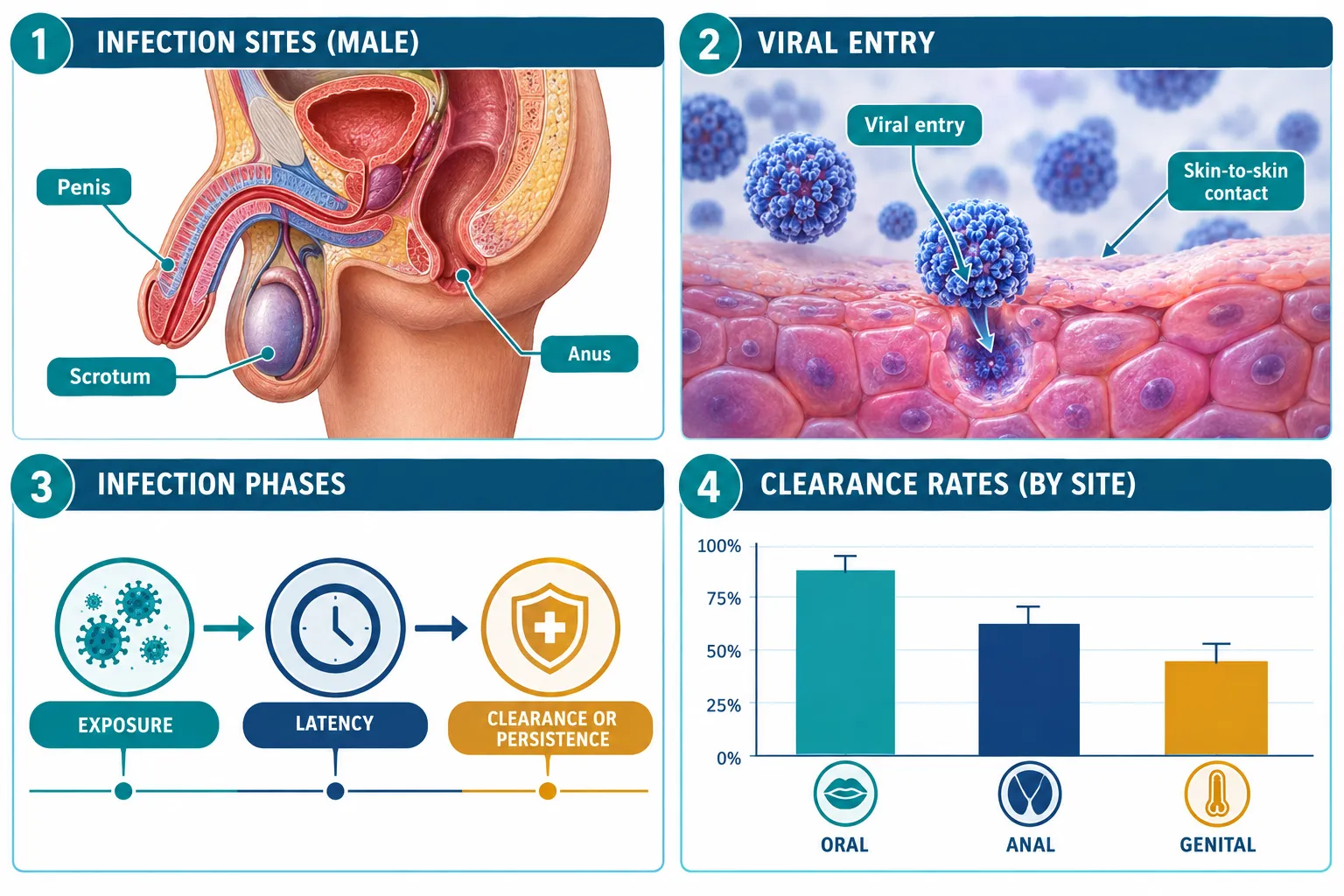
Males can contract HPV, and most sexually active men will at some point in their lives. HPV (human papillomavirus) does not discriminate by sex. It infects the skin and mucous membranes through direct contact, and in men it can affect the penis, scrotum, anus, mouth, and throat.
The good news is that most infections clear on their own. The part that matters is knowing when they don’t, what that means, and what you can do about it.
Key Takeaways
- HPV is extremely common in males; nearly all sexually active unvaccinated men will acquire it at some point
- Most infections resolve without treatment, but some persist and can lead to genital warts or cancer
- HPV infects multiple sites in men, genital, anal, and oral, with different clearance rates at each
- High-risk HPV types, especially genotype 16, are linked to anal, penile, and oropharyngeal cancers in men
- Vaccination before exposure is the most effective way to prevent HPV-related disease in males
How Do Males Contract HPV?
HPV spreads through direct skin-to-skin contact, not through blood or bodily fluids the way HIV or hepatitis do. Sexual contact is the most common route, but penetrative sex is not required. Genital contact alone is enough to transmit the virus.
Men can acquire HPV through:
- Vaginal, anal, or oral sex with an infected partner
- Skin-to-skin genital contact without penetration
- Oral sex (which can introduce HPV to the mouth and throat)
There is no way to tell from a partner’s appearance whether they carry HPV. Most people who have it don’t know, because the virus typically causes no symptoms. You cannot reliably trace when or from whom you acquired it, the virus can remain dormant for months or years before any sign appears.
For a detailed look at how transmission works between partners, the article on whether a woman can pass HPV to a man covers the mechanics in depth.
Where Does HPV Infect Men, and What Does It Cause?
HPV can establish infection at several anatomical sites in men: the penis, scrotum, anus, rectum, and the oropharynx (the back of the throat, including the tonsils and base of the tongue).
What it causes depends on the HPV type involved. The HPV types guide breaks down the full spectrum, but the key distinction for men is this:
| HPV Type Category | Common Genotypes | What It Can Cause in Men |
|---|---|---|
| Low-risk | 6, 11 | Genital warts |
| High-risk | 16, 18, 31, 33 | Anal, penile, oropharyngeal cancers |
Genital warts, caused primarily by types 6 and 11, are the most visible sign of infection. They are not cancerous, but they are contagious and can recur. High-risk types, especially genotype 16, carry a more serious concern: HPV accounts for more than 90% of anal cancers and roughly 60% of oropharyngeal cancers in men.
Penile cancer is less common but also linked to high-risk HPV. The overall cancer burden from HPV in men is real and worth taking seriously, which is exactly why screening and vaccination matter.
Does HPV Clear on Its Own in Men?
Yes, most of the time. The immune system clears the majority of HPV infections without any intervention. Research pooling data across multiple studies found an overall clearance rate of about 71 infections per 1,000 person-months in men, meaning the virus resolves, though the timeline varies.
Clearance is not uniform across the body, though. Genital HPV clears fastest. Anal HPV clears more slowly. Oral HPV clears slowest of all, a relevant fact given the rise in HPV-linked throat cancers.
Persistence is the problem. When HPV doesn’t clear, particularly a high-risk type, the risk of cellular changes and eventual cancer increases over time. Progression to higher-grade disease occurs in roughly 20% of cases within one to two years. That’s not a majority, but it’s not negligible either.
Genital warts add another complication: even when treated, they recur in about half of cases. Genital warts: what they are and what to do covers treatment options and what recurrence actually looks like.
Who Is at Higher Risk for HPV in Men?
HPV is common across the board, but certain groups face a meaningfully higher risk of acquiring it, carrying it longer, or developing complications:
- Unvaccinated men, the single most modifiable risk factor; vaccination before exposure dramatically reduces infection risk
- Men with HIV or other immunosuppressive conditions, the immune system’s ability to clear HPV is impaired, making persistent infection and progression to cancer significantly more likely
- Men who have sex with men (MSM), anal HPV prevalence is substantially higher in this group, and anal cancer risk rises accordingly
- Men with multiple sexual partners or early sexual debut, more exposure opportunities increase cumulative risk
Can Males Contract HPV Without Knowing It?
Most men who have HPV never know it. The virus produces no symptoms in the majority of cases. There is no routine HPV screening test approved for men in the way Pap smears and HPV co-tests exist for women.
This is not a reason to panic. It does mean that the absence of symptoms is not the same as the absence of infection.
For men at elevated risk, particularly MSM and those who are immunocompromised, anal HPV screening is available and recommended by many clinicians. The anal HPV test guide explains what that test involves and what the results mean.
If genital warts appear, that is a sign of low-risk HPV. Warts are treatable, topical prescription medications are a common first-line option, and their presence does not mean high-risk HPV is also there.

Can Males Prevent HPV Infection?
Yes, and the most effective tool is the HPV vaccine.
Gardasil 9, the vaccine used in the United States and most other high-income countries, protects against nine HPV types, including the high-risk genotypes 16 and 18 and the low-risk wart-causing types 6 and 11. It is approved for males up to age 45.
The vaccine works best before any sexual exposure. That’s why it’s recommended starting at age 11 or 12. But vaccination after that age still provides meaningful protection against types not yet acquired.
The HPV vaccine is not recommended during pregnancy, but this applies to female partners, not males.
Condoms reduce transmission risk but don’t eliminate it, since HPV can infect skin not covered by a condom. They remain worth using for overall sexual health.
For a full breakdown of who should get vaccinated and whether the vaccine helps if you already have HPV, the HPV vaccine for men article covers both questions directly.
Frequently Asked Questions
Can a man spread HPV to a woman even if he has no symptoms?
Yes. HPV can be transmitted without any visible signs of infection. A man with no warts and no symptoms can still carry and pass on the virus. This is one reason HPV is so widespread, neither partner may know transmission has occurred.
Is there an HPV test for men?
There is no FDA-approved routine HPV test for penile or scrotal infection in men. Anal Pap smears and HPV testing are available for anal canal screening, particularly for men at higher risk of anal cancer. A doctor can discuss whether anal screening is appropriate based on individual risk factors.
Does having HPV mean a man will get cancer?
No. Most HPV infections, including high-risk types, clear without causing cancer. The risk of cancer is real but depends on whether the infection persists, which type is involved, and immune status. Regular follow-up with a clinician is what catches cell changes before they progress.
Can males contract HPV more than once?
Yes. Clearing one HPV type does not provide immunity against other types, and reinfection with the same type is possible. This is another reason vaccination before exposure is more protective than relying on natural immunity after infection.
At what age should men get the HPV vaccine?
The CDC recommends the HPV vaccine at age 11 or 12, with catch-up vaccination through age 26. For men aged 27 to 45, the decision is made individually with a doctor based on personal risk. The HPV vaccine overview covers the full schedule and what to expect.
Can HPV cause throat cancer in men?
Yes. High-risk HPV, particularly genotype 16, is linked to oropharyngeal cancer, which affects the tonsils, soft palate, and base of the tongue. HPV-related throat cancer has become more common in men over the past two decades. Oral HPV also clears more slowly than genital HPV, which is part of why this risk persists.
What to Do Next
If you’ve recently learned you have HPV, or you’re concerned about exposure, the most useful step is a conversation with a doctor who can assess your specific situation, your age, sexual history, immune status, and any symptoms. For a broader grounding in how HPV works across all types and populations, the plain-English guide to HPV is a good starting point.
Cell changes are easiest to address before they progress. That’s what monitoring is for, and it’s why knowing your status, even when there are no symptoms, is worth the conversation.