There is no pill you take for two weeks and then HPV is gone. That is the honest answer, and understanding why helps you make sense of what doctors actually do, what researchers are building right now, and what your options are in 2026.
Drugs for HPV infection: what to expect depends entirely on which part of the problem you are addressing. Preventing a new infection, treating the visible effects of an existing one, and clearing a persistent high-risk infection are three different goals, and the medical tools for each are at very different stages of development.
Key Takeaways
- No FDA-approved antiviral drug exists that clears an active HPV infection from your body.
- Prophylactic vaccines (Gardasil 9, Cervarix) prevent new HPV infections but do not treat existing ones.
- Treatments for HPV-related conditions, genital warts, cervical cell changes, are well-established and effective.
- Multiple therapeutic vaccines and antiviral candidates are in clinical trials as of 2026, with some showing strong early results.
- For most people with HPV, the immune system clears the infection on its own within one to two years.
What Drugs Are Actually Available for HPV Right Now?
No antiviral medication targets HPV the way antivirals target HIV or influenza. HPV does not replicate using the same enzyme machinery that most antiviral drugs block, and the virus integrates into host cells in ways that make it a difficult pharmaceutical target.
What does exist falls into two categories.
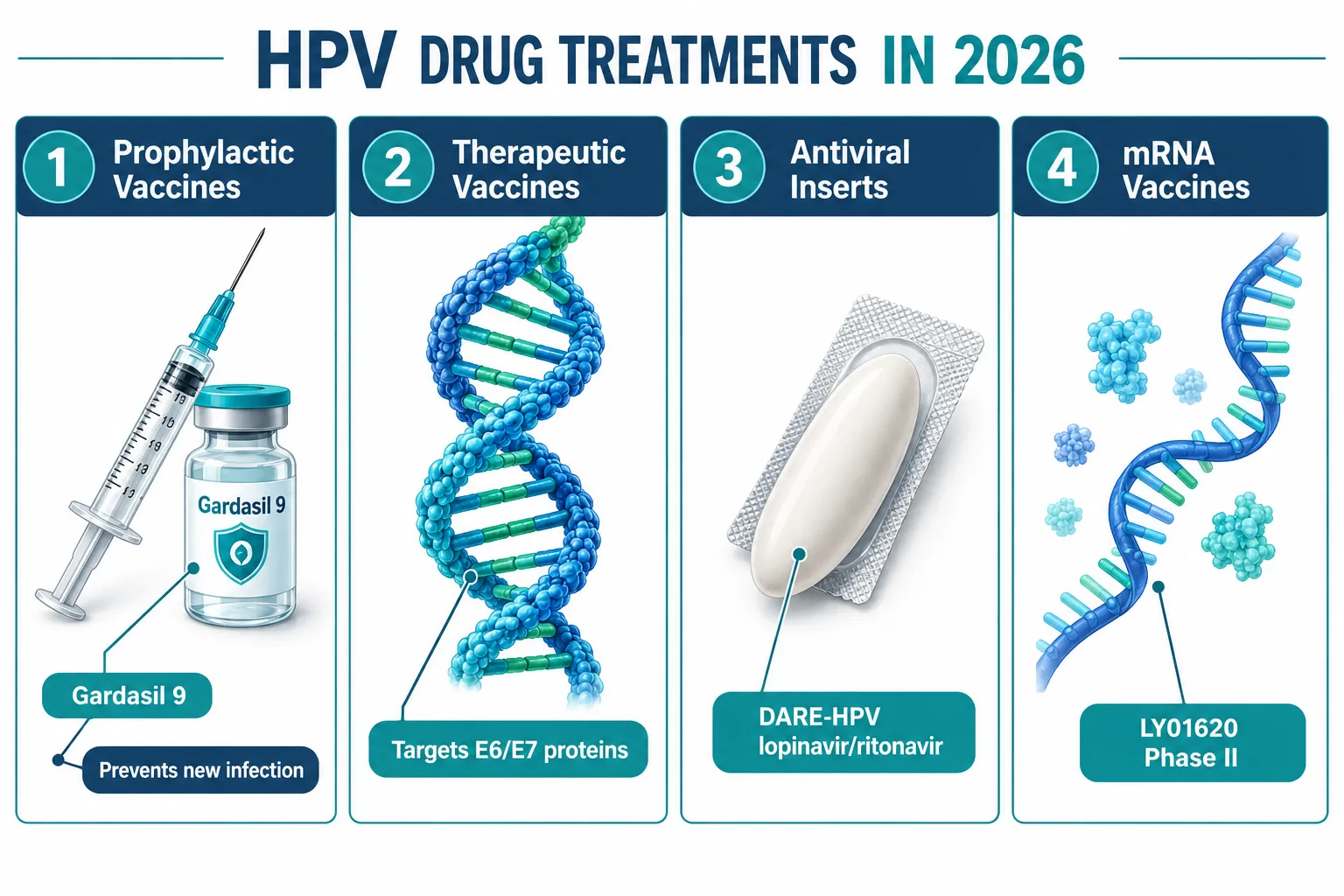
Prophylactic vaccines, Gardasil 9, Gardasil (quadrivalent), and Cervarix, prevent infection by HPV types you have not yet encountered. They do not clear types already in your body. Long-term data presented at the EUROGIN 2026 HPV congress show Gardasil 9 remains effective for at least 14 years after three doses, and the quadrivalent Gardasil shows protection against HPV 16/18-related high-grade cervical disease up to 18 years. When given during adolescence, prophylactic vaccination can prevent roughly 90% of HPV-caused cancers.
Treatments for HPV-related conditions, genital warts, cervical dysplasia, and precancerous lesions, are well-established. These treat the damage HPV causes, not the virus itself. Prescription topical agents like imiquimod and podofilox are applied directly to genital warts; procedural options include cryotherapy, laser ablation, and excision. For cervical cell changes, LEEP (loop electrosurgical excision procedure) removes abnormal tissue. The condyloma genital warts treatment guide covers what each approach involves and what recovery looks like.
The gap, a drug that actually clears a persistent high-risk HPV infection, remains unfilled. That is the unmet need driving most current research.
Why There Is No Cure Yet, and What Is Being Built
Persistent infection with high-risk HPV types (primarily 16 and 18) is what drives cervical, oropharyngeal, anal, and other HPV-related cancers. Clearing that persistent infection before cell changes progress is the goal researchers are working toward.
Antiviral Candidates in Development
Daré Bioscience is developing DARE-HPV, a soft-gel vaginal insert containing lopinavir and ritonavir, two HIV protease inhibitors being repurposed to target HPV. It is described as a potential first-in-category antiviral treatment for persistent high-risk HPV infection. As of 2026, it has not received FDA approval, and no antiviral drug specifically for HPV has.
Separately, preliminary laboratory work on a bean-derived chewing gum formulation reported a 93% reduction in HPV levels in saliva samples in lab tests. That is a striking number, but laboratory results in saliva samples are a very early step, clinical trials in humans have not yet confirmed those findings.
Therapeutic Vaccines: The Main Research Focus
A therapeutic vaccine works differently from a prophylactic one. Instead of preventing infection, it trains your immune system to recognize and attack cells already infected with HPV, specifically cells expressing the viral oncoproteins E6 and E7, which drive abnormal cell growth.
No therapeutic HPV vaccine is approved for clinical use anywhere in the world as of 2026. Several are in trials.
- VGX-3100, a DNA-based vaccine targeting HPV 16 and 18 E6/E7 proteins, has completed Phase III trials for cervical lesions.
- LY01620, an mRNA therapeutic vaccine from Luye Pharma, is advancing into Phase II in China for HPV16-positive cervical high-grade squamous intraepithelial lesions (HSIL). Phase I data reported an HPV clearance rate of approximately 90%, a figure that needs Phase II confirmation in larger groups before drawing firm conclusions.
- TriStim-E6/E7, a novel mRNA-based candidate, combines HPV16 E6/E7 antigens with three T-cell co-stimulatory molecules (CD80, 4-1BBL, and CD70). Preclinical models in 2026 showed robust immune activation and significant anti-tumor activity with a favorable safety profile.
- Lenti-HPV-07, a lentiviral vaccine for HPV-related cervical and oropharyngeal cancers, is in an ongoing Phase I/IIa trial (NCT06319963).
The evidence shows that therapeutic vaccines are the most active area of HPV drug development. None are ready for clinical prescription yet, but the pipeline is real and moving.
Who Is at Higher Risk for Persistent HPV Infection?
Most HPV infections clear within one to two years. These groups are more likely to experience persistent infection, which is what creates long-term risk.
- Immunocompromised people, including those living with HIV and organ transplant recipients on immunosuppressive therapy, clear HPV more slowly and have higher rates of progression to dysplasia.
- Smokers, smoking impairs local immune response in cervical tissue and is consistently linked to higher rates of persistent high-risk HPV.
- People with a history of abnormal Pap results, prior LSIL or HSIL findings indicate the immune system has not cleared the infection and that monitoring needs to continue.
- Unvaccinated adults, those who did not receive prophylactic vaccination remain susceptible to all HPV types the vaccine covers, including the high-risk types 16 and 18.
What Happens If You Have Persistent High-Risk HPV
Persistent high-risk HPV does not mean cancer. It means the infection has not cleared on its own, and that warrants closer monitoring, not panic.
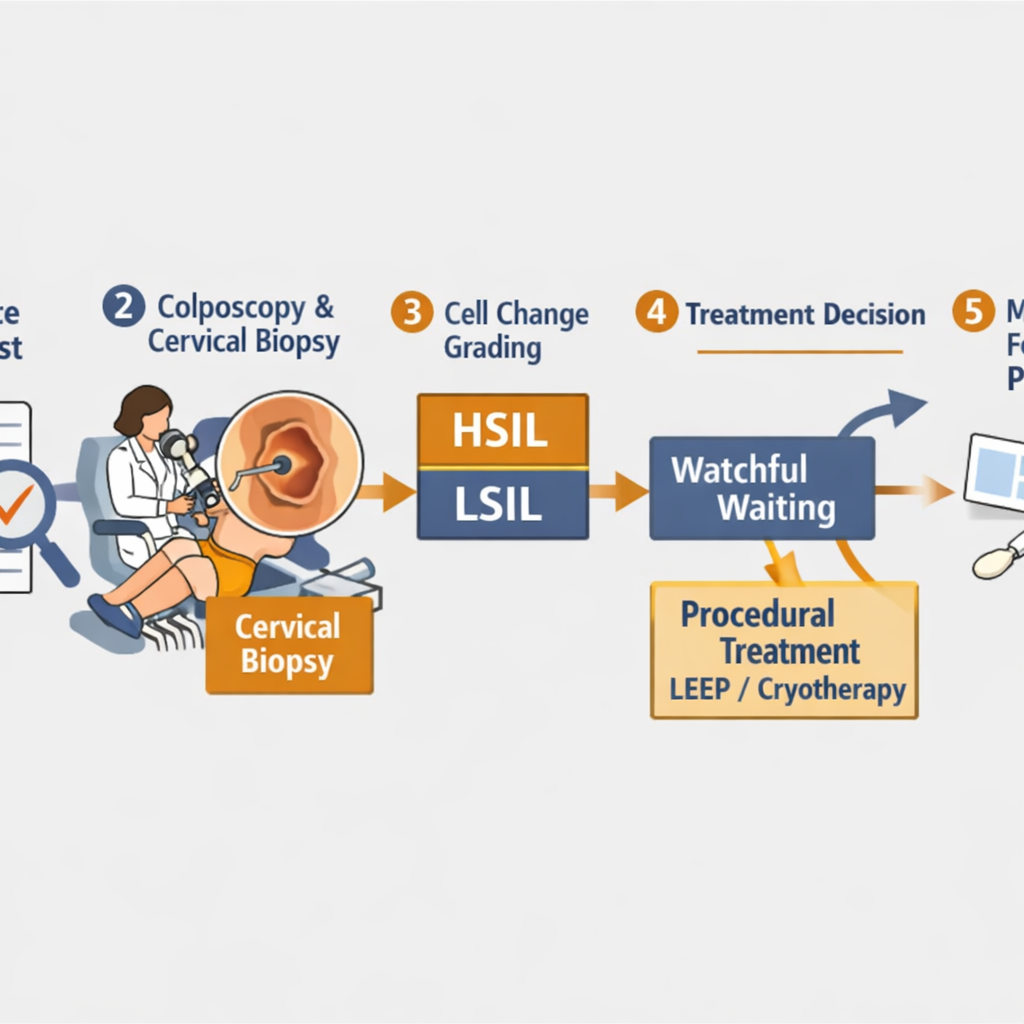
The standard clinical pathway starts with a positive HPV test or an abnormal Pap result. From there, a colposcopy allows a clinician to examine cervical tissue closely and take a biopsy if needed. Results are graded, LSIL (low-grade squamous intraepithelial lesion) or HSIL (high-grade), and that grade determines next steps. The abnormal Pap smear guide covering what happens next explains how results are read and what follow-up looks like at each stage.
Cell changes are easiest to treat before they progress, that is what screening is for. LEEP removes HSIL tissue effectively, and most people do not develop cancer after treatment.
For people wondering whether HPV clears after 30, the answer is yes, it can and does, though the timeline varies by immune status. The guide to clearing HPV after 30 covers what the research shows about clearance rates in that age group.
Some people ask about supplements like AHCC (active hexose correlated compound) as a way to support immune clearance. The evidence is preliminary, small studies show some signal, but no supplement is a substitute for monitoring. The overview of AHCC and cervical cancer outlines what the current data actually shows.
Photodynamic Therapy and Experimental Approaches
One approach that has received media attention is photodynamic therapy using 5-aminolevulinic acid (5-ALA), associated with research by Mexican scientist Eva Ramón Gallegos. Some treated groups showed HPV elimination in her work. The important caveat: these results have not been confirmed in large, independently replicated trials, and no universally accepted cure has come from this line of research. It remains experimental.
Photodynamic therapy is not a standard-of-care treatment for HPV infection in any major clinical guideline as of 2026. Talk to your doctor before pursuing any experimental approach outside of a clinical trial setting.
Frequently Asked Questions
Is there a pill that treats HPV directly?
No. As of 2026, no FDA-approved antiviral pill targets HPV. Antivirals exist for related viruses like herpes and HIV, but HPV’s biology makes it a harder target. Research is active, particularly around therapeutic vaccines and repurposed antivirals, but nothing is approved for clinical use yet.
Can the HPV vaccine help if I already have HPV?
The prophylactic vaccines (Gardasil 9, Gardasil, Cervarix) do not clear an existing infection. They can still be worth discussing with your doctor if you have not been vaccinated, because they protect against HPV types you have not yet been exposed to. The HPV testing guide explains how testing identifies which types are present.
What is the difference between treating HPV and treating HPV-related conditions?
Treating HPV means clearing the virus from your body, no approved drug does this yet. Treating HPV-related conditions means removing genital warts, excising precancerous cervical tissue, or managing dysplasia. Those treatments are well-established and effective. The genital warts treatment options guide covers the full range of approaches for visible warts.
How long does it take for HPV to clear on its own?
Most infections clear within one to two years. High-risk types can persist longer, particularly in people who are immunocompromised or who smoke. There is no reliable way to predict exactly when or whether a specific infection will clear, this genuinely varies person to person.
If I have high-risk HPV, should I be doing anything differently right now?
Keep your screening appointments. If you have had an abnormal Pap result, follow through on any recommended colposcopy. If you smoke, stopping reduces your risk of persistent infection. Beyond that, the most evidence-based action is regular monitoring, because catching cell changes early is what makes treatment straightforward. The cervical cancer and HPV infection explainer covers the progression from infection to cancer risk in plain terms.