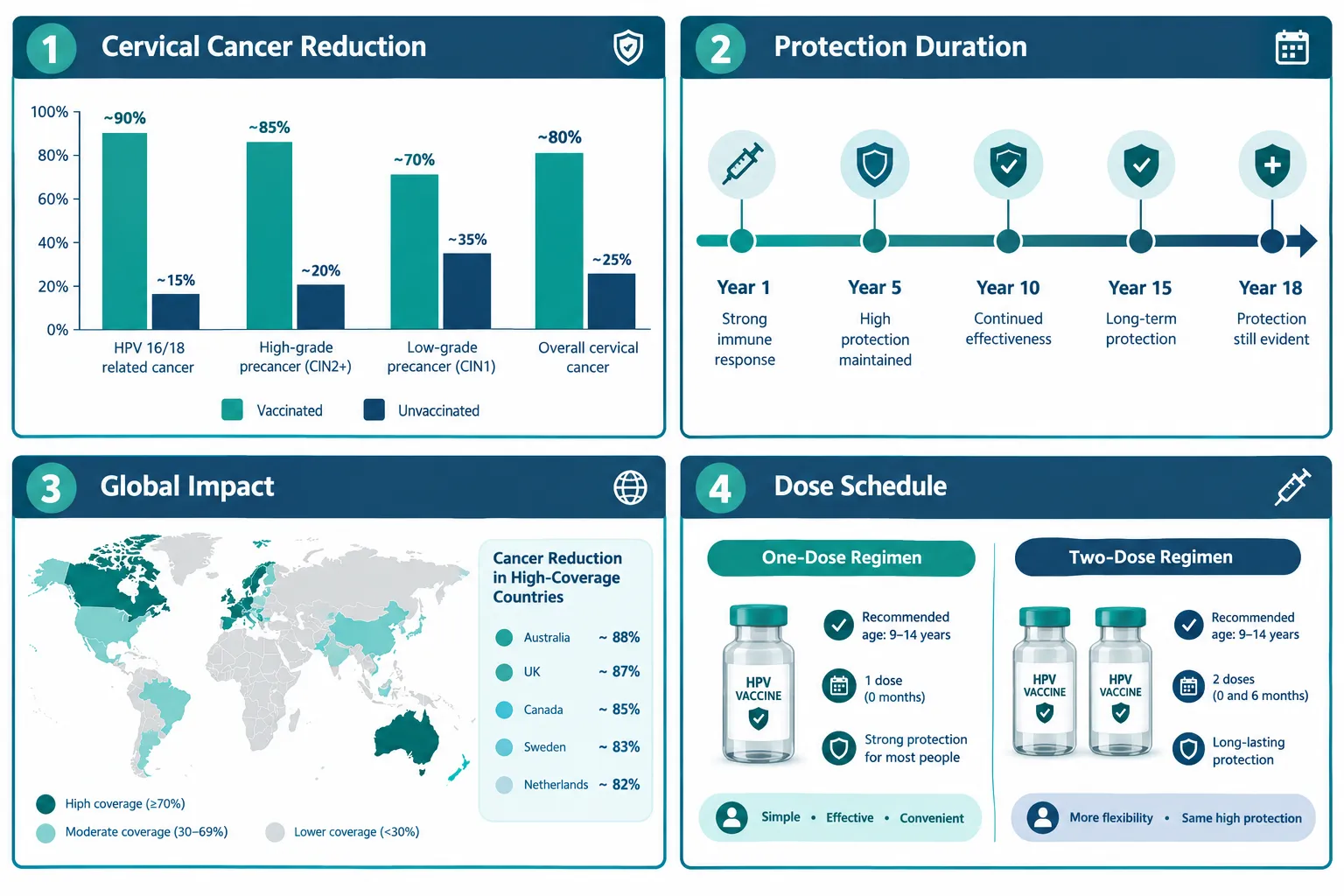
The HPV vaccine works. That’s not a marketing claim, it’s one of the most well-documented outcomes in modern vaccine research. Real-world data from Sweden, Denmark, and England show cervical cancer rates dropping by 80 to 90 percent in women vaccinated before age 17. So if you’re asking whether the shot is worth it, the evidence gives a clear answer.
Key Takeaways
- The HPV vaccine reduces the risk of cervical cancer by up to 90% when given before exposure to the virus.
- Protection has been confirmed in long-term studies tracking outcomes up to 14-18 years post-vaccination.
- The vaccine targets HPV types 16 and 18, which together cause roughly 70% of cervical cancers.
- A single dose now appears to provide protection comparable to two doses, based on recent trial data.
- The vaccine does not treat an existing HPV infection, but it can still offer partial protection against strains you haven’t yet encountered.
What Does the HPV Vaccine Actually Protect Against?
The current vaccine used in most countries, Gardasil 9, targets nine HPV genotypes: types 16, 18, 31, 33, 45, 52, and 58 (all high-risk, cancer-linked strains), plus types 6 and 11, which cause roughly 90% of genital warts cases.
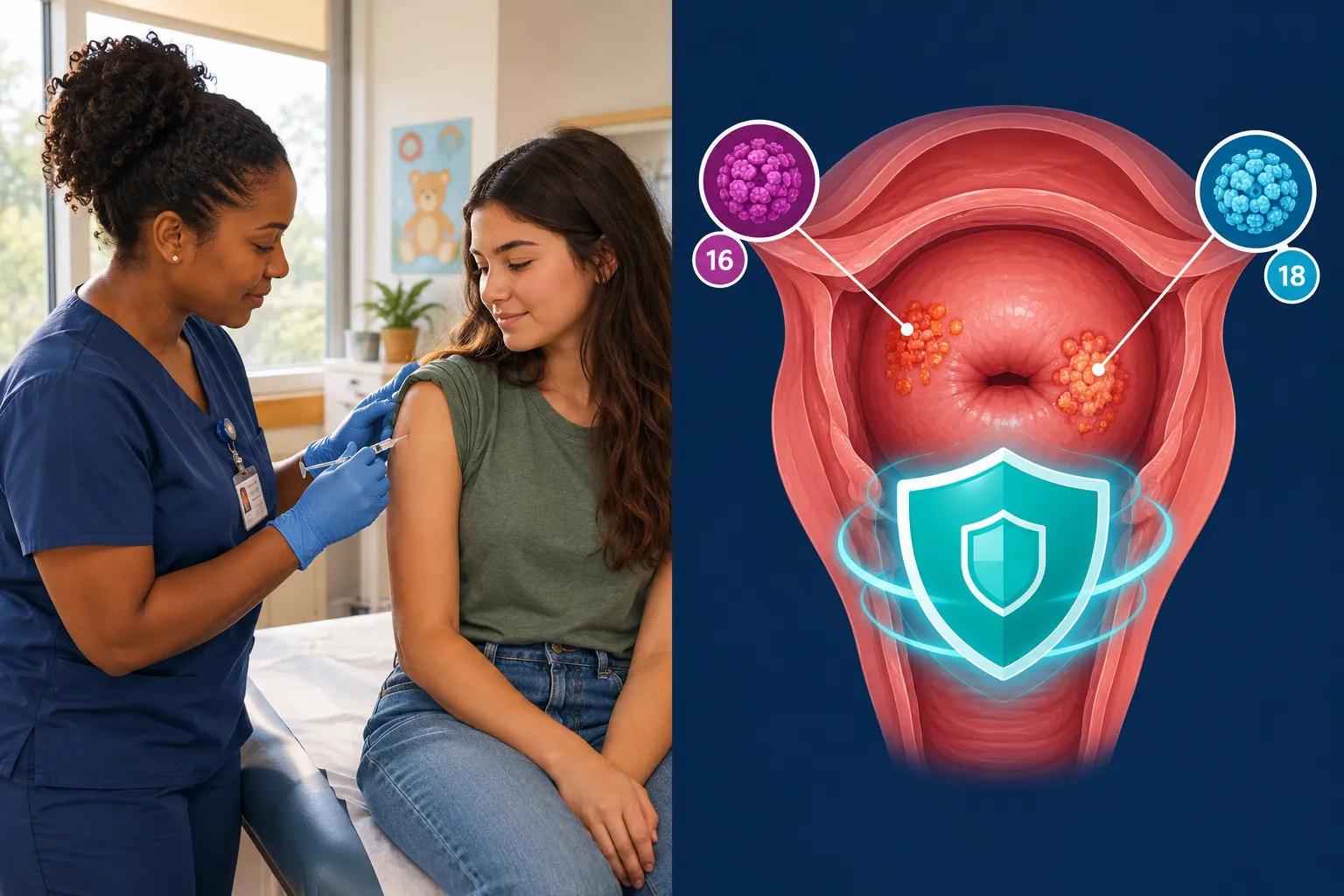
HPV 16 and 18 alone account for approximately 70% of cervical cancers. They’re also linked to cancers of the throat, anus, vulva, vagina, and penis. The vaccine’s protection against these two types is where most of the cancer-prevention data comes from, and that data is strong.
The vaccine works by triggering your immune system to produce antibodies before you’re ever exposed to these strains. If you later encounter HPV 16 or 18, your immune system already knows what to do. It doesn’t treat an infection you already have. That distinction matters, and it’s worth understanding before you look at your own situation.
If you’re trying to understand how HPV testing fits into this picture, the HPV testing guide covering how results are read explains what a positive result actually means and what comes next.
Does the HPV Vaccine Work in Real-World Populations?
Clinical trials show one thing. National registries show another, and in this case, they agree.
Sweden’s national data, published in recent years, tracked over 1.6 million girls and women. Those vaccinated before age 17 had a cervical cancer risk roughly 88% lower than unvaccinated women. England’s NHS data and Denmark’s registry studies show similar results: countries with high vaccination coverage are seeing cervical cancer rates fall at a pace that wasn’t considered possible two decades ago.
A 2026 umbrella review of meta-analyses found approximately a 62% reduction in high-grade cervical lesions (CIN2+) across vaccinated populations, and that figure includes countries with lower vaccination rates, which pulls the average down. In high-coverage settings, the real-world impact is considerably larger.
The evidence shows protection lasting at least 14 to 18 years post-vaccination, with no meaningful decline in antibody levels detected in long-term follow-up studies. Whether protection is lifelong is still being studied, but no booster is currently recommended.
Does the HPV Vaccine Work With Just One Dose?
This is one of the most actively discussed questions in vaccine policy right now, and the answer has shifted.
For years, the standard schedule was two doses for those vaccinated before age 15, and three doses for those vaccinated at 15 or older or who are immunocompromised. New trial data from 2026, including a large study from Kenya, show that a single dose produces antibody responses and real-world protection that are statistically non-inferior to two doses.
The WHO endorsed a single-dose option in 2022, and uptake of that policy has been growing steadily. The practical implication is significant: a one-dose schedule is easier to complete, cheaper to deliver, and removes the barrier of a follow-up appointment. For global vaccination programs, that’s not a minor detail.
The standard recommendation in the US and most high-income countries remains two doses for those under 15. If you’re immunocompromised, three doses are still recommended regardless of age. Talk to your doctor about what schedule applies to your specific situation.
For more on how the vaccine applies specifically to men, including whether it helps if you’ve already been diagnosed, the HPV vaccine for men guide covers the evidence in detail.
Who Gets the Most Benefit From the HPV Vaccine?
The vaccine’s protection is highest when it’s given before any sexual activity, before potential exposure to the virus. That’s why it’s recommended starting at age 9, with the target window being 11-12 years old.
But “most benefit” doesn’t mean “only benefit.” Adults up to age 45 can still receive the vaccine and gain protection against strains they haven’t yet encountered. The benefit decreases with age and sexual history, not because the vaccine stops working, but because the likelihood of prior exposure to all nine covered strains increases over time.
Who’s at Higher Risk for HPV-Related Cancers?
- People who were not vaccinated in adolescence, particularly those now in their 20s and 30s
- Immunocompromised individuals, including those living with HIV or who have had organ transplants, who may not mount as strong an immune response to the vaccine and are less likely to clear HPV infections naturally
- Smokers, who have a higher risk of cervical cell changes progressing when HPV is present
- People with a history of abnormal Pap results, including ASCUS or LSIL findings, who may benefit from vaccination against strains not yet acquired
If you’ve had an ASCUS result and are trying to understand what that means for your risk, the guide to ASCUS Pap results explains how those findings are followed up.
Can You Get the HPV Vaccine If You Already Have HPV?
Yes, and this is a question worth answering directly, because many people assume a diagnosis means the vaccine is pointless.
Having HPV doesn’t mean you’ve been infected with all nine strains the vaccine covers. Most people are infected with one or two strains at a time. Vaccination after diagnosis can still protect you against the strains you haven’t encountered yet. The vaccine won’t clear an existing infection or reverse cell changes that have already occurred, but it adds a layer of protection going forward.
The guide to getting the HPV vaccine if you have genital warts covers this scenario specifically, including what to expect from the conversation with your doctor.
For parents deciding about boys and young men, the question of whether vaccination is necessary is covered in the guide on whether boys need the HPV vaccine.
Is the HPV Vaccine Safe?
The safety profile of the HPV vaccine is one of the most thoroughly reviewed in modern medicine. As of 2026, no new serious safety signals have emerged from post-market surveillance, large registry studies, or systematic reviews, including a comprehensive evidence review completed this year.
Common side effects are the same as most vaccines: soreness at the injection site, mild fever, and occasional dizziness immediately after the shot (which is why sitting for 15 minutes post-injection is standard practice). Fainting has been reported, particularly in adolescents, which is why observation after vaccination is recommended.
Rare reports of more serious events have been investigated repeatedly and have not shown a causal link to the vaccine. The benefit-to-risk ratio remains strongly favorable across all reviewed populations.
The HPV vaccine is not recommended during pregnancy. If you’re pregnant or planning to become pregnant, talk to your doctor about timing.
Frequently Asked Questions
Does the HPV vaccine work if you’re already sexually active?
Yes, though the benefit depends on your prior exposure. The vaccine covers nine strains, and most sexually active adults haven’t been infected with all of them. A doctor can help you weigh whether vaccination makes sense based on your age and history. The FDA approves it for adults up to age 45.
Does the HPV vaccine prevent all cervical cancers?
No. It targets the strains responsible for roughly 90% of cervical cancers, but not all of them. Regular cervical screening, Pap tests and HPV co-testing, remains important even for vaccinated people, because some cancer-causing strains are not covered by current vaccines.
How long does the HPV vaccine’s protection last?
Long-term follow-up studies have confirmed protection for at least 14 to 18 years, with no significant waning of antibody levels detected. Whether a booster will eventually be needed is still under study, but no booster is currently recommended by the CDC or WHO.
Does the HPV vaccine help with genital warts?
Yes. Gardasil 9 covers HPV types 6 and 11, which cause about 90% of genital warts cases. Vaccination before exposure to these strains significantly reduces the risk of developing warts. If you already have warts, the treatment options for genital warts in women covers what’s available to clear them.
Can the HPV vaccine replace regular Pap smears?
No. The vaccine reduces risk substantially, but it doesn’t eliminate it. Cervical screening catches cell changes caused by strains not covered by the vaccine, and it catches changes in people who were vaccinated after prior exposure. Vaccination and screening work together, they’re not alternatives.
What to Do Next
If you haven’t been vaccinated and you’re under 45, the conversation with your doctor is straightforward: ask whether vaccination is appropriate for you now. If you’re a parent of a child aged 9-12, the recommended window for maximum protection is now. If you’ve already been vaccinated, continue with regular cervical screening on the schedule your doctor recommends, the vaccine does most of the work, but screening catches what it misses.
The evidence on whether the HPV vaccine works is not ambiguous. The remaining questions, one dose or two, timing, who benefits most, are refinements on a foundation that’s already solid.