Yes, boys need the HPV vaccine just as much as girls do. The question of whether do boys need HPV vaccine has a clear answer backed by over a decade of ACIP policy: routine vaccination starting at age 11 or 12 is recommended for all children, regardless of sex.
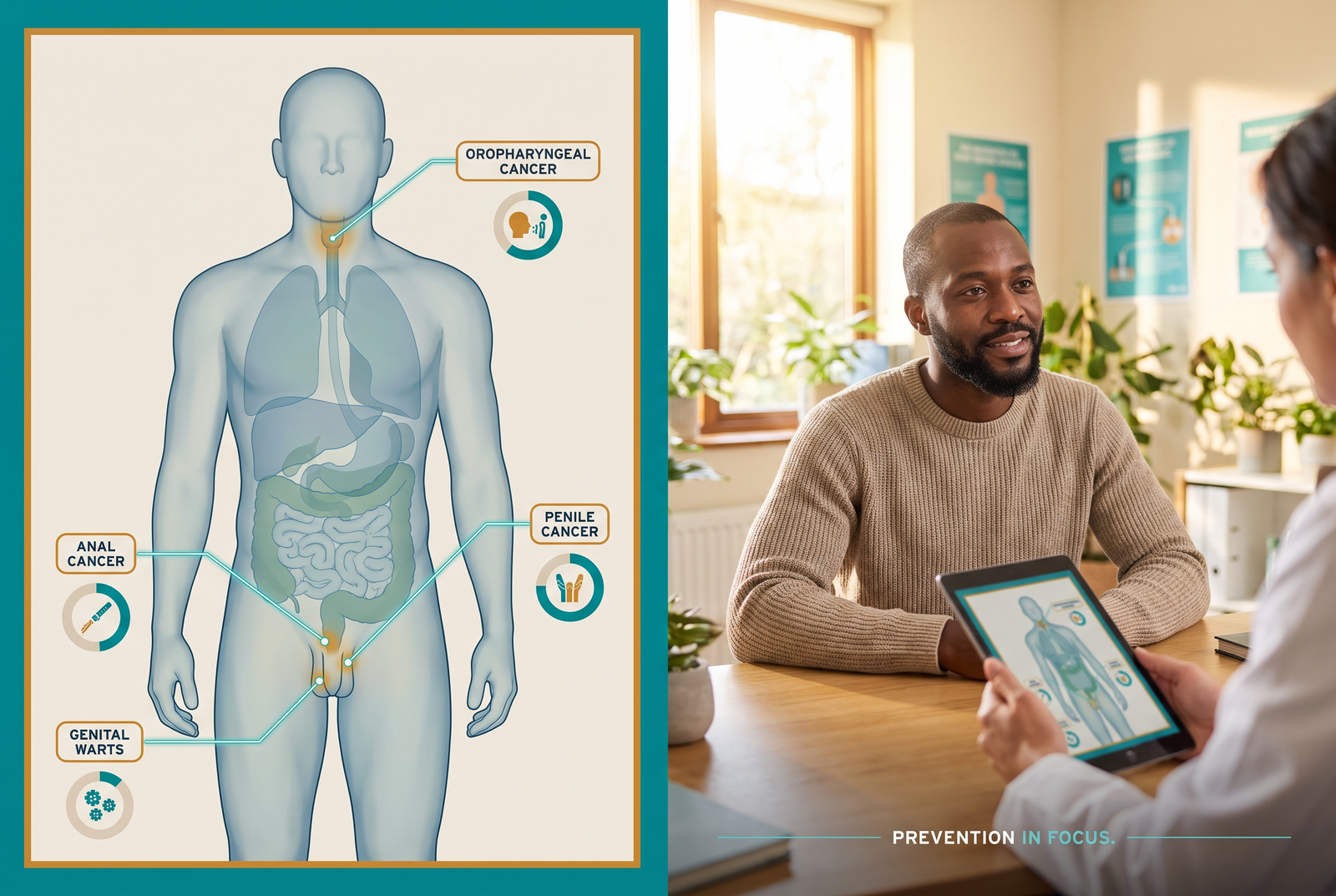
HPV doesn’t discriminate by gender. Males can contract the virus, transmit it, and develop serious HPV-related cancers, including anal, penile, and oropharyngeal cancers, without ever knowing they were infected. The vaccine prevents that from happening.
Key Takeaways
- The CDC recommends HPV vaccination for boys starting at ages 11-12, with catch-up vaccination through age 26.
- Boys who start the series before age 15 need only 2 doses; those who start at 15 or older need 3 doses.
- The same 9-valent HPV vaccine used for girls is used for boys.
- Vaccinating boys protects them from anal cancer, penile cancer, oropharyngeal cancer, and genital warts caused by HPV types 6, 11, 16, and 18, among others.
- Men ages 27-45 may still benefit, but the decision is made through shared clinical decision-making with a doctor.
Why Boys Are at Real Risk from HPV
HPV is the most common sexually transmitted infection in the United States. Most sexually active people will have at least one HPV infection in their lifetime, and that includes men.
The assumption that HPV is “a women’s issue” comes from the fact that cervical cancer screening exists for women, making female infections more visible. But HPV in males causes real, measurable harm. HPV types 16 and 18, the high-risk strains, are responsible for the majority of anal cancers, a significant share of oropharyngeal (throat) cancers, and a portion of penile cancers. HPV types 6 and 11 cause genital warts in men just as they do in women.
The HPV and cancer connection is not limited to the cervix. For men, the risk is real, it’s just less discussed.
There’s also a population-level benefit. When boys are vaccinated, transmission rates drop across all genders. Herd immunity works here: vaccinating males reduces the viral pool that female partners are exposed to, and vice versa.
When Should Boys Get the HPV Vaccine?
The recommended schedule for boys is the same as for girls, and timing matters.
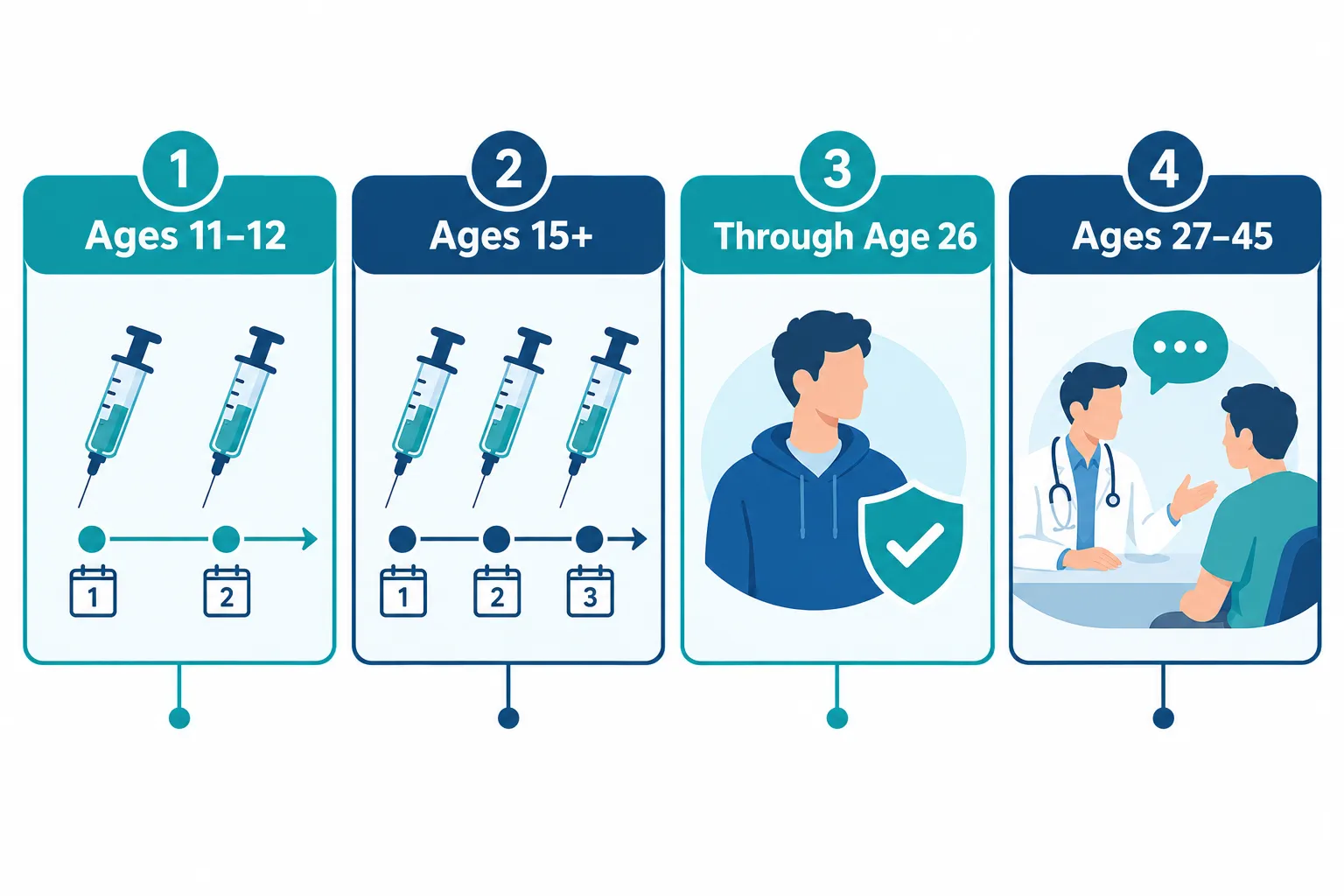
Starting at ages 11-12: This is the routine window. Vaccination before first sexual exposure produces the strongest immune response. The body mounts a more robust antibody reaction to the vaccine at younger ages, which is why earlier is more effective, not just more convenient.
2 doses vs. 3 doses: If the first dose is given before age 15, only 2 doses are needed, spaced 6-12 months apart. If the series starts at age 15 or older, 3 doses are required, given over a 6-month period (0, 1-2, and 6 months). This isn’t arbitrary, the 2-dose schedule has been shown to produce equivalent immune responses in younger adolescents.
Catch-up through age 26: Boys and young men who weren’t vaccinated in adolescence should still get the vaccine through age 26. The evidence for protection remains strong in this group.
Ages 27-45: The vaccine is not routinely recommended here, but it’s not off the table either. Shared clinical decision-making with a doctor is the right approach, the benefit depends on prior exposure history, immune status, and individual risk factors. If you’re in this age group and wondering whether the vaccine still makes sense for you, that conversation belongs with your physician.
For a full breakdown of how the vaccine works and what it covers, the HPV vaccine guide explains the mechanism, the strains covered, and the safety profile in detail.
What Cancers and Conditions Does the Vaccine Prevent in Boys?
The 9-valent HPV vaccine (Gardasil 9) covers nine HPV types: 6, 11, 16, 18, 31, 33, 45, 52, and 58. For boys, the most clinically significant protections are:
- Anal cancer and precancerous anal lesions, HPV 16 and 18 are responsible for roughly 90% of anal cancers. Men who have sex with men are at particularly elevated risk, but anal HPV affects heterosexual men too. The anal HPV symptoms and screening guide covers what this looks like in practice.
- Oropharyngeal cancer, HPV-related throat cancer rates have been rising in men for years. HPV 16 is the dominant driver.
- Penile cancer, Less common, but HPV 16 and 18 are implicated in a significant proportion of cases.
- Genital warts, Caused by low-risk HPV types 6 and 11. Not dangerous, but common, recurring, and disruptive. The vaccine prevents them entirely in those not yet exposed.
It’s worth understanding that HPV can be transmitted from a woman to a man through normal sexual contact, vaccination is the most reliable way to prevent that transmission from resulting in infection.
Who’s at Higher Risk for HPV-Related Disease in Males?
Some groups of males face a higher burden of HPV-related disease and have the most to gain from timely vaccination:
- Unvaccinated men who have sex with men (MSM): This group has significantly higher rates of anal HPV infection and anal cancer. Vaccination before exposure is the most effective intervention.
- Immunocompromised individuals: Men living with HIV, organ transplant recipients, or anyone on long-term immunosuppressive therapy are less able to clear HPV naturally. Infections that a healthy immune system might resolve can persist and progress.
- Men with multiple sexual partners or early sexual activity: Earlier and more frequent exposure increases the probability of encountering high-risk HPV strains. Vaccination before sexual debut provides the strongest protection.
- Unvaccinated men in the 15-26 age range: The catch-up window is real and worth using. Protection is still meaningful even if the series starts later than the ideal adolescent window.
Is the HPV Vaccine Safe for Boys?
The safety data for the HPV vaccine in males is consistent and reassuring. The most common side effects are the same as with most vaccines: soreness at the injection site, mild fever, and occasional dizziness immediately after the shot (which is why a brief sitting period post-vaccination is standard).
Serious adverse events are rare and have not been found to occur at higher rates in males than in females. The vaccine does not contain live virus, so it cannot cause HPV infection.
One note: the HPV vaccine is not recommended during pregnancy, but this applies to females, not males. For boys and men, there are no comparable contraindications beyond standard precautions for any vaccine (active severe illness, known hypersensitivity to vaccine components).
If a boy already has genital warts, the vaccine can still be given, it won’t treat existing warts but will protect against the other strains not yet encountered. The article on getting the HPV vaccine if you already have genital warts explains this in more detail.
Does the HPV Vaccine Work If a Boy Has Already Been Sexually Active?
This is one of the most common questions parents and young men ask. The honest answer: the vaccine is most effective before any HPV exposure, but sexual activity doesn’t automatically disqualify someone from benefiting.
Most sexually active young men have not been exposed to all nine HPV types covered by Gardasil 9. Vaccination after sexual debut can still protect against the strains not yet encountered. The CDC continues to recommend catch-up vaccination through age 26 for this reason, the benefit is real even if it’s partial.
The vaccine won’t clear an existing infection. HPV doesn’t have a cure in the conventional sense, the HPV cure overview explains what that means practically. But preventing future infections with additional high-risk strains is a meaningful clinical benefit.
Frequently Asked Questions
At what age should a boy get the HPV vaccine?
The routine recommendation is ages 11-12. This is the window where the immune response is strongest and vaccination happens before likely sexual exposure. Boys who miss this window can still be vaccinated through age 26, and some men ages 27-45 may benefit after a conversation with their doctor.
Does a boy need 2 or 3 doses of the HPV vaccine?
It depends on when the series starts. Two doses are sufficient if the first dose is given before age 15, spaced 6-12 months apart. Three doses are required if the series begins at age 15 or older, given at 0, 1-2, and 6 months.
Can a boy get HPV from a girl if he’s not vaccinated?
Yes. HPV transmits easily through sexual contact, and women can pass HPV to men just as men can pass it to women. The virus doesn’t require penetrative sex to transmit, skin-to-skin genital contact is sufficient. Vaccination is the most reliable protection.
What happens if a boy never gets the HPV vaccine?
He remains susceptible to all nine HPV strains covered by Gardasil 9. That includes the high-risk types 16 and 18, which drive the majority of HPV-related cancers in men. There’s no routine HPV screening test for men equivalent to the Pap smear, so most HPV infections in males go undetected until a complication appears.
Is the HPV vaccine the same for boys and girls?
Yes. The 9-valent HPV vaccine (Gardasil 9) is the same formulation used for both. The dose schedule, the strains covered, and the safety profile are identical.
Can a boy still benefit from the vaccine if he’s already 20?
Yes. Catch-up vaccination through age 26 is recommended for young men who weren’t vaccinated as adolescents. The benefit depends on which strains, if any, have already been encountered, but most 20-year-olds have not been exposed to all nine covered strains, so partial to full protection is still achievable.
The Next Step
If your son is 11 or 12, the HPV vaccine belongs in his next well-child visit, it’s given alongside Tdap and meningococcal vaccines as part of routine adolescent care. If you’re a young man in your teens or twenties who hasn’t been vaccinated, talk to your doctor about starting the series now. The catch-up window through age 26 exists precisely because life doesn’t always follow the ideal schedule.
The evidence on whether do boys need HPV vaccine is not ambiguous. The vaccine prevents cancer. It’s safe. And the best time to get it is before exposure, which, for most boys, means now.