Most people who test positive for HPV have no symptoms, no complications, and no lasting health consequences. The definition of HPV virus, human papillomavirus, describes a large family of over 200 related viruses that infect the skin and mucous membranes, and the vast majority of those infections clear on their own within one to two years. Understanding what that definition actually means for your health, your relationships, and your next steps is what this article is for.
Key Takeaways
- HPV is the most common sexually transmitted infection worldwide, most sexually active adults will have it at some point.
- Over 200 HPV types exist; only a small subset are classified as high-risk for cancer.
- Most infections, including high-risk types, clear without treatment through normal immune response.
- Persistent high-risk HPV, particularly types 16 and 18, is the primary driver of cervical cancer and several other cancers.
- Vaccination and regular screening are the two most effective tools for preventing HPV-related cancer.
What Is the Definition of HPV Virus, Exactly?
HPV stands for human papillomavirus. It belongs to the Papillomaviridae family, a group of small, non-enveloped double-stranded DNA viruses that infect epithelial cells, meaning the surface cells of skin and mucous membranes. The virus does not enter the bloodstream the way influenza or HIV does. Instead, it targets the basal layer of epithelial tissue, where it can quietly replicate without triggering obvious symptoms.
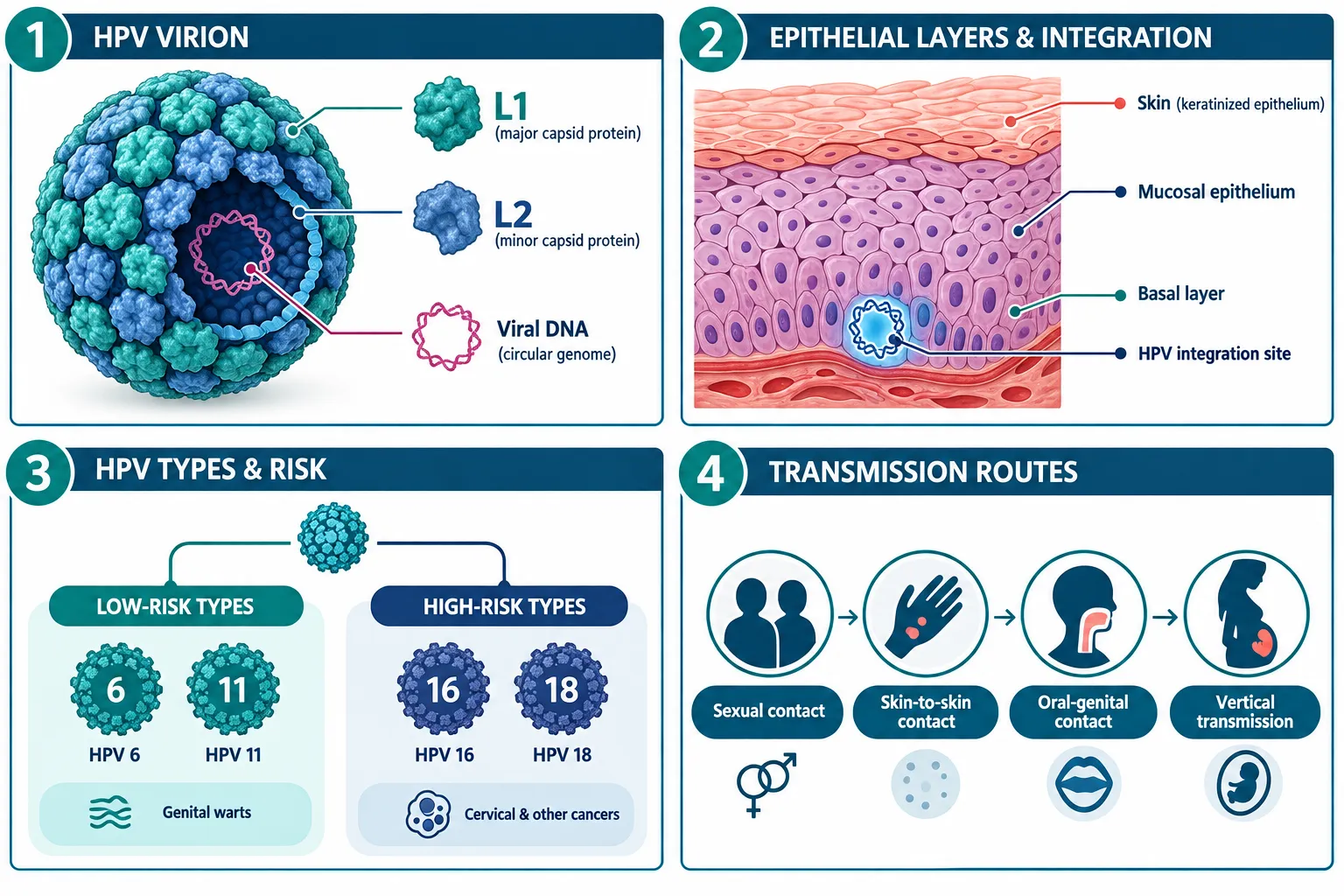
There are more than 200 distinct HPV genotypes, each identified by a number. They are divided into two broad categories based on their behavior in the body:
- Low-risk types (such as HPV 6 and 11) cause genital warts and benign skin lesions but are not associated with cancer.
- High-risk types (such as HPV 16 and 18) can, in a small percentage of persistent infections, cause cellular changes that may progress to cancer over many years.
HPV 16 and 18 together account for approximately 70% of all cervical cancers. That figure matters, not to alarm, but because it explains exactly why screening and vaccination are targeted the way they are.
The virus spreads through direct skin-to-skin contact, most commonly during vaginal, anal, or oral sex. It can also spread through genital contact without penetration. Standard barrier methods reduce transmission risk but do not eliminate it entirely, because HPV can infect areas not covered by a condom. This is worth knowing not as a reason for anxiety, but as an explanation for why HPV is so common even among people who have had very few partners.
How HPV Behaves Inside the Body
Understanding the definition of HPV virus means understanding what it actually does, and what it usually does not do.
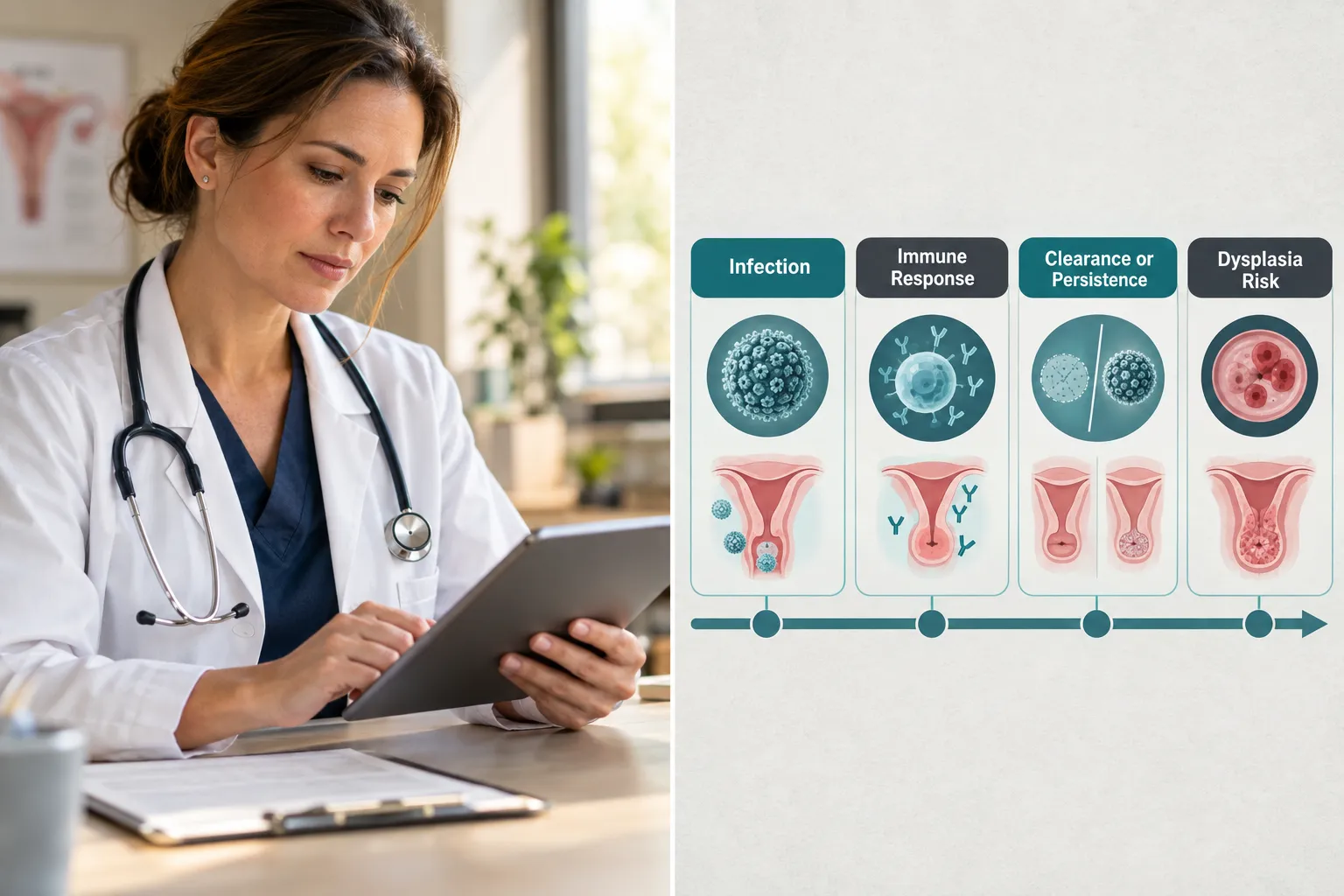
After exposure, HPV infects basal epithelial cells through micro-abrasions in the skin or mucosa. The viral DNA enters the cell nucleus and can remain in two states: episomal (existing separately from the host DNA) or integrated (inserting itself into the host chromosome). Integration is the step most closely associated with cancer risk. It disrupts normal cell regulation and can trigger the kind of uncontrolled cell growth that, over time, may develop into dysplasia or cancer.
The critical word is “may.” In most people, the immune system identifies and eliminates the infection before integration occurs. Studies consistently show that roughly 90% of HPV infections clear within two years. Persistent infection, particularly with high-risk types, is what creates elevated cancer risk, and persistence is more likely in people with weakened immune systems.
Cell changes caused by persistent high-risk HPV are graded on a spectrum: from ASC-US (atypical squamous cells of undetermined significance) through LSIL (low-grade squamous intraepithelial lesion) to HSIL (high-grade squamous intraepithelial lesion). HSIL is the stage where intervention is most clearly indicated, because cell changes are easiest to treat before they progress, that’s what cervical screening is designed to catch. An abnormal Pap smear result does not mean cancer; it means the monitoring system is working.
For genital warts caused by low-risk HPV types 6 and 11: these are common, treatable, and not a cancer risk. The genital warts guide covers what they look like and what treatment involves.
Who’s at Higher Risk for HPV-Related Complications?
Most people with HPV will never develop complications. These groups face a meaningfully higher risk of persistent infection or progression:
- Immunocompromised individuals, people living with HIV, organ transplant recipients, or anyone on long-term immunosuppressive therapy clear HPV more slowly and are more likely to develop high-grade dysplasia.
- Smokers, smoking impairs local immune response in cervical tissue and is independently associated with higher rates of cervical dysplasia in people with high-risk HPV.
- Unvaccinated people, those who did not receive the HPV vaccine before exposure to high-risk types lack the antibody protection that significantly reduces infection risk.
- People with a history of abnormal Pap results, prior LSIL or HSIL findings indicate the immune system has not cleared a high-risk type, and ongoing monitoring is essential.
HPV in Men and Women: What the Definition Means Differently
The definition of HPV virus applies equally to all sexes, but the health consequences and screening options differ.
For women and people with a cervix, high-risk HPV is the cause of virtually all cervical cancers. It is also associated with vaginal and vulvar cancers. Cervical screening, Pap smears, HPV co-tests, or primary HPV tests, exists specifically to detect cell changes before they become cancer. The HPV testing guide explains how these tests work and how to read results. For a detailed look at symptoms, screening timelines, and pregnancy considerations, the HPV in women overview covers each of those areas.
For men, there is no approved routine HPV screening test. High-risk HPV in men is associated with penile cancer, anal cancer, and oropharyngeal (throat) cancer. The HPV in men guide explains what symptoms to watch for and when to seek evaluation. Men who have sex with men face a higher risk of anal HPV-related disease; the anal HPV test guide explains how anal Pap testing works.
The HPV Vaccine: What It Does and Who Should Get It
The HPV vaccine does not treat an existing infection. What it does is prevent new infections from the HPV types it covers, and it does this very effectively.
The vaccine currently available in the United States (Gardasil 9) protects against nine HPV types: the two low-risk types that cause most genital warts (6 and 11), plus seven high-risk types including 16 and 18. Population-level data consistently shows that countries with high vaccination rates have seen significant drops in cervical dysplasia and HPV-related cancers.
The standard schedule as of 2026:
| Age at First Dose | Number of Doses | Schedule |
|---|---|---|
| 9-14 years | 2 doses | 0 and 6-12 months |
| 15-26 years | 3 doses | 0, 1-2, and 6 months |
| 27-45 years | 3 doses (shared decision with provider) | 0, 1-2, and 6 months |
The HPV vaccine is not recommended during pregnancy. If pregnancy occurs between doses, the remaining doses should be completed after delivery.
Adults aged 27-45 who were not previously vaccinated can discuss vaccination with their provider. The benefit is lower in this age group because many people have already been exposed to at least some HPV types, but it is not zero, particularly for high-risk types not yet encountered.
For a broader look at how HPV types are classified and what the numbers mean, the HPV types guide breaks down the full spectrum from low-risk to high-risk genotypes.
What Happens After an HPV Diagnosis
A positive HPV test is not a medical emergency. It is information, and what you do with it depends on which type was detected and what, if any, cell changes are present.
If a high-risk type is detected with a normal Pap result, the standard approach is monitoring: a follow-up co-test in one to three years, depending on your age and history. If cell changes are present alongside a high-risk type, your provider may recommend colposcopy, a closer examination of the cervix, and possibly a biopsy. These steps exist because catching dysplasia early makes treatment straightforward.
If you’ve been diagnosed and want to understand what treatment options exist for the virus and its complications, the HPV treatment overview covers the current approaches to managing both the virus and its symptoms.
The timing of an HPV infection is often impossible to determine. The virus can remain dormant for months or years before being detected. A positive test result does not tell you when you were infected or from whom.
Frequently Asked Questions
Can you have HPV for years without knowing it?
Yes. HPV frequently causes no symptoms and can remain undetected for years. There is no blood test for HPV, and in men there is no routine screening, so many people carry the virus without ever knowing. This is one reason HPV is so widespread.
Does HPV always show up on a Pap smear?
A Pap smear tests for abnormal cervical cells, not HPV itself. A separate HPV test, or a co-test that combines both, is needed to detect the virus directly. Normal Pap results do not rule out HPV infection. The Aptima HPV test guide explains one type of primary HPV test in detail.
If my HPV clears, can I get it again?
Clearing one HPV type does not provide immunity against other types. You can be reinfected with the same type if exposed again, and you can acquire new types through new exposures. Vaccination before exposure remains the most reliable form of protection.
Is there anything that supports the immune system in clearing HPV?
There is no approved antiviral treatment for HPV itself. Some research has examined whether supplements like AHCC, a compound derived from shiitake mushroom mycelia, may support immune clearance of HPV, though the evidence is still limited. The AHCC for HPV evidence review summarizes what the current research shows and where the gaps remain.
Does a high-risk HPV result mean I will develop cancer?
No. Most people with high-risk HPV, including types 16 and 18, clear the infection without developing cancer. Cancer develops only in a small subset of people with persistent, untreated high-risk infection, typically over a period of ten to twenty years. Screening is designed to detect and treat cell changes long before that point.
What to Do Next
The definition of HPV virus matters most in what it tells you to do, and what it tells you not to worry about unnecessarily. If you’ve recently tested positive, the next step is a conversation with your provider about which type was found, whether any cell changes are present, and what follow-up interval is appropriate for your situation. If you haven’t been vaccinated and are under 45, ask whether the vaccine is still relevant for you. If you’re due for cervical screening and have been putting it off, schedule it, not because HPV is an emergency, but because screening works best when it’s consistent.