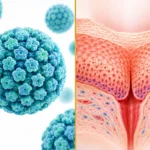
Most HPV infections clear on their own, and that is still true after 30. What changes is the timeline and the monitoring that follows. Clearing HPV after 30 is common, but persistence becomes more likely with age, which is exactly why screening guidelines for this age group are more structured than they are for people in their early twenties.
Key Takeaways
- Most HPV infections in people over 30 clear within two years, but persistence is more common after 30 than before.
- “Clearing” HPV means the virus drops below detectable levels, it does not always mean permanent eradication.
- High-risk HPV types, especially types 16 and 18, that persist beyond two years carry a meaningful risk of cell changes and should be monitored closely.
- Updated 2025-2026 screening guidelines now prioritize high-risk HPV (hrHPV) testing for people aged 30-65, with self-collection becoming a widely available option.
- Vaccination history, immune status, and smoking all affect how quickly, or whether, the virus clears.
Does HPV Clear on Its Own After 30?
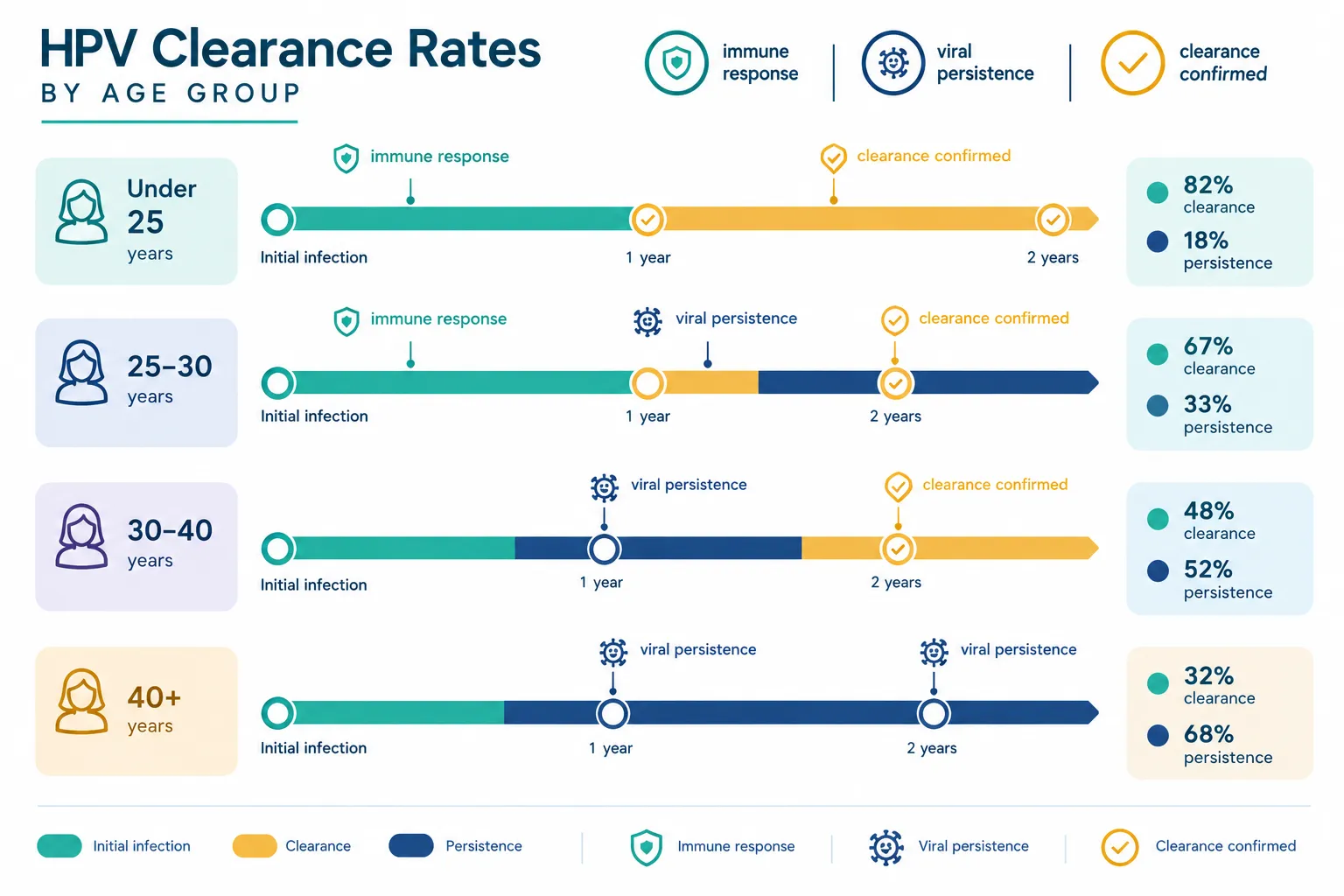
HPV doesn’t stop clearing after 30, it just takes longer on average. Studies consistently show that roughly 70-80% of HPV infections resolve within one to two years across all adult age groups, but the clearance rate slows as the immune system’s response to new viral exposures becomes less aggressive with age.
For people in their thirties and forties, a high-risk HPV result on a cervical screening test often clears by the next test cycle, typically 12 months later. That said, persistence rates are meaningfully higher after 30 than they are in people under 25.
The reason matters: younger immune systems tend to mount a faster, stronger response to HPV. After 30, the same infection may linger longer before the immune system suppresses it to undetectable levels. This doesn’t mean the infection is more dangerous by default, it means the monitoring window is longer, and the follow-up protocol is more specific.
For a fuller picture of how the virus behaves across different types, the plain-English guide to HPV covers the biology in straightforward terms.
What “Clearing HPV” Actually Means
Testing negative for HPV after a previous positive result does not always mean the virus is gone permanently. It means the viral load has dropped below the threshold that current tests can detect.
This distinction matters for two reasons.
First, HPV can reactivate. If your immune system becomes suppressed, through illness, medication, or aging, a previously undetectable infection can become detectable again. This is sometimes called “reactivation” rather than a new infection, though the two can be difficult to distinguish.
Second, “cleared” HPV does not always mean zero cancer risk. If high-risk HPV types 16 or 18 were present and caused cell changes before clearing, those changes need to be followed up independently. Clearance of the virus does not automatically reverse dysplasia. If you’ve had an abnormal Pap result alongside a positive HPV test, the guide to abnormal Pap smear follow-up explains what the next steps look like.
Who’s at Higher Risk for Persistent HPV After 30?
Certain groups are more likely to have HPV that persists rather than clears:
- Immunocompromised people, including those living with HIV, organ transplant recipients on immunosuppressive drugs, or people undergoing chemotherapy, have significantly reduced ability to suppress HPV. Persistence and progression to dysplasia happen faster in this group.
- Smokers, tobacco use is linked to impaired local immune response in cervical tissue, making it harder for the body to clear high-risk HPV types.
- Unvaccinated people, those who did not receive the HPV vaccine before exposure to high-risk types lack the antibody protection that can limit reinfection or limit the severity of an active infection.
- People with a history of abnormal Pap results, prior LSIL or HSIL findings indicate that high-risk HPV has already caused detectable cell changes, which increases the likelihood that any current infection will persist or progress.
How Screening After 30 Has Changed
Screening guidelines for people aged 30-65 shifted significantly in 2025 and into 2026. The core change: high-risk HPV testing is now the preferred primary screening method, rather than the Pap smear alone.
This matters because hrHPV testing detects the presence of high-risk genotypes, including types 16, 18, 31, 33, and 45, before cell changes become visible on a Pap smear. Catching persistent infection early gives clinicians more time to monitor and intervene before dysplasia progresses.
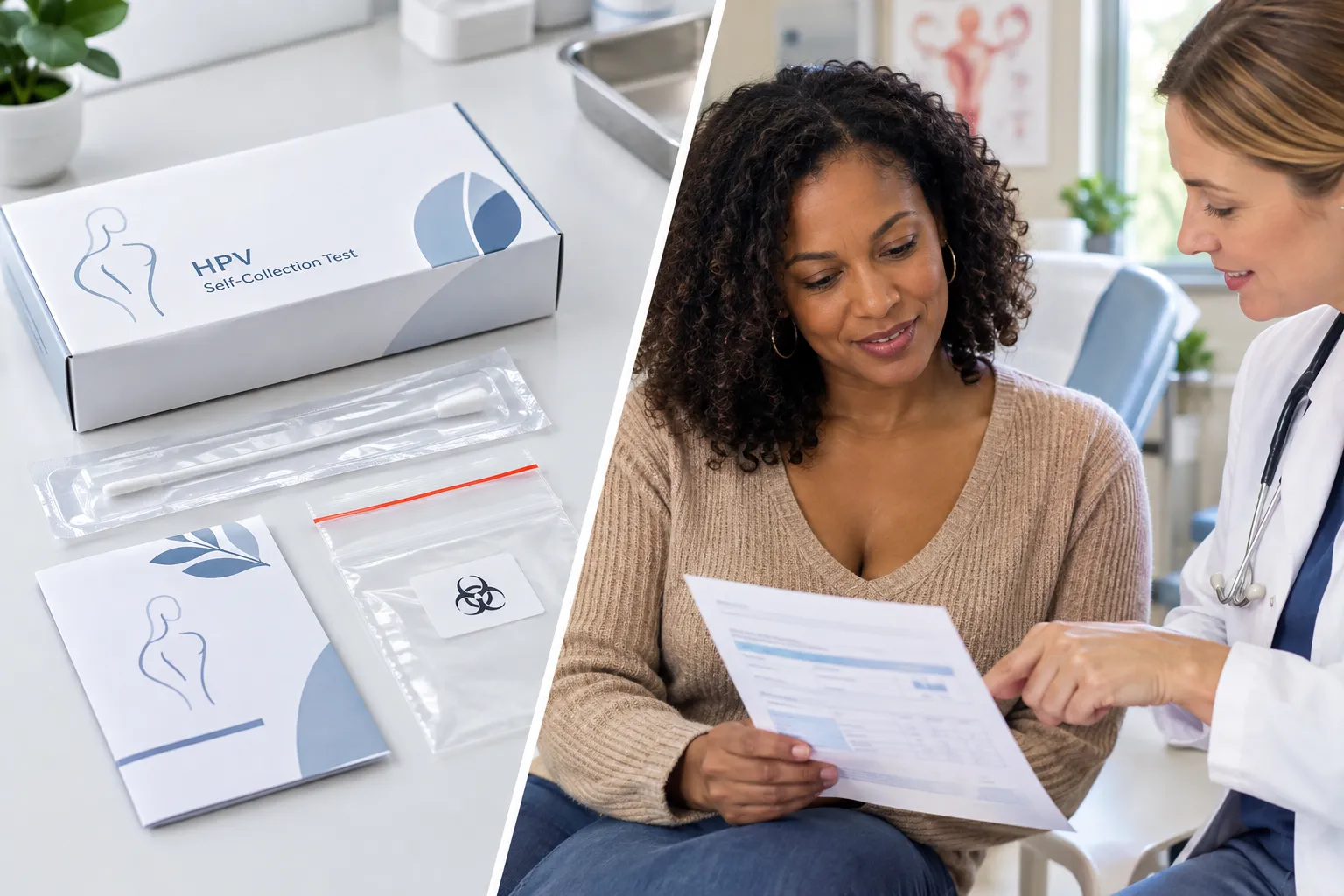
The other major shift is self-collection. For people aged 30-65, self-collected vaginal swabs for HPV testing are now a recognized and validated option in updated federal and professional guidelines. This removes a significant access barrier for people who avoid clinical pelvic exams due to cost, geography, or past trauma.
Genotyping, identifying the specific HPV type rather than just returning a positive/negative result, is also being emphasized more. Knowing whether type 16 or 18 is present changes the follow-up pathway. A positive result for types 16 or 18 typically leads directly to colposcopy, while other high-risk types may allow for a repeat test in 12 months first.
If you’ve received an ASCUS result alongside HPV testing, the ASCUS HPV research overview covers what that combination means for follow-up.
What Affects Whether HPV Clears After 30?
No single factor determines whether your body will clear HPV, but several have a documented effect on the timeline:
Immune function is the most significant. A healthy, intact immune response is the primary mechanism by which HPV is suppressed. Anything that compromises immune function, chronic illness, immunosuppressive medication, unmanaged HIV, extends the window for persistence.
HPV type matters considerably. Low-risk types like 6 and 11 do not cause cancer and typically resolve without intervention. High-risk types 16 and 18 are the ones that require close monitoring when they persist, because they account for approximately 70% of cervical cancers.
Vaccination status has an indirect effect. The HPV vaccine does not clear an existing infection, but it may reduce the risk of reinfection with a new type and may support immune response in ways that are still being studied in vaccinated adults.
Smoking cessation is one of the few modifiable factors with direct evidence. Quitting smoking improves local cervical immune function and is associated with higher clearance rates in people with persistent HPV.
Some people ask about AHCC, a mushroom-derived supplement that has been studied in small trials for its potential effect on HPV clearance. The evidence is preliminary, the AHCC for HPV overview covers what the studies actually show and where the gaps are.
When Can You Stop Screening?
Stopping cervical screening is not simply a matter of age, it depends on documented HPV clearance and screening history.
Under updated 2025-2026 guidelines, people aged 65 and older can discontinue routine cervical screening only if they have had adequate prior screening, typically three consecutive negative hrHPV tests or two negative co-tests within the past ten years, and no history of high-grade dysplasia (CIN2 or higher) in the past 25 years.
If you have a history of persistent high-risk HPV, HSIL, or treated cervical dysplasia, screening continues beyond 65. The decision to stop is not one to make based on age alone, talk to your doctor about your specific screening history before making that call.
For men, HPV monitoring looks different. The HPV in men guide covers the current state of testing, anal HPV screening, and what follow-up looks like for men with high-risk HPV exposure.
Clearing HPV After 30: What It Means for Your Long-Term Risk
A negative HPV test after a previous positive is genuinely good news. It means the virus is no longer detectable, and your risk of developing HPV-related cell changes from that infection is substantially reduced.
What it does not mean: that you are permanently protected, that prior cell changes have resolved, or that future screening is unnecessary. Clearing HPV after 30 is a checkpoint, not a finish line.
The practical implication is straightforward. Continue with whatever follow-up interval your doctor recommends, whether that’s a repeat hrHPV test in 12 months, a co-test in three years, or a colposcopy. Cell changes are easiest to treat before they progress, and that is precisely what the follow-up schedule is designed to catch.
Frequently Asked Questions
Can HPV come back after it has cleared?
A previously undetectable HPV infection can become detectable again, particularly if your immune system is suppressed. Whether this represents reactivation of the original infection or a new exposure is often impossible to determine from testing alone. This is one reason follow-up screening continues even after a negative result.
Does clearing HPV mean my partner no longer has it?
Not necessarily. HPV transmission between partners is common, and both people can carry the virus without symptoms. Your partner’s status is independent of your test result. There is currently no approved HPV test for penile or scrotal tissue in routine clinical settings.
Does the HPV vaccine help if I already have HPV?
The vaccine does not treat an existing infection or clear a current HPV type. It does protect against types you haven’t yet been exposed to, which is why vaccination is still recommended for eligible adults up to age 45 even after a positive diagnosis. Talk to your doctor about whether vaccination makes sense for your situation.
What does an Aptima HPV test result mean compared to a standard HPV test?
The Aptima test detects active HPV gene expression, meaning it identifies infections where the virus is actively replicating, rather than simply detecting viral DNA. This can reduce false positives. The Aptima HPV test guide explains how results are interpreted and what follow-up they typically trigger.
If HPV clears, does that mean my Pap smear will be normal again?
Not always immediately. Cell changes caused by HPV can persist on the cervix even after the virus is no longer detectable. An abnormal Pap result may remain for one to two follow-up cycles after HPV clearance, depending on the grade of the abnormality. Your doctor will track both results together to determine the appropriate next step.
What to Do Next
If you’ve received a positive HPV result after 30, the most useful thing you can do is confirm the follow-up plan with your doctor, specifically, the interval for your next test and whether genotyping was done. If you have a history of abnormal Pap results, ask whether a colposcopy is indicated. If you smoke, quitting is the one lifestyle factor with the clearest link to improved clearance. And if you haven’t been vaccinated, ask whether you’re still within the eligible age range.
Clearing HPV after 30 is realistic and common. The monitoring that surrounds it exists not because the outlook is poor, but because catching any changes early is what keeps it that way.