HPV spreads primarily through direct skin-to-skin sexual contact, not through saliva. That means ordinary kissing carries very low risk, though the picture gets slightly more complicated with deep, open-mouth kissing. Here’s what that means in practice, and what the evidence actually supports.
Key Takeaways
- Closed-mouth and casual kissing is not considered a meaningful route of HPV transmission.
- Deep, open-mouth kissing may carry a low but non-zero risk of transmitting oral HPV in specific circumstances.
- HPV DNA has been detected in saliva, but saliva is an inefficient medium for transmission, detection does not equal infectiousness.
- High-risk oral HPV infection is relatively uncommon, and progression to cancer is rarer still.
- Vaccination, not avoiding kissing, is the most effective prevention strategy.
How HPV Actually Spreads
HPV, human papillomavirus, is a skin-to-skin virus. It passes most efficiently through the direct contact that happens during vaginal, anal, or oral sex, where mucous membranes and epithelial tissue come into close, sustained contact. The full breakdown of how HPV spreads and what it doesn’t spread through covers the transmission mechanics in detail.
What makes HPV different from many other viruses is that it doesn’t need bodily fluids to travel. It lives in the surface cells of skin and mucous membranes, which is why condoms reduce risk but don’t eliminate it entirely, and why transmission can happen even without penetrative sex.
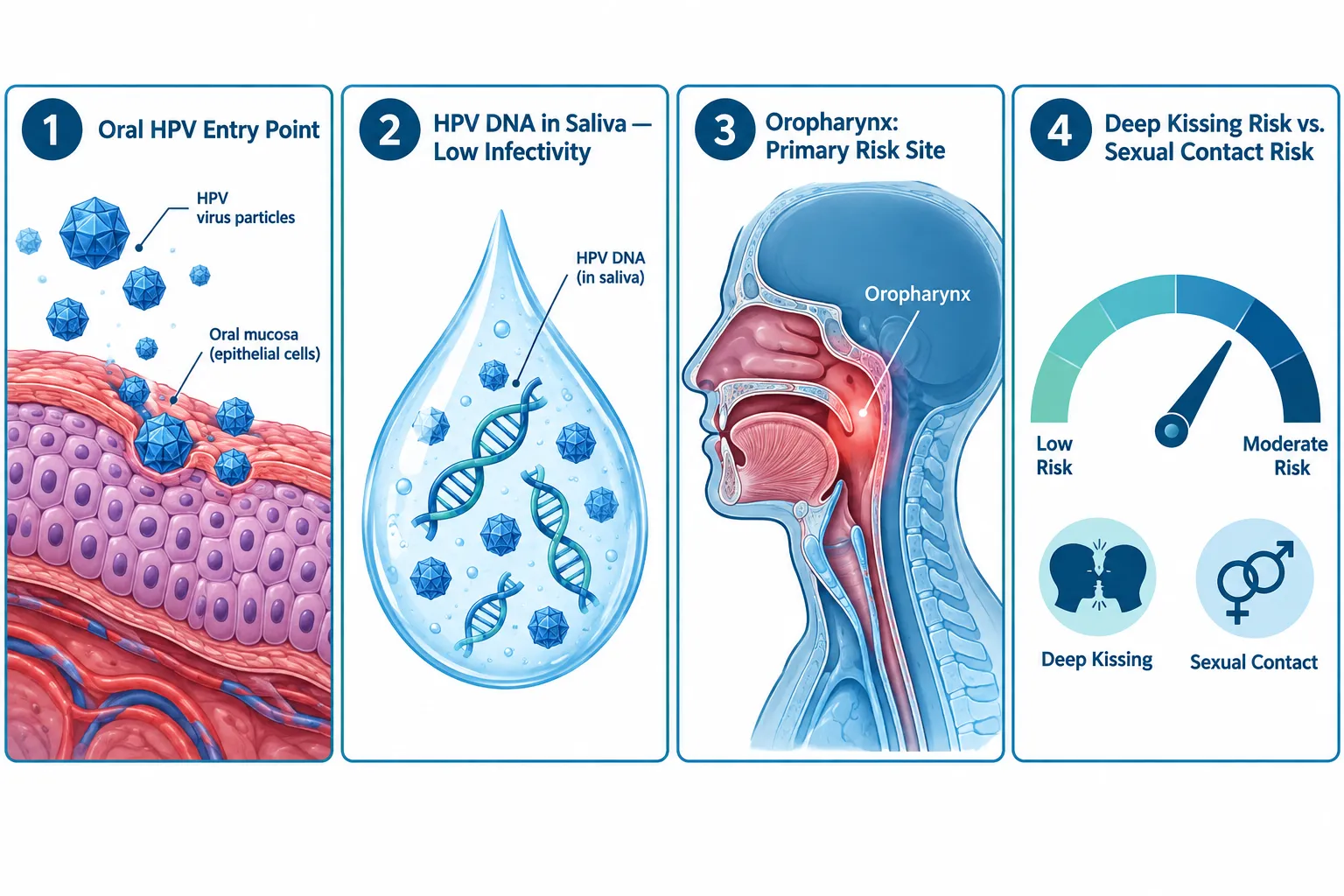
Saliva, by contrast, is a relatively poor medium for HPV. The virus can be detected in saliva samples, but detection of HPV DNA is not the same as infectious viral particles being present in quantities sufficient to establish a new infection. Viral load, the specific HPV genotype, the presence of oral sores or lesions, and your immune status all affect whether exposure leads to actual infection.
Can U Get HPV by Kissing? Breaking Down the Risk
The honest answer is: it depends on what kind of kissing, and what’s happening in the mouth of each person.
Closed-mouth kissing, a peck on the lips or a cheek kiss, is not considered a route of HPV transmission by any major health authority. The contact is brief, there’s minimal mucosal exposure, and there’s no evidence linking this type of kissing to HPV infection.
Deep, open-mouth kissing (sometimes called French kissing) is where the picture becomes less clear-cut. Some studies of college-aged men found that having more open-mouth kissing partners was significantly associated with oral HPV infection, even among those who reported no oral sex. Other studies in similar populations found no significant association. The evidence is genuinely mixed, and no single study has definitively proven or disproven kissing as a standalone transmission route.
What most researchers agree on: if one partner already has an active oral HPV infection, particularly if they have oral sores or lesions, deep kissing creates more opportunity for the virus to transfer than closed-mouth contact does. Without that active oral infection, the risk drops considerably.
What the evidence shows:Deep kissing may carry a low but not zero risk of oral HPV transmission in specific circumstances. It remains a secondary, inefficient route compared to sexual skin-to-skin contact.
What Types of HPV Are Involved in Oral Infection?
Not all HPV types behave the same way in the oral cavity. HPV types 16 and 18, the high-risk genotypes most associated with cervical and oropharyngeal cancers, are the ones that matter most clinically. The overview of HPV types and what the numbers mean explains the distinction between low-risk and high-risk strains in full.
Low-risk types like HPV 6 and 11, which cause most genital warts, are not strongly associated with oral cancer. High-risk oral HPV infection is relatively uncommon in the general population, and progression from infection to malignancy is even rarer. That context matters when thinking about kissing risk: even if there’s a theoretical transmission route, the downstream clinical consequences are low-probability events for most people.
Does Saliva Protect Against HPV?
Saliva contains antimicrobial proteins and enzymes that may reduce the efficiency of HPV transmission through oral contact. This is one reason researchers believe kissing is a far less effective transmission route than genital contact. It doesn’t reduce the risk to zero, but it does help explain why oral HPV rates don’t mirror the rates seen with sexual transmission.
Who’s at Higher Risk for Oral HPV Infection?
A few groups face meaningfully higher odds of acquiring or carrying oral HPV:
- People with multiple oral sex or kissing partners: The more partners, the greater the cumulative exposure opportunity, regardless of how efficient any single contact is.
- Immunocompromised individuals: People living with HIV, those on immunosuppressive therapy after organ transplants, and others with compromised immune function are less able to clear HPV infections, oral or otherwise, once acquired.
- Unvaccinated adults: HPV vaccination substantially reduces the risk of acquiring the high-risk types most associated with oropharyngeal cancer. Those who haven’t been vaccinated carry a higher baseline risk.
- Smokers: Tobacco use is an independent risk factor for oral HPV persistence and for head and neck cancers when HPV is present.
What Oral HPV Actually Means for Your Health
Most oral HPV infections, including high-risk types, clear on their own within one to two years. The immune system handles them without any treatment and often without any symptoms at all. The full guide to HPV symptoms in men and women explains why most people with HPV never know they have it.
A small proportion of persistent high-risk oral HPV infections, particularly HPV 16, are linked to oropharyngeal cancers, cancers of the back of the throat, base of the tongue, and tonsils. These cancers have been rising in incidence over recent decades, and HPV is now recognized as a major driver of that trend. The connection between HPV and cancer covers which cancer types are involved and how that risk is monitored.
There is no routine screening test for oral HPV equivalent to a Pap smear for cervical HPV. Dentists and ENT specialists may identify suspicious oral lesions during routine exams, but there’s no standardized population-level screening program for oropharyngeal cancer the way there is for cervical disease.
How to Actually Reduce Your HPV Risk
Changing your kissing behavior is not a meaningful prevention strategy, the risk from kissing is low enough that it doesn’t warrant behavioral change beyond what’s already sensible. What does make a real difference:
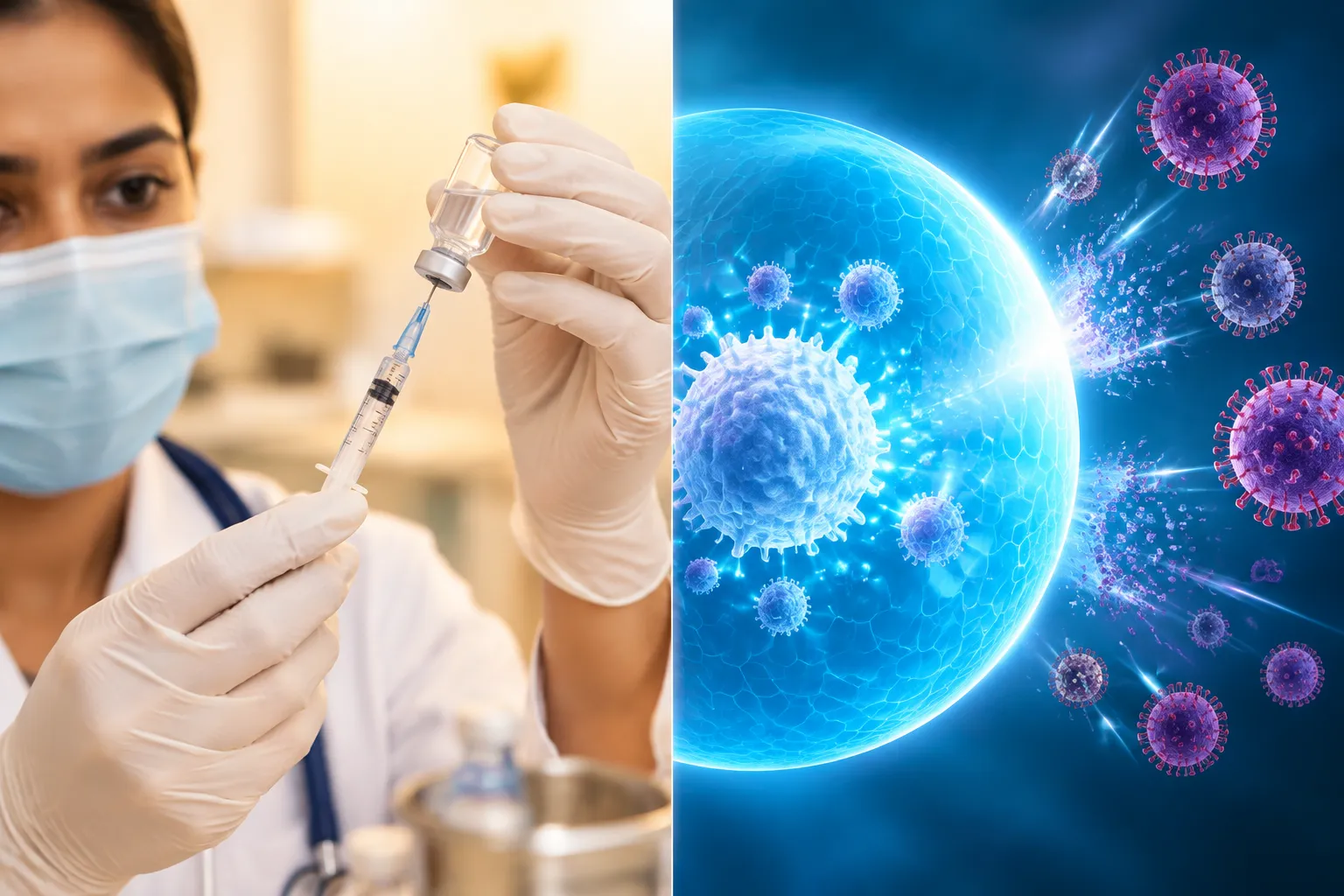
- Get vaccinated. The HPV vaccine protects against the high-risk types most associated with oropharyngeal and other HPV-related cancers. The detailed guide to how the HPV vaccine works and who should get it covers the schedule, age recommendations, and what the evidence shows. Vaccination is the single highest-impact prevention step available.
- Use barriers for oral sex. Condoms and dental dams reduce HPV transmission during oral sex, the route that carries far more risk than kissing alone.
- Keep up with cervical screening. If you have a cervix, regular Pap smears and HPV co-testing catch cell changes before they progress. An abnormal Pap smear result doesn’t mean cancer, it means the system is working.
- Don’t smoke. Tobacco significantly increases the risk that an HPV infection will persist and progress rather than clear.
None of these steps require avoiding kissing. They address the actual drivers of HPV-related disease.
Frequently Asked Questions
Can you get HPV from a quick peck on the lips?
A brief, closed-mouth kiss is not considered a transmission route for HPV. The contact is too limited and saliva is an inefficient medium for the virus. No evidence links casual kissing to HPV infection.
If my partner has oral HPV, should I stop kissing them?
Major health organizations do not recommend avoiding kissing as an HPV prevention measure. The risk from kissing is low, and most oral HPV infections clear without causing any health problems. Vaccination is a more practical and effective protective step than changing kissing behavior.
Can HPV spread through sharing drinks or utensils?
Sharing cups, utensils, or lip balm is not considered a route of HPV transmission. HPV requires direct contact with skin or mucous membrane, it doesn’t survive on surfaces or objects in a way that allows transmission.
Is there a test for oral HPV?
There is no FDA-approved screening test for oral HPV that’s recommended for routine use in the general population. If a dentist or doctor spots a suspicious lesion during an exam, they can take a biopsy for further analysis. Research-grade oral rinse tests exist but are not standard clinical tools.
Does the HPV vaccine protect against oral HPV too?
Yes. The vaccine targets HPV types 16, 18, and others, the same high-risk types that cause oropharyngeal cancers. Vaccination before exposure to these types provides strong protection against oral as well as genital HPV infection. The HPV vaccine guide covers who benefits most and when to get it.
Can men get oral HPV from kissing?
Men can acquire oral HPV through any route that involves mucosal contact, including deep kissing, though sexual contact remains the dominant transmission pathway. HPV in men, including oral and oropharyngeal risk, is covered in full detail on this site.
What to Do With This Information
The question of whether you can get HPV by kissing has a real answer: casual kissing carries negligible risk, and deep kissing carries a low but non-zero risk under specific circumstances. That doesn’t translate into a reason to change how you kiss, it translates into a reason to be vaccinated, stay current with cervical screening if you have a cervix, and use barriers during oral sex.
If you’re concerned about a specific exposure or you’ve noticed an unusual oral lesion, that’s worth raising with a doctor or dentist directly. Cell changes and oral lesions are easiest to evaluate and treat early, that’s what clinical monitoring is for.