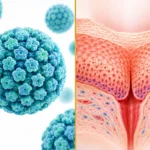
HPV cannot be cured in the way a bacterial infection can be cured with antibiotics. There is no antiviral drug that clears the virus from your body on command. That said, most HPV infections, including high-risk types, resolve on their own without treatment, and the vast majority of people who test positive never develop serious complications.
Those two facts together are what “can HPV be cured?” actually means in practice.
Key Takeaways
- No approved antiviral therapy exists that directly eliminates HPV from the body.
- Most infections clear naturally within one to two years through normal immune activity.
- High-risk HPV types (like 16 and 18) that persist beyond two years carry a higher risk of cell changes, which is exactly what cervical and anal screening is designed to catch early.
- Visible symptoms like genital warts are treatable, even though the underlying virus may remain dormant.
- The HPV vaccine prevents the most dangerous types but does not treat an existing infection.
What “Clearing” HPV Actually Means
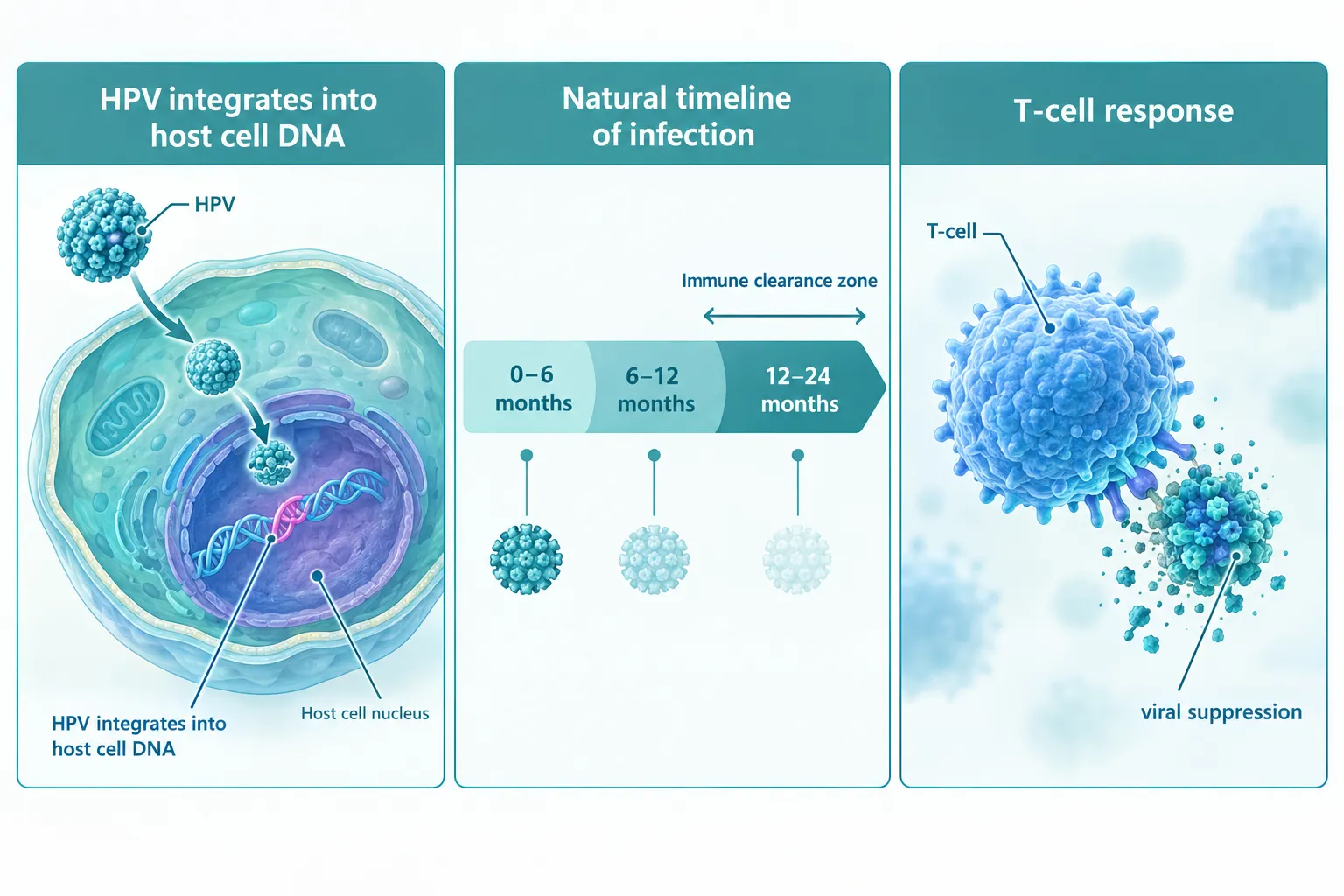
When doctors say HPV “clears,” they don’t mean the virus is surgically extracted. They mean your immune system suppresses it to levels that are undetectable on standard tests. The virus may still be present in a dormant state in a small number of cells, it simply stops replicating actively enough to cause harm or show up on a test.
This distinction matters because it changes what you should expect. A negative HPV test after a previous positive result is genuinely good news. It means your immune system has done its job. It does not guarantee the virus is gone at a molecular level, but it does mean your risk of cell changes drops substantially.
Most cervical HPV infections clear within 12 to 24 months. Longitudinal cohort data consistently show that the majority of infections, including high-risk genotypes, are undetectable by the two-year mark. Persistence beyond that window is the scenario that warrants closer monitoring, not the initial positive result.
The HPV types guide on HPVGuide.org explains the difference between low-risk and high-risk genotypes in detail, understanding which type you have shapes what follow-up actually looks like.
Why There Is No Direct Cure for HPV
HPV is a DNA virus that integrates into the nucleus of host cells. That integration is part of why eliminating it is so difficult. Unlike bacteria, viruses don’t have their own metabolic machinery that a drug can easily target without also affecting your own cells.
No approved antiviral therapy exists that specifically targets HPV. This is not a gap in pharmaceutical ambition, it reflects genuine biological complexity. The virus replicates inside your own cells using your own cellular machinery, which makes designing a drug that kills the virus without harming surrounding tissue extremely difficult.
Therapeutic vaccines, designed to train the immune system to attack already-infected cells, are an active area of research as of 2026. Early-phase trials have shown some promise, particularly for high-grade cervical lesions caused by HPV 16. But none have reached regulatory approval yet. The evidence shows this is a promising direction, not a current solution.
What does exist is a robust system for managing the consequences of HPV:
- Cell changes (dysplasia): Caught through Pap smears and colposcopy, treated before they progress.
- Genital warts: Caused by low-risk types 6 and 11, treatable with topical medications, cryotherapy, or minor procedures.
- High-risk persistent infection: Monitored through co-testing (Pap + HPV test) on a schedule your doctor determines based on your results.
If you’ve had an abnormal Pap result and want to understand what happens at the next step, the abnormal Pap smear guide walks through the process clearly.
Does HPV Go Away on Its Own?
Yes, in most cases. The immune system clears HPV the same way it clears most viral infections, not with a dramatic event, but gradually, over months. You won’t feel it happening. There’s no symptom that signals clearance, which is why follow-up testing is the only reliable way to confirm it.
The clearance rate is high. Studies consistently show that roughly 70-90% of HPV infections become undetectable within two years. The rate varies by age, immune status, and HPV genotype, but the general pattern holds across the research.
High-risk types like HPV 16 tend to persist longer than low-risk types. HPV 16 is responsible for the majority of HPV-related cancers, which is why a positive result for type 16 specifically triggers a different follow-up protocol than a generic high-risk positive.
Persistence, not initial infection, is the risk factor. A single positive HPV test is not a cancer diagnosis, or even a precancer diagnosis. It’s a signal to monitor.
The HPV testing guide covers how co-testing works, what your results actually mean, and when repeat testing is appropriate.
Who Is at Higher Risk for HPV Persistence?
Most people clear HPV without intervention. These groups are more likely to experience persistent infection or complications:
- Immunocompromised individuals, people living with HIV, organ transplant recipients on immunosuppressive therapy, or anyone with a significantly weakened immune system. HPV clearance depends heavily on T-cell function.
- Smokers, smoking impairs local cervical immunity and is independently associated with higher rates of HPV persistence and progression to high-grade dysplasia.
- People with a history of abnormal Pap results, prior LSIL or HSIL findings indicate the immune response has not fully controlled the infection, and closer monitoring is warranted.
- Unvaccinated individuals, those who were not vaccinated before exposure to high-risk types lack the antibody protection that reduces the risk of persistent infection from types 16 and 18.
Can HPV Be Cured Through Treatment of Its Symptoms?
This is where the question gets more practical. While the virus itself has no cure, its visible effects, genital warts and precancerous cell changes, are both treatable.
Genital warts caused by HPV types 6 and 11 can be removed through several methods: topical prescription creams, cryotherapy, laser treatment, or minor surgical excision. Removing the warts does not remove the virus from your system, but it does eliminate the visible lesions and may reduce transmission risk. For a detailed look at treatment options, the genital warts treatment guide covers what to expect.
Precancerous cell changes (cervical dysplasia graded as LSIL, HSIL, or CIN 1-3) are treated through procedures like LEEP (loop electrosurgical excision procedure) or cone biopsy, which remove the affected tissue. These procedures are highly effective at preventing progression to cervical cancer. They treat the cell changes, not the virus itself, but treating the cell changes is what prevents cancer, which is the actual goal.

For men, the picture is similar. HPV often causes no symptoms at all, but genital warts and, in rarer cases, anal or penile lesions can develop. The HPV in men guide covers what testing and monitoring look like for men specifically.
What the HPV Vaccine Does, and Doesn’t, Do
The HPV vaccine (Gardasil 9 in most countries) protects against nine HPV types, including 16, 18, 31, 33, 45, 52, and 58, the high-risk types responsible for most HPV-related cancers, plus types 6 and 11, which cause most genital warts.
The vaccine does not treat an existing infection. If you already have HPV 16, vaccination will not clear it. What it does is protect you from acquiring additional high-risk types you haven’t yet been exposed to, which remains valuable even after a positive result.
Vaccination before first sexual exposure is most effective. But the vaccine is approved and recommended through age 45 in many countries, and partial protection is still meaningful for people in that age range who haven’t been exposed to all covered types.
The evidence on vaccination is clear: countries with high adolescent vaccination rates have seen dramatic reductions in HPV 16/18 infections and cervical precancers. This is prevention, not cure, but at a population level, it is the most powerful tool currently available.
Frequently Asked Questions
If my HPV test comes back negative after a positive, am I cured?
A negative result after a previous positive means the virus is below detectable levels, your immune system has suppressed it effectively. Most clinicians consider this clearance. Whether trace amounts of virus remain dormant in cells is a question current testing cannot answer definitively, but a sustained negative result is associated with very low risk of progression.
Can HPV come back after it clears?
A reactivation of a previously suppressed infection is possible, particularly if your immune system becomes compromised later in life. This is more of a theoretical concern than a common clinical event for healthy adults. New positive results after a period of negative testing may also reflect a new exposure rather than reactivation.
Does having HPV mean my partner has been unfaithful?
No. HPV can remain dormant for years before showing up on a test. A new positive result cannot be traced to a specific exposure event or timeframe. The timing of HPV infection is often genuinely unknowable, even with careful history.
Is there anything I can do to help my body clear HPV faster?
No supplement or lifestyle change has been proven to accelerate HPV clearance in rigorous clinical trials. Stopping smoking, managing stress, and maintaining a healthy immune system are reasonable general health measures. Some early research on AHCC (a mushroom extract) has shown preliminary results, covered in the AHCC for HPV evidence review, but it is not an established treatment.
Should I tell future partners I have HPV?
This is a personal decision with no single right answer. HPV is extremely common, most sexually active adults have had it at some point. Condoms reduce but do not eliminate transmission risk. Discussing your status with partners allows them to make informed decisions, and many clinicians recommend it for ongoing relationships.
What to Do Now
HPV cannot be cured directly, but the path forward is clear. If you have a recent positive result, the next step is not panic, it’s follow-up. Your doctor will determine whether your result warrants a repeat test in 12 months, a colposcopy, or a specific treatment based on the HPV type and any associated cell changes.
Cell changes are easiest to treat before they progress, that’s what screening is for. Staying current with Pap smears and HPV co-testing is the most reliable thing you can do. If you haven’t been vaccinated and are under 45, ask your provider whether vaccination still makes sense for you.
The HPV and cancer guide explains which cancers are linked to HPV, how that progression actually works, and what monitoring prevents, useful context if you want to understand the full picture.