Yes, a man can absolutely give a woman HPV. It is one of the most common ways the virus spreads in heterosexual couples, and it can happen even when the man has no visible symptoms, no warts, and no awareness that he is carrying the virus.
HPV transmits through direct skin-to-skin and mucous membrane contact, not through blood or semen. That means penetrative sex is not required. Close genital contact is enough. Understanding how male-to-female transmission works, and what actually lowers the risk, is what this article covers.
Key Takeaways
- A man can transmit HPV to a woman through skin-to-skin genital contact, with or without penetration and with or without visible symptoms.
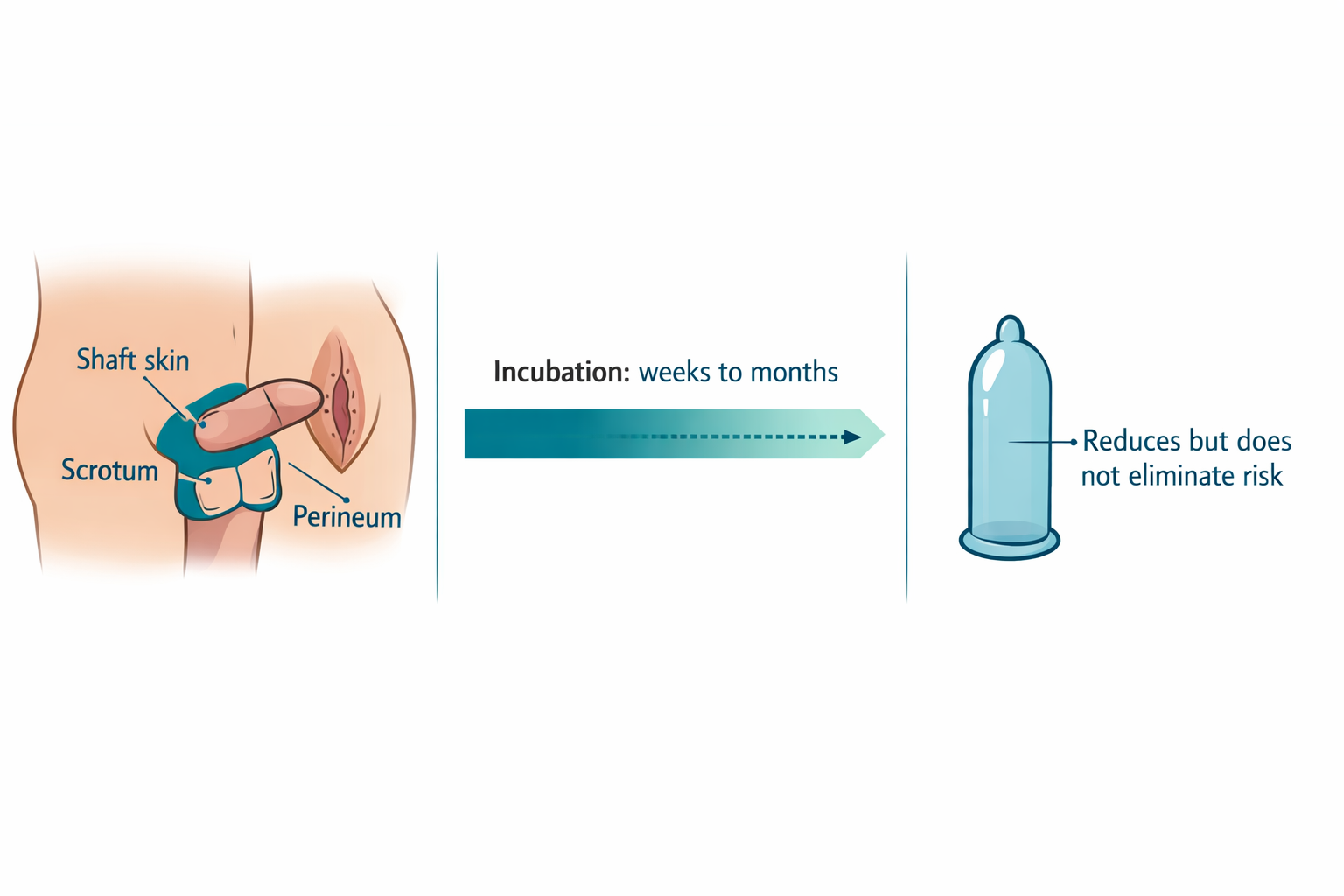
- HPV is found on multiple surfaces of male genital skin, shaft, scrotum, perineum, not just the tip of the penis, which is why condoms reduce but do not eliminate transmission risk.
- Most HPV infections, including high-risk types, clear on their own. The concern for women is persistent infection with high-risk types like HPV 16 and 18, which can lead to cervical cell changes over time.
- Vaccination of both partners is the most effective strategy for reducing transmission. The HPV guide on the vaccine for men covers who should get it and whether it helps if HPV is already present.
- Regular cervical screening, Pap smears and HPV co-testing, is what catches cell changes early, when they are easiest to manage.
How Does a Man Transmit HPV to a Woman?
HPV spreads through contact with infected skin or mucous membranes, not through bodily fluids. This distinction matters. It means that a man who carries HPV on the skin of his shaft, scrotum, or perineum can transmit it during any sexual activity that brings that skin into contact with a woman’s vulva, vaginal tissue, or cervix.
Penetrative vaginal sex is the most studied route, but transmission has been documented through non-penetrative genital contact as well. The virus does not need an open wound or visible lesion to cross from one person to another. Intact skin contact is sufficient.
Men often carry HPV on multiple genital sites simultaneously. Studies using PCR testing have found HPV DNA on the penile shaft, glans, scrotum, and perineum, and the virus is not always present in the same location across time. This anatomical spread is part of why how HPV spreads and how it doesn’t is more complex than most people assume.
Transmission can happen during a person’s first sexual encounter with a new partner. It can also happen after years in a monogamous relationship, because HPV can remain dormant for months or years before the immune system clears it or before it causes detectable changes.
Does He Have to Have Symptoms to Transmit HPV?
No. Most men with HPV have no symptoms at all. No warts, no pain, no discharge. The full picture of HPV symptoms in men and women makes clear that the majority of people carrying the virus have no sign of it.
Low-risk HPV types like 6 and 11 can cause genital warts, which are visible. But high-risk types, including HPV 16 and 18, the types most associated with cervical cancer, typically produce no symptoms in men whatsoever. A man can carry HPV 16 for years, transmit it to a partner, and never know he had it.
What Are the Actual Transmission Rates?
Couple-based transmission studies, where researchers test both partners repeatedly over time, give a clearer picture than population surveys. In these studies, male-to-female transmission rates for genital HPV have been estimated at roughly 40-60% per year of sexual partnership, depending on the study design, the HPV types tested, and whether the female partner was previously unexposed.
That is a meaningful rate. It does not mean every sexual encounter results in transmission, but it does mean that sustained exposure to an HPV-positive partner carries real cumulative risk over time.
Female-to-male transmission rates in the same couple-based studies are often reported as equal to or higher than male-to-female rates per act of sex. This is not a reason to assign blame in either direction, it reflects how efficiently HPV moves through skin contact regardless of which partner carries it first.
What matters clinically is that women bear a disproportionate share of HPV-related disease burden. Cervical cancer, cervical dysplasia, and vulvar cancer are all linked to persistent high-risk HPV infection. Men can carry the same types with far fewer clinical consequences, which is part of why HPV in men, including symptoms, risks, and testing is a topic worth understanding separately.
Who Is at Higher Risk for HPV Transmission From a Male Partner?
Some women face a meaningfully higher chance of acquiring HPV from a male partner, or of developing complications if they do.
- Unvaccinated women lack immune protection against the HPV types covered by current vaccines, including the high-risk types 16 and 18.
- Immunocompromised women, including those living with HIV, those on long-term immunosuppressive therapy, or organ transplant recipients, are less able to clear HPV after exposure and are at higher risk of persistent infection and dysplasia.
- Women with a history of abnormal Pap results already have evidence that HPV has affected their cervical cells; re-exposure or a new high-risk type adds to that risk.
- Women whose male partners are unvaccinated and have had multiple prior partners face higher cumulative exposure to diverse HPV genotypes.
Does Using a Condom Prevent Male-to-Female HPV Transmission?
Condoms reduce the risk. They do not eliminate it. This is not a reason to avoid condoms, consistent condom use has been shown to lower HPV transmission rates and is associated with faster clearance of existing infections in women. The reduction in risk is real and clinically meaningful.
The limitation is anatomical. A condom covers the penile shaft and glans but does not cover the scrotum, perineum, or the base of the penis. HPV on any of those surfaces can still contact vulvar or perineal skin during sex. This is not a flaw in condom design, it is simply a reflection of how HPV spreads through skin contact rather than fluid exchange.
Other barrier methods like dental dams offer partial protection for oral-genital contact but are similarly limited by coverage area.
The most effective protective strategy combines condom use with vaccination. Vaccination addresses the types not covered by barrier methods. The HPV vaccine, how it works, who should get it, and whether it’s safe covers the evidence on protection in detail.
What Happens to a Woman After She Acquires HPV From a Male Partner?
Most of the time, nothing visible happens. The immune system clears the infection within one to two years, and the woman never develops symptoms or cell changes. This is the most common outcome, even with high-risk HPV types.

The concern arises when a high-risk type, particularly HPV 16 or 18, persists beyond two years. Persistent infection is what drives cervical cell changes, progressing from low-grade (LSIL) to high-grade (HSIL) dysplasia and, in a subset of untreated cases, to cervical cancer. This process typically takes ten or more years, which is exactly the window that cervical screening is designed to catch.
An abnormal Pap result is not a cancer diagnosis. It is a signal that cell changes are present and need monitoring or treatment. What to expect after an abnormal Pap smear explains the follow-up process, colposcopy, biopsy, and what the different result categories mean, in plain terms.
The link between HPV and cancer, which cancers are involved, and how prevention works provides a fuller picture of the long-term risk landscape.
Does It Matter Which HPV Type the Man Transmits?
Yes, significantly. Low-risk types like HPV 6 and 11 can cause genital warts but do not lead to cancer. High-risk types, especially 16 and 18, which together account for roughly 70% of cervical cancers, carry a different clinical weight.
Standard HPV testing in women identifies whether high-risk types are present, and some tests can distinguish HPV 16 and 18 specifically. HPV testing, how it works, who should get it, and what results mean covers how that information is used in clinical decision-making.
Can Vaccinating Men Protect Women?
Yes. This is one of the clearest public health arguments for male HPV vaccination. When men are vaccinated against HPV types 6, 11, 16, and 18, or the nine types covered by Gardasil 9, they are less likely to carry and transmit those types to female partners.
Population-level data from countries with high male vaccination rates show reductions in HPV prevalence in women, including in unvaccinated women, through what epidemiologists call herd protection. The effect is real and measurable.
Vaccination is most effective before first sexual exposure, but current guidance in 2026 supports vaccination through age 26 for all adults, with shared clinical decision-making for adults aged 27-45 based on individual risk. A man who already has HPV can still benefit from vaccination against the types he does not yet carry.
Frequently Asked Questions
Can a man give a woman HPV without knowing he has it?
Yes, and this is the most common scenario. Most men with HPV have no symptoms and no way of knowing they carry the virus without testing. There is currently no approved HPV test for men in routine clinical use in the U.S., which means most male carriers are unaware of their status.
If my partner has HPV, does that mean he was unfaithful?
Not necessarily, and the timing of an HPV infection is often medically impossible to determine. HPV can remain dormant for months or years before it shows up on a test or causes symptoms. A positive result in a long-term relationship does not indicate when or from whom the virus was acquired.
Can a woman get HPV from a man through oral sex?
Yes. Oral HPV transmission is documented, and HPV 16 is associated with oropharyngeal cancers in both men and women. The transmission risk from a single oral sex encounter is lower than from vaginal sex, but it is not zero, particularly with repeated exposure.
Does HPV always cause cervical problems in women who get it from a man?
No. Most women who acquire HPV, including high-risk types, clear the infection without developing any cervical abnormality. Persistent infection with a high-risk type is what creates risk. Regular Pap and HPV co-testing is what identifies the minority of women whose infections do not clear.
If a woman already has HPV, can her male partner reinfect her with the same type?
The evidence here is not fully settled. Most experts believe that once a person has cleared a specific HPV genotype, they have some degree of immune memory against that type. However, reinfection is considered possible, particularly in immunocompromised individuals or after a long gap between exposures.
Should a man get tested for HPV if his female partner has it?
There is no standard clinical HPV test for men in the U.S. outside of anal Pap testing for men at high risk of anal cancer. A man whose partner has HPV cannot typically get a routine test to confirm his own status. The practical response is vaccination if not already vaccinated, consistent condom use, and open communication with a healthcare provider about individual risk.
Tags: HPV transmission, male to female HPV, can a man give a woman HPV, HPV in men, HPV in women, cervical HPV risk, HPV prevention, HPV vaccine, genital HPV, high-risk HPV types, HPV and cervical cancer, HPV screening