
Every wart, the rough bump on your finger, the painful spot on the bottom of your foot, the flat patch on your forearm, the growth in the genital area, is caused by human papillomavirus. So if you’re asking whether all warts are caused by HPV, the answer is yes, without exception. What varies is the specific HPV type involved, where on the body it appears, and what it means for your health.
That last part matters. Not all HPV types carry the same risks, and a wart on your hand is a completely different clinical situation from a genital wart. Understanding the difference tells you what, if anything, you need to do next.
Key Takeaways
- All warts, regardless of location or appearance, are caused by HPV infection.
- Over 200 HPV genotypes exist; different types infect different body sites and carry different risk profiles.
- Skin warts (hands, feet, face) are caused by low-risk, non-sexually transmitted HPV types, not the same strains linked to cancer.
- Genital warts are caused primarily by HPV types 6 and 11, which are low-risk for cancer but are sexually transmitted.
- Not every HPV infection produces a visible wart, most infections have no symptoms at all.
What Causes Warts? The HPV Connection Explained
HPV is a family of more than 200 related viruses, each assigned a number, a genotype. Every single wart is the result of one of those genotypes infecting skin or mucosal cells and triggering abnormal cell growth. There is no documented wart caused by a bacterium, fungus, or any other pathogen. The “warts from toads” idea is folklore; the biology is clear.
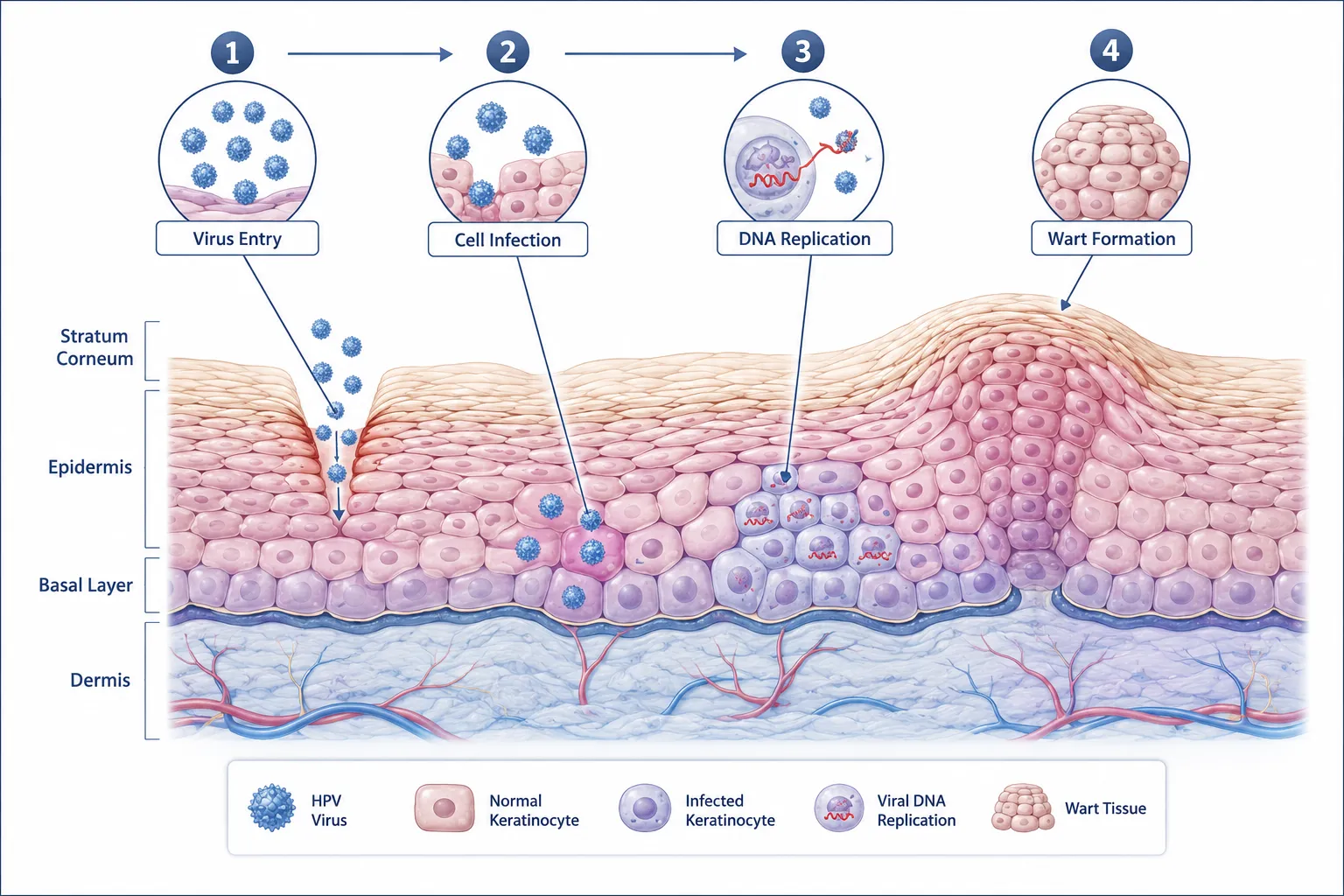
HPV enters through tiny breaks in the skin, a small cut, a hangnail, a softened patch of skin after swimming. Once inside, it infects the basal layer of the epidermis, the deepest layer of skin cells. The virus hijacks those cells’ replication machinery, causing them to multiply faster than normal. The result is the raised, thickened tissue you see as a wart.
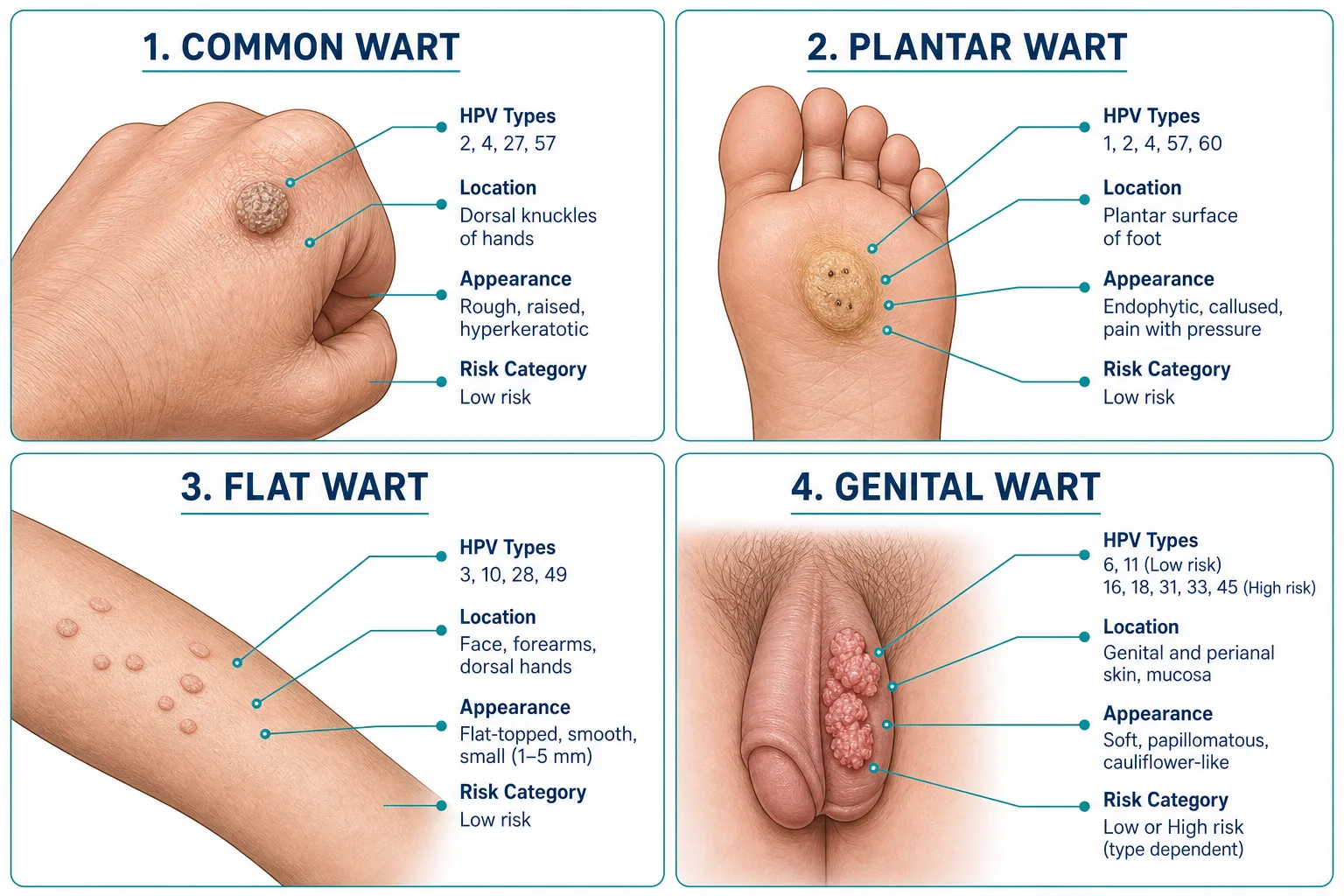
The type of wart that forms depends almost entirely on which HPV genotype caused the infection and where on the body the infection took hold. HPV 1 tends to produce deep plantar warts on the soles of the feet. HPV 2 and 4 are common culprits behind the rough, raised warts that appear on fingers and hands. HPV 3 and 10 cause flat warts, the smoother, skin-colored patches that often appear on the face, forearms, or legs. HPV 6 and 11 are responsible for the majority of genital warts.
These are all HPV. They are not all the same HPV.
Different Wart Types, Different HPV Strains, What That Means for You
The most important distinction to understand is between skin warts and genital warts, because they involve different HPV types, different transmission routes, and different health implications.
| Wart Type | Common HPV Types | Transmission | Cancer Risk |
|---|---|---|---|
| Common (hand/finger) | 2, 4, 27, 57 | Skin-to-skin, surfaces | None |
| Plantar (foot) | 1, 2, 4 | Floors, shared surfaces | None |
| Flat warts | 3, 10, 28 | Skin contact | None |
| Genital warts | 6, 11 | Sexual contact | Very low (types 6/11 are low-risk) |
| Oral/throat warts | 6, 11 | Oral sexual contact | Low, but recurrent laryngeal papillomatosis possible |
Skin warts, the kind on your hands, feet, or face, are caused by HPV types that are not sexually transmitted and are not associated with cancer. You can pick them up by walking barefoot in a locker room, sharing a towel, or touching a surface where the virus landed. They’re extremely common, especially in children, and most resolve on their own as the immune system clears the infection.
Genital warts are a different situation. They’re caused by HPV 6 and 11, which are classified as low-risk HPV types, meaning they are not the strains that cause cervical, anal, or other HPV-related cancers. The detailed breakdown of HPV types, including which are high-risk and which are low-risk, explains this classification clearly. Genital warts are sexually transmitted, they’re more persistent than skin warts, and they warrant medical attention, not because they’re dangerous in the cancer sense, but because they’re contagious and treatable.
Who’s at Higher Risk for HPV-Related Warts?
Anyone can get a wart. But certain groups are more likely to develop them or have more difficulty clearing them.
- Immunocompromised individuals, people living with HIV, organ transplant recipients on immunosuppressive drugs, or anyone with a weakened immune system, are significantly more prone to widespread or persistent warts because their immune response to HPV is reduced.
- Children and young adults have higher rates of common skin warts; immune exposure to these HPV types builds over time.
- Unvaccinated sexually active adults face a higher risk of genital warts caused by HPV 6 and 11, since the HPV vaccine covers both of those types.
- People with frequent skin trauma, athletes, meat handlers, people who bite their nails, create more entry points for skin-infecting HPV types.
How HPV Causes Warts, and Why Most HPV Infections Don’t
Here’s something that surprises most people: having HPV does not mean you’ll get a wart. Most HPV infections, including many genital HPV infections, produce no visible symptoms at all. The immune system recognizes and clears the virus before any noticeable cell changes occur. This is true for both low-risk and high-risk HPV types.
Whether a wart actually forms depends on several factors: the specific HPV genotype, the viral load at the time of exposure, the location of infection, and the state of your immune system. Someone with a healthy immune response may clear an HPV 6 infection without ever developing a visible genital wart. Someone with reduced immune function may develop multiple warts from the same exposure.
This is also why the absence of a wart doesn’t mean the absence of HPV. The overview of HPV symptoms, including why most people have none, covers this in more detail. For high-risk HPV types like 16 and 18, the strains most strongly linked to cervical cancer, warts are not a typical symptom at all. Those infections are usually silent, which is exactly why cervical screening exists.
The wart is the visible sign of infection. But the virus can be present without producing one.
Genital Warts Specifically: Common, Treatable, and Not a Cancer Diagnosis
Finding a genital wart doesn’t mean you have cancer. HPV 6 and 11, which cause the vast majority of genital warts, are low-risk types, they are not the strains responsible for cervical, anal, penile, or oropharyngeal cancers. That distinction matters and is worth holding onto.
Genital warts are one of the most common sexually transmitted infections. They can appear on the vulva, vagina, cervix, penis, scrotum, anus, or surrounding skin. They vary in appearance, some are flat, some are raised, some cluster into a cauliflower-like texture. The complete guide to what genital warts look like and what to do about them walks through the full picture.
Treatment is available and effective. Options range from topical prescription creams applied at home to in-office procedures like cryotherapy or surgical removal. The overview of genital wart treatment options and how they work covers what each approach involves. Warts can recur after treatment because the underlying virus may still be present in surrounding tissue, but recurrence becomes less frequent over time as the immune system responds.
If you’ve been diagnosed with genital warts and are concerned about your broader HPV status, including whether you may also carry a high-risk type, that’s a reasonable question to raise with your doctor. The guide to HPV testing and how results are interpreted explains what current tests can and can’t tell you.
Skin Warts vs. Genital Warts: Can One Cause the Other?
This question comes up often, and the answer is: in practice, no, not meaningfully. The HPV types that cause common skin warts (hands, feet, face) are distinct genotypes from those that cause genital warts. They have different tissue preferences, different transmission routes, and different biological behavior.
Theoretically, any HPV type could infect any skin site given the right conditions. But HPV 1, 2, and 4, the typical hand and foot wart types, are not the strains you find in genital infections, and HPV 6 and 11 don’t typically establish themselves in the dry skin of the hands or feet. The tissue environment matters.
This means that having a common wart on your finger carries no implication about your sexual health, and it’s not a route of transmission for genital HPV. They’re related viruses that happen to share a name.
Frequently Asked Questions
Can you have HPV and never get a wart?
Yes, this is actually the most common scenario. Most HPV infections, including both low-risk and high-risk types, clear without producing any visible symptoms. Whether a wart forms depends on the specific HPV type, your immune response, and where the infection takes hold. The absence of warts doesn’t mean the absence of HPV.
Do genital warts mean the person I’m with has been unfaithful?
Not necessarily, and the medical evidence doesn’t support that conclusion. HPV can remain dormant for months or years before producing symptoms. The timing of a wart’s appearance tells you very little about when the infection occurred or how many partners were involved. The biology of HPV incubation makes it genuinely impossible to trace most infections to a specific exposure.
Are flat warts the same as genital warts?
No. Flat warts are caused by HPV types 3, 10, and 28, non-sexually transmitted strains that typically appear on the face, forearms, or legs. Genital warts are caused by HPV 6 and 11, which are sexually transmitted. Both are HPV, but they’re different genotypes with different transmission routes and different clinical contexts.
If I have a wart on my hand, should I get an HPV test?
Standard HPV tests used in clinical settings, the kind done alongside a Pap smear, only detect high-risk genital HPV types. They don’t test for the HPV strains that cause skin warts, and a skin wart on your hand has no bearing on cervical cancer screening. If you have concerns about genital HPV, that’s a separate conversation with your doctor about appropriate screening based on your age and history.
Can the HPV vaccine prevent warts?
The current HPV vaccines protect against HPV 6 and 11 (the main causes of genital warts) as well as high-risk types 16, 18, and others. The vaccine does not protect against the HPV types that cause common skin warts, because those strains are not included in the current formulations. For genital wart prevention specifically, vaccination before first sexual exposure is most effective, though it still offers some benefit afterward for types not yet acquired.
Conclusion
All warts are caused by HPV, that’s the straightforward answer to the question. What matters clinically is which HPV type is involved and where the infection is. Skin warts on your hands or feet carry no cancer risk and no sexual health implications. Genital warts, caused by low-risk HPV types 6 and 11, are sexually transmitted and warrant treatment, but they are not a cancer diagnosis.
If you have genital warts, the practical next steps are: confirm the diagnosis with a clinician, discuss treatment options, and ask whether additional HPV screening is appropriate for your situation. For skin warts, most resolve on their own, treatment is an option if they’re painful or persistent, not a medical urgency.
For anyone navigating an HPV diagnosis more broadly, the plain-English guide to what HPV is and what it means is a useful starting point. And if you’ve received an abnormal Pap result alongside an HPV finding, understanding what an abnormal Pap smear means and what happens next explains what the follow-up process looks like.
The wart is the visible part of the story. The virus, the type, and your immune system write the rest.